
| Technology | Miscellaneous | Talks |
China’s leading self-media in the telecommunications industry
There is an interesting phenomenon.
Every few years, the fiercely competitive smart home market sees the emergence of some eye-catching new categories.
From smart routers that “mine” using idle bandwidth, to smart speakers that cater to the needs of the elderly and children, and to “magic mirrors” embedded with displays and sensors, these products may not be extremely popular, but they all exhibit sparks of innovation.
Currently, there are also two interesting products worth noting.
[1]
One is the “Girlfriend Machine”.
In 2022, South Korea’s LG launched the StanbyME Girlfriend Machine, pioneering this category. In the same year, Kangguan also launched the Girlfriend Machine product in China.
Subsequently, several leading tech brands followed suit, launching products like Xiaodu Tiantian, Hisense Dabai, and Tmall Genie Wow, further establishing the basic form and core capabilities of this category.
As of now, more than 40 domestic manufacturers have launched Girlfriend Machine products.
The basic form of the Girlfriend Machine is a super large screen (generally 27 to 48 inches) paired with a movable base. The base has a built-in battery, allowing it to be moved flexibly indoors without being constantly connected to a power source; the stand can rotate, lift, and adjust to multiple angles, with some even supporting the free installation and removal of the screen, thus maximizing the adaptability to different usage scenarios.
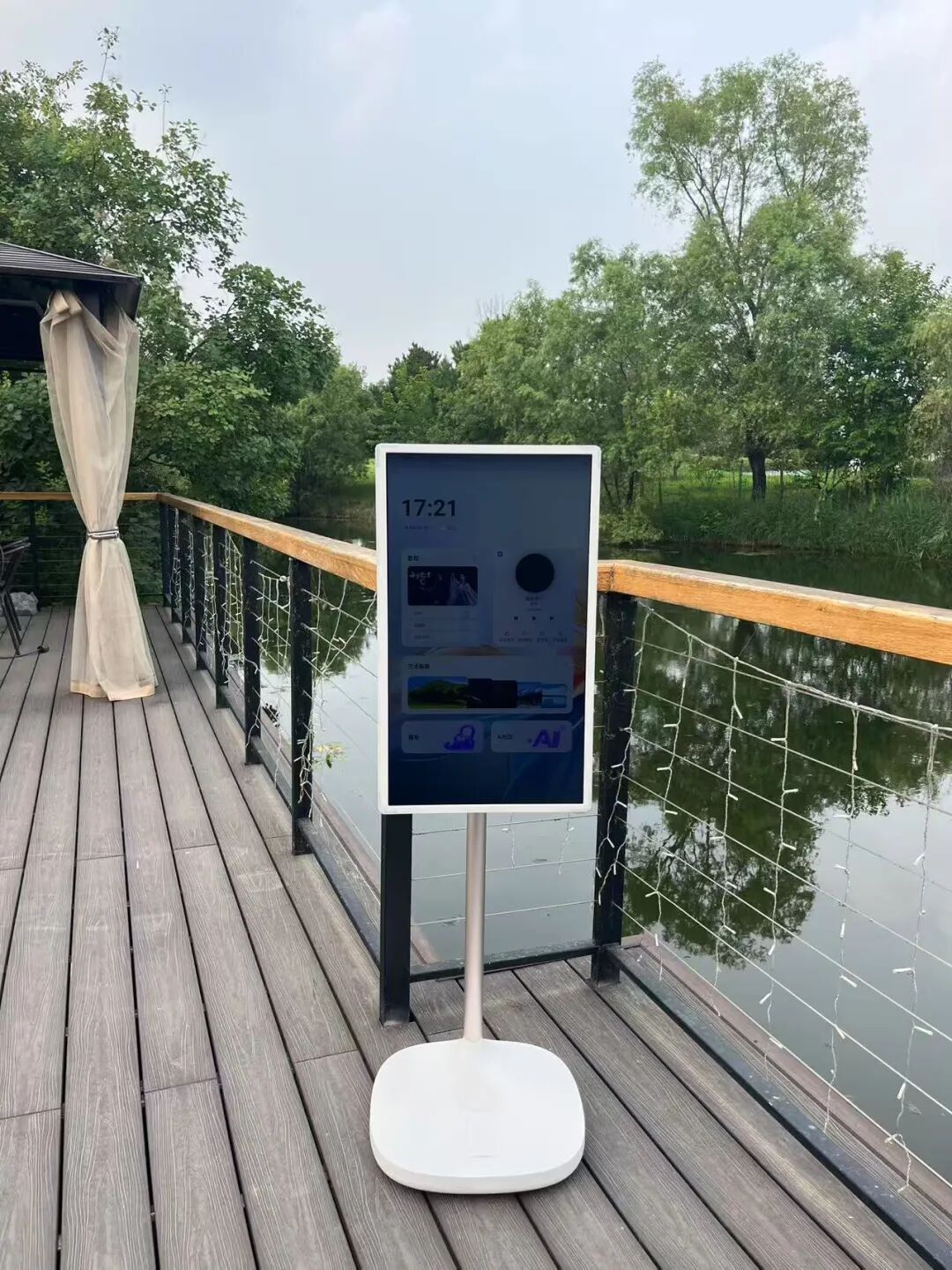
At first glance, the Girlfriend Machine appears to be a “small TV” or “large tablet” with a movable stand, but this simple form change has brought about a remarkable transformation in user experience, addressing pain points that traditional devices could not cover.
Currently, as various smart home devices become increasingly popular, our interactions—whether for work, life, entertainment, or managing other smart home devices—primarily occur through three methods: physical buttons, voice, and screens.
Among these, cumbersome physical interactions are gradually being phased out, voice interaction is not yet mature, and screens remain the core hub.
In the home environment, our previous screens had limitations: mobile phone screens are too small for an immersive experience; tablets are relatively heavy and often require hands-on use when moving; TVs are fixed in position; smart speakers have small screens and are constrained by power cords; smart screens, while movable, are often too large and inconvenient to move around.
In contrast, the Girlfriend Machine provides an immersive experience with a large screen while achieving high flexibility in a typical home environment, allowing for easy movement and freeing up hands.
Whether for video calls with the elderly and children, fitness for young people, watching shows, cooking, or children’s learning and entertainment, the Girlfriend Machine can be more flexible and convenient.
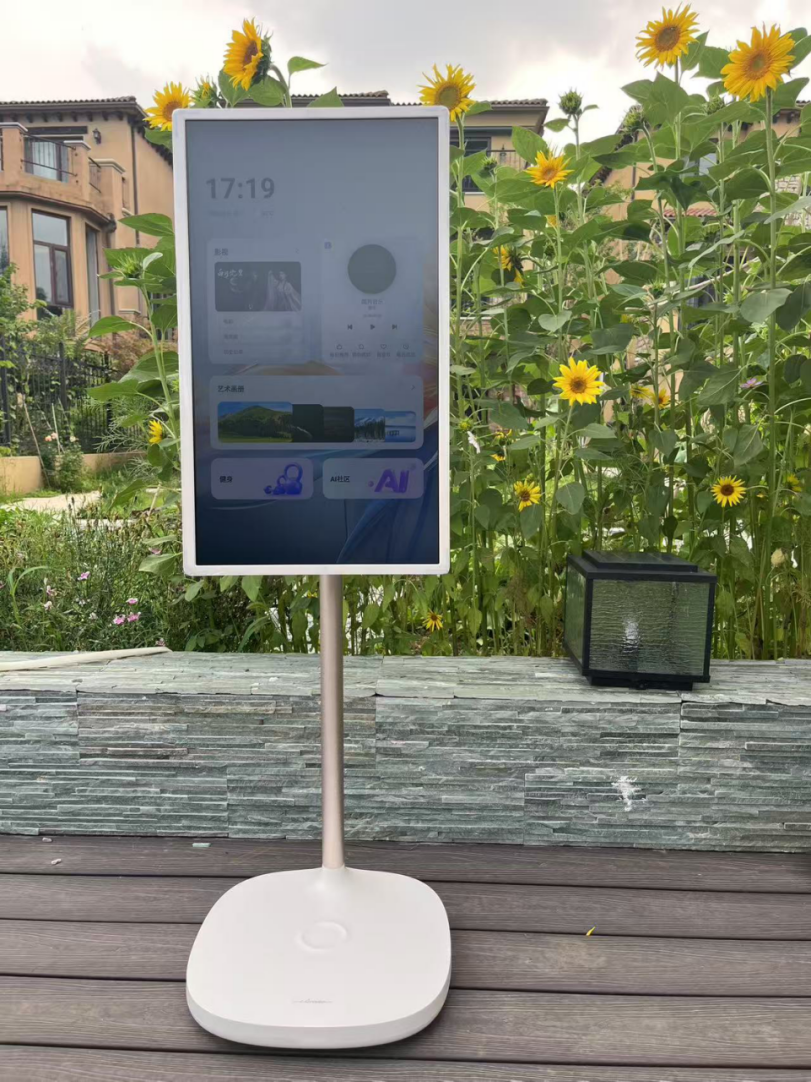
For example, a friend of mine pushes the Girlfriend Machine into the garden to work out on the lawn, while his wife pushes it into the kitchen to cook along with it, and the experience is quite good.
Of course, the Girlfriend Machine also has its shortcomings.
Firstly, due to the large screen and high stand, the base must have sufficient weight, making it relatively heavy. This means that moving it is not as easy as one might imagine, especially if there are vertical obstacles on the ground, which can further limit mobility.
Secondly, as a new category, its cost-performance ratio is still relatively unfriendly. In the Chinese market, the average price of Girlfriend Machines in 2024 exceeds 3700 yuan, although it has decreased by 800 yuan compared to 2023, purchasing an electronic product at this price still requires comprehensive consideration for most families.
However, as the Girlfriend Machine industry matures and competition intensifies, the average price is likely to continue to decrease, and sales volume is expected to increase further.
More importantly, at least for the foreseeable future, its unique advantages of large screen immersion and high flexibility will still be hard to replace.
According to market research firm Luotu Technology, the retail volume of Girlfriend Machines in the Chinese market across all channels is projected to reach 254,000 units in 2024, a year-on-year increase of 37.3%, with e-commerce channels accounting for 86.5% of total sales. In the first quarter of this year, online sales of Girlfriend Machines in the Chinese market reached 49,000 units, a year-on-year increase of 42.4%, maintaining a high growth rate.
In the future, we hope the Girlfriend Machine can break through the “trial” user group and achieve a larger market scale breakthrough.
[2]
The other interesting product is the 3D light-sensing monitoring system.
For many years, we have been very conflicted about home surveillance cameras.
On one hand, whether for elderly care, child monitoring, pet supervision, or theft prevention, we need home surveillance.
On the other hand, we are extremely concerned that this may lead to privacy breaches. (See related articles: “Your home camera is being ‘peeped’ at, turning your living room and bedroom into a ‘live broadcast scene'”)
This dilemma has largely limited the popularization of related application scenarios.
But now, we can finally have both.
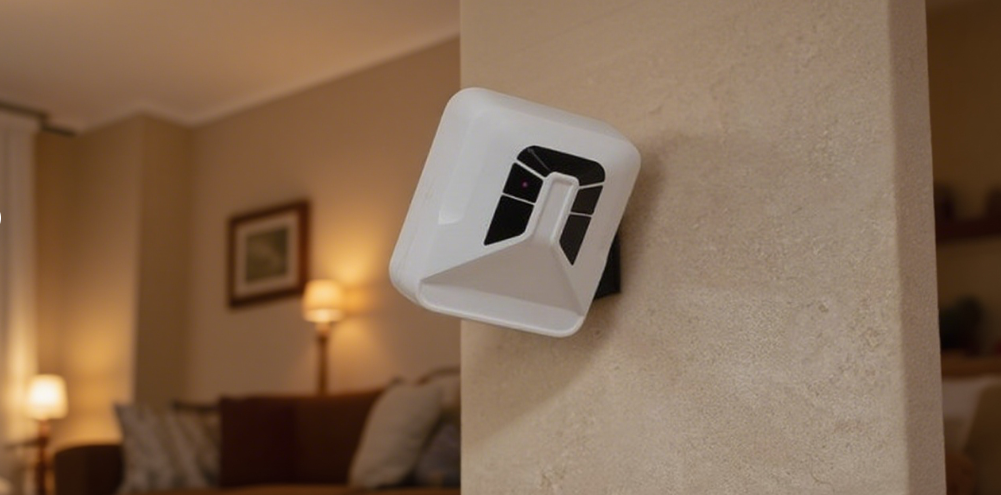
The principle of the 3D light-sensing camera is to replace traditional video cameras with laser radar sensors, which scan human skeletal movements to generate high-precision, non-image-based point cloud models, and then use AI algorithms to determine behaviors such as monitoring and alerting.
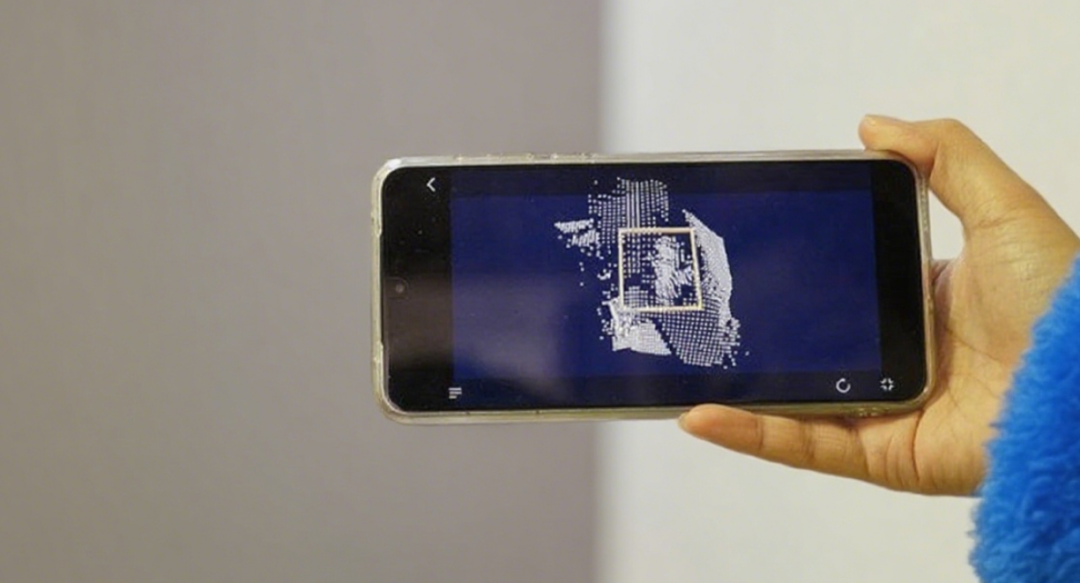
Its core advantages are:
1. The 3D light-sensing system only generates skeletal dynamic point clouds, ensuring that in private scenarios such as bathing or using the toilet, there is “zero image retention”, fundamentally eliminating the possibility of privacy breaches from a technical standpoint.
2. Laser radar can operate normally in environments with water mist, darkness, etc., making application scenarios more stable and reliable.
Currently, this technology and product have just begun to be applied, with high prices and limited applications.
However, it is foreseeable that it will rapidly become popular in the coming years.
In January 2025, the Ministry of Industry and Information Technology has already listed “3D light-sensing smart health care” as a core scenario for 10G optical networks, using 3D light-sensing cameras for elderly care. For example, once a solitary elderly person is identified as having fallen or slipped, a rescue alert will be triggered promptly to ensure timely medical assistance.
Recently, during a digital rural application investigation with China Unicom, this application has already been piloted in Chongqing, and it may further be included in digital rural or digital home service packages in the future.