On September 9, according to foreign media Wccftech, NVIDIA’s Executive Vice President and Chief Financial Officer Colette Kress recently discussed the competitive landscape posed by Broadcom’s ASIC chips at the Goldman Sachs Communacopia + Technology Conference, stating that NVIDIA’s GPUs offer a better cost-performance ratio. She also provided insights into the sales outlook for the H20 in China, predicting that sales will reach $5 billion in the third quarter, and disclosed progress on the next-generation Vera Rubin AI GPU.
NVIDIA GPUs Offer Better Cost-Performance Ratio Than ASICs
Currently, there are two technological routes in the cloud AI chip market: NVIDIA’s AI GPU route and the custom ASIC route. Many major cloud service providers are accelerating their investment in ASIC chips to reduce reliance on NVIDIA and lower the high costs of GPU procurement. For instance, Google, Amazon, and Microsoft have all launched their own AI ASIC chips. This has also driven growth for Broadcom, which provides custom AI ASIC services.
Broadcom reported outstanding financial results last week, with AI-related revenue in the third quarter soaring 63% year-on-year to $5.2 billion. It is expected that AI revenue will further rise to $6.2 billion in the fourth quarter, potentially marking the 11th consecutive quarter of growth. Broadcom also revealed that it has secured a custom AI chip (XPU) order worth up to $10 billion from a fourth major client (speculated to be OpenAI).
These positive developments have led to a surge in Broadcom’s stock price, while NVIDIA’s stock has come under pressure. This is because the market believes that custom AI ASIC chips are starting to gain traction against NVIDIA’s AI GPUs. There are concerns that NVIDIA’s dominance in the AI chip market may be challenged, especially as the development of Google TPU matures and AI giant OpenAI begins to engage in ASIC self-research projects. Notably, there are rumors that Apple and Elon Musk’s xAI will also join the ASIC camp.
As the dominant player in the AI chip market, NVIDIA CEO Jensen Huang has expressed skepticism about whether ASICs can secure a foothold in the AI chip market. In an interview following his keynote speech at the GTC conference on March 18, he stated, “First of all, I don’t know how they would know how much market share ASICs will capture. They don’t know what chip they are building. The chip is designed by others, and Broadcom is merely an ASIC design service provider.” In contrast, NVIDIA knows what it is building and understands the potential involved, as it has extensive experience in designing chips required for AI training.
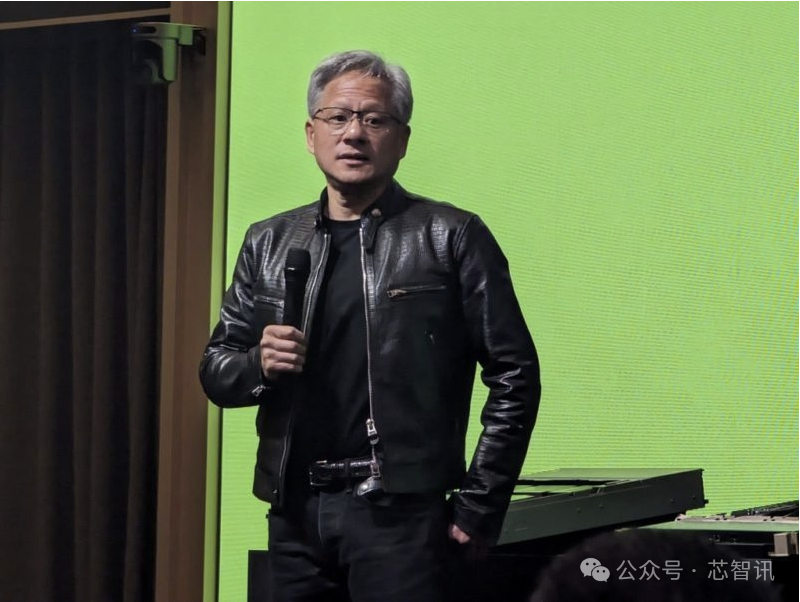
Huang also hinted that Broadcom’s future products may struggle to compete with NVIDIA. He said, “Many ASICs have been canceled. ASIC providers must find a way to outperform the best products on the market, but how can they know if their product is the strongest and can achieve widespread deployment?” Regarding whether Google, Amazon, Microsoft, and Google’s developed ASIC chips pose a threat to NVIDIA, Huang responded, “Designing a chip does not mean it will be deployed.”
However, OpenAI’s involvement and the continuous surge in Broadcom’s ASIC revenue seem to have “refuted” Huang’s predictions. Recently, Google also appears to be pushing its self-developed TPU into the public market to compete with NVIDIA.
In this regard, Colette Kress emphasized at the conference that NVIDIA’s strategy is not to pursue a low-cost route for a single ASIC, but to focus on “performance per watt” and “performance per dollar,” showcasing the advantages of rack-scale data center solutions through the rapid expansion of GB200 and GB300 cabinets.

Kress pointed out that AI systems often need to run for 4 to 6 years, and the long-term power costs far exceed hardware costs, making a high-performance and energy-efficient architecture the best choice.
NVIDIA’s GB200 can bring a profit margin of 77.6% for AI factories, while AMD’s MI355X has a profit margin of -64%!
According to her, individuals generating more tokens and inference demand for inference models account for a significant portion of the demand for inference models. Inference models are crucial because if they execute successfully, they can operate through forms like agent AI. Therefore, NVIDIA focuses on large-scale creation of large AI system solutions.
“We are considering creating a large-scale data center position that can achieve the highest performance, but also the highest performance per watt and per dollar. … When you purchase any type of large system like we do, you must remember that you will continuously use power supply throughout the entire process of owning a complete cluster for 4 years, 6 years, or even longer. Therefore, having high performance is crucial to ensure the correct power needed for this. Thus, we are very determined in how we consider this transition and the shift towards full data center scale solutions. Some of them focus on it because it is a rack-scale type of function. We put all different chips together so that they can work together and optimize for the right performance. So we feel very good about our plans.”
Third Quarter H20 Revenue May Reach $5 Billion
Regarding the H20 chip specifically supplied for mainland China, Colette Kress stated that geopolitical issues between the US and China have hindered NVIDIA’s ability to generate revenue from H20 chip sales in China. This has resulted in NVIDIA’s H20 revenue from the Chinese market being nearly zero in the second quarter. However, NVIDIA’s data center business still maintained a year-on-year growth of 56% and a quarter-on-quarter growth of 5% in the second quarter.
According to Colette Kress, NVIDIA has obtained an H20 license from the Trump administration in the US. Kress confirmed that NVIDIA has “obtained permission from several major clients in China.” She added that NVIDIA hopes to have the opportunity to complete shipments and deliver H20 to Chinese customers.
However, she added, “There are still some geopolitical situations affecting us that we need to resolve between the two governments.” According to Kress, NVIDIA’s Chinese clients want to ensure that “the government is also well-received regarding their receiving H20.”
Multiple reports indicate that local companies, influenced by the official stance, are increasingly using domestic AI chips instead of NVIDIA’s products.
Nevertheless, Colette Kress still asserts that the company believes “this situation (shipping H20 to China) is very likely to occur.” According to her, while it is difficult to determine how much additional revenue this batch of goods should generate, it could be between $2 billion and $5 billion.
This aligns with her statements in the second quarter earnings report, indicating that if tensions between the US and China ease, NVIDIA’s third quarter H20 chip shipment revenue could reach $2 billion to $5 billion.
NVIDIA’s guidance for third quarter revenue is $54 billion (±2%), which, based on the median, represents a quarter-on-quarter growth of 15.6%, but does not include revenue from H20 sales to the Chinese market.
Kress stated, “Our current outlook for the third quarter is a quarter-on-quarter growth of 17%.” This indicates NVIDIA’s optimism regarding the surge in market demand for its products and the anticipated revenue from H20 sales in the third quarter from the Chinese market.
GB300 Sales Expected to Surge 300% Quarter-on-Quarter
In the second quarter of this year, revenue from the Blackwell platform has reached nearly 70% of NVIDIA’s data center computing revenue (Compute, including GPU chip revenue of $33.8 billion). The production of the new Blackwell Ultra is also rapidly increasing.
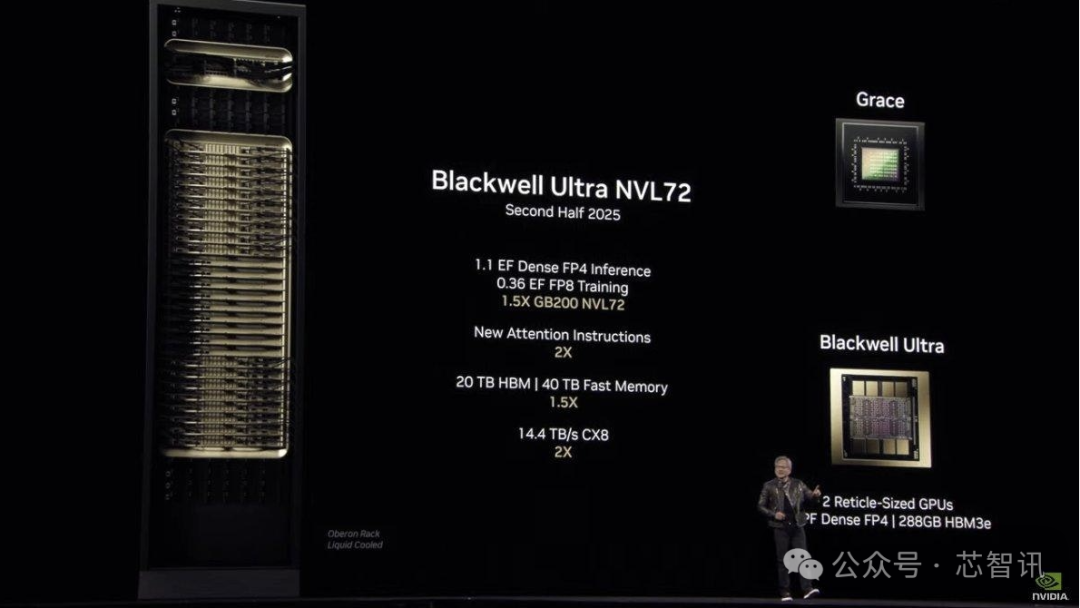
Kress also stated, “NVIDIA has achieved scalability through GB300 Ultra.” This scaling has surprised some people. She added that the scaling is “seamless; it is a seamless transition, and many do not understand the scale and quantity we can actually bring to market.”
Therefore, Kress expects NVIDIA to further expand the scale of GB200 and GB300 racks in the third quarter. Her comments align with a recent research report indicating that NVIDIA may achieve a 300% quarter-on-quarter growth for GB300 in the third quarter.
Vera Rubin GPU Has Completed Taping Out of Six Chips
Regarding new products, Colette Kress revealed that the Vera Rubin GPU has completed the taping out of six chips. Although the Vera Rubin GPU has not yet officially launched, large clients are already lining up.
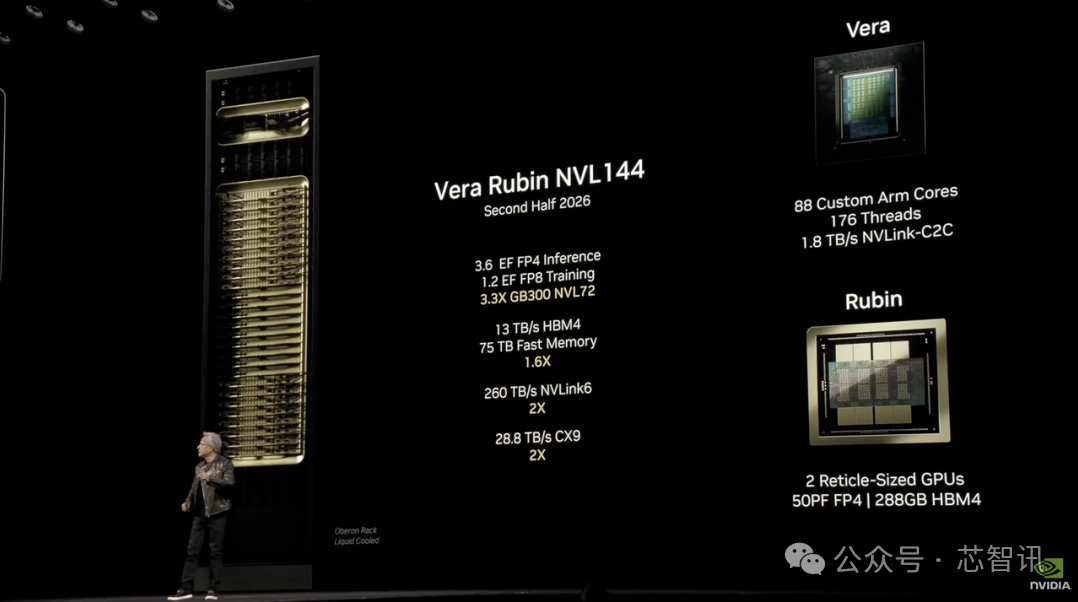
Remarkably, just for the deployment of Rubin, data centers have pre-planned several GW-level power supplies—equivalent to the output of several large nuclear power plants. This indicates that the Rubin series is expected to become the core of the next round of large AI system deployments.
Kress added that as part of NVIDIA’s efforts to integrate Rubin for data centers, NVIDIA “has already discussed the potential demand for Vera Rubin in the thousands of megawatts,” and that “this has been outlined even before it is ready for market, and as we move forward, we have already seen demand for Vera Rubin at the gigawatt scale.”
Editor: Chip Intelligence – Wandering Sword
Previous Exciting ArticlesDell China Layoffs, Compensation N+3!Hu Yuhua Appointed Senior Vice President of Sales and Marketing for NXP Greater ChinaAMD: No Advantage of Arm Architecture Compared to x86!Rumors of Yang Shining Joining Rongxin, Ningbo 12-inch Wafer Factory SuspendedThousands of Chip Team Transferred to Singapore Subsidiary? ByteDance RespondsNew Kailai Has Orders Exceeding 10 Billion, Valuation Near 100 Billion?Global Semiconductor R&D Investment Top 20: Intel First, TSMC Seventh!H100/H200 Supply Tight? NVIDIA: Supply Sufficient, Unrelated to H20!Six Chinese Companies Capture 68.8% of Global Power Battery Market!237.31 MTr/mm²! Rapidus’s 2nm Transistor Density Higher Than TSMC?Domestic GPU New Star Lishuan Secures 500 Million Financing: Revenue Zero, Pre-Investment Valuation 3.5 Billion!Huahong Plans to Acquire 97.4988% of Huali Micro!Breaking! The US Revokes Exemptions for Samsung and SK Hynix’s Wafer Plants in China!Huang Renxun: Blackwell GPU May Enter the Chinese Market!SMIC Plans to Fully Control SMIC North!Chip Origin Acquires Chip Coming, Together Towards a Bright Future for RISC-V
For industry communication and cooperation, please add WeChat: icsmart01Chip Intelligence Official Communication Group: 221807116