Most MCU pins cannot measure negative voltage. Therefore, to achieve the collection of both positive and negative voltages, the circuit shown in Figure 1 can be used. This circuit converts negative voltage to positive voltage, and the specific principle is as follows.
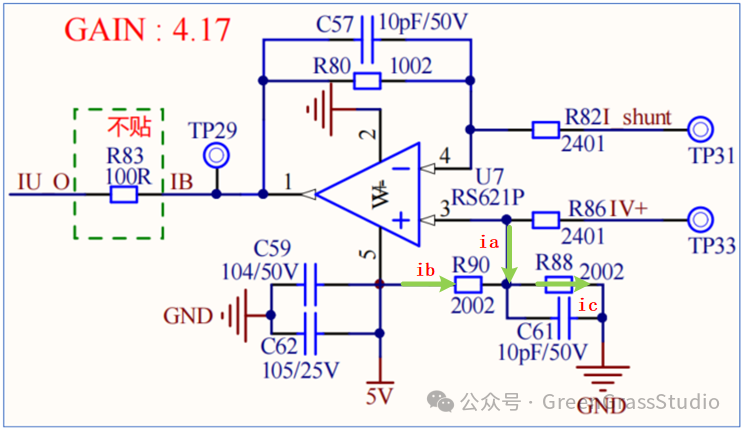
Figure 1
According to the virtual short concept, we can set the voltages at the terminals 4 and 3 of the operational amplifier to V34. Then, applying KCL at the right end of resistor R90, we can obtain:
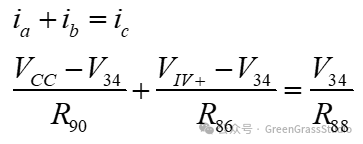 (1)
(1)
In the IU_O branch, we can deduce through the virtual break:
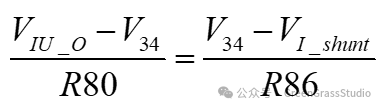 (2)
(2)
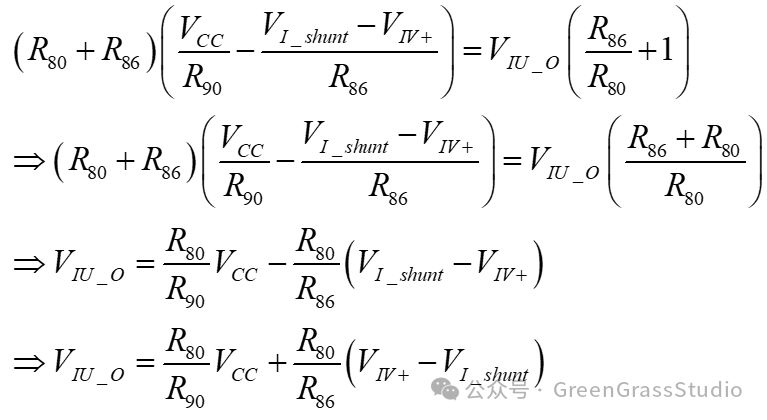
Combining equations (1) and (2), we can derive:
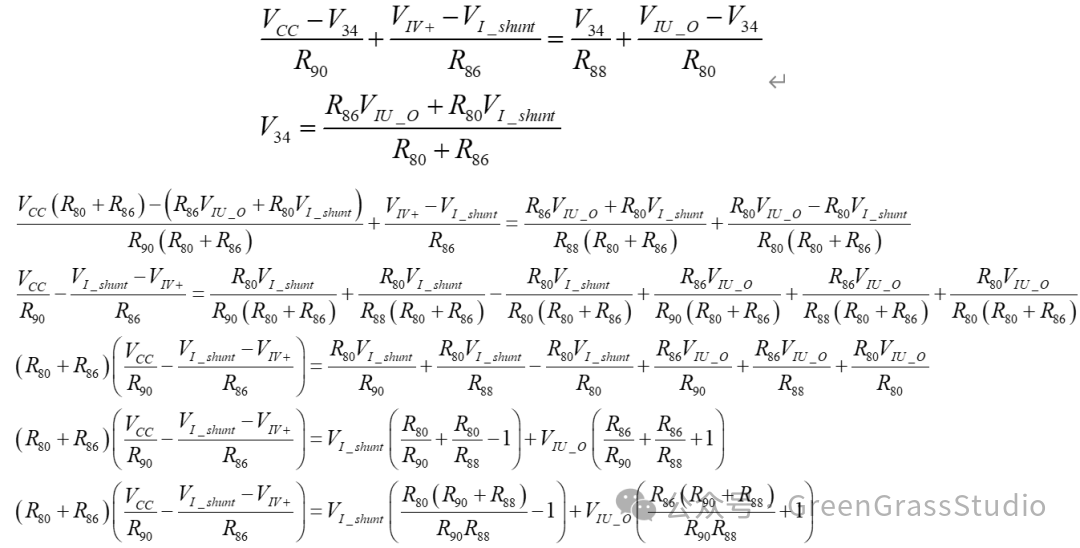
It can be seen that to achieve differential amplification, the above equation must satisfy:
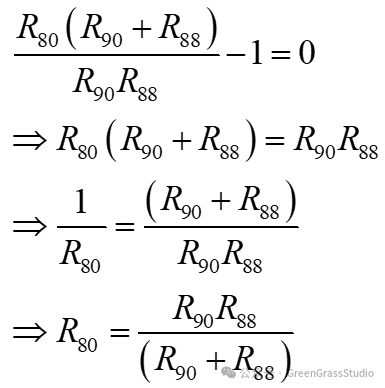
That is, the resistance value of R90 and R88 in parallel must be equal to R80.
In summary, we can conclude: