
As an important tool for food safety testing, veterinary drug residue detectors play a crucial role in ensuring the safety of animal-derived foods (such as meat, poultry, and aquatic products). With a wide range of veterinary drug residue detectors available in the market, how do you choose the right product for you? This article will analyze the key parameters of veterinary drug residue detectors in detail to help you make an informed choice.

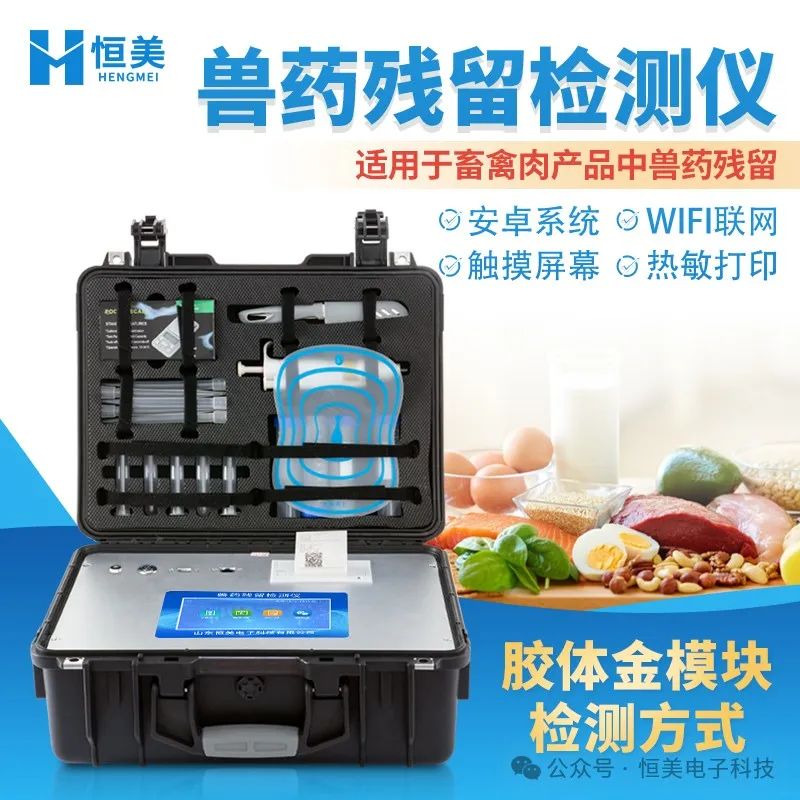
1Clarify Testing Needs
First, you need to choose a veterinary drug residue detector based on your testing needs. The types of veterinary drugs and items that can be detected may vary with different instruments. For example, some instruments can detect residues of antibiotics and clenbuterol, while others can detect residues of organophosphates and carbamate pesticides. Therefore, when choosing, ensure that the selected instrument meets your actual needs.
2Focus on Detection Accuracy
Detection accuracy is an important indicator of the performance of veterinary drug residue detectors. High accuracy means more precise test results, which can better ensure food safety. Therefore, when choosing, you should pay attention to the detection accuracy of the instrument and select one that can provide accurate results.

 3Ease of Use
The convenience of operation is also a factor to consider when selecting veterinary drug residue detectors. The simpler the operation, the more convenient the use, and it can reduce operational difficulty and human error. Modern veterinary drug residue detectors are usually equipped with automatic sampling systems, data processing systems, etc., which greatly improve testing efficiency. Therefore, when choosing, you can pay attention to the instrument’s operation interface, operating procedures, and whether it is equipped with automation features.
4Parameter Analysis
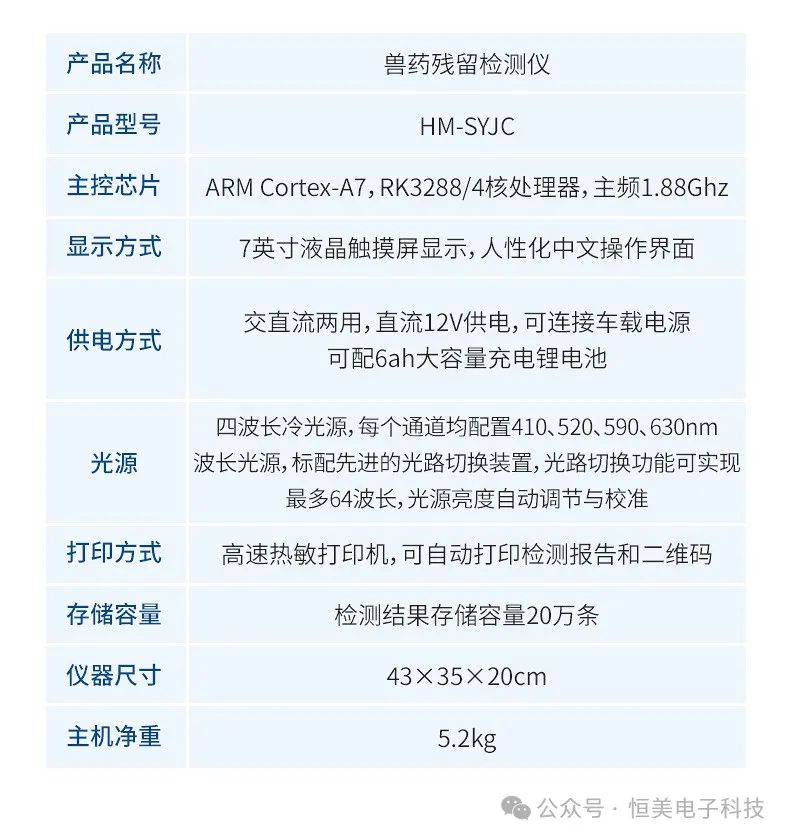
1. The main control chip uses ARM Cortex-A7, RK3288/4-core processor, with a main frequency of 1.88GHz, resulting in faster operation and stronger stability.
2. Display method: 7-inch LCD touchscreen display, user-friendly Chinese operating interface, intuitive and simple readings.
3. AC/DC dual-use, powered by 12V DC, can connect to vehicle power supply, can be equipped with a 6Ah large-capacity rechargeable lithium battery, convenient for outdoor mobile testing.
4. Four-wavelength cold light source, each channel is equipped with light sources of 410, 520, 590, and 630nm wavelengths, standard with advanced optical path switching device, patented optical path switching function can achieve up to 64 wavelengths, and all detection items can be tested simultaneously across all channels.
5. Automatic brightness adjustment and calibration of the light source.
6. Intelligent constant current voltage regulation, automatic calibration of light intensity, no temperature drift phenomenon of the light source during long-term continuous operation.
7. Built-in new national limited standards, compare with the measured results on-site, and continuously update standards.
5Price and BudgetThe prices of veterinary drug residue detectors may vary among different models and brands. Therefore, when choosing, you need to select a suitable instrument based on your budget. At the same time, you should also pay attention to cost-effectiveness and choose tools with stable performance and reasonable prices.


In summary, choosing a veterinary drug residue detector that suits your needs includes testing requirements, detection accuracy, ease of operation, core parameters, price, and budget. I hope this article can provide useful references for your selection, helping you choose a veterinary drug residue detector with excellent performance and ease of operation to protect food safety.