Open source is not only changing the way we interact with the world, but it is also changing the way the world interacts with us. A prime example of this is: open source robotics.
Robots are playing an increasingly important role in our world, and although we have not yet realized a utopian future with robot butlers like those in the TV show Jetsons, robotics has made significant progress in many fields that were unimaginable fifty years ago.
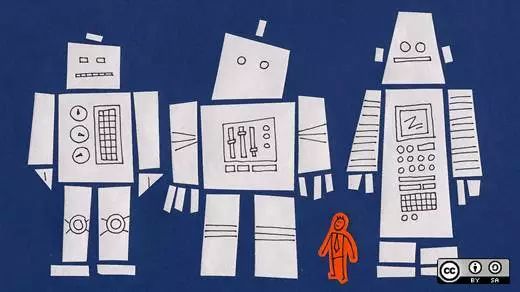
The biggest beneficiaries of the robotics revival are undoubtedly the manufacturing industries, but we are also seeing robots entering mainstream lifestyles. Many of us own robots to vacuum, clean gutters, mow lawns, and more.
Today, with advancements in autonomous vehicles, drones, and other transportation technologies, the boundaries between robots and vehicles are becoming increasingly blurred.
To be honest, many of us are interested in robotics simply because it is fun! The good news is, you don’t need to be an electronic engineer to enjoy robotics as a personal hobby. Fortunately, there are many open source projects available. Even the most inexperienced beginners can get started with their help.
Open Source Hardware Projects
Robots are physical entities, so both the code and hardware used require licensing. Fortunately, there are several open source hardware platforms available for learning how to build robots. Below are a few you might want to know about:
-
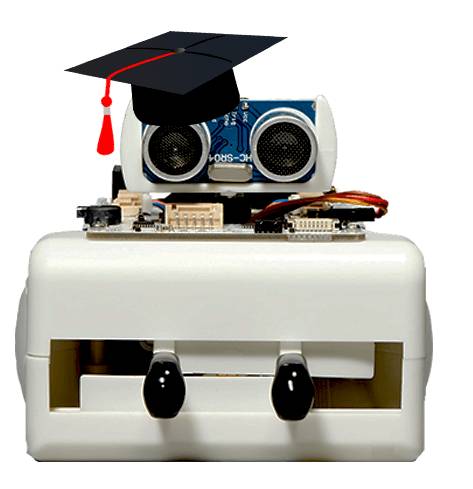
Sparki is a fully open-source robotics platform in every sense. Its circuit diagrams, 3D modeling files, and underlying source code are all open source. Sparki is designed to help learners from elementary school students to adults build affordable beginner robots. It offers distance sensors, accelerometers, infrared communication, compasses, light sensors, line followers, and more. The Sparki robot moves on wheels, but it also has a walking relative called Hexy, the hexapod, which is also an open-source platform project.
-
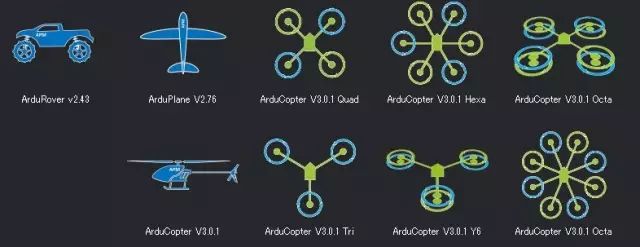
Robots not only walk, sometimes they also fly. Several open source drones utilize projects like OpenPilot or Ardupilot systems. For example, the ArduPilot Copter drone can be assembled into helicopters, quadcopters, or other configurations; it can be DIYed or purchased as component kits from several manufacturers.
-
TurtleBot is another robotics platform that provides component kits from several manufacturers and fully open-source documentation. This can help you build your own robot using a laptop, Kinect motion sensor, and Kobuki mobile platform, or build a robot on the iRobot Create development platform.
Open Source Software Projects
Robots are not just a set of metal frames. They require some intelligence to follow direct commands or make some preliminary decisions on their own to serve their owners. Here are a few interesting open source projects in the realm of robotics software.
-
For beginners, LeJOS might be a good robotics software project. It is essentially an alternative firmware for LEGO Mindstorms robots. You can rely on it to program LEGO robots using the Java programming language.
-
Rock, which stands for Robot Construction Kit, is a software framework based on the Orocos RTT (Real-Time Toolkit). It is designed to be extensible and includes drivers for some existing applications.
-
ROS, which stands for Robot Operating System, is a framework for writing software for robots. It includes various tools and libraries to simplify the programming process. It is designed for collaborative development, featuring modular components and a global community. In China, there is already a ROS Chinese community.
Before you start assembling hardware casually, you need to set a plan. In the real world, a robot’s operation is limited by gravity, terrain, weather, and other factors. Designing a robot on paper that looks good does not mean it is feasible in reality. So, why not perform functional simulations of your robot first?
Robot Simulators
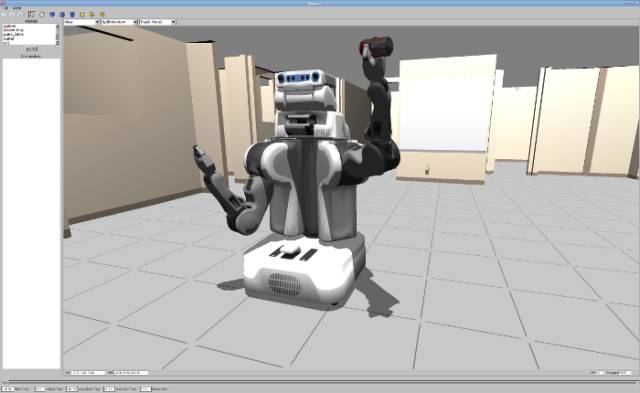
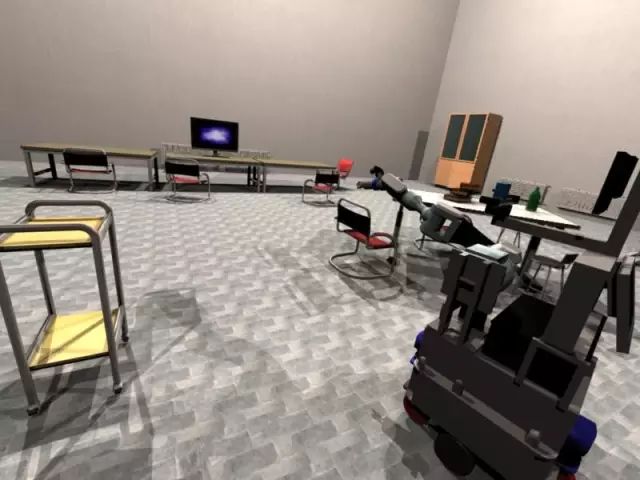
Gazebo is a well-known complete simulation solution adopted by the non-profit open-source organization under the Apache license, featuring advanced 3D graphics, virtual sensor capabilities, and a comprehensive command-line toolset. Additionally, Gazebo can run simulations in the cloud, supports various plugins, and several commonly used robot platforms for model building.
Morse (Modular OpenRobots Simulation Engine) is a BSD-licensed open-source project that is a general-purpose multi-robot simulation platform. Its main feature is the ability to control the degrees of freedom of actual simulations and freely design component models according to one’s needs. It provides a large number of configurable sensor and actuator modules, high scalability, and simulates interactions between humans and robots. Morse uses Python programming and can also use the Blender game engine for rendering. Morse focuses on academic robot simulation, and currently, five schools and research institutions are using it.
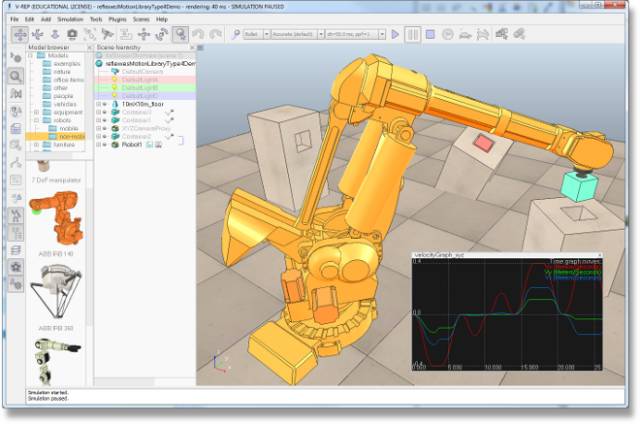
V-REP is a virtual robot experiment platform licensed under the GPL, which can run on Windows, Mac, and Linux systems. V-REP supports various programming methods (embedded scripts, plugins, add-ons, ROS nodes, remote client APIs, or custom solutions) and languages (C/C++, Python, Java, Lua, Matlab, Octave, and Urbi), capable of simulating advanced physical scenarios as well as data obtained from close-range sensors and visual sensors.
This article is selected from opensource.com
Author: Jason Baker
Compiled by: Machine Heart
Statement: Some content comes from the internet, for the purpose of learning and communication only. The copyright of the article belongs to the original author. If there are any issues, please contact for deletion.

Recently, Everyone Is Watching
1. The latest Fortune Global 500 list released: Huawei drops out of the top 100, with half of the top 8 in the internet sector from China.
2. Chinese technology leads the world by more than 10 years! It relies on this “chip”!
3. What are COC/COP? Huawei, Jinfa Technology… have entered the game! What is the magic behind it?
4. How to integrate machine vision systems? Look here!
5. Nuclear radiation detectors are selling out! Are they really useful? Experts remind→
6. Stock price skyrockets by 229%! This tech giant CEO has a net worth of over 300 billion yuan! Ranking on the rich list→
7. Observing the domestic process of chemical new materials from the C919’s commercial maiden flight
8. Machine vision systems achieve automation inspection of cream filling production lines
9. The new generation of “artificial sun”! Significant progress!
10. CICC releases five new standards for urban brains and successfully holds a frontier innovation seminar for urban brains