Cybersecurity is for the people, and cybersecurity relies on the people
—— Protecting high-quality development with high-level security


In recent years, with the rapid development of open automation technology, communication technology, and security technology, the traditional control field is undergoing an unprecedented transformation. Industrial control systems are transitioning from closed to open, IT and OT systems are accelerating their integration, security technologies are continuously upgrading, and new technologies, models, and business formats are emerging. However, the cybersecurity threats to industrial control systems are frequent, with industrial enterprises facing ransomware and cyberattacks, making the cybersecurity situation severe. Strengthening security guarantees is imperative and urgent.
Cybersecurity risks in industrial control systems are increasing
With the rapid development of “5G + Industrial Internet” and open automation technology, new models and business formats are continuously emerging. The independence of industrial communication networks is being broken, and the demand for interconnectivity, data sharing, and business collaboration across layers and fields is increasing, leading to a surge in risk exposure. Various threats, such as ransomware and supply chain attacks, are directly targeting industrial production sites, and traditional security measures are facing the risk of failure, with incidents of attacks on industrial control networks and data ransom increasing.
Industrial control security faces new situations, changes, problems, and challenges
As the integration of information technology and industrialization deepens, industrial control systems are moving from standalone to interconnected, from closed to open, and from automation to intelligence. While productivity has significantly increased, the methods of cyberattacks on industrial control systems are constantly evolving, presenting new characteristics and challenges in industrial control security.
First, attack behaviors are becoming increasingly professional.Attack behaviors have shifted from individual or single hacker group attacks to organized and hierarchical black industry activities. Due to the low threshold for attacks and the easy availability of attack tools, criminals can trade through the dark web and easily obtain and widely disseminate various types of malware, launching high-intensity cyberattacks.
Second, the attack process is becoming continuous.Cyberattacks on industrial control systems exhibit significant political, military, and economic intentions. Attacks on critical infrastructure are organized and premeditated, with a high degree of probability regarding the timing, industry, and methods used. The process generally begins with information gathering, including commercial secrets, military intelligence, economic intelligence, and technological intelligence, to serve subsequent attacks. Attacks may last for days, weeks, months, or even longer.
Third, ransomware has become the mainstream attack method.In addition to traditional program viruses, various new types of malicious code are emerging, such as logic bombs, Trojans, and worms, which often have stronger propagation and destructive capabilities. Ransomware is becoming the most dangerous and threatening security risk for industrial control systems.
Fourth, compared to the situation of cyberattacks, the level of protection for industrial control security is clearly insufficient.The characteristics of the industrial control security industry are evident, with higher requirements for reliability and real-time performance, and the preventive measures are more complex. It is necessary not only to ensure that the production process operates according to the design requirements under predetermined conditions but also to avoid safety accidents, which places extremely high demands on industrial control security solutions. During implementation, there are often awkward situations where certain aspects cannot be touched or interfered with. Meanwhile, some industrial enterprises have weak security awareness, and the information security management systems and protective measures for industrial control systems are inadequate.
Recommendations for advancing cybersecurity in China’s industrial control systems
First, strengthen top-level design and improve the industrial control security system and mechanism.From multiple dimensions and levels, strengthen the coordination of management and technical means in network security, data security, cryptographic security, and production safety. Establish industrial control network security management and technical teams, enhance cybersecurity awareness and education, improve the understanding and awareness of cybersecurity risks among small and medium-sized enterprises and grassroots employees, and promote industrial enterprises to fulfill their cybersecurity protection obligations and implement the main responsibility for industrial control security.
Second, strengthen technical research and improve intrinsic security levels.In line with the characteristics of China’s manufacturing industry, organize research and breakthroughs in network attack and defense technologies, strengthen technical analysis and attack reproduction of typical industrial control security incidents, identify important industrial control systems in manufacturing, and promote “evaluation-driven reform and attack-driven defense” to block security vulnerabilities from the source.
Third, strengthen emergency response and enhance the protective capabilities and resilience of industrial control security.In accordance with the key points of policies and standards such as the “Guidelines for the Protection of Industrial Control Systems,” actively conduct cybersecurity risk assessments for manufacturing enterprises in China. From the perspectives of “prevention before events,” “monitoring and containment during events,” and “retrospective repair after events,” develop standardized emergency response mechanisms for industrial control attacks, regularly organize attack and defense drills, and ensure that important industrial control systems have good resilience and recovery capabilities in the event of major cyberattacks.
END
Image source | National Cybersecurity Awareness Week
Text source | Industrial Control System Information Security Special Issue (Volume 11)
This article contributed by | Intelligent Manufacturing Promotion Department
Editor | Yang KaiReview | Wang YangApproval | Wang YuboRelease | Yang KaiPast Issues ReviewPast Issues Review
2025 Integrated Circuit (Wuxi) Innovation Development Conference Opens
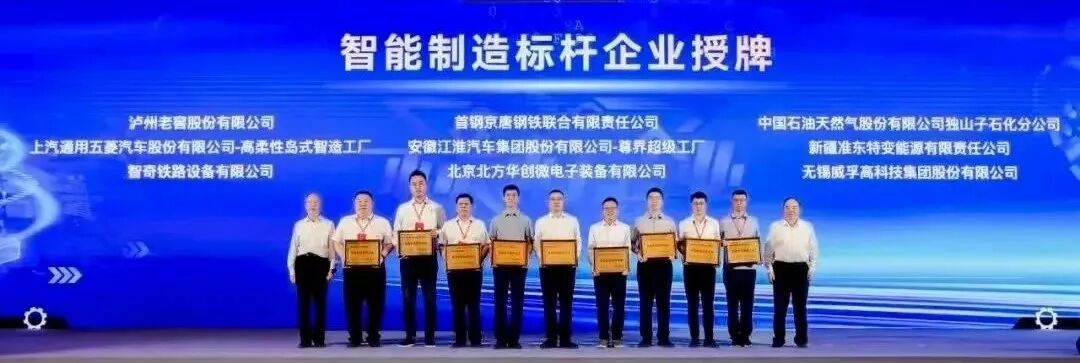
Our city’s number of benchmark intelligent manufacturing enterprises ranks second among cities nationwide

2025 Annual Provincial Specialized and New Small and Medium Enterprises Application Starts

Disclaimer: If there are any potential infringement issues with the text, fonts, or images in this public account, please contact us in a timely manner, and we will promptly remove or take other appropriate actions. This statement is made for your understanding and consideration.