EEPROM is an Electrically Erasable Programmable Read-Only Memory with non-volatile characteristics, widely used for storing device parameters. Its core is based on a floating-gate transistor structure, allowing for byte-level erasure and writing (with a lifespan of 100,000 to 1,000,000 cycles). Compared to EPROM, it does not require ultraviolet light for erasure, making it more convenient to use.
Structure of EEPROM Storage Cells
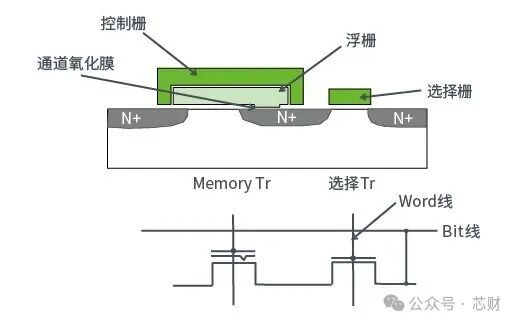
The EEPROM storage cell consists of two transistor units.
Data Writing Method
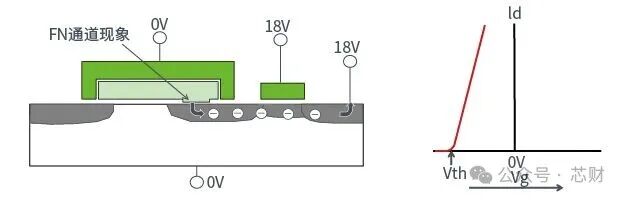
Writing process: A high voltage (e.g., 18V) is applied to the control gate, causing electrons to tunnel through the oxide layer and inject into the floating gate, thereby changing the threshold voltage of the transistor to store data.
Data Erasure Method
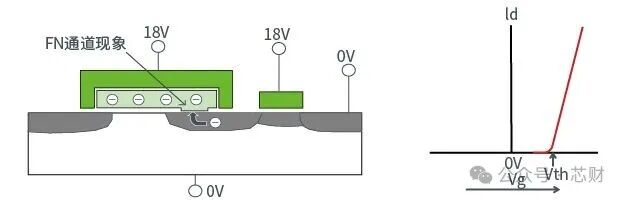
Erasure process: Electrons are released from the floating gate through a reverse electric field, eliminating the need for ultraviolet light, providing high flexibility.
EEPROM cells are larger, but the peripheral circuitry is simple, offering a cost advantage in small capacity storage. EEPROM is widely used in fields such as RFID, CCM, and automotive electronics.