
How many times do you touch your phone screen every day? Scrolling through short videos, replying to messages, ordering takeout… These seemingly mundane actions actually rely on a metal that sounds very unfamiliar – Indium.
It is neither gold nor silver, nor is it a well-known rare earth element, yet it is referred to as the “industrial vitamin”. The reason is simple: Without indium, there would be no responsive touch screens.
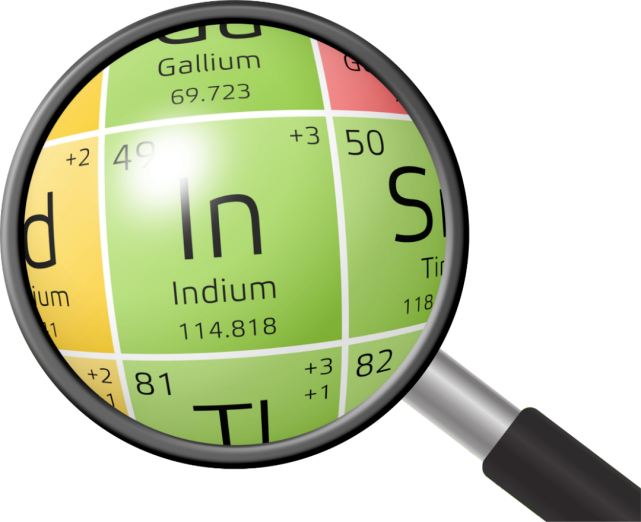
What Makes Indium So Special?
Indium is a silvery-white metal with a slight blue sheen, soft enough to be scratched with a fingernail, yet possesses a magical ability: it is both transparent and conductive.
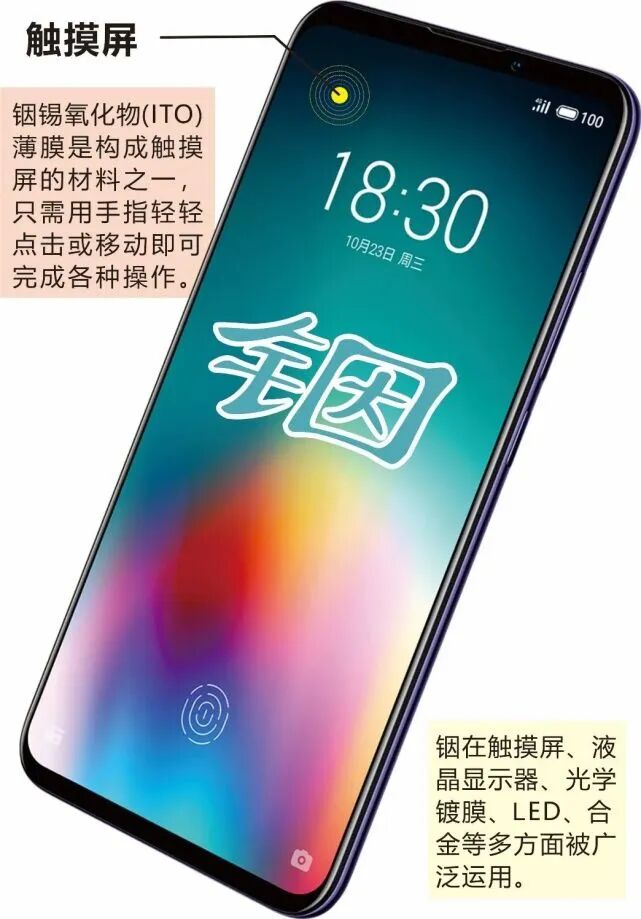
When it combines with tin to form Indium Tin Oxide (ITO) film, it becomes the soul component of touch screens.
This film, which is thousands of times thinner than a human hair, can accurately capture the slightest touch of your finger and instantly transmit the signal to the processor.
In short: Indium encapsulates both the “visible” and the “tangible” within a small glass screen.
Where Does Indium Come From?
The scarcity of indium far exceeds that of rare earth elements, with a crustal abundance of only 0.1 ppm (parts per million). It is often found “mixed” in zinc ores and other metal deposits, making it nearly impossible to mine separately.
Globally, the proven reserves are about 50,000 tons, with over 70% located in China. Thanks to comprehensive utilization technology of associated minerals, China can efficiently extract indium, currently supplying about 85% of refined indium globally, firmly holding the lifeline of the touch screen industry.
Some even describe: China is the “power switch” of the world’s touch screens.
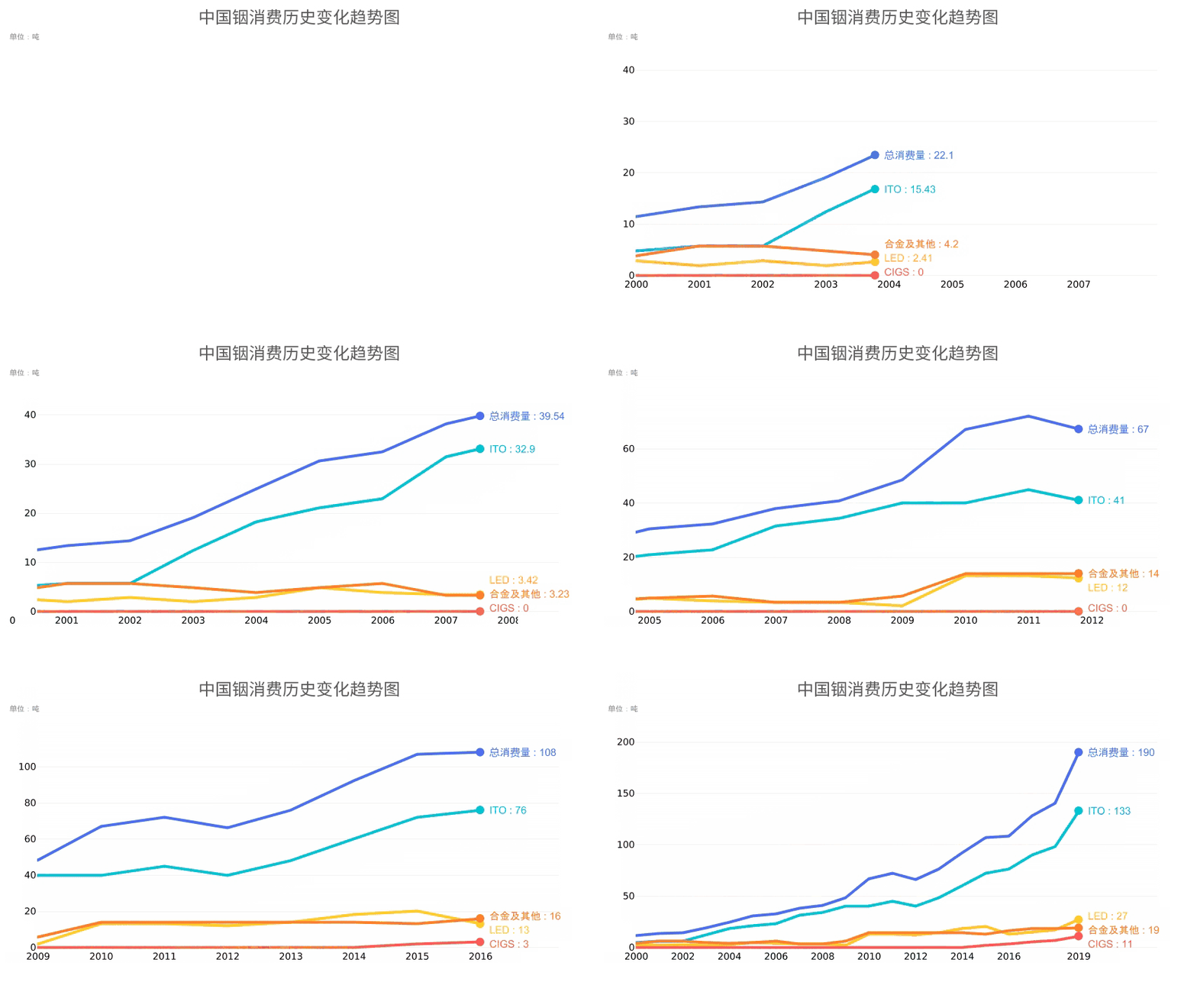
Why is Indium So Important?
-
In mobile phones and tablet screens, it makes the screens “both transparent and sensitive”.
-
In the renewable energy sector, it enhances the efficiency of solar cells.
-
In the semiconductor field, it supports 5G communication and fiber optic networks.
-
In alloys, even adding just 0.5% of indium can significantly improve corrosion resistance.
Indium may only weigh a few milligrams, yet it impacts the entire electronic era.
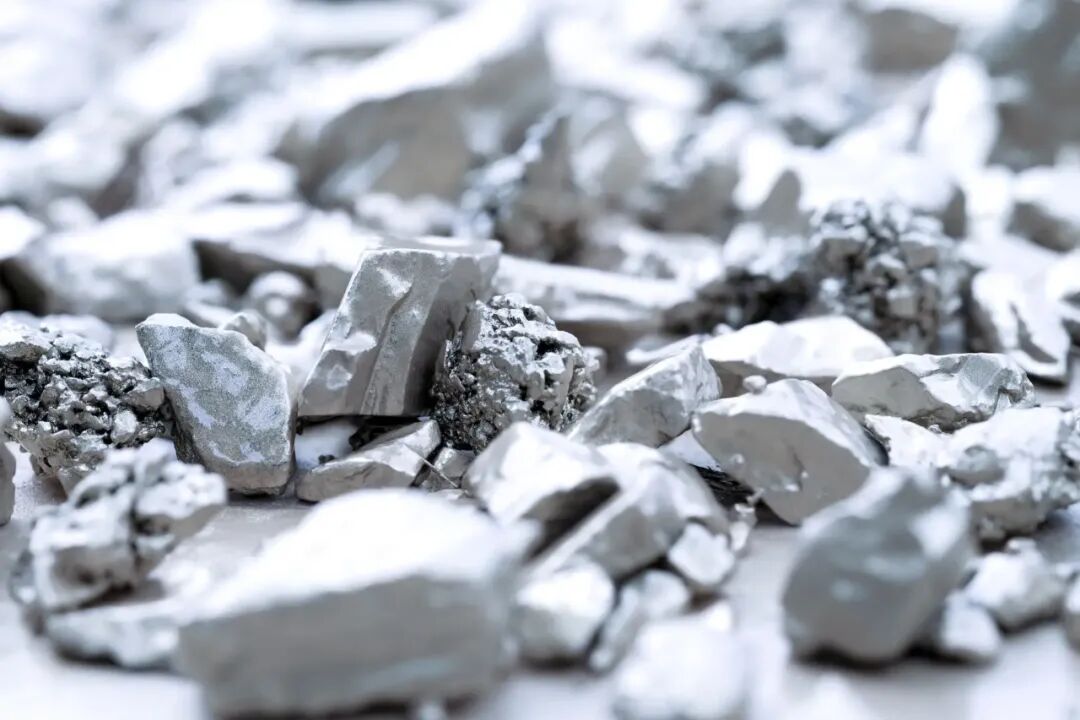
The Sustainable Development of Indium
The scarcity of indium makes it a globally recognized strategic resource. So how should we move towards the sustainable development of indium resources? The author believes there are several key points:
-
Recycling: “Secondary mining of indium” from old mobile phones, televisions, and displays.
-
New Material Substitution: Nano-silver wires, conductive polymers, etc., may partially take over.
-
Deep Processing Routes: Develop indium-based semiconductors and high-efficiency solar cells to avoid low-end consumption.
In the future, indium will play a greater role in broader fields. Moreover, there are many strategic resources like indium that are yet to be discovered and utilized, which requires geological teams to continue exploring the earth to find more mineral resources for the country.

Author | Meng Zhilei
Editor | Han Sen Jia Mingshuai
Reviewer | Ge Xiaodi
Approval | Sun Zhibo
Source | Geological Team Nine If you find this interesting, please click here↓↓↓