Banner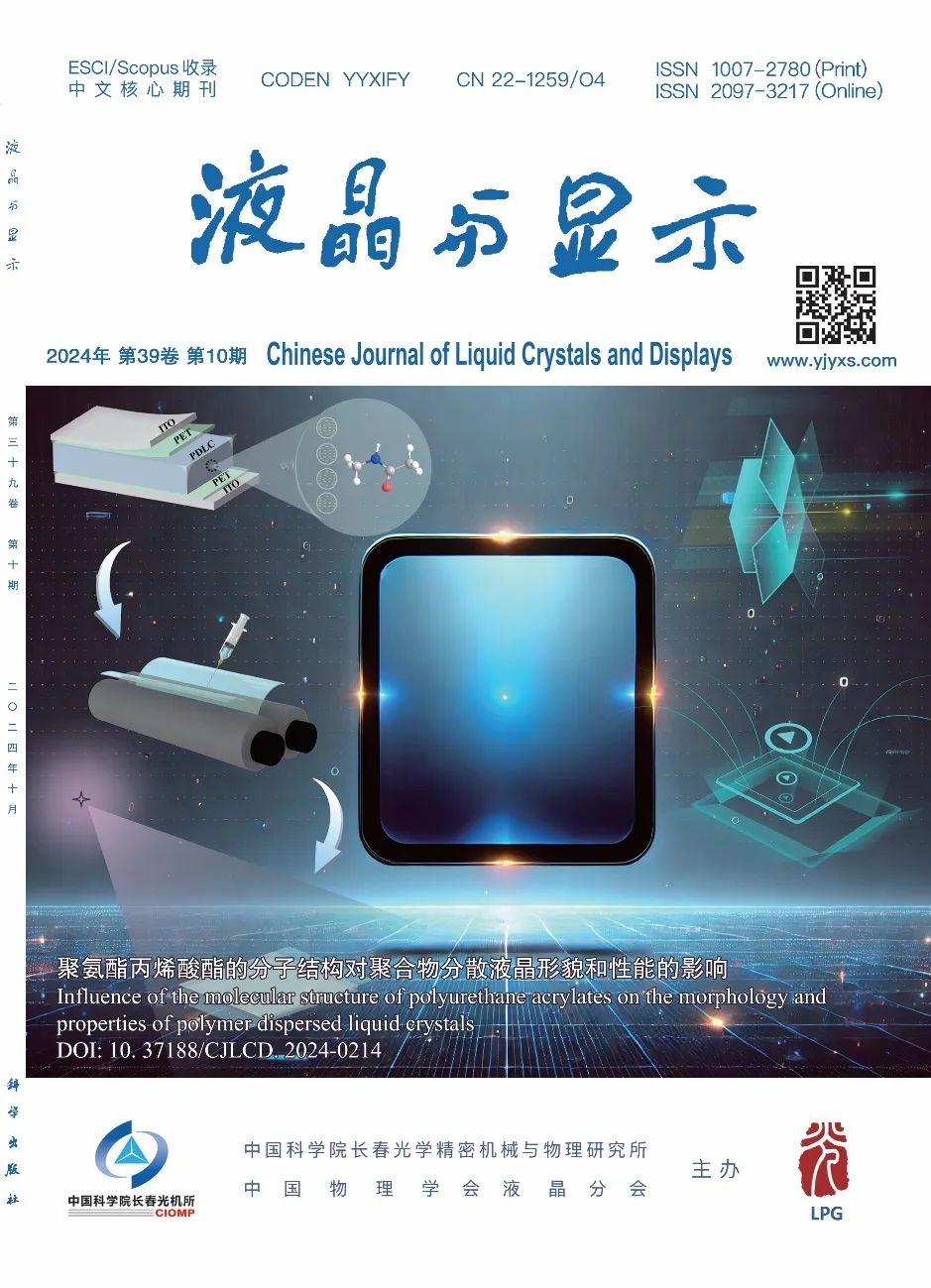
Figure 1: Cover image of “Liquid Crystal and Display” 2024, Issue 10
Introduction
Polymer Dispersed Liquid Crystal (PDLC) is a type of polymer-liquid crystal composite material formed by uniformly dispersing micron-sized liquid crystal domains in a continuous polymer matrix. Due to the advantages of PDLC, such as fast response, high contrast, wide viewing angle, and no polarization dependence, it has broad application prospects in large-area flexible displays, smart windows in buildings, and wearable devices. Currently, most PDLC films are prepared using acrylate monomers as polymerization monomers through photoinitiated free radical polymerization. Although acrylate monomers have advantages such as fast polymerization speed and low viscosity, their high toxicity and the brittleness of the cured film after polymerization, as well as a high volume shrinkage rate, result in poor adhesion with plastic substrates, limiting their application in flexible devices.
Recently, a research article titled “The Influence of Molecular Structure of Polyurethane Acrylate on the Morphology and Performance of Polymer Dispersed Liquid Crystals” was published by Professor Lu Hongbo‘s team from the Institute of Optoelectronic Technology at Hefei University of Technology in “Liquid Crystal and Display” (ESCI, Scopus indexed, core Chinese journal) 2024, Issue 10, and was selected as the cover article of the issue. The article effectively improves the adhesion of PDLC to the substrate by utilizing the hydrogen bonds formed between the urethane linkages in polyurethane acrylate, breaking the limitations of traditional acrylate monomers in flexible devices, achieving characteristics of PDLC devices such as low driving voltage, high contrast, good adhesion, and maintaining good optoelectronic performance in a bent state.
Design of PUA Molecular Structure
Polyurethane Acrylate (PUA) is a type of acrylate oligomer containing unsaturated double bonds, with urethane linkages and acrylate functional groups in its molecular structure. The hydrogen bonds formed between urethane linkages in the PUA molecular structure enhance the flexibility of the polymerization system, improving the mechanical properties of flexible PDLC. After UV curing, it possesses excellent wear resistance, flexibility, high elongation at break, and low-temperature resistance of polyurethane, good adhesion to substrates such as plastics, as well as excellent optical performance and weather resistance of polyacrylate, with almost no volume shrinkage after polymerization. The design and synthesis of PUA monomers with different isocyanate molecular structures explore the impact of PUA structure on the optoelectronic performance of devices.
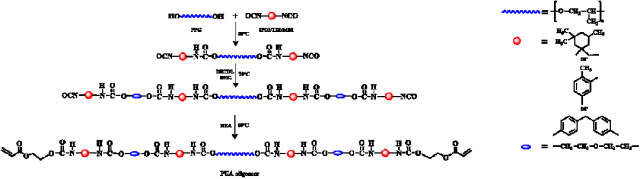
Figure 2: Synthetic structural formula of Polyurethane Acrylate (PUA)
Figure source: Liquid Crystal and Display, 2024, 39 (10): 1285-1294. Fig.1
Influence of PUA Molecular Structure on PDLC Network Morphology
Figure 3 shows the SEM images of PDLC films prepared from polymerization monomers PUA-I to PUA-M, where significant structural differences are observed, forming different polymer network morphologies. As the isocyanate structure transitions from a cyclic structure to a single phenyl structure, and then to a biphenyl structure, the pore size of the polymer network shows a trend of gradual reduction and increased uniformity and density. The molecular structure of the PDLC sample prepared with aliphatic PUA-I is a relatively rigid cyclic structure with low viscosity and lower reactivity, leading to a lower crosslinking density and resulting in larger polymer pore sizes. For aromatic polyurethane acrylates (PUA-T and PUA-M), the phenyl rings contained in their molecular structures have high chemical similarity with the biphenyl structure of liquid crystal E7, thus endowing them with good chemical affinity. Additionally, the higher viscosity of aromatic PUA restricts the diffusion and aggregation of liquid crystal domains, resulting in a reduction in polymer pore size.
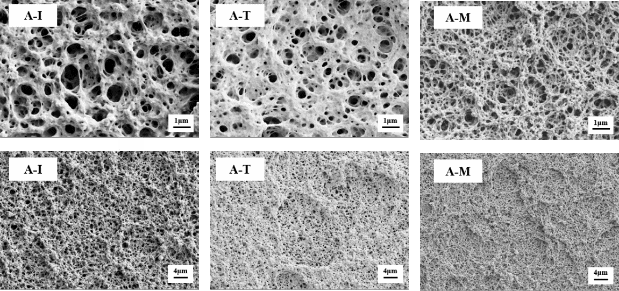
Figure 3: SEM images of PDLC devices prepared from different isocyanate structural monomers
Figure source: Liquid Crystal and Display, 2024, 39 (10): 1285-1294. Fig.5
Influence of PUA Molecular Structure on PDLC Optoelectronic Performance
As shown in Figure 4 (a-d), the optoelectronic performance and gel content of PDLC films prepared from different PUA molecular structures are displayed. The A-I sample prepared from aliphatic PUA-I has a relatively low viscosity and lower reactivity, leading to a faster diffusion speed of the polymerization system and slower polymerization speed, resulting in larger polymer pore sizes. The anchoring effect of the polymer network on liquid crystal molecules weakens, resulting in lower driving voltage and faster response time on. For the A-T and A-M samples prepared from aromatic PUA-T and PUA-M, due to their higher viscosity and higher reactivity, the LC molecules are less likely to diffuse and aggregate, resulting in smaller polymer pore sizes and a significant increase in driving voltage.
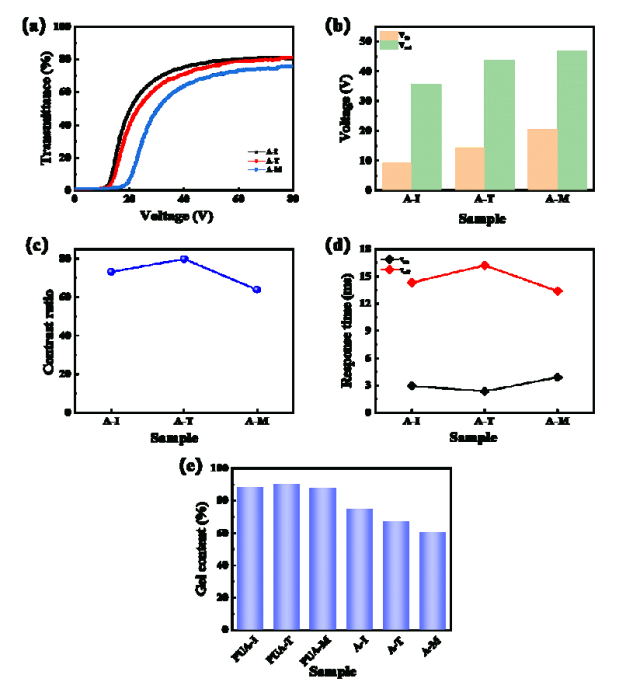
Figure 4: Optoelectronic performance and adhesion test graphs of samples A-I to A-M (a) Relationship between transmittance and voltage; (b) Threshold voltage Vth and saturation voltage Vsat; (c) Contrast CR; (d) Response timeon and recovery timeoff
Figure source: Liquid Crystal and Display, 2024, 39 (10): 1285-1294. Fig.6
Conclusion and Outlook
Polyurethane Acrylate (PUA) after UV curing possesses both the flexibility and adhesion of polyurethane and the optical properties of acrylates, effectively solving the problems of poor adhesion in the preparation of flexible PDLC devices using traditional acrylate monomers, which leads to substrate detachment and issues of high driving voltage and low contrast in practical applications. This article designs the isocyanate structure in PUA molecules to change the morphology of the polymer network, thereby regulating the mechanical and optoelectronic properties of the devices. In the future, the design concept of devices gradually trends towards lightweight and portable directions, and flexible devices are one of the trends in the development of portable devices. This research is expected to broaden the development prospects of PDLC in flexible display devices and provide inspiration for improving the optoelectronic and mechanical properties of flexible devices, with great application potential in smart windows for buildings and vehicles, as well as convenient flexible displays for wearable technology.
Paper Information
Wang Yumeng, Mo Shunping, Wang Han, Qiu Longzhen, Xu Miao, Lu Hongbo. The Influence of Molecular Structure of Polyurethane Acrylate on the Morphology and Performance of Polymer Dispersed Liquid Crystals [J]. Liquid Crystal and Display, 2024, 39(10): 1285-1294.
https://cjlcd.lightpublishing.cn/thesisDetails#10.37188/CJLCD.2024-0214
Corresponding Author
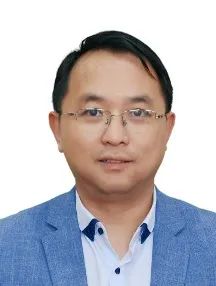
Lu Hongbo, PhD, researcher, obtained a PhD from the University of Science and Technology of China in 2006, mainly engaged in research on polymer/liquid crystal composites and devices, and new liquid crystal materials and devices.E-mail: [email protected]Supervisor: Zhang YingEditor: Zhao Yang
Banner
👇 Follow Me 👇
Light Up the “Like” and “Looking” to not miss article updates