▲Clickthe blue text“Schlumberger Digital and Integrated Group” to set as【Star】, to view information without getting lost.
In the petroleum industry, asphaltenes are the heaviest and most polar components in crude oil. They are prone to precipitation and deposition under changes in pressure, temperature, or mixing with other components, leading to a series of serious issues such as reservoir damage, wellbore blockage, pipeline transport difficulties, and catalyst poisoning in refineries. It is challenging to accurately predict their complex behavior based solely on experience. Therefore, accurately establishing an asphaltene fluid model is crucial. By precisely modeling the asphaltene fluid, one can simulate its solubility, precipitation envelope, and phase changes under different operating conditions, effectively predicting the risk points of asphaltene deposition. This provides a scientific basis for optimizing development plans, designing production processes, selecting chemical inhibitors, and formulating asphaltene removal strategies. It is a key foundation for ensuring flow assurance and improving oil recovery rates, which is of great significance for ensuring the safe and efficient operation of oil and gas production.
To ensure the reliability of asphaltene calculation results, the process of creating an asphaltene model is generally divided into the following three steps:
01Select an appropriate asphaltene model 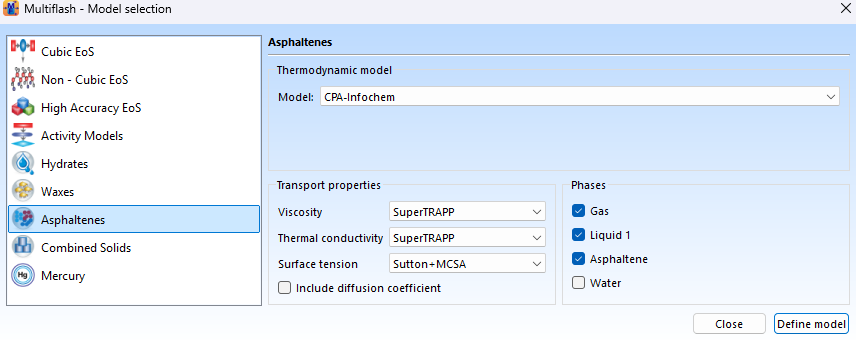 02Characterize the fluid
 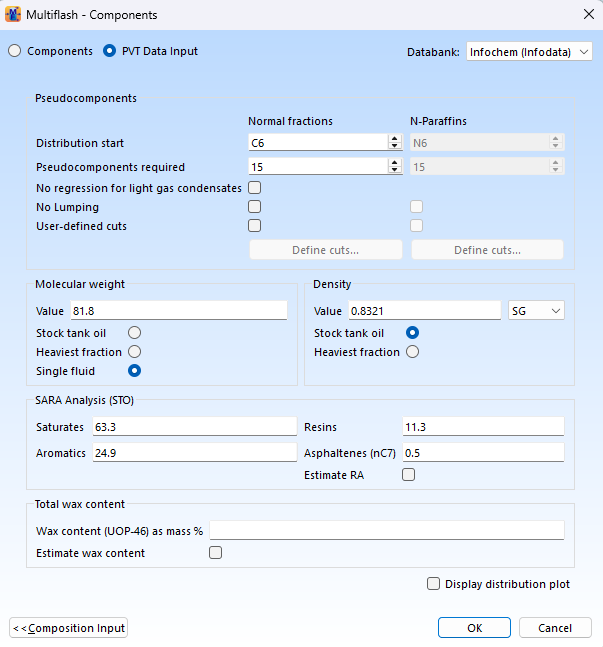 03Calibrate the fluid model and optimize the asphaltene model parameters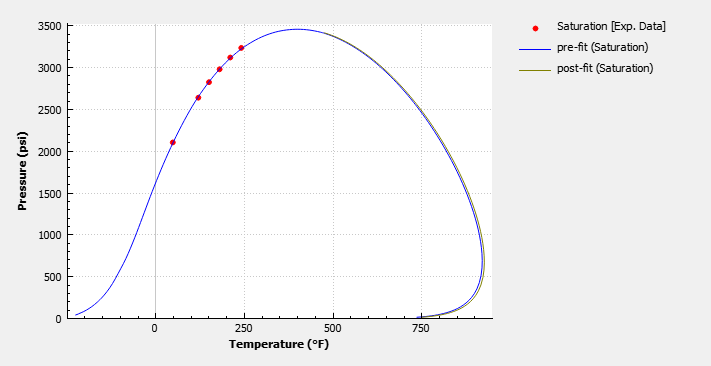
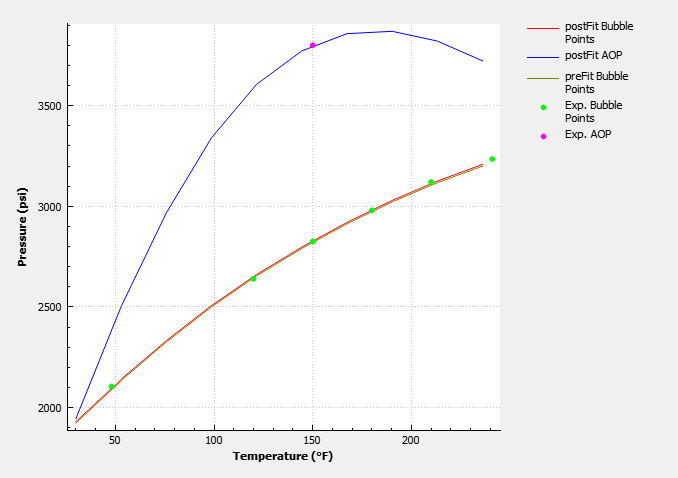
For the second step of fluid characterization and the third step of calibrating fluid model parameters, the following relevant data needs to be prepared:
(1) Fluid composition analysis report;
(2) The content of asphaltenes in crude oil and the ratio of resins to asphaltenes;

This data is usually determined through the SARA analysis results of the crude oil in the tank. It should be noted that complete SARA analysis data is not required; only the mass percentage (wt%) of resins and asphaltenes in the crude oil is sufficient. The reason is that the mass percentages of saturated hydrocarbons and aromatics are only used for fluid characterization and normalizing the mass percentages of resins and asphaltenes.
It is worth noting that the mass percentage of asphaltenes refers to the portion precipitated by n-heptane. Some laboratory reports provide the n-pentane precipitation value. The conversion between n-pentane and n-heptane precipitation values varies by crude oil and laboratory. Typically, we find that the mass percentage of asphaltenes precipitated by n-pentane is about twice that of the n-heptane precipitation value (this ratio varies between 1.3 and 2.7);
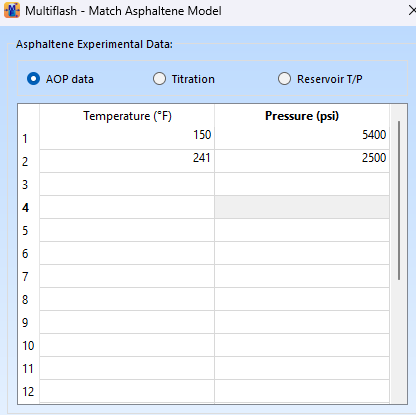
(3) Ideally, data on the initial precipitation point (AOP) of asphaltenes at least at two different temperatures is required;
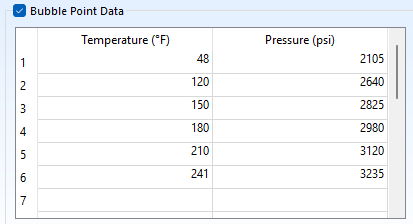
(4) Bubble point test data is useful but not essential.
If you cannot provide complete data as mentioned above, we have also developed relevant formulas in the Multiflash software to calculate and set the required parameters. The table below summarizes alternative options available to you in the absence of ideal input data.
|
Description of Missing Data (Fluid Characterization) |
ProvidedAlternative Options |
|
You only have the mass percentage of asphaltenes in crude oil (wt%) |
In the “PVT Laboratory Fluid Analysis” dialog of the Multiflash software, input the mass percentage of asphaltenes in the SARA analysis panel and check “Estimate RA” before performing fluid characterization. |
|
You have no understanding of the asphaltene content in crude oil at all |
In the “PVT Laboratory Fluid Analysis” dialog of the Multiflash software, check “Estimate RA” before performing fluid characterization. |
When there is a water phase in the system, calculations become exceptionally complex, especially during phase equilibrium boundary calculations. If it is necessary to consider the water phase in the calculations, it is important not to include water components in the fluid during characterization and model calibration. This is because the experimental measurements on which the asphaltene model is based are conducted in a water-free environment.
The correct steps to consider the water phase are as follows:
(1) Specify the water phase in the model definition;
(2) Do not add water components to the fluid before characterization and calibration;
(3) Characterize the fluid without water;
(4) Calibrate the model;
(5) After completing the above steps, you can then add the water components to the fluid.
— END —
Author:Chen JiyunEditor: Yu Ting