
Introduction
GCCS-J is the U.S. military’s theater command and control system, which is the core of the U.S. Global Command and Control System (GCCS). It serves as the foundation for conducting joint operations and is a fundamental tool for operational planning, analysis support, joint operational command, and planning in the theater.
During the Gulf War, the U.S. military identified several issues with its global military command system, including excessive vertical layers, insufficient horizontal interoperability, and poor friend-or-foe identification capabilities. In 1995, the Department of Defense undertook a massive update of this system, which had been in development for nearly 40 years, renaming it the Global Command and Control System (GCCS).
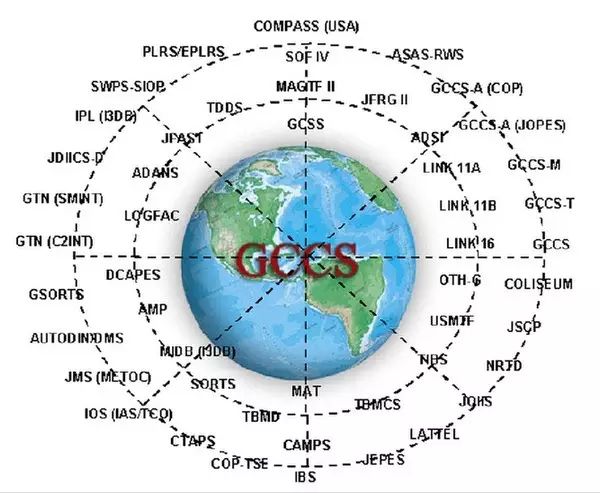
GCCS-J is a core component of the U.S. Global Command and Control System and is the primary command and control system used by the U.S. theater.
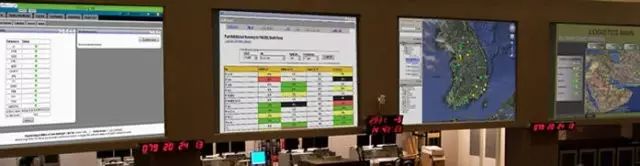
GCCS-J is a Command, Control, Communication, Computer, and Intelligence (C4I) system that includes software, hardware, programs, standards, and interfaces. This system provides robust, seamless command and control capabilities for the Commander in Chief (CINC), Secretary of Defense (SECDEF), National Military Command Center (NMCC), battlefield commanders (CDR), joint force commanders, and military service commanders. It enables full-spectrum support for planning, executing, controlling, and logistical operations in various military actions for theater commands and joint task force commanders.
Development History

The system began development in 1995 and has undergone over twenty years of evolution:
September 1995—— Formation of the memorandum of decision
June 2000—— Formation of the requirements document
December 2001—— Designation of participants for rapid improvement pilot program
June 2004—— Preliminary development documentation
May 2008—— Capability development phase
September 2011—— Product generation phase
GCSS-J added eight milestone reviews
March 2014—— MSB / C
Currently, the U.S. military places a high priority on the development of this system, with the Department of Defense budgeting tens of millions of dollars annually for updates and upgrades:
2012 budget: $26.18 million
2013: $56.68 million
2014: $23.69 million
2015: $14 million
2016: $11.36 million
2017: $10.42 million
System Framework and Functions
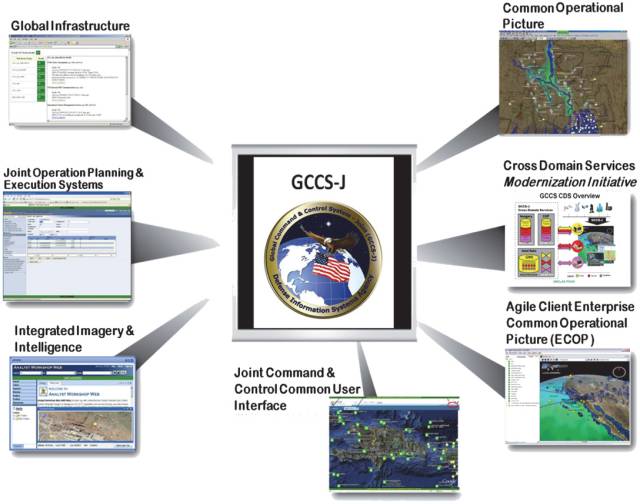
The GCCS-J system consists of two main components:
(1) GCCS-J Global (force protection, situational awareness, intelligence applications);
(2) JOPES (force deployment, power projection, planning and deployment/redeployment applications).
Specifically includes the following modules:
1. Global infrastructure
2. Joint Operational Planning and Execution System (JOPES)
3. Integrated imagery & intelligence
4. Common Operating Picture
5. Cross-domain services modernization initiative
6. Agile client enterprise common operational picture (ECOP)
7. Joint command & control common user interface
The GCCS-J adopts a primarily open system client/server (C/S) architecture and is currently evolving towards a web-based B/S architecture, allowing different user software packages to operate over the network from any location.
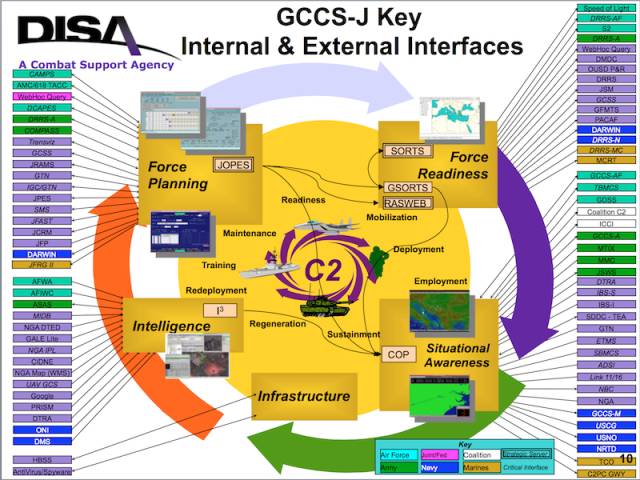
The GCCS-J integrates command and control task applications, functions, databases, web technologies, and office automation tools. By exchanging imagery, intelligence, force status, and planning information, C2 capabilities are fused into a comprehensive, interoperable system. A key part of the functionality of GCCS-J is the force planning product, commonly known as the Joint Operational Planning and Execution System (JOPES), which provides conventional warfare planning tools and capabilities for the Joint Staff and joint forces. GCCS-J is designed from the user’s perspective, characterized by short design and development cycles, functional extensibility, and rapid response to user issue reports by operational prototype developers.
Main Features
01
Big Data Support
The system supports various military and civilian data formats, enabling real-time creation/viewing of thousands of graphical overlays to depict battlefield elements.
Through NGA’s CADRG charts/CIB image display tracks and overlay layers
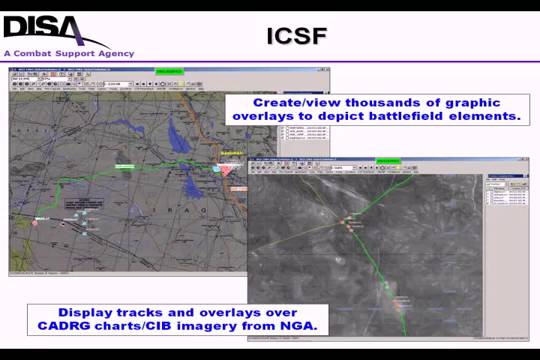
Global data/orbital coverage
For example, using GCCS-J Global in the Air and Space Operations Center (AOC) can achieve the following functions:
—— Establish the air image portion of the common operational picture and maintain its accuracy
—— Associate or fuse raw data from multiple sources
—— Correlate raw electronic intelligence data with track data
—— Execute target selection operations
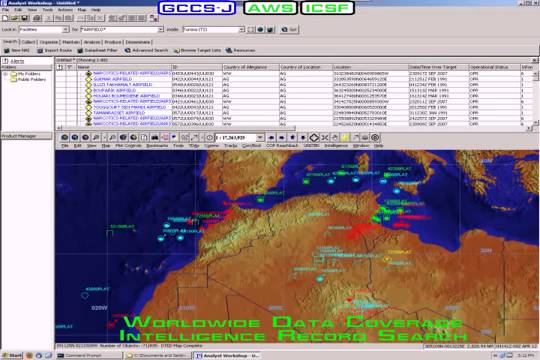
The system contains rich weapon equipment data, various track and trajectory data, and operational forces and resource data from around the globe, allowing commanders and staff to rely on this system as if they have access to a rich database, providing detailed data support for decision-making and planning. Produced by “Desktop Warfare”!
02
Planning Tracking and Analysis
The core of the system is the Joint Operational Planning and Execution System (JOPES), which can achieve the following functions:
—— Transform decisions into operational plans (OPLANs) to meet U.S. military deployment requirements;
—— Support force deployment and redeployment;
—— Implement emergency and crisis action plans;
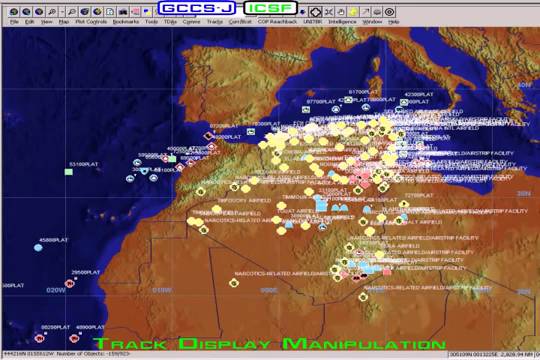
Can display information for each entity in the plan, laying the foundation for planning tracking and analysis
The GCCS-J system can filter and display up to 100,000 tracks. The global component of GCCS-J provides a common operational picture that displays mission track information against a map background. While users are unlikely to display all 100,000 tracks simultaneously on their operational screens, this information is available in the database for query reference and supports ongoing operations. The ability to store and display many operational tracks represents a significant improvement over previous versions of GCCS-J, allowing you to have all tracking data and filter it according to the needs of the theater commander.
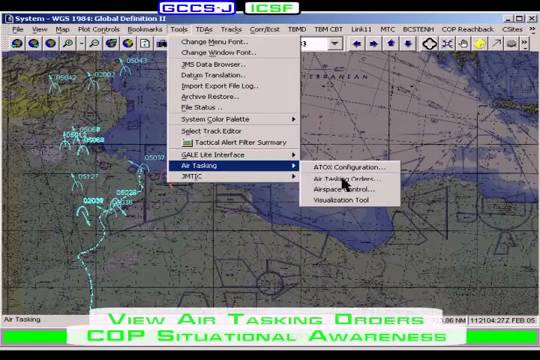
Querying the plan through the system
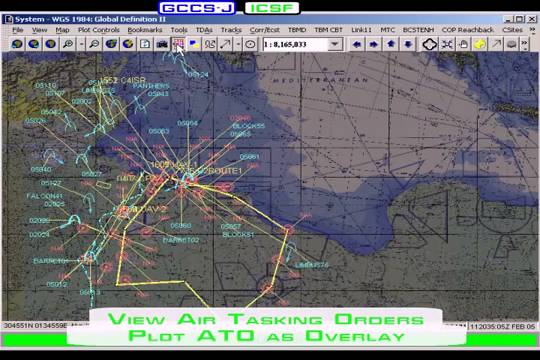
Querying air tasking orders (ATO)
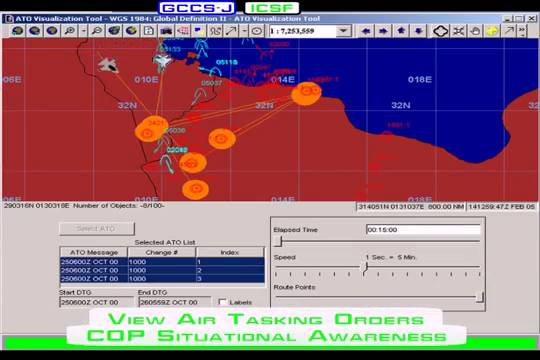
Performing task tracking and analysis, viewing results in real-time
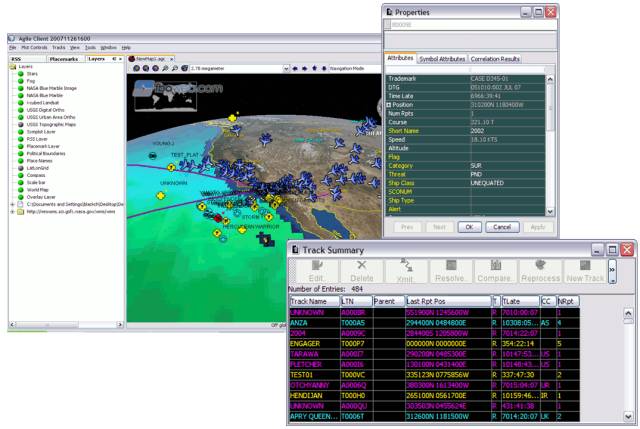
Tracking airborne targets
03
Decision Support Analysis
The system can support decision-making for theater commanders and staff, providing auxiliary analysis and decision support-related functions.
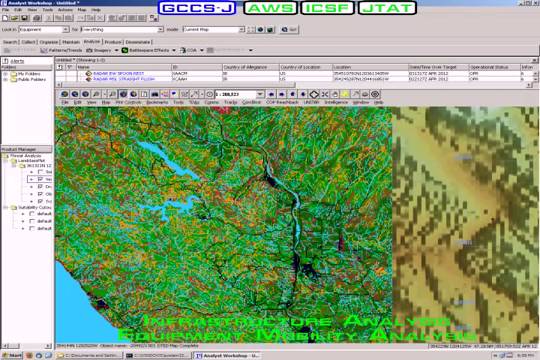
Auxiliary terrain environment analysis
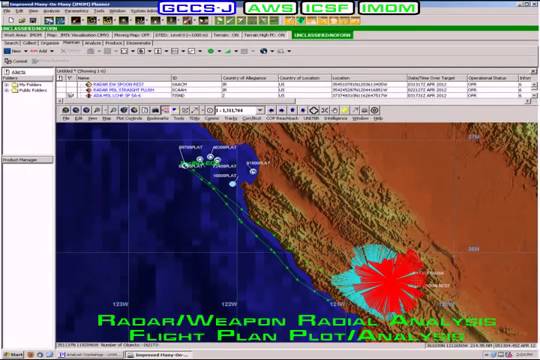
Flight trajectory analysis, radar blind spot analysis
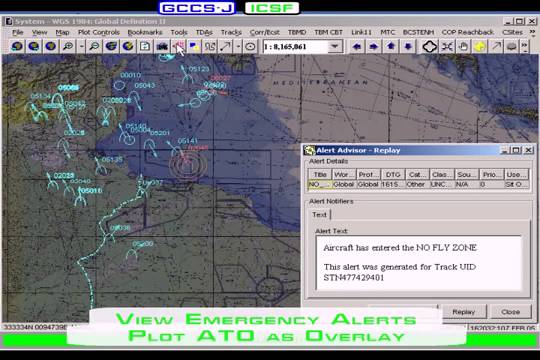
Aircraft entering a no-fly zone, the system automatically prompts a warning
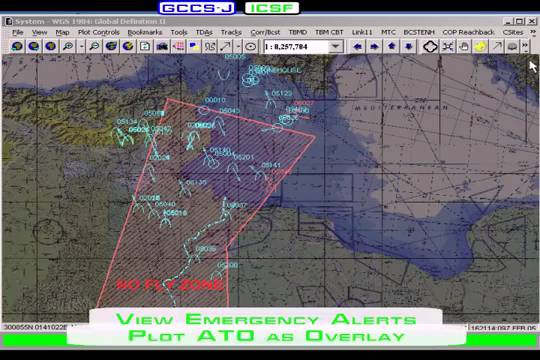
Displaying no-fly zones (red diagonal lines in the image), indicating potential collateral damage
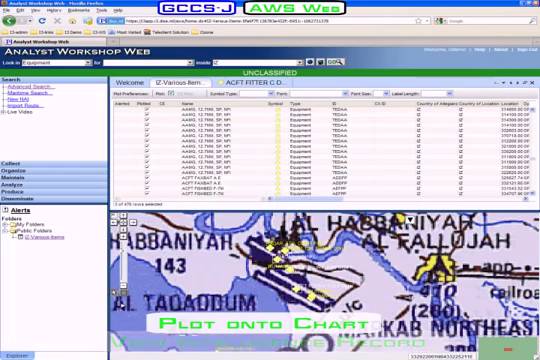
Displaying the planning list, used for assisting in conflict analysis
JOPES is the second major component of GCCS-J. This is a set of applications designed to enable commanders to plan significant movements of forces and equipment in and around the theater. JOPES integrates policies, procedures, personnel, and equipment by combining automated data processing (ADP) systems, reporting systems, and basic GCCS ADP support to provide commanders and staff with the capability to plan joint military operations.
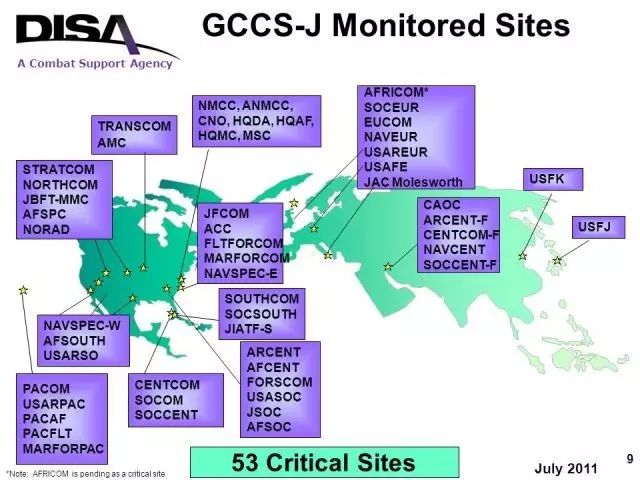
Supports global multi-region and multi-national use, with 53 monitoring sites distributed globally to support system operations
JOPES provides support to global users by providing authorized subscribers access to its suite of applications. In the BLOCK V version, upgrades to JOPES include maintaining core client/server applications to access critical operational planning data securely and stably. The introduction of web-based applications, using the latest commercial software versions to update the system, and the continuous deployment of services to military customers.
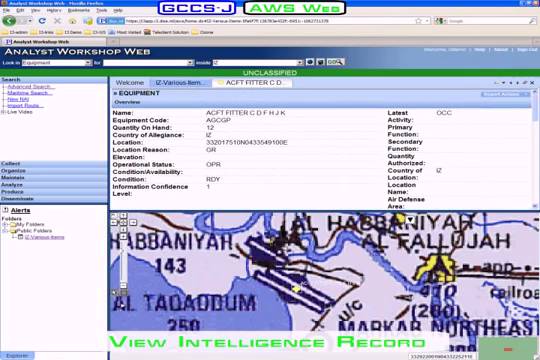
Intelligence record queries to assist in analyzing enemy situations
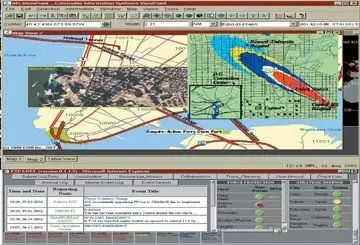
The system provides further improvements through the Block V global baseline, including enhanced capabilities to determine the effects of nuclear, biological, and chemical attacks; combining image objects with metadata on common operational displays; integrated alert notifications; new intelligent tools; and intelligent data, graphics, and image displays delivered through web browsers. Version V also integrates new information warfare/information operations planning tools; allows planners to create time-critical target folders from common operational pictures/intelligence displays; generates target-quality coordinates from sensor images; and shares tracks, images, and data across different security domains.
04
Joint Intelligence Support
GCCS-J Global has an integrated imagery and intelligence component known as I Cubed. The imagery capabilities provide near-real-time intelligence data to enhance situational awareness for theater staff and commanders. For example, forces operating in Afghanistan may request a list of available imagery data and existing intelligence information to prepare for combat operations.
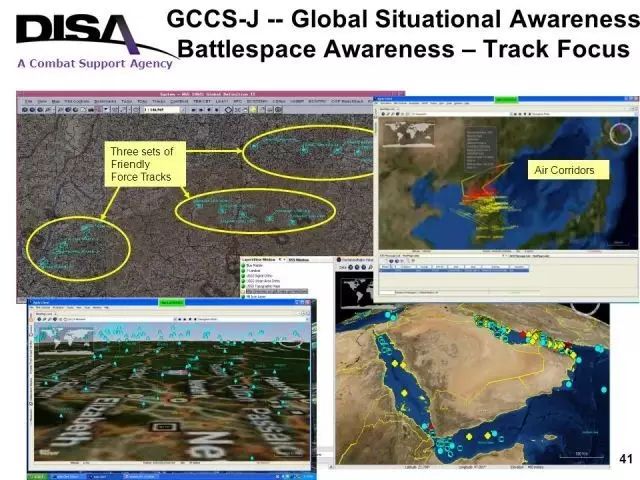
Global battlefield awareness, focusing on battlefield situation
Cubed helps commanders make more informed decisions by providing them with situational awareness and tracking data to command operations.
—— Connect the unique systems of national command authorities and lower command levels of joint task forces, component commanders, and military services;
—— Process, correlate, and display geographic information, integrating it with available intelligence and environmental information to provide users with a fused battlefield space map
—— Provide I3 capabilities
—— Provide missile warning and tracking capabilities
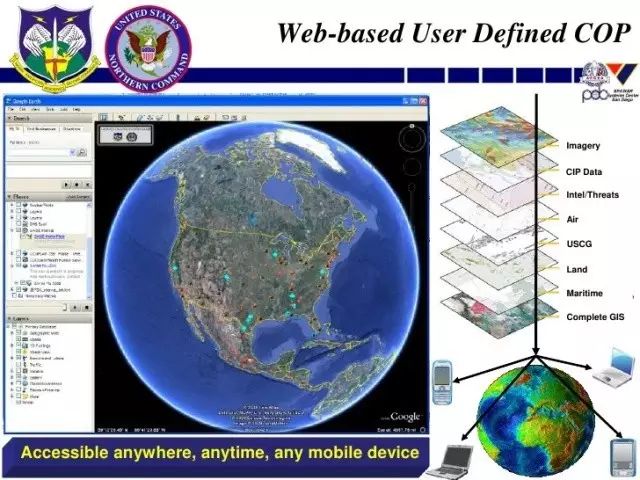
Common Operating Picture based on multi-type layers
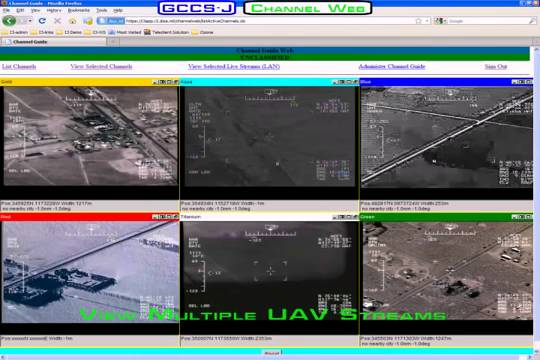
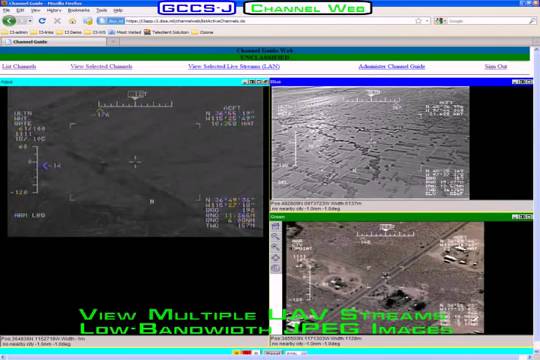
Drone reconnaissance imagery
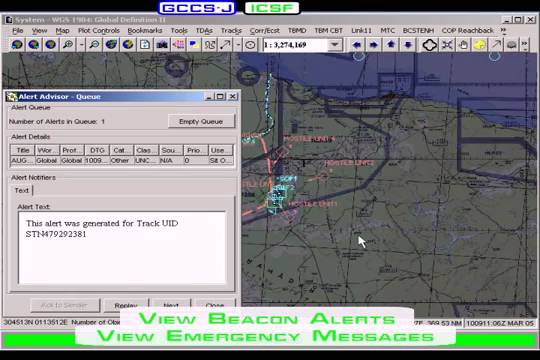
Missile warning
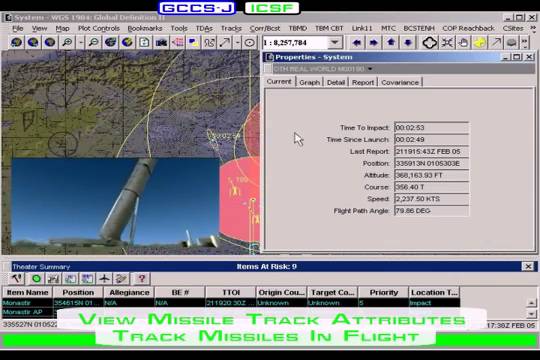
Tracking calculations
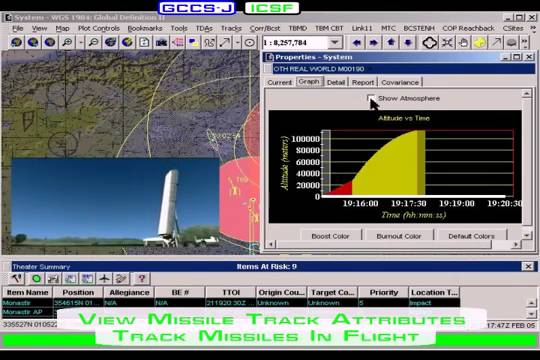
Command interception
In the information society, advancements in systems drive societal progress and enhance productivity. The development of platforms like Alipay, WeChat, Didi, and shared bicycles is changing and influencing society, even promoting transformations in lifestyles. Similarly, the integration and development of information systems greatly enhance operational effectiveness, directly changing and influencing transformations in operational methods.
The core of operations based on information systems is the information system itself. The first step is to clarify the mechanisms of the information system and build a first-class system for planning, decision-making, and commanding operations, before discussing how to conduct operations and apply them. One must avoid theoretical discussions that are grandiose yet impractical, as empty talk can lead to national downfall!

Source: Desktop Warfare
📚 Previous article recommendations
 2018 Sixth Command and Control Conference Special Forum Report|Research on Cyber Space Situational Awareness Issues Creates a New Era of Deep Development of Military-Civil Integration180-page PPT, explaining artificial intelligence technology and industrial developmentArtificial intelligence reshapes future warfare patterns
Submission email: [email protected]
Long press the QR code below to subscribe for free!
C2
How to join the association
Register as a member of the association:
Individual members:
Follow the association’s WeChat: China Command and Control Society (c2_china), reply “individual member” to obtain the membership application form, fill it out as required, and if you have any questions, you can leave a message in the public account. You can only pay the membership fee online through Alipay after passing the association’s review.
Unit members:
Follow the association’s WeChat: China Command and Control Society (c2_china), reply “unit member” to obtain the membership application form, fill it out as required, if you have any questions, you can leave a message in the public account. You can only pay the membership fee after passing the association’s review.
Long press the QR code below to follow the association’s WeChat

Thank you for your attention