The AI + healthcare sector is entering a fast track of development.
Artificial Intelligence (AI) is infiltrating every aspect of ordinary people’s lives at an unprecedented speed, from financial trading to transportation, from social media interactions to fitness guidance, with AI playing a role behind the scenes. In the field of healthcare, the application of AI is gradually making its way into frontline diagnosis and treatment. Currently, AI demonstrates immense potential in various aspects such as disease diagnosis, treatment plan formulation, surgical assistance, and medical resource management, providing innovative solutions to the challenges of inefficiency, misdiagnosis, and uneven distribution of medical resources faced by the healthcare industry.

AI-Powered Cardiovascular Surgical Robot
A technician operates the main robotic unit outside the operating room, remotely controlling the robotic arm inside the operating room through voice commands, accurately completing the entire process of vascular interventional surgery, including the advancement, rotation, and retraction of guidewires, adjustment of guiding catheters, balloon expansion, and stent placement. This scene was witnessed by reporters at the launch event of the AI-driven fully automated vascular interventional surgical robot. This highly anticipated device was designed and developed by Shenzhen Ruixin Intelligent Medical Technology Co., Ltd.
Ruixin Medical was founded in Shenzhen in 2017, with three co-founders who are all Ph.D. graduates from renowned universities in the United States and have years of experience in the American healthcare industry. Currently, the company has completed five rounds of financing, with investors including State Investment and Innovation, Matrix Partners, Tencent, and others.
“In traditional cardiovascular surgeries, doctors need to wear heavy lead aprons and work in environments with strong radiation. Our goal is to combine AI with surgical robots to make the diagnostic and treatment process more precise, efficient, and safe,” said Zheng Lingxiao, founder and CEO of Ruixin Medical, in an interview.
Zheng Lingxiao stated that AI + surgical robots are not merely about replacing doctors in manual operations; more importantly, by introducing AI, it empowers the entire process from pre-surgical screening and diagnosis, intelligent surgical planning, to real-time navigation during surgery, allowing surgical robots to possess intelligent capabilities that surpass human limits in terms of “brain,” “eyes,” and “hands.” He anticipates that once this AI surgical robot is officially put into use, it will be able to perform clinically simple repetitive surgeries under the supervision of doctors; for more challenging surgeries, the AI surgical robot can also provide stronger assistance to experts.
Ma Jun, co-founder and CTO of Ruixin Medical, also told reporters that the newly launched fully automated AI vascular interventional surgical robot achieves a three-party collaboration of “doctor – intelligent system – execution terminal”: doctors issue clinical tasks through natural language interaction (such as voice commands), the intelligent system uses advanced algorithms to convert the commands into executable operational goals, and finally, the execution terminal completes the automated surgical operations.
According to the company, the device has completed prototype production and simulation experiments, and it is expected to complete AI automated animal surgeries in the second half of this year, with a formal market launch anticipated in 2027.
AI + Healthcare Accelerates Development
In recent years, products combining AI and robotics have continuously sparked a technological revolution in the medical field, with more and more innovative achievements emerging in healthcare. At the aforementioned AI surgical robot launch event, experts from renowned cardiovascular hospitals stated that through deep integration with AI, Ruixin Medical’s cardiovascular AI + surgical robot precision diagnosis and treatment platform can achieve a closed loop from diagnosis, planning to execution, allowing complex surgeries to no longer rely solely on experience, enabling primary care doctors to perform high-difficulty surgeries with high quality, truly realizing the decentralization of high-quality medical resources, allowing more patients to enjoy the benefits of smart healthcare right at their doorstep.
In fact, with the support of national policies and the pursuit of investment institutions, the AI + healthcare sector is entering a fast track of development. In November 2024, the National Health Commission, in conjunction with the National Administration of Traditional Chinese Medicine and the National Disease Control Bureau, issued the “Reference Guidelines for AI Application Scenarios in the Health Industry,” clarifying the basic concepts and application scenarios of 84 subfields, providing a standardized development path for “AI + healthcare” and further fueling the booming AI + healthcare industry.
Regarding the current industry’s sustained attention, Ma Jun stated that AI + robotics is a major trend in medical technology, with language models represented by ChatGPT and DeepSeek significantly advancing artificial intelligence towards general artificial intelligence (AGI). In the United States, researchers from prestigious institutions such as Stanford University and Johns Hopkins University have begun using large models to train the Da Vinci robot to perform laparoscopic surgeries. He is leading a team to utilize a self-developed language model to convert natural language into standardized target tasks, ultimately achieving AI-controlled robots to complete automated PCI (Percutaneous Coronary Intervention).
Many investment institutions are also focusing on this sector, with Ruixin Medical’s important investor, State Investment and Innovation, being one of them. Public information shows that State Investment and Innovation is a private equity investment company under the National Development Investment Corporation. In the healthcare sector, this institution has invested in nearly 70 companies, with an investment scale of about 15 billion yuan, including nearly 30 high-end medical device companies.
Ma Yilin, investment director of State Investment and Innovation, told reporters that the essence of the healthcare industry is to capture clinical needs; AI is merely a tool and cannot override the industry itself. However, AI can enhance product performance in certain directions within the healthcare field, showing good application prospects. For example, in the diagnostic field, image-based diagnosis has previously relied on manual interpretation, which has issues of low efficiency and poor consistency, while AI, through learning and extensive sample training, can assist doctors in interpretation, improving efficiency and consistency. Looking at the development trend, with the enhancement of computing power and the continuous development of underlying models and algorithms, AI applications in healthcare will become more widespread, coupled with national policy encouragement and the payment side beginning to support medical device products with AI attributes, he holds an optimistic view of the industry’s prospects.
Challenges Remain, Bright Prospects Ahead
According to a report released by the China Research Institute of Industry in February 2025, the market size of AI + healthcare in China has reached 31.5 billion yuan in 2023, and it is expected to exceed 80 billion yuan by 2025, with a compound annual growth rate of 58.3%.
Despite the bright prospects of AI + healthcare, it still faces numerous challenges. Wang Peng, a researcher at the Beijing Academy of Social Sciences and executive director of the Data Assetization Research Institute, stated that the application of AI in healthcare faces multiple difficulties, including data privacy and security issues, the reliability and interpretability of AI diagnoses, the technical acceptance of healthcare practitioners, as well as regulations and ethics.
In response, Zheng Lingxiao emphasized that from the very beginning of product design, the company has maintained close communication with clinical experts to ensure that the products meet the needs of clinical specialists. For hospitals, Ruixin Medical’s product prices have significantly decreased compared to existing products, making it commercially viable.
Wang Peng suggested adopting advanced encryption technologies to protect medical data and establishing strict access control mechanisms to ensure that only authorized personnel can access sensitive data. Additionally, using knowledge graphs and human-machine collaboration can enhance the credibility of medical AI. For physicians, hospitals, and medical institutions, AI technology training should be provided to familiarize doctors with the application methods and working mechanisms of AI. Regarding ethics, he recommended formulating ethical guidelines for AI in healthcare to clarify the responsibilities of AI in medical decision-making, ensuring that the use of AI complies with medical ethics, while the government and medical institutions should establish relevant regulations for strict approval and supervision of AI medical products. For patients, it should be ensured that patients have the right to know and decide whether to accept AI-assisted diagnoses.
Editor: Li Dan

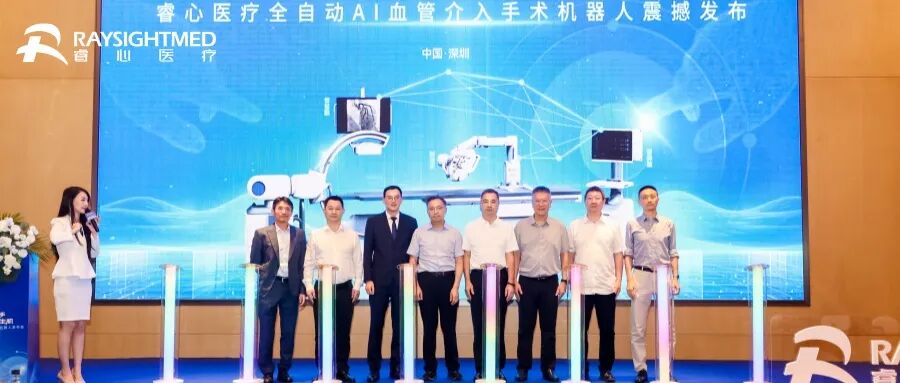
Ruixin Medical’s fully automated AI vascular interventional surgical robot has been launched, ushering in the era of precise interventional “fully automated” intelligence.
Following NMPA approval, the world’s first AI technology-based coronary microcirculation IMR assessment product—Ruixin AngioQFA has been published in an international authoritative journal.
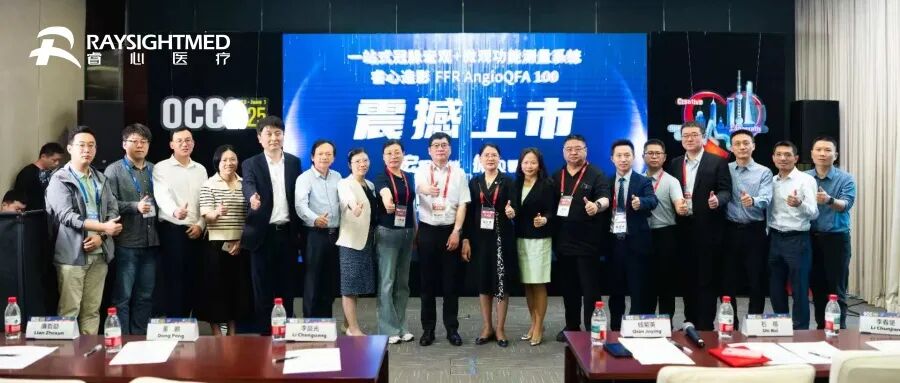
Ruixin Medical’s coronary function measurement system AngioQFA 100 made its debut at the 2025 Dongfang Conference, leading a new direction for one-stop coronary + microcirculation function assessment.

Proofread by: Lü Jiubiao