With the rapid development of AI, robotics, and automobiles, the demand for MCUs has reached unprecedented heights. To seize the initiative in this increasingly competitive market, major manufacturers are fully engaging in a “race to the bottom” that has sparked a fierce competition in technology and cost.
What exciting highlights are there in this “race to the bottom drama? Let’s explore.
Three Manufacturers Embrace M23
The Cortex-M23 and Cortex-M33 are two Armv8-M architecture cores released by Arm in 2016, which began to introduce TrustZone. One can simply understand M23 as an upgraded version of M0/M0+, and M33 as an upgraded version of M3/M4.
In recent years, Microchip, Nuvoton, GigaDevice, Renesas, and others have successively launched products based on the M23 core. Recently, GigaDevice, Renesas, and Nuvoton have continued to update their M23 product lines, redefining cost-performance ratios.
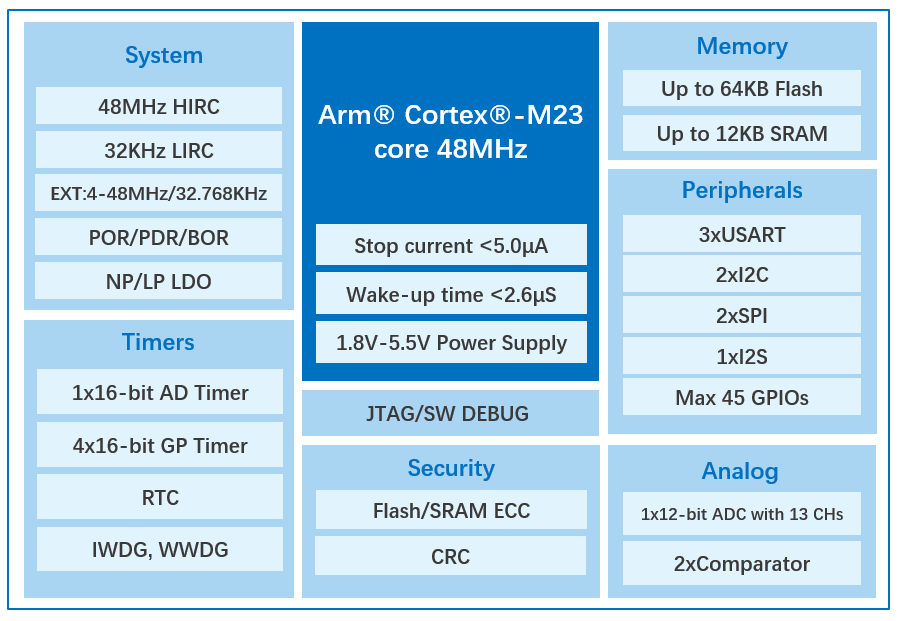
First up is GigaDevice. On June 5, GigaDevice launched the GD32C231 series of entry-level microcontrollers, further expanding the product lineup of the Arm Cortex-M23 core. The GD32C231 series is positioned as “high-performance entry-level” and will provide more competitive solutions for applications such as small appliances, BMS battery management systems, small display devices, handheld consumer products, industrial auxiliary control, and automotive aftermarket.
GigaDevice emphasizes that this series significantly enhances computing performance and peripheral specifications while maintaining excellent price competitiveness. The M23 core architecture improves performance by 10% compared to M0+, with a maximum frequency of 48MHz, featuring efficient processing capabilities such as single-cycle multiplication and integer division, greatly enhancing software execution efficiency. Moreover, this affordable MCU redefines the value standard of the entry-level MCU market, creating a new pattern of “affordable yet well-equipped.” The specific configuration is shown in the block diagram:
Next is Renesas. On June 10, Renesas also launched a processor based on the 48MHz Arm Cortex-M23. However, the highlight of this MCU is its industry-first support for the new USB-C Revision 2.4 standard, along with a rich set of features, making it an ideal choice for portable devices and personal computers (PCs).
In addition to supporting the new USB-C standard, low power consumption is also a highlight of this product. The RA2L2 MCU employs proprietary low-power technology, providing a working current of 87.5µA/MHz and only 250nA of software standby current. It offers an independent working clock for low-power UART, which can be used to wake the system when receiving data from Wi-Fi and/or low-power Bluetooth modules. With support for USB-C, these features make the RA2L2 an ideal solution for portable devices such as USB data loggers, charging boxes, and barcode scanners.
The new MCU not only supports USB-C with CC detection and a maximum of 15W (5V/3A), as well as USB FS, but also provides LP UART, I3C, and CAN interfaces, helping designers reduce the number of required components, effectively lowering BOM costs, saving PCB space, and reducing power consumption. The specific configuration is as follows:

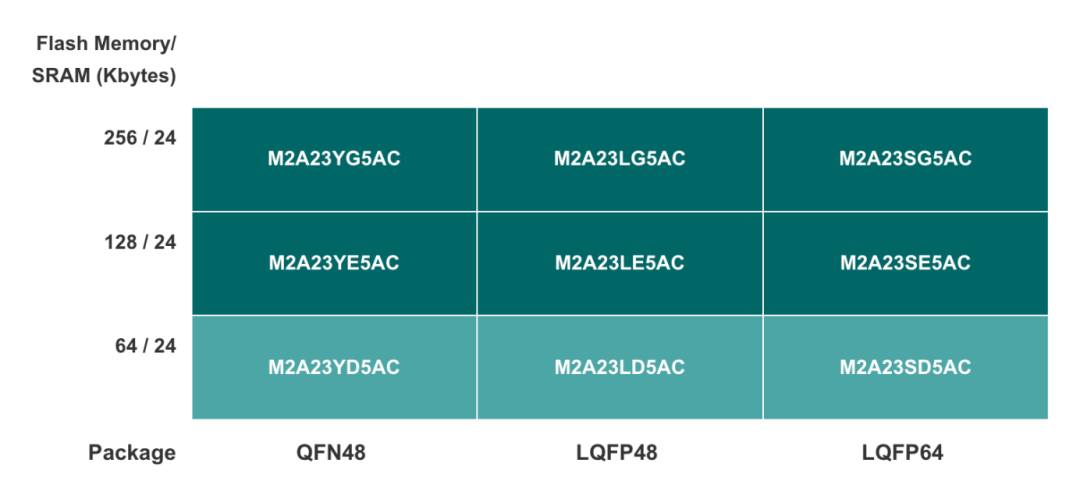
Finally, Nuvoton is also continuing to promote M23 core products, but its main focus is on the automotive and industrial markets. On March 18, Nuvoton launched the 32-bit M23 core MCU (with a maximum operating frequency of 72 MHz) — the NuMicro M2A23 series, designed to meet the stringent requirements of automotive and industrial control. This series can operate in ambient temperatures up to 125°C, supports a wide voltage range from 2.5V to 5.5V, and features three CAN FD interfaces and one LLSI interface, making it particularly suitable for various in-vehicle CAN signal modules and internal/external lighting control applications. In automotive systems, this series can drive in-vehicle networks and body control devices; in industrial automation, it can be applied to motor control and sensor data processing.
It provides up to 256 KB of eFlash, 24 KB of SRAM, and 4 KB of Flash loader memory (LDROM), which can be used for in-system programming (ISP). Up to 6 PDMA channels can achieve efficient data transfer, reducing CPU load and ensuring smoother system operation. It includes 4 32-bit timers, 12 144 MHz PWM outputs, and 2 watchdog timers, with 1 24-bit SysTick timer supporting precise task scheduling, suitable for real-time applications. Analog functions include 1 12-bit ADC, supporting 2 million samples per second (2 Msps), providing 16 channels, 2 comparators, and a built-in temperature sensor to ensure reliable data acquisition.
Although the M23 core MCU has been around for a while, many people may still be unfamiliar with it. Engineers explain that the M23 outperforms the M0 in terms of functionality and performance, especially in code execution efficiency, hardware security, and instruction set optimization. Moreover, the M23 is the most energy-efficient version in the M series. Additionally, based on the ARMv8-M architecture, the M23 supports ARM TrustZone security technology, enhancing system security. While both are aimed at the low-end embedded market, the M23 is more suitable for IoT devices and other security-sensitive products that require basic security protection capabilities. Overall, the M23 core is more suitable for applications with higher security requirements compared to the M0+ core, while the M0+ core is more suitable for applications with higher cost and power consumption requirements. The choice of which core to use depends on your application needs and prioritized factors.
It is evident that GigaDevice and Renesas have been actively pushing low-power MCUs based on the M23 and M33 cores, driving MCUs towards higher security and cost-performance development, while Nuvoton continues to push the M23 into the automotive market. However, the existing M0/0+ and M3/4 have high market acceptance, indicating that these companies’ products are targeted at specific applications.
Still Competing in Automotive MCUs
In the automotive MCU field, manufacturers continue to showcase their “superpowers,” launching very unique MCU products.
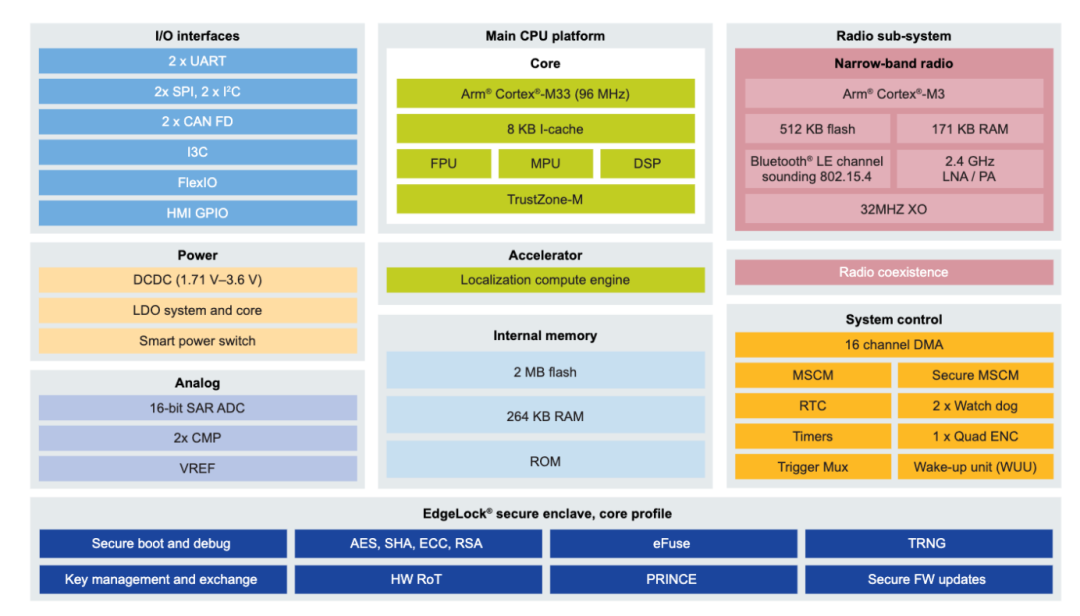
First is NXP, which launched the first automotive-grade MCU supporting “Bluetooth channel detection” in May this year — the KW47 and MCX W72 wireless microcontrollers (MCUs), helping automotive manufacturers achieve distance measurement and bringing new ranging solutions to automotive access and automation systems, with broader applications to come.
“Bluetooth channel detection” is a new feature added to the Bluetooth core specification BLE 6.0, which can significantly enhance Bluetooth positioning accuracy. By incorporating this technology, Bluetooth gains the ability to compete with UWB, especially in the field of digital keys.
Specifically, the KW47 is a low-power, high-security single-chip wireless MCU, integrating a high-performance BLE Core V6.0 wireless device, channel detection, and CAN FD, designed for automotive and industrial applications. Compliant with BLE 6 standards, the upgradeable wireless device can support up to 24 concurrent hardware connections in any master/slave combination. It integrates FlexCAN technology, compatible with CAN and CAN FD protocols, and meets ISO11898-1 standards, specifically designed for automotive applications. In terms of safety and reliability, it adopts an advanced and scalable security architecture, featuring Arm TrustZone-M, resource domain controllers, and isolated EdgeLock security zones, supporting hardware encryption accelerators, random number generators, key generation, storage and management, and secure debugging. The specific block diagram is as follows:
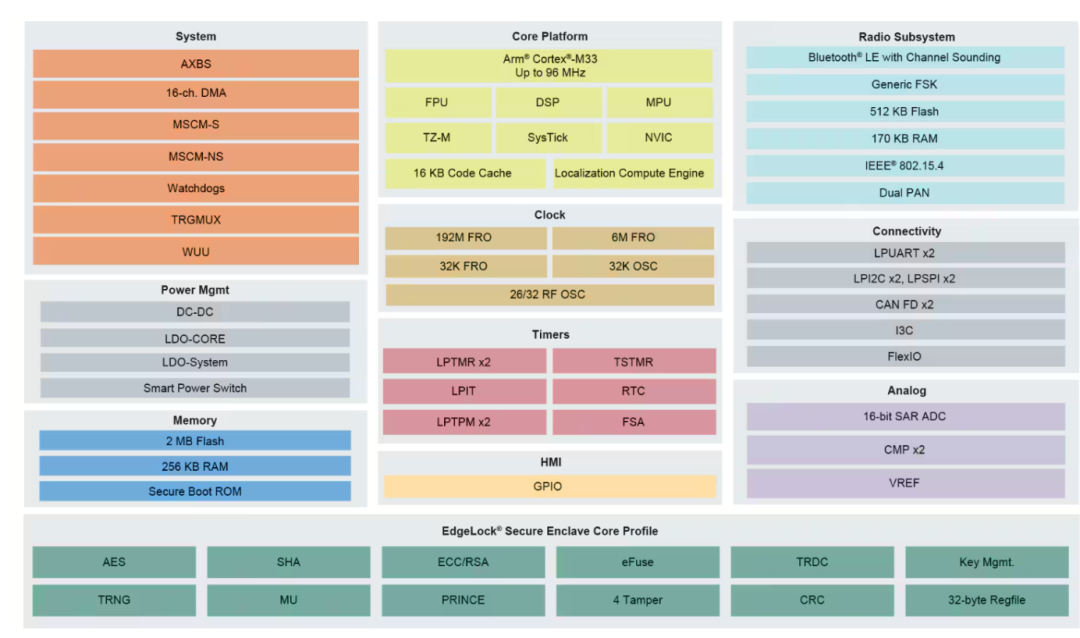
MCX W72 is even more powerful, featuring a 96MHz Arm Cortex-M33 core and supporting multi-protocol wireless subsystems including Matter, Thread, Zigbee, and BLE. The independent wireless subsystem has a dedicated core and memory, which can reduce the load on the main CPU, leaving it for primary applications, and allows firmware updates to support future wireless standards. The MCX W72x also provides advanced security through the integration of the EdgeLock Secure Enclave Core Profile, supported by NXP’s EdgeLock 2GO cloud service for credential sharing. Additionally, this series features Bluetooth channel detection and a dedicated on-chip positioning computing engine to reduce ranging latency. The specific block diagram is as follows:
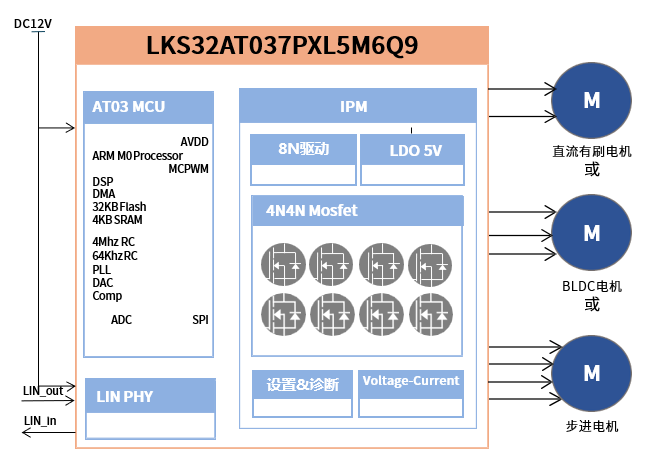
Next, Lingyang Chuangxin and Jingfeng Mingyuan launched a highly integrated automotive-grade MCU on May 9 — the LKS32AT037PXL5M6Q9. This MCU integrates the Arm Cortex-M0 core and a DIV/SQRT coprocessor, with a maximum operating frequency of 48MHz, internally integrating a 4-phase half-bridge driver circuit, 5V LDO, and LIN-PHY, supporting LIN automatic addressing and baud rate adaptation, significantly simplifying peripheral circuit structures, reducing design complexity, and helping customers reduce product size.
In terms of algorithms, it supports three-phase BLDC sensorless sinusoidal control, two-phase stepper motor sensorless sinusoidal control, and position control for brushed DC motors, along with application protection supporting overcurrent, overvoltage, undervoltage, overtemperature, stall, and phase loss protection functions. The chip’s power supply has a maximum withstand voltage of 40V, with effective phase current up to approximately 570mA at a maximum ambient temperature of 125°C; at a maximum ambient temperature of 105°C, the peak phase current can reach approximately 1A. The product application block diagram is as follows:
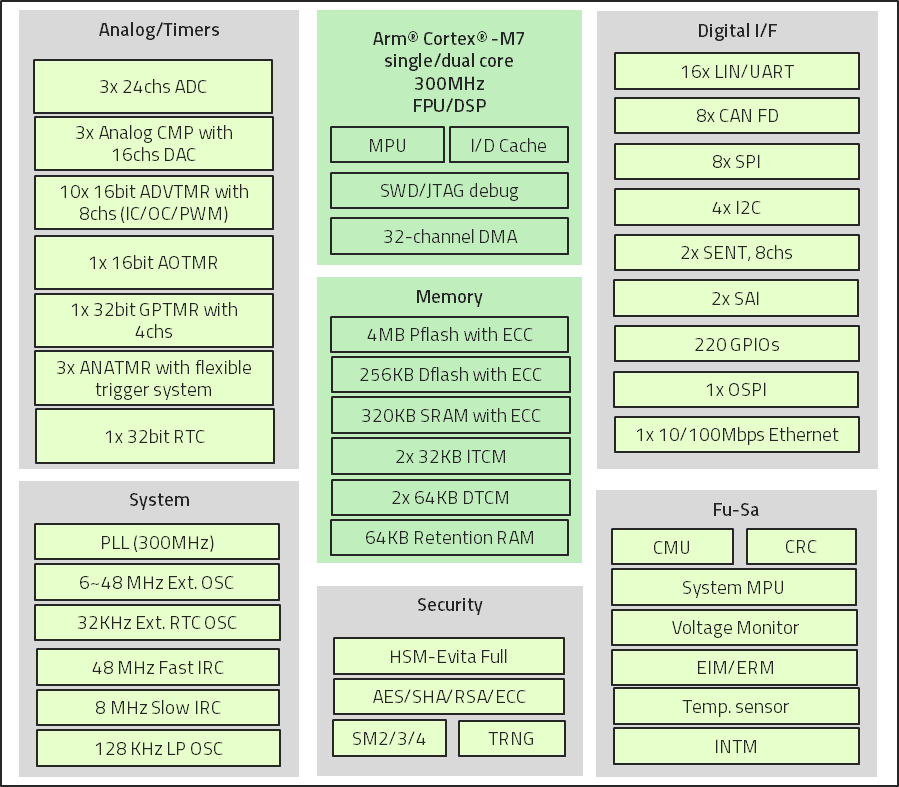
Finally, OmniVision Group launched the new generation OMX2xx series high-performance MCU — the OMX2x4B on June 10. The OMX2x4B is the first product in this series, featuring a high-performance Arm Cortex-M7 core with a maximum frequency of 300MHz, supporting up to 4MB of embedded Flash and 512KB of SRAM. It supports A/B SWAP OTA, features an Evita Full level HSM information security module, and includes 10/100M Ethernet.
The OMX2x4B series offers single-core, dual-core, and packaging options such as BGA196 and BGA257 for customer selection, suitable for applications in smart cockpits (CDC), body domain control (BDC), door controllers, thermal management (TMS), battery management (BMS), and front-view integrated machines. It supports the AUTOSAR automotive open system architecture and can provide MCU low-level software MCAL, closely collaborating with well-known domestic and international AUTOSAR basic software suppliers such as Vector, EB, and PwC. This series currently supports mainstream compilers such as Keil, Eclipse, and IAR, as well as mainstream debuggers like J-Link and Lauterbach. The specific configuration is as follows:
Each MCU Showcases Its Strengths
Recently, MCU manufacturers have also launched many distinctive products.
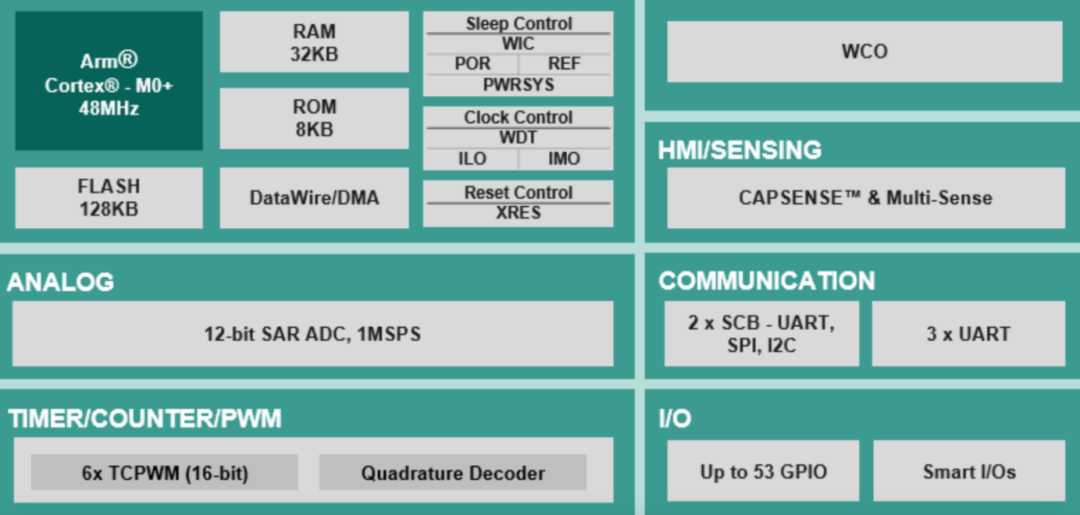
First is Infineon, which launched the PSOC 4100T Plus MCU on May 27. The product’s highlight is the integration of advanced sensing and system control functions on a single chip, featuring 128K Flash and 32K SRAM, and employing Infineon’s advanced Multi-Sense technology, which includes CAPSENSE™, inductive sensing, and liquid level sensing functions.
It is reported that Infineon’s 5th generation CAPSENSE technology has significantly improved compared to its predecessors, with a signal-to-noise ratio (SNR) performance improved by 10 times, while power consumption has decreased by 10 times.
The 4100T Plus can serve as a standalone general-purpose MCU providing a powerful system control and management platform, as well as a dedicated HMI MCU for creating intuitive interactive interfaces, and can also serve as a single-chip solution for system control and touch-based HMIs. Target applications include home appliances, consumer electronics, touchpads, and touch screen applications. The specific block diagram is as follows:
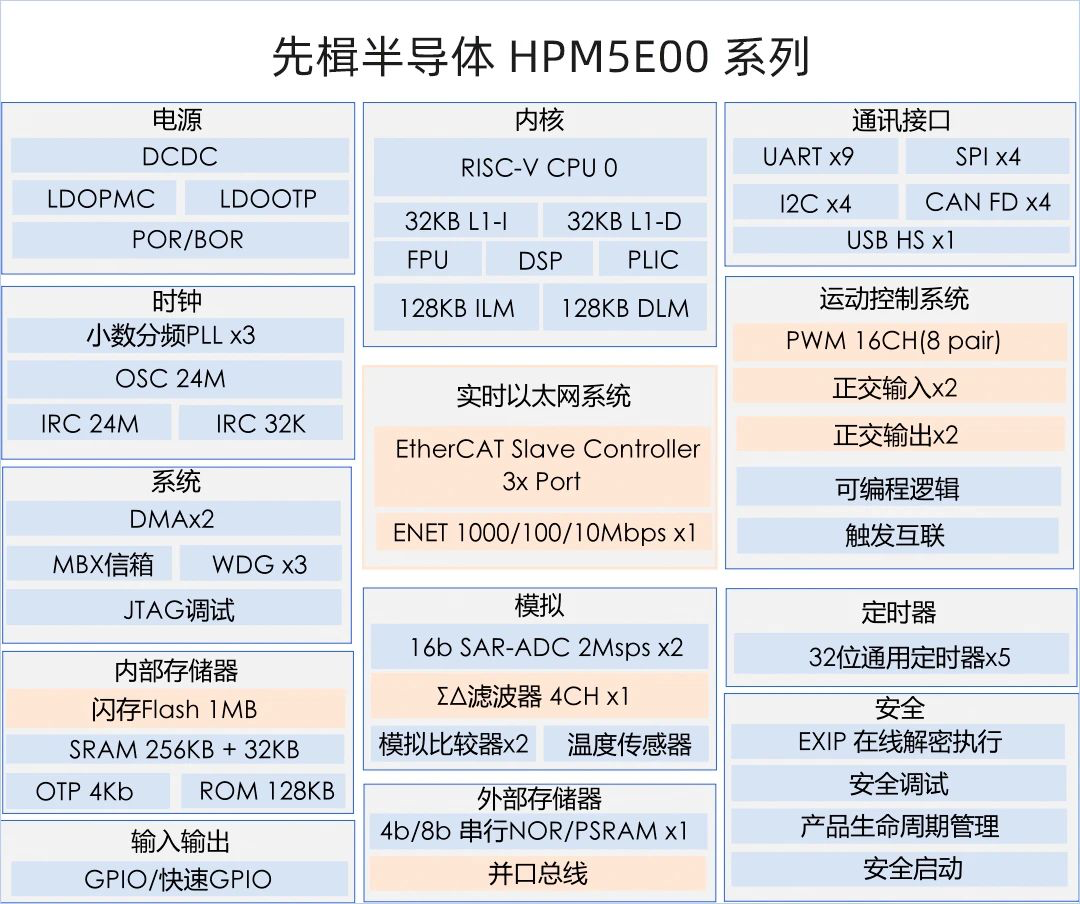
Second is Xinjie Semiconductor, which launched the HPM5E00 on May 6. The main highlight of this product is the EtherCAT IP officially authorized by Beckhoff, making Xinjie the first Chinese manufacturer to obtain EtherCAT support, as previous EtherCAT-supporting MCU chips were monopolized by foreign manufacturers.
The HPM5E00’s target applications include industrial control and robotics, specifically including general industrial control scenarios such as inverters, servos, PLCs, and remote IO, as well as high-end applications such as robotic joints, industrial robotic arms, and building automation (BAS). Compared to Xinjie’s previously launched HPM6E00, the HPM5E00 has lower power consumption, better cost, and smaller packaging. The specific block diagram is as follows:
Third is Guomin Technology, which launched the first domestic Arm Cortex M7+M4 dual-core heterogeneous MCU — the N32H78x series high-performance MCU in April. The N32H78x/N32H785EC/N32H76x/N32H765EC series is a benchmark product launched by Guomin Technology aimed at intelligent control fields such as embodied robotics and industrial control, featuring super strong computing power, ultra-fast response, high precision, high reliability, and high security. It has application advantages in general industrial control fields such as inverters, servos, PLCs, as well as high-performance motor control fields such as industrial/humanoid robots, elevators, and in the new energy field such as photovoltaic inverters, arc detection, energy storage BMS, automotive OBC, and charging piles, as well as in industrial displays, instruments, and facial recognition HMI.

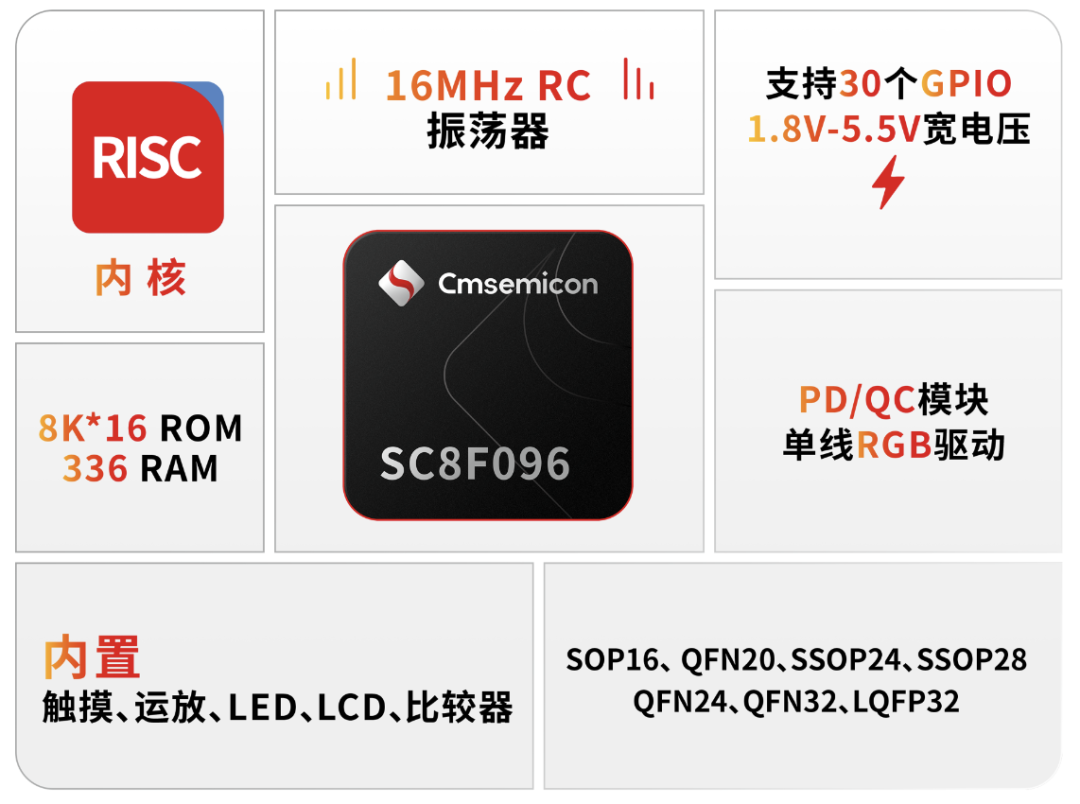
Fourth is Zhongwei Semiconductor, which launched the new 8-bit RISC core MTP chip SC8F096 series in May. In fact, even though the price of 32-bit MCUs has been decreasing, there is still a significant market for 8-bit MCUs, as many scenarios do not require such complex MCUs, so 8-bit MCUs are still evolving.
The SC8F096 integrates rich resources, with a built-in 16MHz RC oscillator, providing 8K×16 ROM and 336B RAM storage combinations, supporting 30 GPIOs and a wide operating voltage of 1.8V-5.5V, with built-in touch, operational amplifiers, comparators, LEDs, LCDs, PD/QC, and single-wire RGB drivers. It is currently the most resource-rich series of 8-bit RISC core products under Zhongwei Semiconductor, providing innovative solutions for cost-sensitive projects.
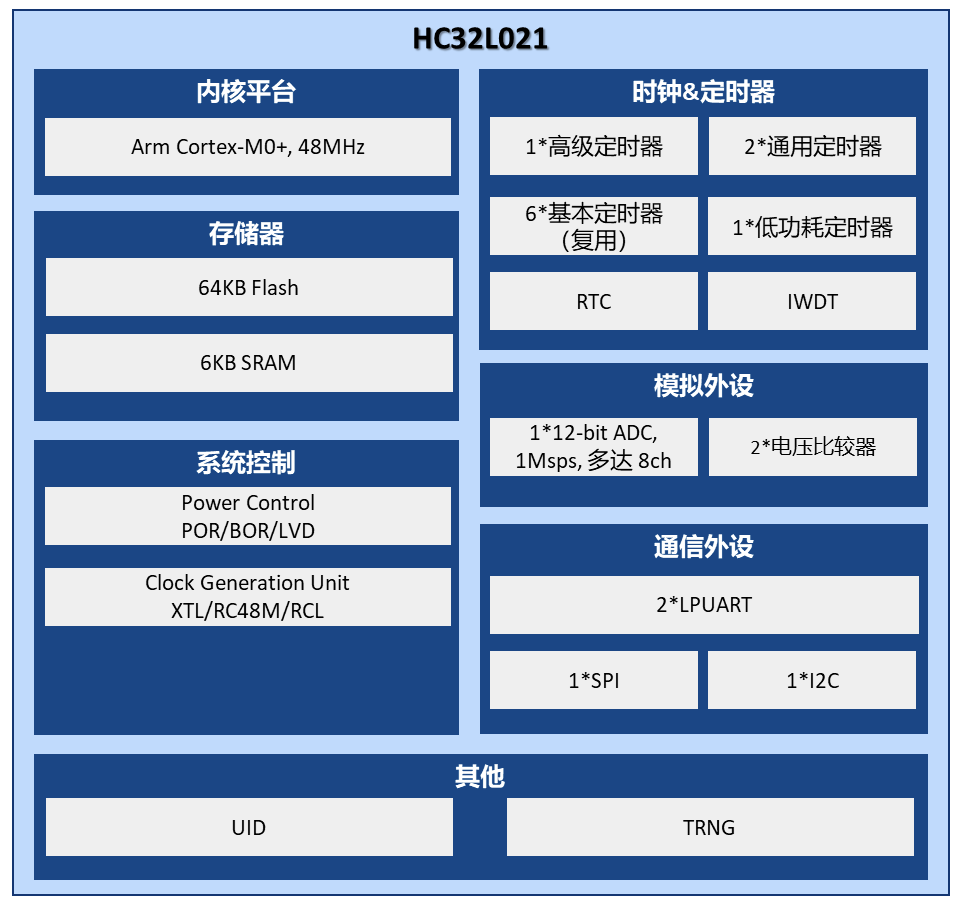
Fifth is Xiaohua Semiconductor, which released the ultra-low power MCU — HC32L021 in April. This product is positioned to compete with 8/16-bit MCUs, offering outstanding overall performance.
In terms of ultra-low power consumption, the HC32L021 employs advanced power management technology and domestic ultra-low leakage process technology; functional and performance optimizations are reflected in the careful design of computation speed, data processing capabilities, and peripheral interfaces, such as a working main frequency of 48MHz, optimized high-precision high-speed internal clock, low-power timers, and serial communication interfaces. The specific product block diagram is as follows:
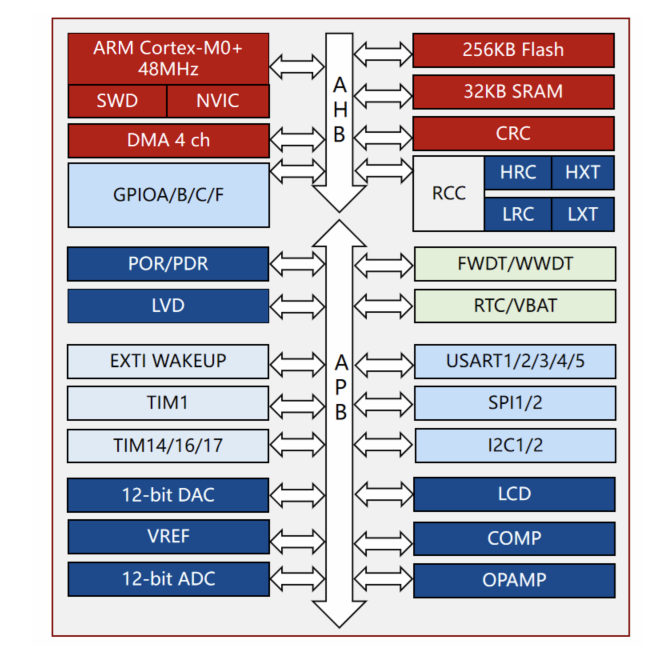
Sixth is Chipsea Technology, which launched a high-capacity, cost-effective MCU — CS32F090 in May. Currently, MCUs are also pursuing edge AI and machine learning, where storage capacity is key. The CS32F090 series features four major characteristics: “large capacity storage, high integration of analog, ultra-low power consumption, and wide voltage,” targeting application fields including consumer electronics, industrial automation, medical devices, etc., such as pads, vacuum cleaner battery packs, e-bike battery packs, floor cleaning machine controllers, gas detectors, and electronic blood pressure monitors. The specific block diagram is as follows:
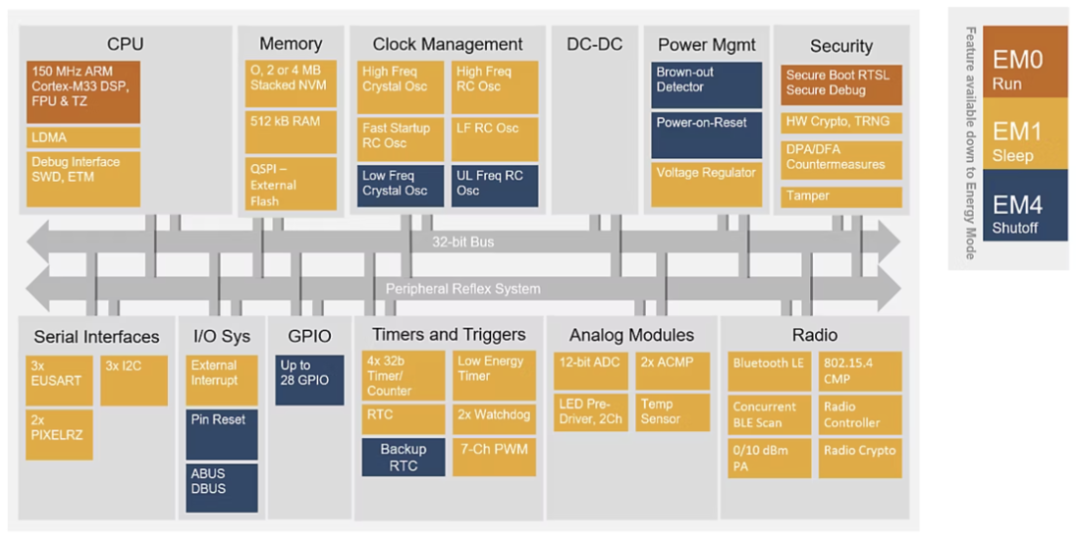
Seventh is Silicon Labs, which launched a 22nm multi-protocol wireless SoC on May 22, including two products: SiXG301 for line-powered applications and SiXG302 for battery-powered efficiency.
SiXG301 features a 150 MHz Arm Cortex-M33, 4 MB of Flash, and 512 kB of RAM, supporting our concurrent multi-protocol (CMP), which allows Zigbee and Matter over Thread to run simultaneously on a single device, simplifying SKU management for product manufacturers and enhancing end-user usability. The specific block diagram is as follows:
Summary
The competition in the MCU market is endless, as everything requires MCUs, and for different scenarios, we need various power consumption, performance, and functionality of MCUs.
Overall, currently, robotics is a hot pursuit for MCU manufacturers, with wireless MCUs focusing on BLE 6.0 and multi-protocols like Matter and Zigbee being key, while industrial MCUs supporting EtherCAT is a major trend, and automotive MCUs focusing on digital keys, high integration, and high performance are hot topics.
In addition, AI is also a hot topic for MCUs. Just yesterday, Nordic Semiconductor announced the acquisition of intellectual property and core technology assets from Neuton.AI. Neuton.AI is a pioneer in developing fully automated TinyML solutions for edge devices, combining Nordic’s nRF54 series ultra-low power wireless SoCs with Neuton’s neural network framework to bring scalable high-performance AI to the most resource-constrained devices. Previously, Renesas completed the acquisition of the American startup Reality AI, which develops machine learning models (with TinyML as its business) in 2022, and Infineon acquired the Swedish startup Imagimob AB in May 2023, which focuses on TinyML and AutoML.
Clearly, the competition in the future MCU market will only become more intense.
· END ·
Follow the subscription account of EEWorld: "Robot Development Circle"
Reply "DS" to receive the complete version of "DeepSeek: From Beginner to Expert"

Scan to add the assistant and reply “robot”
Join the group to exchange experiences face-to-face with electronic engineers