
Compiled by | Su Mi Produced by | CSDN (ID: CSDNnews)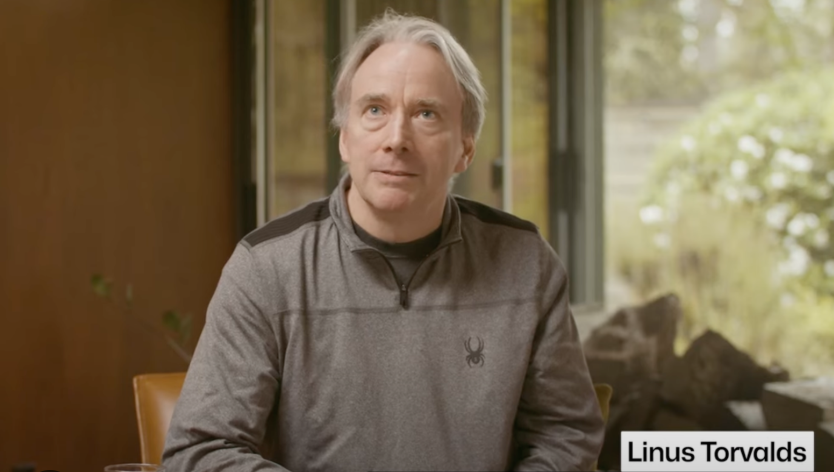
-
“In the past nearly 20 years, I have actually not been a programmer anymore.”
-
“As for Git, which I invented, I am now just an observer.”
-
“I used to say my job was to reject proposals, but now I have to say ‘agree or disagree’ in the face of opposition from some long-term maintainers.”
-
“Vibe Coding allows people to do things that were previously impossible, but from a maintainer’s perspective, maintaining the code it generates could be ‘terrible’.”
These words are not a joke or self-deprecation, but a sober confession from Linus Torvalds, the father of Linux and the inventor of Git, in the face of technological waves.
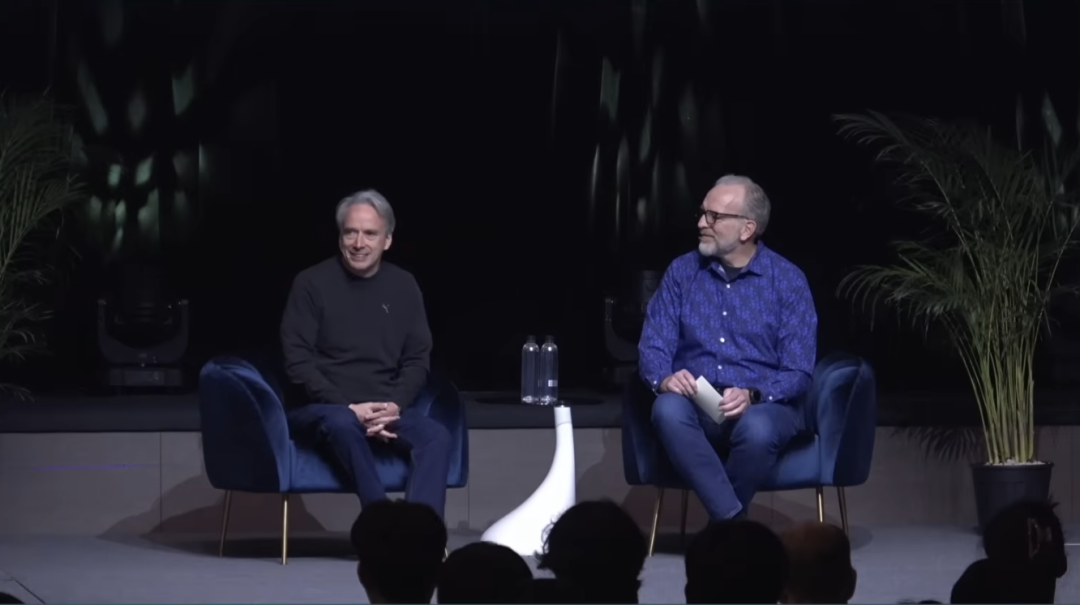
Earlier this month, Linus Torvalds had a conversation with Dirk Hohndel, the head of open source at Verizon, at the Linux Foundation Open Source Summit held in Seoul, South Korea. He talked about his role change, how AI is reshaping software development, and his thoughts on the increasing reliance of hardware on Nvidia’s proprietary GPUs and CUDA rather than open-source Linux. He also discussed the conflicts caused by Rust within the kernel team, the serious interference of various AI crawling tools on kernel.org, and the pressures he faces daily and how he alleviates them.
In the current AI wave that is almost rewriting the fate of developers, Torvalds admitted that he is not using AI to assist in writing code, nor has he even tried it. “But I am sure someone is already researching whether it is applicable to the kernel codebase.” When asked if AI would make programmers’ jobs disappear, he simply replied, “AI is just another tool, like compilers that freed people from writing assembly code, greatly improving productivity, but it hasn’t made programmers disappear.”
Of course, if someone disagrees with his views, they can email him. However, he said, “I can almost guarantee I will read it, but I can also almost guarantee I won’t reply.” He joked, “I rarely reply to emails. If you don’t receive a reply from me, it means I am quite satisfied. I just don’t let people know. I apologize for that.”
The following is the complete content of this conversation:

“I am no longer a programmer; many things are not done by me, but rather I am watching Linux move forward.”
Dirk Hohndel: My name is Dirk Hohndel, and I am responsible for open source work at Verizon. I have been involved since the founding of the Linux Foundation, and my exposure to Linux is almost as long as this gentleman on stage—because you are…
Linus Torvalds: Yes, I am Linus. We are doing this interview because I hate public speaking. In contrast, I have no idea what Dirk will ask me, but that makes it much easier. For many years, we have had these chats once or twice a year. This format is not new; compared to traditional speeches, this way makes me feel more comfortable as someone who usually does not like the ‘public figure’ identity.
Dirk Hohndel: Indeed, this is our 28th conversation, which is quite interesting. The last time we were here was exactly ten years ago, and I am glad to be back in Seoul. For me, every time I come to Asia is fascinating; the way people here view open source and software development is different, and it is a completely different world, which I find very intriguing.
Linus, ten years ago you just released Linux 4.8. Would you like to briefly summarize the biggest changes over the years?
Linus Torvalds: Indeed, a lot of work has been done. But I want to emphasize something I often repeat because it is important—the real work is not done by me. For nearly twenty years, I have actually not been a programmer; I am more of a technical lead and maintainer of the system.
It is true for Linux, and even more so for Git; now I am almost just an observer.
I want to remind everyone that the real contributions are made by others, perhaps by those sitting in the audience.Many people attribute the credit to me because I have been involved in the Linux project, but in fact, I am more of a “watcher” of this kernel project moving forward.
Dirk Hohndel: Looking back over the past ten years, what has impressed you in the evolution and development of Linux?
Linus Torvalds: What impresses me the most is—I used to say that one day this project would be “finished.” But that was a long time ago. I have been doing Linux for almost 35 years, and I do not feel there will ever be a point where we can say, “Okay, that’s it.”
In fact, I gradually realize that for all truly long-standing projects, the core work is actually maintenance and ongoing support. Especially for the kernel, I discussed with Greg(Greg Kroah-Hartman, Linux kernel developer) yesterday that as long as new hardware continues to emerge, there will always be new work on the kernel side. But even without new hardware, I am somewhat surprised that after 35 years of the project, we are still modifying the core kernel code to make it cleaner, more maintainable, and more stable.
At three o’clock this morning, due to the time difference, I was still discussing how to clean up some code.
For a system like Linux, the real work is in continuous maintenance, keeping everything running smoothly, while facing new challenges—whether from hardware or from the ever-changing software ecosystem.
Dirk Hohndel: If we look at the process, the development model of the Linux kernel has been very stable over the past 15 years. However, this is “too boring” for the media. People often focus on the moments when you raise your voice or any scene where you reject a proposal. In your feeling, has the situation improved? Or worsened? Or is it about the same? How often do you feel the need to say, “We are not doing this thing”?
Linus Torvalds: One change is very obvious: I used to say that my job was mainly to say “no.” People propose various radical new ideas that may be interesting, but as soon as I hear them, I know they will be a maintenance nightmare, so I would say, “No. You put it in your sandbox, do it, prove me wrong with data, and then come back to me.” I feel that is a large part of my job as a system maintainer.
But in the past few years, I have found that sometimes my job is to say “yes.” Because… you know, in this circle for so long, with hundreds of maintainers who have been around for decades, people have become a bit set in their ways. Sometimes you want to break the deadlock and say, “Hey, we need to try this new thing,” and I am the one who says, “Okay, let’s do it.”
For example, with the adoption of Rust, even though we have been working on Rust for five years, it is not a completely new thing. But at the time, I felt that the kernel should not stagnate; we need to do something new, and we also need to attract new people to join.
This is one of the biggest changes for me: I now need to encourage other maintainers to be more open to new ideas.

“Rust has become a part of the Linux kernel, and it took longer than I expected”
Dirk Hohndel: Rust is one of the examples I wanted to mention. I noticed that although Rust has been around for five years, it has only really entered the kernel code for about three years, and it has indeed sparked a lot of discussion and controversy.
Some people have expressed their frustration, and there have been debates over code formatting issues or inconsistent review opinions on unfamiliar language code. Some maintainers even withdrew because of this. Do you think all of this is worth it? Is it really worth disrupting our development process to introduce new technology?
Linus Torvalds: I think it is worth it. But I also believe that Rust has indeed attracted a lot of media attention, perhaps because it is more prominent in the kernel. Of course, there is also obvious Rust code in other areas, but in fact, we have disagreements in almost every area of the kernel because that is part of new development and bug discovery. People can get very passionate when defending their views, but in this sense, Rust is not fundamentally different from other areas; it just happens to be more newsworthy.
I think we have now reached a stage (Greg may elaborate, as he is paying more attention than I am)—Rust is truly becoming a part of the kernel, rather than just an experimental thing.
Of course, it has taken longer than I expected, no doubt about it.
Dirk Hohndel: In fact, the previously more noticeable “intense controversy” was not entirely related to Rust. The first removal of a component from the kernel was not related to Rust; it was entirely due to interpersonal relationships.
Linus Torvalds: That’s right; this year has been a bit turbulent. We have had many disagreements, and we even moved some kernel functionalities out of the kernel to reduce friction.
However, to be fair, this is not the first time such a thing has happened. There have been some modules in the kernel that are no longer used or have serious issues that have been removed. In 35 years, such situations have been rare and not pleasant, but I think we have handled it quite well. After all, this is a large project, with thousands of people involved in each release, every two months. You will have personal disagreements, professional disagreements, and friction. That is all part of life. I think we are still a happy family overall.
Dirk Hohndel: I would prefer to describe it as a group of very mature people who have found ways to coexist. But I will go along with your description of a “happy family.” Usually, this is the first thing I ask you, but at the end of the first part: Do you have anything to say about version 6.18 RC4?
Linus Torvalds: No. That is the current kernel version. I like “boring.” For me, “boring” means there are no super exciting new features, and it won’t cause millions of machines around the world to crash. 6.18 does not seem to be a problematic version. We had a series of test failures, but the results showed that, to a large extent, it was actually the tests themselves that failed, not the kernel. A few weeks ago, I was a bit worried, but now it seems to be heading towards another incremental, boring— in the best way—release version.

The Rise of Nvidia and AMD Hardware and Its Impact on Linux
Dirk Hohndel: If we look at significant changes in the industry, I think one of the biggest changes is in hardware. For decades, everything revolved around CPUs; everyone talked about CPUs. Who has the fastest CPU, the best architecture. In recent years, with the rise of companies like Nvidia and AMD, accelerated processors (APUs) have become the focus.
Interestingly, while these processors are related to Linux machines, they are not actually running Linux. What do you think about this trend of hardware focus gradually moving away from Linux?
Linus Torvalds: I don’t see it that way. I still think the most interesting part is the general-purpose CPU. It may not be in the news as frequently because it has been around for a long time, and people are used to it. What Linux does is maintain the system, boot the system, handle the UI, and all the things you expect the system to do. The AI part is the new darling of the industry, and that’s fine. However, it is not completely independent; it is a different environment that Linux helps nurture and realize, and I do not feel that the kernel needs to be an extremely indispensable part of it.
For me as a kernel maintainer, it is not fundamentally different from user space. Although I personally love open source and do not want to participate in non-open-source projects, open source has never been a religious belief for me. I do open source, and Linux is also open source, but people have been running commercial applications on Linux for a long time, such as large databases, cloud services, etc., which is perfectly normal.
For me, GPUs are just another form of the same thing; you run your AI workloads on top of the kernel. The fact that there is its own system to maintain GPU hardware is usually not something Linux needs to worry about too much. We are actually involved in it to some extent. There are many resource management, virtual memory handling, and other things that the kernel is deeply involved in.
This is actually one of the benefits brought by AI; it has made Nvidia a good participant in the Linux kernel field. It is well known that this was not the case 20 years ago. Now, as Linux becomes so important to AI cloud, Nvidia suddenly cares a lot about Linux, and we have many kernel maintainers in that area. So this is one of the positive aspects of the AI boom.

“The application of AI in the Linux kernel is at best experimental; I have never played with AI-assisted code”
Dirk Hohndel: I think it is always a very positive thing when a vendor embraces what we do and gets involved. That’s great. Since you have mentioned AI so many times, I have to talk about it.
Last year we talked about the potential of AI or generative AI for code review and code explanation. The Linux kernel community has done a lot of work around this. What is the current progress?
Linus Torvalds: Well, it is not in place yet. Indeed, there are many people doing a lot of work, and some are trying to use AI to help maintainers handle patch flows, backport patches to stable versions, etc. To be honest, most of it is still experimental. The biggest problem we encounter is that AI has a significant interference with the infrastructure. For example, AI crawlers are everywhere grabbing kernel.org source code, which causes huge trouble and is not always pleasant.
However, there are also some good aspects. I look forward to the day when AI is no longer overhyped, but becomes more of a daily reality that no one keeps talking about. Obviously, that day is still a few years away. I think exciting new technologies are always a topic people want to talk about. Of course, with trillions of dollars invested, people are increasingly curious.
Dirk Hohndel: One thing that impressed me was at the Amsterdam Open Source Summit, where Daniel Stenberg from Libcurl mentioned that low-quality security reports generated by AI have almost become a “denial of service attack” on his project. Have you encountered similar situations on the kernel side?
Linus Torvalds: We have had similar issues on the kernel side, but not as severe. However, we have indeed seen some bug reports and security announcements that are clearly fabricated by someone abusing AI. This takes up maintainers’ resources. In some projects, this problem is more severe than in the kernel.
Dirk Hohndel: Of course, the other topic everyone wants to talk about is AI-generated code. I often compare it to “enhanced auto-correction” because AI is indeed great at code completion, syntax checking, and standard library usage. On the other hand, the agentic AI that is being talked about a lot now—basically, you tell AI, “Hey, Claude, I want you to develop this feature,” and some even say, “With the help of AI, I developed a complete product in a week.” Have you played with these things yourself?
Linus Torvalds: I have never played with it at all. But I am sure someone is researching it and even wants to apply it to the kernel codebase. However, I think the kernel is complex and special enough; although we have open-sourced a lot of code for AI to learn from, it is difficult to apply directly to the kernel. I estimate that very few people would write kernel code using Vibe Coding; it is more likely to be used in their small projects.
In fact, I think most of this is a good thing. When I was a kid, I learned to use computers in a very simple way, typing out programs from magazines bit by bit. That was how I fell in love with computers.
Now computers are too complex, and programming requirements are much higher, making it much harder to get started than when I did. If Vibe Coding were used to create formal products, it might be a terrible idea from a maintenance perspective. But it is indeed a good way to get newcomers involved, experience the fun of programming, and do things that were previously impossible. So I generally maintain a positive attitude towards it.
Dirk Hohndel: What I mean is that this thrill clearly exists; entering a new programming language, a new environment, a new library set, and letting the tools do 90% of the work is very exciting. But I have spent a lot of time on this; the tools can help you do 90% of the work, and they do it very well. But that remaining 10%…
Linus Torvalds: That remaining 10% has occupied 34 years of my 35-year project career.
Dirk Hohndel: Exactly. So there are many opportunities to create great things, but it is also very necessary to make these things truly land. However, we have indeed seen a lot of discussions about layoffs of software developers; there has been a real wave of unemployment in the United States, with thousands of people being laid off. The reason is usually, “Oh, AI has made us more efficient.” If you think about the students who are still studying computer science today, do you think the profession of software development will be significantly affected?
Linus Torvalds: Honestly, I don’t know. This is one of those questions where I would say, “Hey, let’s wait a few years and see what the real answer is,” because I think it is a complex issue.
I personally guess that you will find that you need just as many maintainers to keep the projects running. AI is just another tool, like compilers that freed people from writing assembly code and greatly improved productivity, but it hasn’t made programmers disappear.
I think AI will ultimately be the same. It is another tool that allows you not to deal with all the minutiae, but it will not make real programmers disappear. That is my intuition. If anything, it may make people more efficient, but it also opens up entirely new development areas, so you will actually end up needing more software programmers.
Dirk Hohndel: That is exactly what I think. If you gain these productivity improvements, you can do a few things. You can say, “I can do the same thing with fewer people,” or “I can do more with the existing people.” For me, one of the biggest opportunities of generative AI is that we can do things that were previously impossible to demonstrate prototypes due to high initial barriers. So from my perspective, today’s computer science newcomers can express ideas, do demos, or prototypes with modern tools, which is as important as writing a bubble sort 20 or 30 years ago.
This is interesting because it does change the content of software engineers’ work and the way you interact with systems. I think your comparison to assembly language and machine code is very apt. Or the transition from C (which is still used by some) to object-oriented languages is also similar.

Homemade Guitar Pedals to Relieve Stress
Dirk Hohndel: We have talked so much about software; let’s talk about hardware. Some people really have very strange hobbies. For example, some people make pedals for string instruments. Can you talk about your experience with guitar effects pedals?
Linus Torvalds: This very strange hobby was born from: Last Christmas, I started making guitar pedals for fun. It makes no sense because I have no musical talent and have never touched an electric guitar in my life, but I wanted to learn electronics. So I started making guitar pedals, first with kits, then designing my own. They all turned out terribly. I actually do not want to encourage others to do this because it is meaningless. After all, all modern guitar pedals are digital.
But the reason I did it is that I believe—and I encourage everyone—when you have a high-pressure, high-risk job, and you feel the need to do something else to relax, you should find a hobby where failure is not only expected but actually fun.
It doesn’t have to be guitar pedals; it can be anything, anything at all. For me, the point of interest happens to be soldering and making hardware; I know I am completely incompetent in this area, but I really enjoy it. Some people think failure is a bad thing, but I happen to be the kind of person who likes to do things I am not good at because that is how you learn. You have to accept that you will fail. I have been doing it for a year and still haven’t fully learned (laughs).
Dirk Hohndel: I disagree; I have a few pedals you made, and they are getting better and better.
Linus Torvalds: This is something I would encourage anyone in this industry to do because this field can indeed be quite stressful. Especially if you are doing open source, at least for me, the most stressful part is often the people. I do not feel any pressure from the technology. But sometimes when you have disagreements, and you really want to say, “I want to take a break; I need to do something completely different,” that is when you need a hobby or something where you can say, “Hey, this has nothing to do with my work, and it doesn’t matter if I mess it up.” For me, that is electronics.
Dirk Hohndel: I find it interesting that the electronic hardware you make is quite simple, while the Linux open source project you are responsible for is one of the most complex things in the world. This strong contrast fascinates me.
Linus Torvalds: Yes, my electronic hobby is actually getting more “backward.” I started making slightly fancy integrated circuits, and then I started to go backward; now I am playing with and really understanding how a single transistor works. My job is to deal with trillions of transistors, while my personal hobby is dealing with three transistors. So that is my two extremes in hardware.

Linus’s Daily Routine: Reading Emails but Rarely Replying
Dirk Hohndel: You mentioned earlier that you no longer write software; you are a manager. Now we know that you usually play with relatively simple hardware. So what exactly do you do in your daily routine?
Linus Torvalds: The reality is that I sit in front of the computer every day reading emails. I almost never reply to emails. If you email me, I can almost guarantee I will read it, but I can also almost guarantee I won’t reply. I reply to emails very rarely.
In fact… I feel a bit sorry. Not only for everyone who emails me but also for those developers who only see the complaining side of me. People think I am an angry, grumpy old man because the type of emails I reply to are often about various issues that arise. And when everything goes smoothly—which is actually the vast majority of the time—I do not send emails saying, “Thank you, this is well done.” So if you don’t receive a reply from me, it means I am quite satisfied. I just don’t let people know. I apologize for that.
Dirk Hohndel: I think this is a good point to end; this message indicates: Linus is actually a very friendly person, just hiding his good intentions.
Linus Torvalds: In my heart, I am very happy. It’s just that my outward expression is not always that way, and I sincerely apologize for that.
Source: https://www.youtube.com/watch?v=tWx769t1JKg
END