
In September 2025, Yushu Technology announced the commencement of its IPO process. This means that the entire sector, which has an annual shipment volume of only a few thousand humanoid robots, is expected to welcome its first publicly listed company on the A-share market.
Is this early-stage technology industry being prematurely accelerated by capital? Wang Xingxing recently stated at the Bund Conference, “Currently, using AI to make robots work is still a barren land.”
Who is currently paying for humanoid robots? Stripping away the beautiful pictures that only exist in interviews with various bosses, we attempt to narrate the industry reality seen by a young man who wants to “take a gamble” while selling humanoid robots: Under the windfall, how do people “collaborate for a future” and turn this story of the future into real money today? This is precisely what makes Li Zhe’s perspective unique.
“Chaos is a ladder.” Only with bubbles can there be opportunities.
Tencent News “Qianwang”
Written by | Gu Lingyu
Edited by | Liu Peng
Li Zhe hesitated before giving up a million-dollar salary at a large company to switch to selling humanoid robots, but soon his concerns were swept away—after joining a well-known robotics company, he quickly secured a contract worth six figures, transforming a single vehicle into a motorcycle, and his dreams seemed closer than ever.
In 2025, humanoid robots are becoming the “windfall of windfalls,” regarded as the next generation of smart terminals after mobile phones and cars, and a gateway connecting AI with the physical world. In the first half of 2025 alone, this sector attracted over 4 billion in financing domestically, with 9 financing rounds exceeding 500 million.
The windfall has arrived, and Li Zhe is eager to enter the market. I urged him to chat, but every time I reached out, he was “too busy sprinting contracts” until one day he finally got off work before midnight, and we finally met.
“I just delivered this batch of products.” After a whole day of work, his excitement was hard to conceal. He sent me a video from the delivery site. In the footage, a life-sized humanoid robot was “moving” in the showroom—more accurately, it was shuffling. This humanoid robot clearly struggled with the smooth marble floor, moving slowly as if it were drunk, looking like it could stumble at any moment.
“Don’t be fooled by its appearance; it’s priced at several hundred thousand, and that’s the ‘friendship price’ for major clients,” Li Zhe said. If this price were used to buy a car, you could get two Xiaomi YU7s.
“You cannot have any unrealistic fantasies about the current capabilities of robots. Those flashy robot demo videos you see are beautified; sometimes even the actions on the exhibition stage are not real and require human control,” Li Zhe said.
His friend actually witnessed a robot drop its head during a demonstration, creating a very awkward scene.
It is generally believed that large-scale commercialization of humanoid robots is still at least 3-5 years away. However, if the capabilities of robots are still so rudimentary, what kind of “fool” is buying them? How much fluff is there in the prices, orders, and production capabilities of various companies? I was extremely curious.
Li Zhe believes he is standing at a huge era windfall, and whether he can achieve a career leap depends on the performance in the next few to several months.“The financing bubble for embodied intelligence will soon burst, and major companies will enter the market. If we don’t work hard now, when will we?”

Selling robots is about selling “scarcity”; we must learn from luxury goods.
“Chaos is a ladder.” This line from “A Song of Ice and Fire” perfectly describes Li Zhe’s career choice. He knew before switching careers that humanoid robots were still in their early stages and the situation was chaotic, but this not only did not deter him; it instead made him sense hope.
“Only with bubbles can there be opportunities, attracting capital and public attention, and allowing for higher prices.”
The International Data Corporation (IDC) report shows that in 2024, the commercial sales shipment volume of humanoid robots in China is expected to be around 2,000 units. This scale, in other manufacturing industries, would likely signal a collapse; but for embodied intelligence, this scale has attracted over 140 financing rounds this year alone and supported several companies with valuations exceeding 10 billion.
In fact, if it weren’t for the abundance of bubbles, Li Zhe wouldn’t have come. His career history is impressive, never lacking offers from large companies, but lacking upward opportunities. “Now, promotions in various industries are saturated; the only way to make a big leap is to enter a new industry and take risks, so that one does not get eliminated in mid-life.”
After entering the industry, Li Zhe often takes demo videos to run after clients: in the videos, humanoid robots move smoothly and naturally, capable of making coffee, handing over items, and autonomously navigating and avoiding obstacles in complex environments, making pauses that resemble “thinking.”
“Don’t believe any of that. Humanoid robots are currently only mature in interactive displays,” Li Zhe said.
He categorizes humanoid robot capabilities into three levels: interactive intelligence, motion intelligence, and operational intelligence. Interactive intelligence refers to acting as a guide at exhibitions, which all companies can do. Motion intelligence refers to running and jumping, mainly targeting the research market, with far fewer clients. Operational intelligence refers to replacing human complex labor—this is the ultimate goal for humanity, but at this stage, it basically only exists in interviews with bosses.
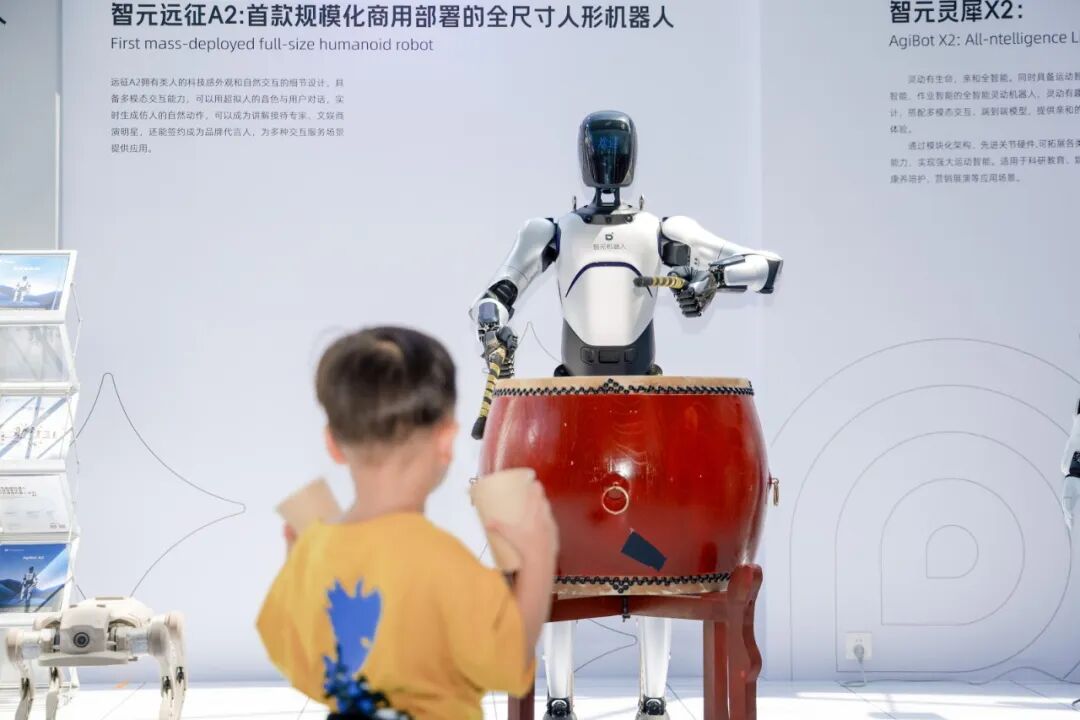
Intelligent robots at the Bund ConferenceSource: Intelligent Robots
Currently, the robots sold in the industry mainly use interactive intelligence, with buyers mostly being brand departments of large enterprises, various exhibition halls, and event organizers, used for explaining exhibitions, guiding events, and stage performances. Very few can enter industrial production.
Li Zhe’s first client was a company related to exhibitions.
Initially, he made a mistake. He tried to sell to the executive level of the client’s brand department, but faced with these “display guides” priced at hundreds of thousands, even if they were interested in purchasing, they couldn’t make the decision. After several setbacks, Li Zhe quickly found the right path: he figured out how to get the boss’s contact information and directly secured the top position.
Some believe that currently, when companies buy robots, they are not buying the robots themselves, but a brand—showcasing the company’s innovative image, buying marketing value, and emotional value.Therefore, only management who can make decisions about the overall image of the company are likely to make the purchase.
Thus, many humanoid robot companies share an unspoken consensus: the marketing department is, to some extent, more important than the R&D department.This is because when clients purchase, they are primarily buying the “brand” of humanoid robots, the attention, the technological sense conveyed by the brand, and the recognition that makes the other party nod and understand.
Just like buying luxury goods, buyers are purchasing the identity recognition brought by the brand, while the product’s capabilities are secondary.
One of Li Zhe’s colleagues has thoroughly learned the “nonchalant” attitude of luxury goods sales. Typically, people are very cautious when receiving cold sales calls, but this colleague’s method of developing clients is to call using the company’s official website contact, starting with a plain statement: “Hello, this is XX Robotics, hoping for a potential collaboration,” and the person receiving the call is often willing to continue the conversation.
This straightforward confidence stems from the product’s brand power and “sense of prestige.”

Good days last at most six months; we must work hard to sell.
“Many clients think that robots have already entered the ‘price war’ stage of domestic cars,” Li Zhe said. He often needs to correct clients’ perceptions: the humanoid robots priced below 100,000 on the official website are not meant for clients but for investors and onlookers.
If you look at the PR materials of leading robots, they often list prices below 100,000: the price of the Zhongqing SA 01 is 38,500, Yushu R1 is 39,900, and Zhiyuan Lingxi X2 Youth Edition is 98,000. However, these products are often very basic, sometimes only including hardware, and clients need to do secondary development after purchasing. The versions priced at hundreds of thousands include the software, algorithms, and customized services that clients truly need.
This has effectively created two price points: the “display price” and the “purchase price,” which is a common practice in B2B business,” Li Zhe explained. The display price is for the public and investors: companies need to create a sense of prosperity with low prices to maintain capital market heat; the purchase price is the real price clients have to pay, and due to most companies currently having insufficient production capacity, many can only deliver months later, with very few able to deliver within a month.
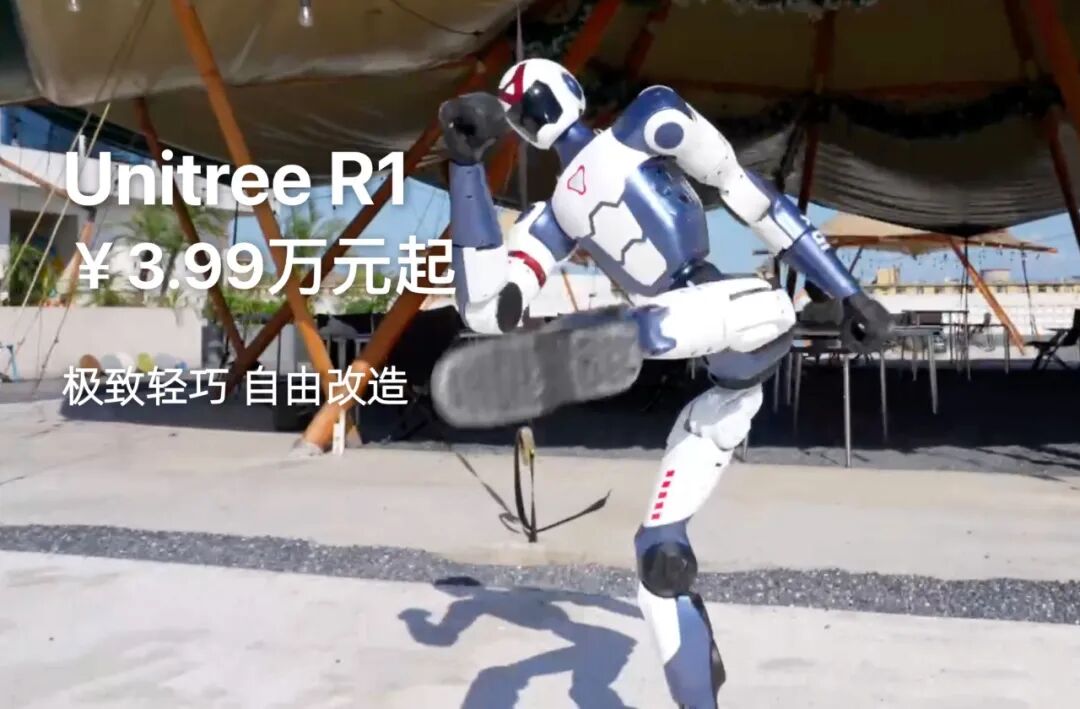
Yushu Technology humanoid robot R1 starts at 39,900. Source: Yushu Technology official website
“It’s somewhat like the factory price and retail price of luxury goods; many clients still think they can buy a watch or a bag at factory price anytime.”
Why is production capacity so scarce? A R&D head of a leading robotics company stated: first, the supply chain for humanoid robots is not as complete as reported; second, companies are uncertain about future order scales and are cautious about production; third, the hardware design of robots has not yet stabilized and is still rapidly iterating, so large-scale production is not necessary.
This has created a spectacle: although bosses assert in interviews that “the future is just around the corner,” many are skeptical about investing in automated production lines. In the futuristic humanoid robot industry, most companies still rely on manual assembly for production and have not yet introduced automated assembly lines.
Moreover, many companies regard “self-developed motors and joint modules” as core competitiveness, avoiding the use of generic components. This requires more skilled technicians, whose training cycles are long and will not magically appear just because robots are booming.
Li Zhe’s company is one of the few in the industry with actual mass production capabilities, which gives him more confidence in pricing his products.
However, such good days are also limited. “Right now is the time of highest profit; in a few months, the same order may need to be priced down by more than 30%,” Li Zhe lamented.
His judgment is that in China, the supply chain is strong enough to develop on a weekly basis, and by the end of this year, the mass production capabilities of various companies may significantly increase, narrowing the advantages of leading companies.
“Now we must sell hard and quickly. This is the last remaining window period.”

Striving to be the “NIO of embodied intelligence,” stockpiling supplies before the bubble bursts.
Undoubtedly, manufacturers need orders to prove that “they are the NIO in the field of robots.” This is crucial for the survival of the company.
Humanoid robots are costly, with low output and lack of scenarios; startups must enhance their commercialization capabilities while seeking external funding.
UBTECH is a good example. Even though it has gone public, its financial report shows that in the first half of this year, UBTECH’s growth mainly relied on revenue from cat litter boxes, swimming pools, and educational robots, which grew nearly 50% year-on-year—these cash cows support its humanoid robot business, which only shipped 800 units this year, and accounted for 35.1% of its R&D investment. Meanwhile, the company is actively seeking various funding support.

UBTECH went public in 2023, becoming the first humanoid robot stock, but its main products are not humanoid robots.
Source: UBTECH official website
“And now these companies are valued very high, and future financing will become increasingly difficult. They must present orders to prove they are leading and have commercialization capabilities to continue attracting investment until they go public,” said the aforementioned R&D personnel.
He stated that to secure orders, many companies in the industry are competing for orders, even inflating orders, securing relationship orders, and engaging in “left-hand to right-hand” order phenomena.
“With orders, there is financing; with financing, there is a future,” Li Zhe said. Now ordinary companies want to seize the opportunity to secure financing, while leading companies aspire to become the “NIO of humanoid robots.”
An obvious fact is that NIO experienced years of losses in its early stages but still achieved success, not as a mass production car company but as a startup successful in capital operations and operational thinking.
Recently, leading manufacturers like Yushu Technology, Zhiyuan Robotics, and UBTECH have been releasing news of large orders worth hundreds of millions. Moreover, in July this year, Zhiyuan Robotics reverse-acquired A-share listed company Shuangwei New Materials; in September, Yushu Technology announced it would submit its IPO prospectus in the fourth quarter of this year, all vying to become the highest premium “first stock of embodied intelligence.”
“The earlier you go public, the better. The market will soon calm down, and by the time the third company goes public, it may be difficult to issue shares,” a certain financial advisor revealed.
It is widely believed that the money in the domestic primary market is insufficient to support most companies to survive until the industrial mass production stage. Leading companies must compete for the first few IPO tickets, and going public is also a brand endorsement for the company.
With this endorsement, the original brand advantage may truly become an all-around advantage.
The industry is accelerating forward. According to the figures mentioned by Yushu Technology CEO Wang Xingxing in a recent speech, in the first half of 2025, each company in the humanoid robot industry is expected to grow by 50%-100%. In the coming years, the global humanoid robot industry shipment volume is expected to double each year, and if there are greater technological breakthroughs, it is possible to ship hundreds of thousands or even millions of units in a year within the next 2-3 years.
A beautiful picture is slowly unfolding.
However, Li Zhe does not believe this is only beneficial for startups.
“Right now, this stage is equivalent to the starting gun just fired; the marathon has only run the first 100 meters.” Li Zhe said. “It’s still these new startups competing. But once the technology converges and the industry matures, Tencent, Alibaba, ByteDance, Huawei, Xiaomi, and those traditional industrial robot giants will all come down to pick the fruits.”
They have both the funds and users, as well as supply chain integration capabilities, which we cannot compete with.
The good days for startups are now; he must seize every moment to sell a few more orders.
Recently, he has felt the temperature of industry commercialization rising, with many peers expanding their sales teams, and the competition for orders becoming more intense. Li Zhe is flying between different cities, attending every exhibition, and not missing any sales leads.He is betting on these recent months for a career leap and a financial turnaround.
In addition to visiting clients, he also took time to visit Yonghe Temple to pray. This is a habit he developed at a large company: half relying on effort, half on luck.Although he speaks in a Buddhist manner, he still does not forget to seize every opportunity, just like he did in the past when facing every windfall. “Once I secure the order and deliver it, you must help me write about it. Bosses buy robots for publicity, and we must also make them feel that this money is well spent, truly worth it.”
(To protect privacy, Li Zhe is a pseudonym. This article does not constitute any investment advice.)
*Copyright statement: Content produced by Tencent News, unauthorized copying and reproduction is prohibited, otherwise legal responsibility will be pursued.