
Source: China Semiconductor Forum Editor: Liu WeiImage/Creative from TuchongThe electronics industry is experiencing a shift, last year manufacturers were chasing delivery, but this year they are pushing products onto customers!The role reversal within a year has left many in the electronics industry feeling deeply affected; the fluctuations in market conditions are as drastic as flipping a book. Industry insiders, who have served for over 20 years, express that they have never seen such a high inventory and low demand situation, the entire downstream market has suddenly shifted from extreme optimism to extreme pessimism.Reports indicate that the Taiwanese laptop brands Asus and Acer have inventory levels of 193.3 billion (154 days) and 63.8 billion (80 days) respectively in their first-quarter financial reports, while a major industrial computer manufacturer has inventory levels reaching 128 days. Every system manufacturer has recorded historically high inventory levels; last year they placed additional orders with confidence, but this year they are hesitant to meet suppliers even if they have broken promises, as a domino effect of declining consumer demand is rapidly spreading upstream.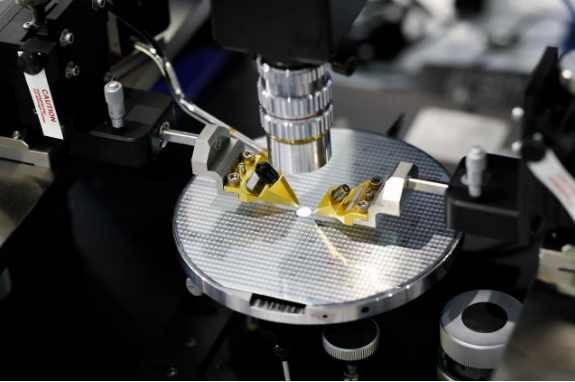 What caused the “high inventory, low demand” situation?Unreasonable demand has triggered a storm of order cancellations in the supply chain. In the electronics industry, subsequent orders are generally planned based on customer forecasts, which must be evidenced by email. In cases of unusually large orders, internal controls often require customers to pay a deposit to reduce material preparation risks or sign procurement contracts to clarify responsibilities in case client demand does not match orders. However, the electronics industry has long been dominated by client power, especially large clients holding significant market orders, leading suppliers to often sign unequal agreements with payment terms exceeding 120 days. It is not uncommon for clients to only provide forecast quantities without actual orders while demanding suppliers to prepare materials.Last year, amidst an optimistic atmosphere, brand manufacturers aggressively increased orders, urging system OEMs to prepare stock, and everyone was frantically competing for production capacity. The forecast quantities provided were abnormally large orders, often exceeding a growth rate of at least 30% compared to pre-2020 levels, with many even doubling. The unusually large orders excited many companies, leading management to have an overly optimistic outlook for the future, even signing NCNR contracts to secure priority supply (rather than guaranteed supply), resulting in this year’s tragedy where receiving large orders turned into receiving large burdens. This year’s storm of order cancellations in the supply chain was also ignited by unreasonable demand.Chip Prices PlummetDue to order cancellations in the supply chain and reduced demand, some chips from Texas Instruments that were priced around 100 RMB in March can now be purchased for 20 RMB, a drop of up to 80%.This wave of chip price drops is due to both declining market demand and increased production capacity from manufacturers. Semiconductor fabs typically take 2-3 years from construction to production. Chip factories that began construction in 2020 will start mass production in the second half of this year to next year. Texas Instruments previously invested $30 billion in four wafer fabs, with one factory starting mass production in the second half of this year and another expected to come online early next year, gradually alleviating the tight capacity issues.Market expectations indicate that analog chip prices will decline in the second half of this year, but foundries like TSMC, which derive half of their revenue from advanced processes of 7nm and below, can sustain for a while longer, with impacts expected in 2023.Intel has issued a warning: weak demand will drag down chip companies. On June 9, Intel executives warned that economic weakness would affect market demand and harm company performance. Intel’s CFO Dave Zinsner stated during a conference, “I feel there is some weakness in the macro environment, which is quite evident. Macro trends will affect Intel, and they will affect everyone, not just the semiconductor industry; global businesses will be impacted.”Market ForecastLooking ahead, the inventory storm that began in 2022 has already toppled, and it will be difficult to reduce inventory in the short term, especially for IC design companies. The reason is that upstream wafer foundries operate in an oligopoly, and offending suppliers makes it very difficult to secure future capacity. If clients are large customers controlling both design and demand, they cannot afford to offend either side, leading to a double-edged sword situation.Ultimately, the only solution is to wait for market inflation concerns to ease and for consumer demand to gradually return, which means inventory reduction may take at least one to two years. Industry insiders estimate that unless new revolutionary products emerge, inventory reduction may not be resolved until the second half of 2023.


Contact Us: qqmm-777 (Duty WeChat)Advertising and Business Cooperation: Phone 15053167995Submissions and Interview Requests: Email [email protected]
Copyright Statement: In addition to publishing original articles, the manufacturing industry is also committed to sharing excellent articles. Reprints must indicate the source and author; for reprint authorization requests, please leave a message at the end or in the backend. All rights reserved, violators will be held accountable.