Conformal coating is a specially formulated paint used to protect circuit boards and related equipment from environmental corrosion. Conformal coatings have excellent resistance to extreme temperatures; once cured, they form a transparent protective film that can protect circuits from damage under conditions such as exposure to chemicals (e.g., fuels, coolants), vibrations, humidity, salt spray, moisture, and high temperatures. Under these conditions, circuit boards may suffer from corrosion, mold growth, and short circuits, exhibiting superior insulation, moisture-proofing, leakage prevention, dust-proofing, corrosion resistance, aging resistance, mold prevention, component loosening, and dielectric strength.
Function of Conformal Coating
Humidity is the most common and destructive factor for PCB circuit boards. Excessive moisture significantly reduces the insulation resistance between conductors, accelerates high-speed decomposition, lowers Q value, and corrodes conductors. We often see copper green on the metal parts of PCB circuit boards, which is caused by the chemical reaction between uncoated copper and water vapor, oxygen. Applying conformal coating on printed circuit boards and components can reduce or eliminate the deterioration of electronic operational performance when subjected to adverse environmental factors. If this coating can maintain its effectiveness for a satisfactory period, such as longer than the product’s service life, it can be considered to have achieved its coating purpose.
Components of Conformal Coating
Acrylic Products: Acrylic conformal coatings are flexible and provide comprehensive protection. As a single-component system, they have good adhesion, are easy to operate, have low requirements for equipment and conditions, are convenient to apply, offer high transparency and brightness, and have short operation cycles, making them easy to use and remove. Some acrylic products meet military standards; they dry quickly without curing and can be removed with compatible organic solvents, making this type of circuit board conformal coating one of the most widely used and effective products on the market.
Is Conformal Coating Toxic?
The toxicity of conformal coating depends on the type of thinner and solvent used. If the conformal coating uses toluene or xylene as a thinner, these chemicals are harmful to the human body; however, if fatty acids or alcohols are used, they are less harmful. Xylene has moderate toxicity and can irritate the eyes and upper respiratory tract; at high concentrations, it can have a narcotic effect on the central nervous system. Although many so-called environmentally friendly conformal coatings have appeared in the market, it is still necessary to take protective measures during actual use, such as wearing gas masks.
There are four application methods for conformal coating:
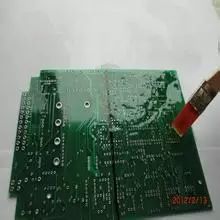
1. Brushing – Commonly used, it can produce excellent coating effects on smooth surfaces.
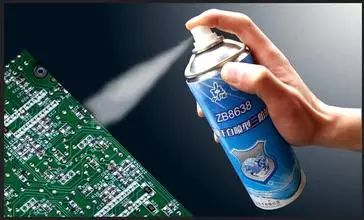
2. Spraying – Using spray can products can conveniently apply to repairs and small-scale production; spray guns are suitable for large-scale production, but both spraying methods require high accuracy in operation and may produce shadows (areas beneath components that are not coated with conformal coating).
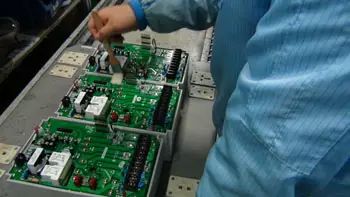
3. Automatic Dipping – Dipping ensures complete coating without causing material waste from excessive spraying.
4. Selective Coating – Accurate coating without wasting material, suitable for large-scale coating, but has higher requirements for coating equipment. It is most suitable for large-scale coating. Using a well-prepared XY table can reduce coverage. When spraying PCB boards, many connectors do not need to be sprayed. Using tape is slow and leaves too much residue when torn; consider making a combination cover according to the shape, size, and position of the connectors, using installation holes for positioning. Cover the areas that do not need spraying.
Requirements for Conformal Coating Operations
1. Clean and bake the board to remove moisture. The dust, moisture, and grease on the surface of the object to be coated must be removed to ensure its protective effectiveness. Thorough cleaning ensures that corrosive residues are completely removed and that the conformal coating adheres well to the surface of the circuit board. Baking conditions: 60°C for 10-20 minutes; it is better to apply while hot after taking it out of the oven.
2. Use brushing to apply the coating, and the brush area should be larger than the area occupied by the components to ensure complete coverage of components and pads.
3. When brushing, the board should be as flat as possible, and there should be no dripping after brushing. The brushing should be even, with no exposed areas, ideally between 0.1-0.3mm.
4. Before brushing and spraying, ensure that the diluted product is thoroughly mixed and let it sit for 2 hours before brushing or spraying. Use high-quality natural fiber brushes and gently brush at room temperature. If using machinery, measure the viscosity of the paint (using a viscosity meter or flow cup), and adjust the viscosity with thinner.
5. Circuit board components should be vertically immersed in the coating tank. Connectors should not be immersed unless carefully covered. The circuit board should be immersed for 1 minute until bubbles disappear, then slowly taken out. A uniform film layer will form on the surface of the circuit board. Most of the coating residue should flow back into the coating machine. TFCF has different coating requirements. The immersion speed of the circuit board or components should not be too fast to avoid excessive bubbles.
6. After immersion, if there is a skin phenomenon on the surface when used again, remove the skin and it can continue to be used.
7. After brushing, place it flat on a rack to cure. If heating is required, it accelerates the curing of the coating. If the surface of the coating is uneven or contains bubbles, it should be left at room temperature for a longer time before curing in a high-temperature oven to allow the solvent to flash off.
Precautions:
1. If a thicker coating is desired, it is best to achieve this by applying two thinner layers – and the second layer should only be applied after the first layer is completely dry.
2. When applying coating to PCBs, generally connectors, software sockets, switches, heat sinks, heat dissipation areas, and plug-in areas should not have coating materials; it is recommended to use removable anti-solder adhesive to cover.
3. The thickness of the film layer: The thickness of the film layer depends on the application method. A larger amount of thinner results in lower viscosity of the glue, leading to thinner application; conversely, higher viscosity results in thicker application.
4. All coating operations should be conducted at temperatures above 16°C and relative humidity below 75%. PCBs, being composite materials, can absorb moisture. If moisture is not removed, the conformal coating cannot provide adequate protection. Pre-drying and vacuum drying can remove most moisture.
Method for Repairing Coated Components
To repair coated components, simply touch the soldering iron directly to the coating to remove the component. After installing a new component, clean the area with a brush or solvent, then dry and reapply the coating.