
This is the disassembly report No. 3492 from Charging Head Network.
This is the disassembly report No. 3492 from Charging Head Network.
Introduction
Introduction
Introduction
Introduction
Introduction
Introduction
Introduction
Introduction
Introduction
Introduction
Introduction
Introduction
This disassembly focuses on the Mini-ITX motherboard released by Radxa, which is part of the ROCK 5 series, fully compatible with standard PC peripherals and has excellent compatibility and flexibility. The motherboard supports the Radxa system and Android system, with boot options from microSD card, eMMC, and NVME hard drives.The ROCK 5 ITX motherboard uses the Rockchip RK3588 SoC chip, paired with 8GB LPDDR5 memory and 8GB eMMC storage. It features two HDMI ports and one USB-C port for video output, as well as an HDMI port for video input. The motherboard has an eDP screen interface and two MIPI LCD interfaces, supporting four display outputs.It also has two camera interfaces, four SATA hard drive interfaces, an M.2 solid-state drive interface, and a TF card slot. The motherboard supports three power supply methods: DC input, PoE power supply, and 24-pin ATX power supply. Below, Charging Head Network brings you the disassembly of Radxa’s motherboard to explore its overall design and materials used.
Unboxing the Radxa ROCK 5 ITX Motherboard
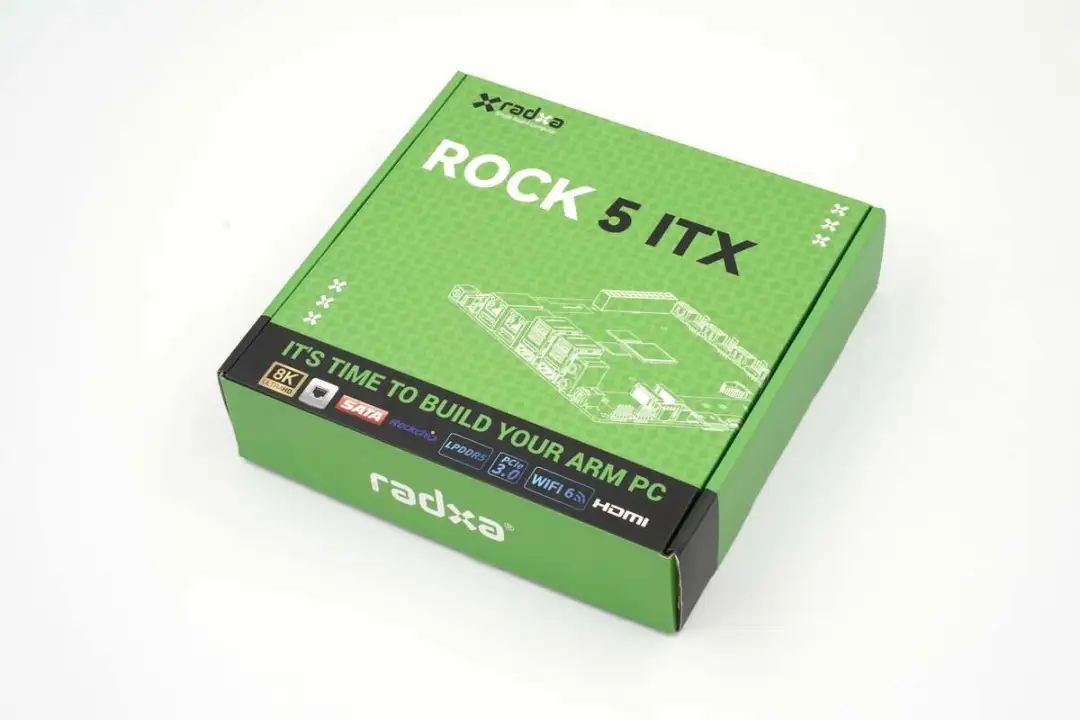 The motherboard packaging box has a green background with the words ROCK 5 ITX printed on the front, along with a diagram of the motherboard and the phrase ‘IT’S TIME TO BUILD YOUR ARM PC’.
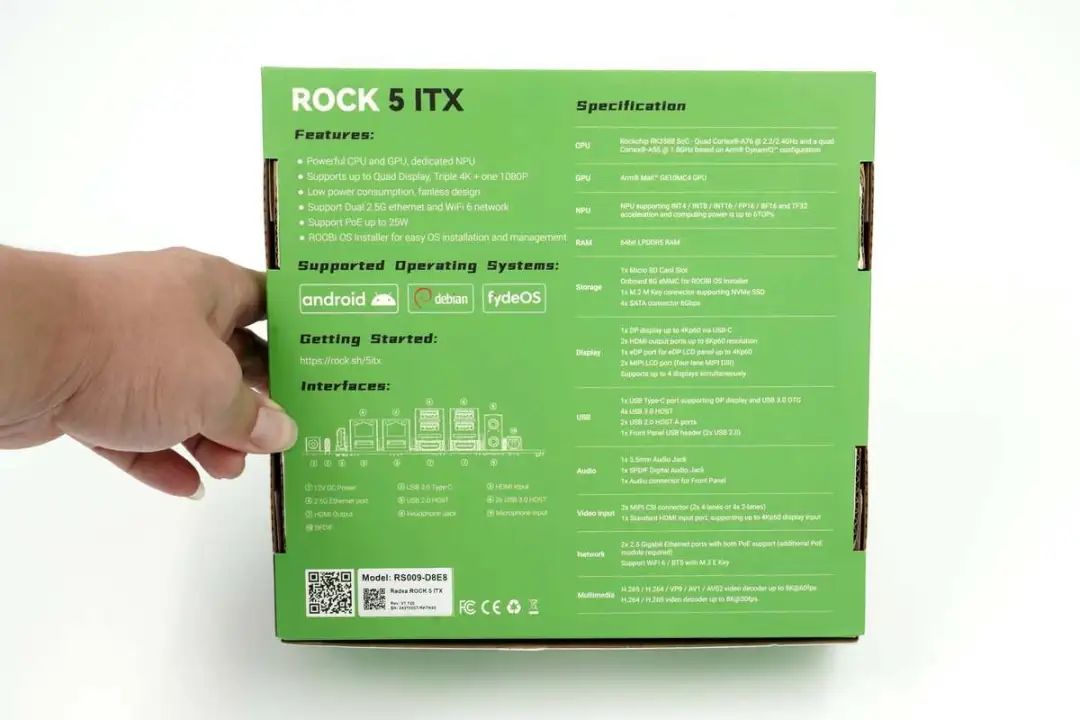 The back of the box lists the motherboard’s features, supported operating systems, interfaces, and specifications.
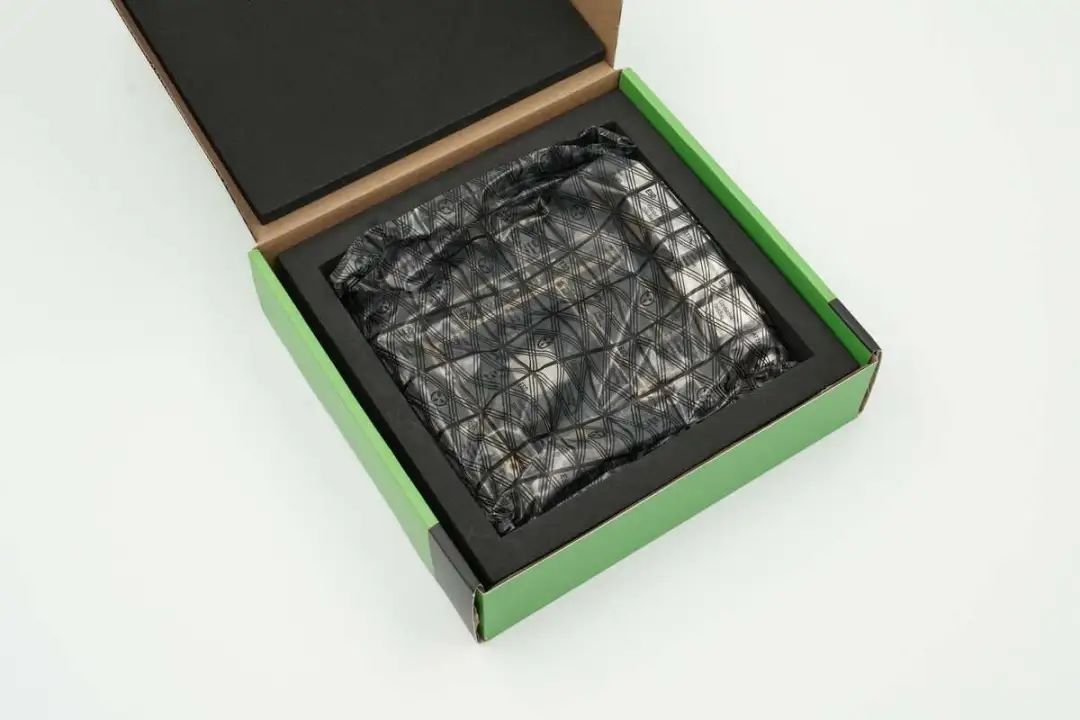 The motherboard is wrapped in an anti-static bag, and the interior of the box has foam padding for shock protection.
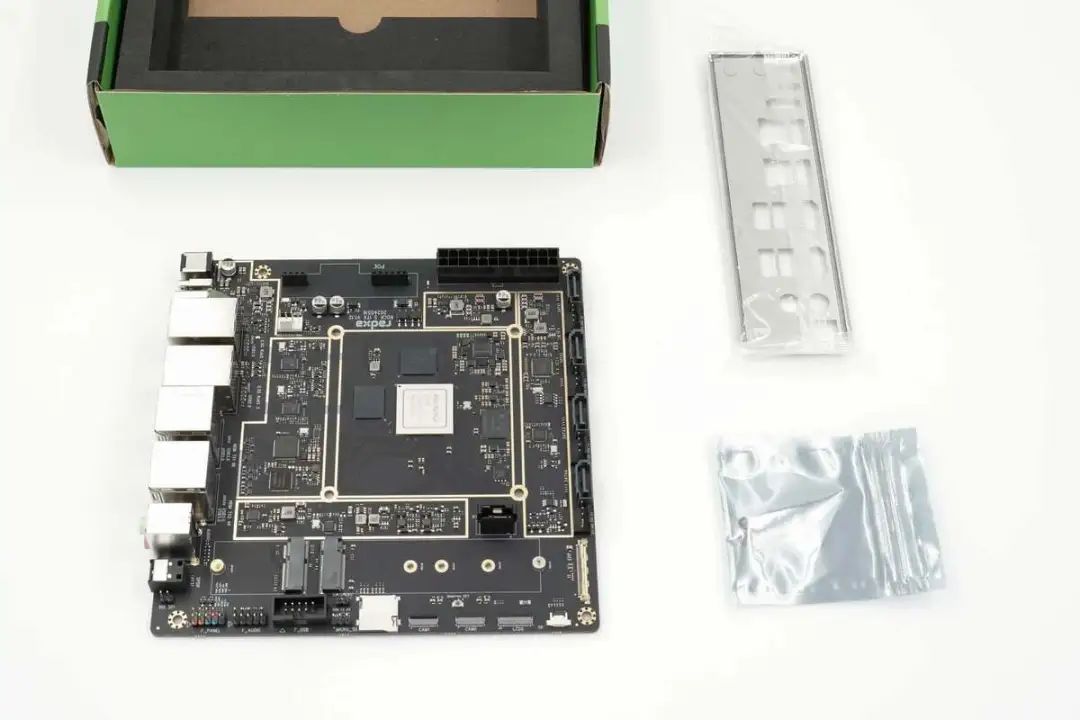 The package includes the motherboard, IO shield, and mounting screws.
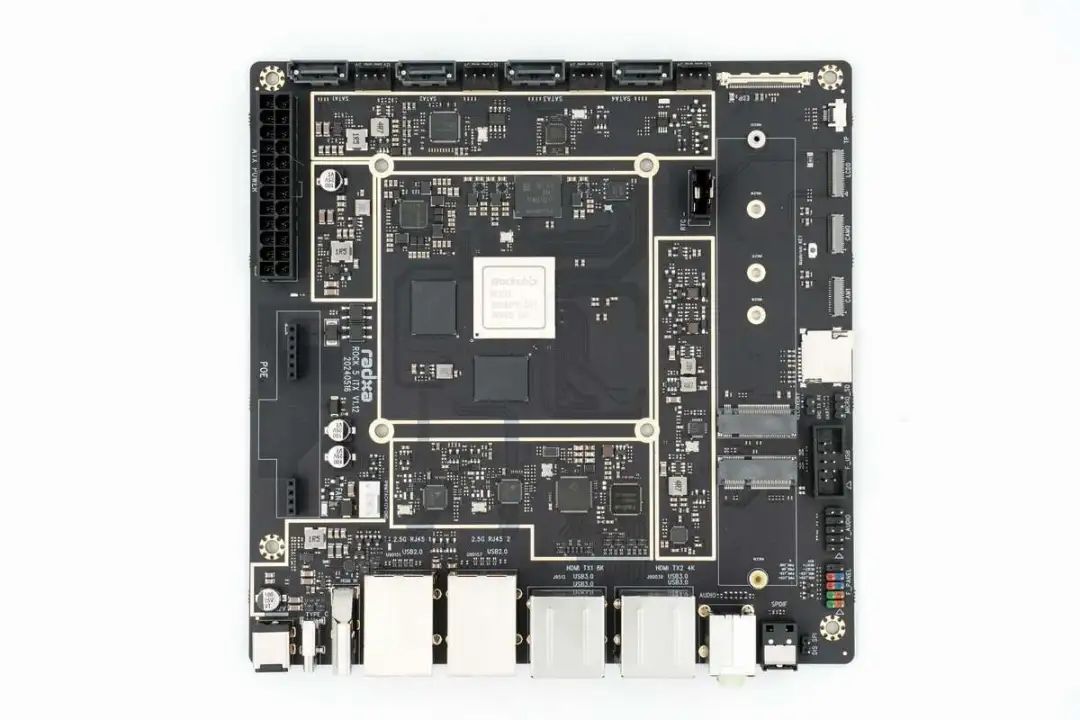 The front of the motherboard is shown, with the processor, memory, and eMMC storage located in the center, and gold-plated copper separating each area. There are four SATA hard drive interfaces at the top, an ATX 24-pin power supply interface on the left, a PoE module socket at the bottom, and various interfaces for solid-state drives, screen connections, camera interfaces, and the IO interface at the bottom.
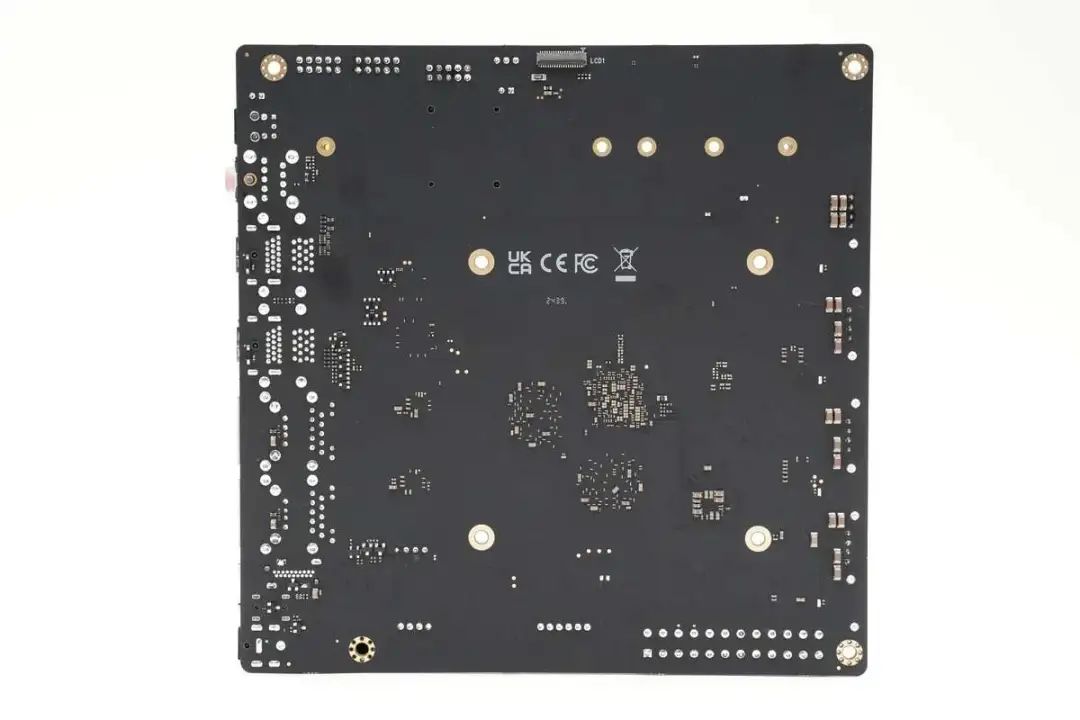 The back of the motherboard has a screen ribbon socket and surface-mounted capacitors.
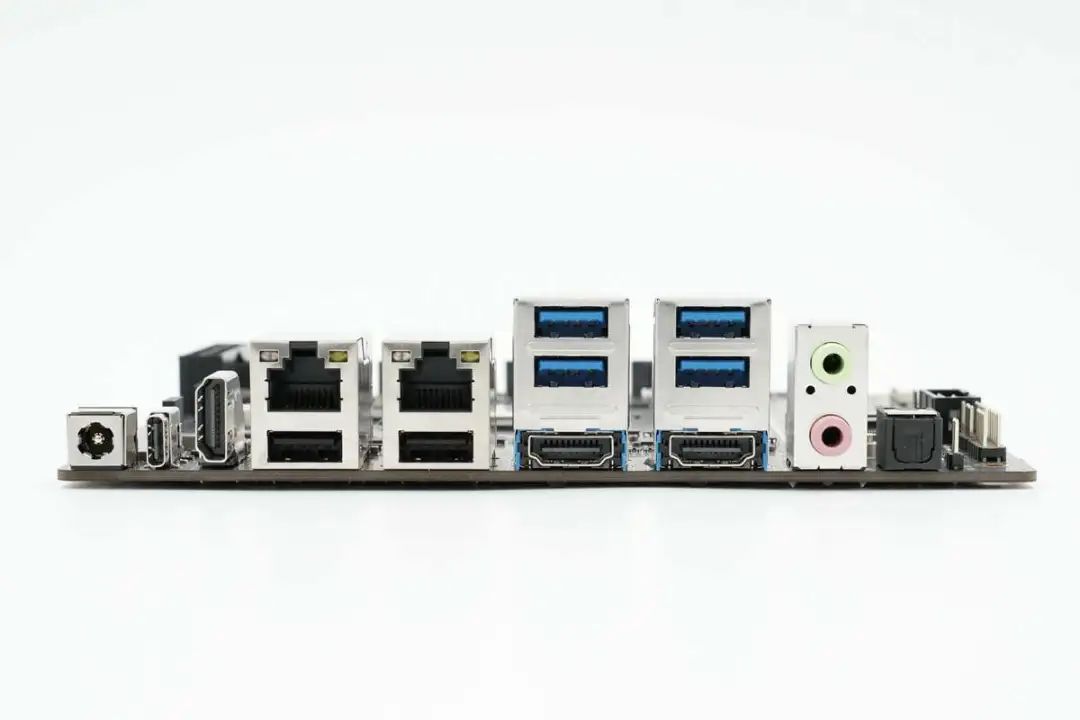 The IO interface overview, from left to right, includes a DC power interface, a USB-C interface supporting DP output, an HDMI video input interface, two 2.5G network ports, a USB2.0 composite interface, two dual USB3.0 and HDMI composite interfaces, a 3.5mm audio interface, and an optical output interface.
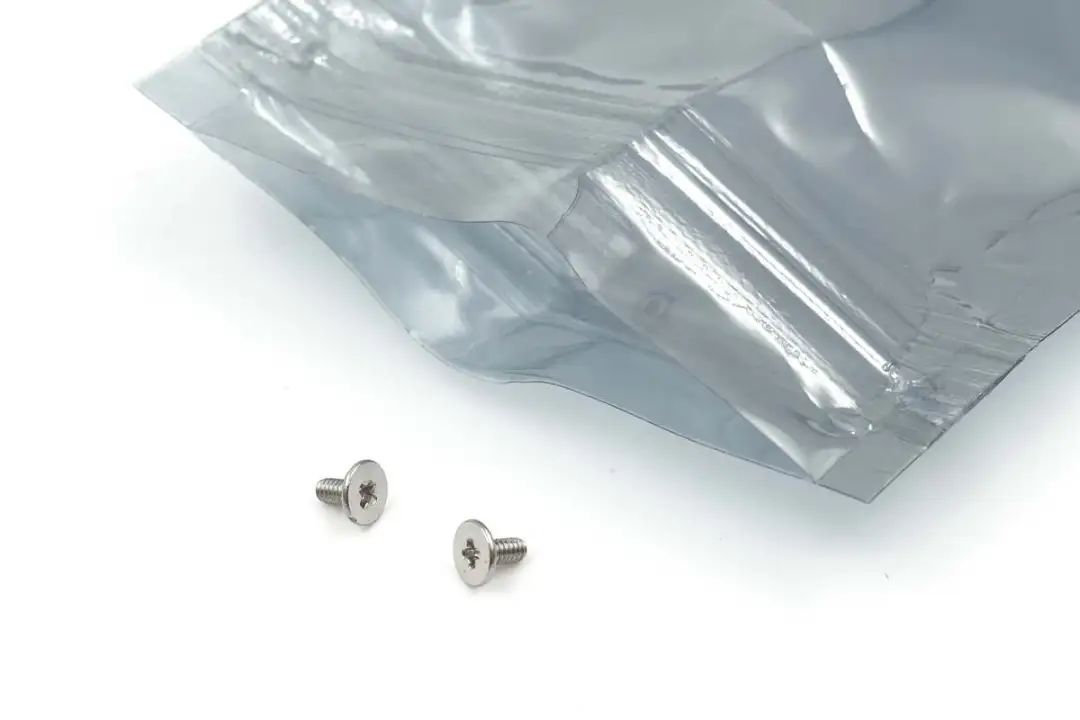 The IO shield has corresponding openings for the interfaces and leaves space for a wireless antenna interface.Includes two screws for fixing M.2 solid-state drives and network cards.
Disassembly of Radxa ROCK 5 ITX Motherboard
After reviewing the unboxing and exterior display of Radxa’s ITX motherboard, let’s proceed to disassemble it and examine the workmanship and materials used.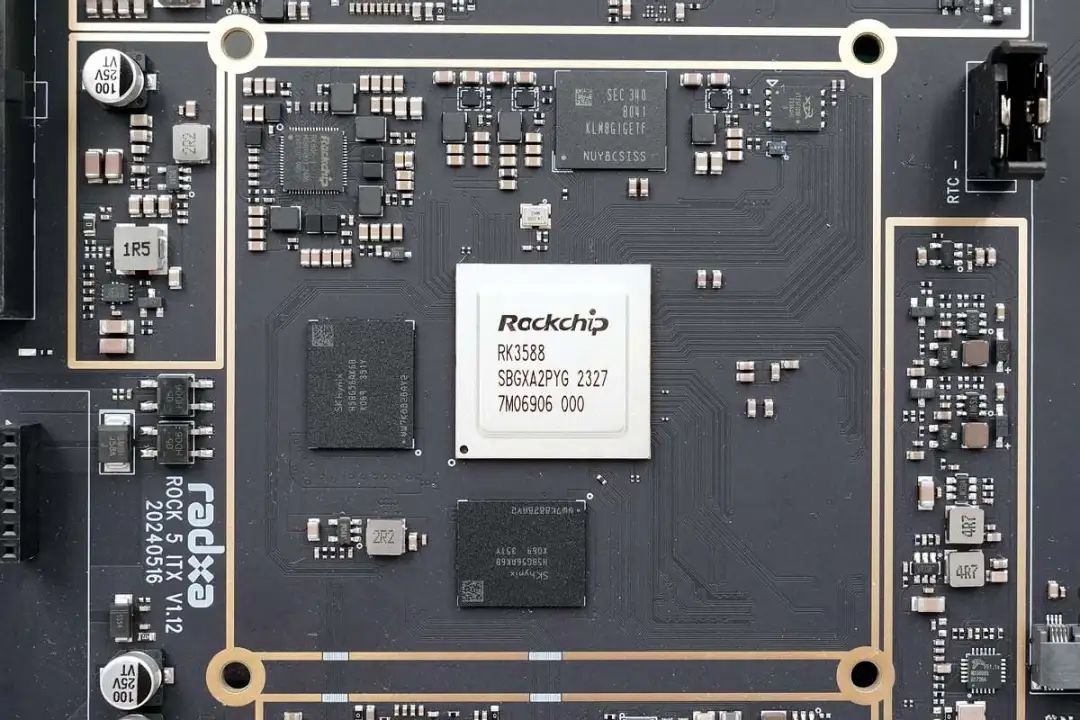 At the center of the motherboard is the processor, with the PMIC in the top left corner, and above it are the eMMC chip and memory, with two memory chips on the left and bottom.
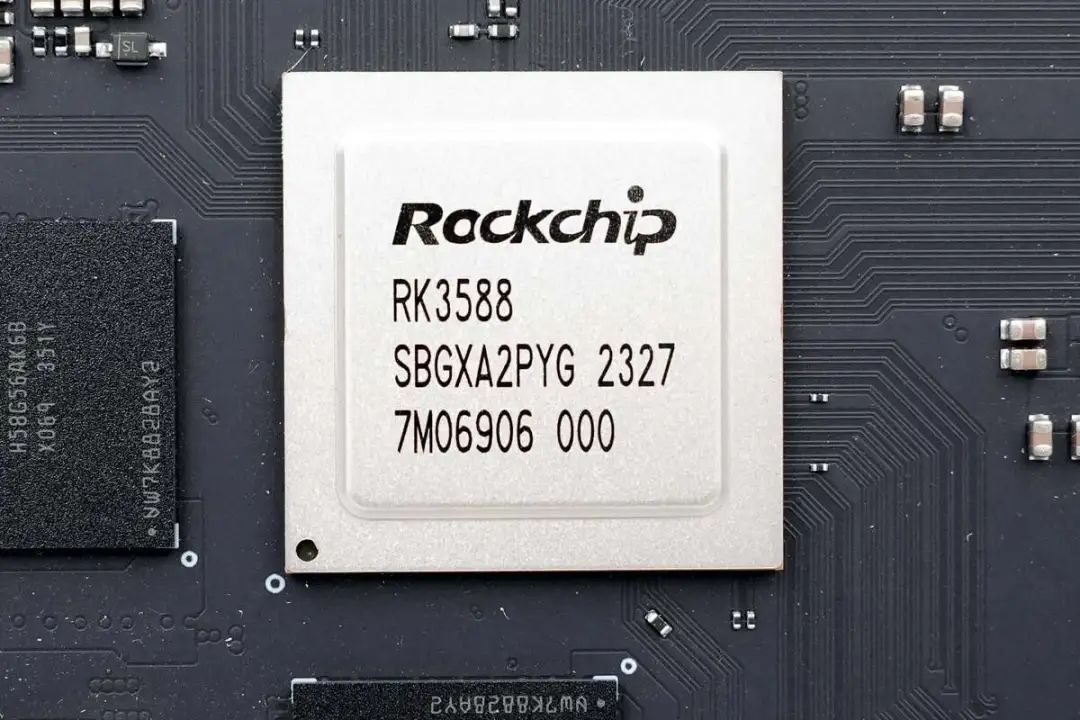 The processor is from Rockchip, model RK3588, manufactured using a 8nm advanced process, integrating a quad-core Cortex-A76 and a quad-core Cortex-A55 processor, with an integrated ARM Mali-G610 MC4 GPU and a 6TOPS computing power NPU, supporting 8K video encoding/decoding and 8K display output.The RK3588 supports PCIe 3.0 and PCIe 2.1, SATA 3.0 interfaces, USB 3.0 and 2.0 interfaces, and has UART, SPI, I2C, PWM, and CAN 2.0 interfaces to meet the expansion needs of different hardware devices, packaged in FCBGA1088L.
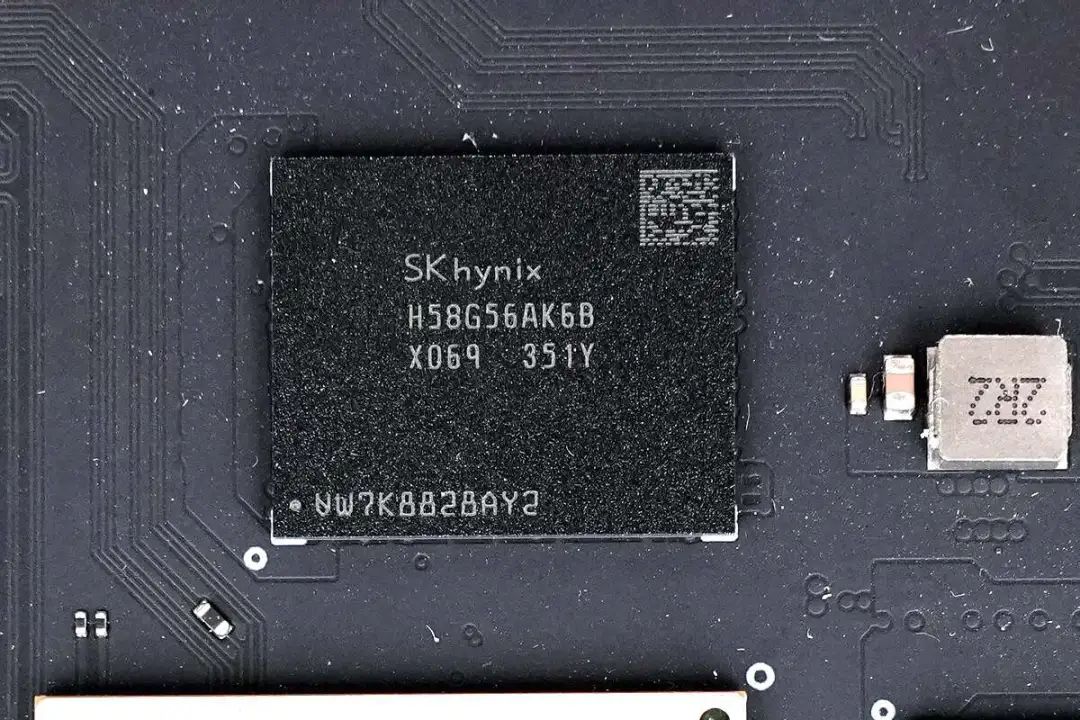 The memory chip comes from Hynix, is LPDDR5 memory, model H58G56AK6BX069N, with a single capacity of 4GB, totaling 8GB with two chips.
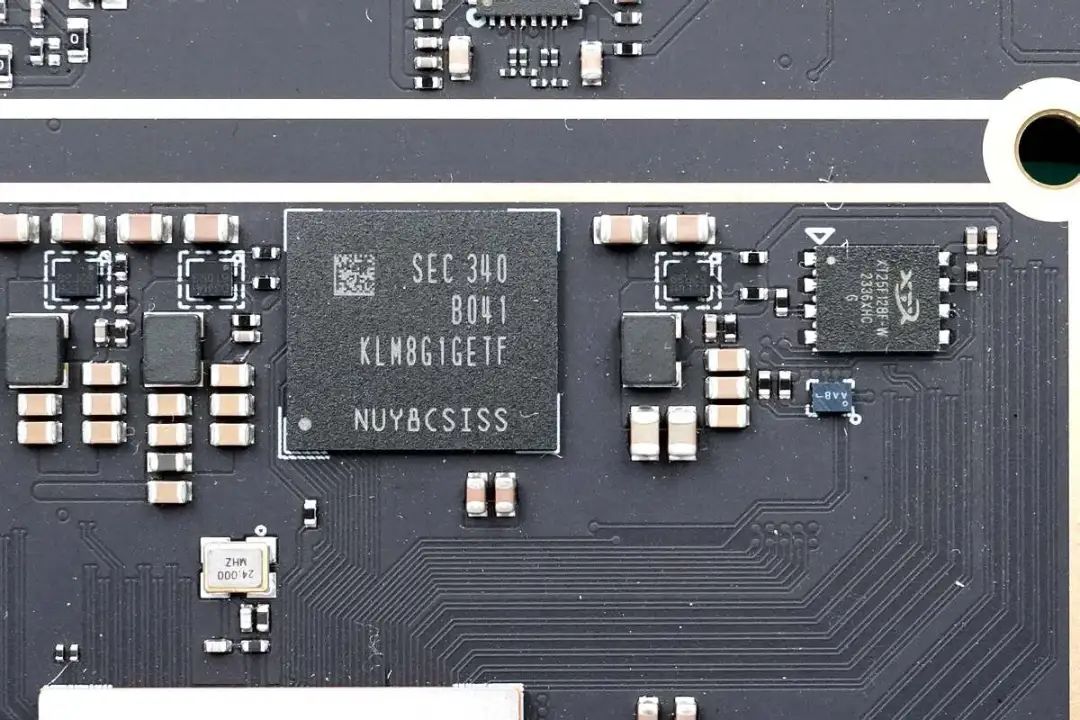 The eMMC storage comes from Samsung, model KLM8G1GETF-B041, with eMMC 5.1 interface and a capacity of 8GB, in BGA-153 packaging.
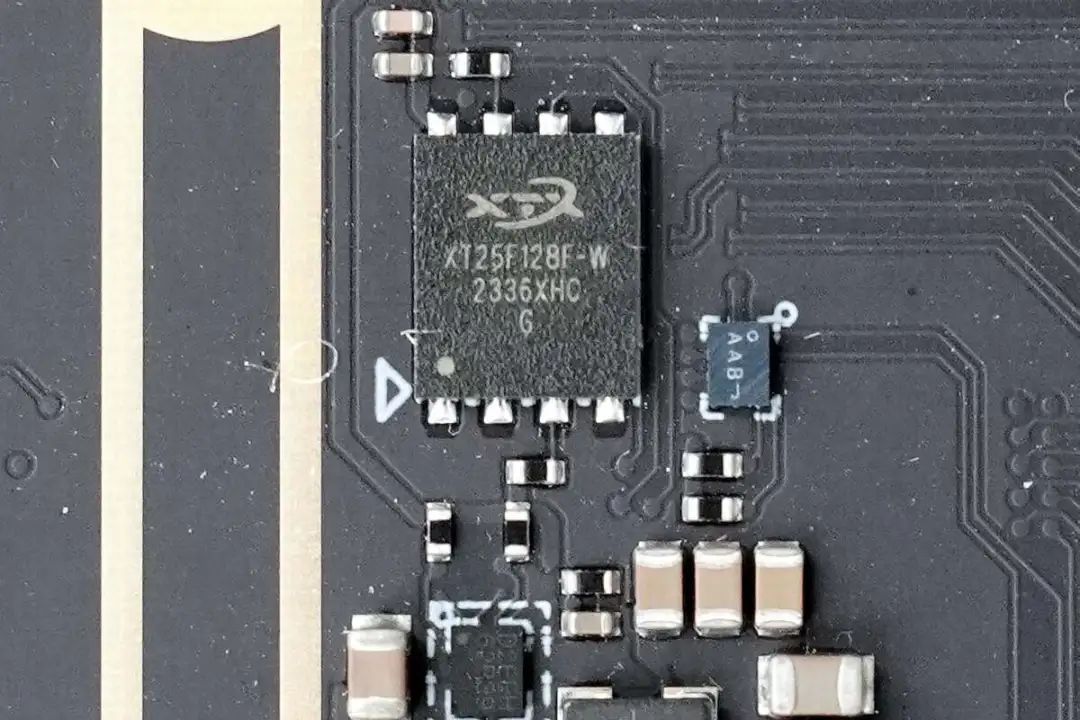 The storage chip comes from Chipsea, model XT25F128F-W, with a capacity of 16MB, in WSON packaging.
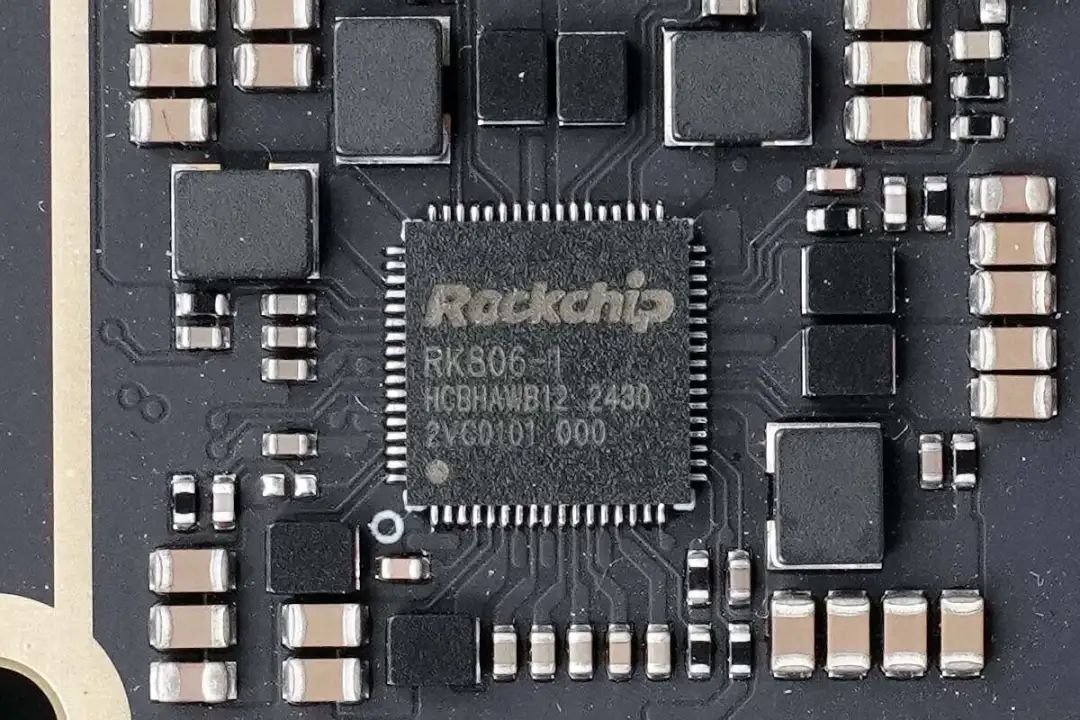 The PMIC is from Rockchip, model RK806-1, integrating 10 synchronous buck outputs and 9 LDO outputs, supporting dual-chip applications, with I2C and SPI communication interfaces, in QFN68 packaging.
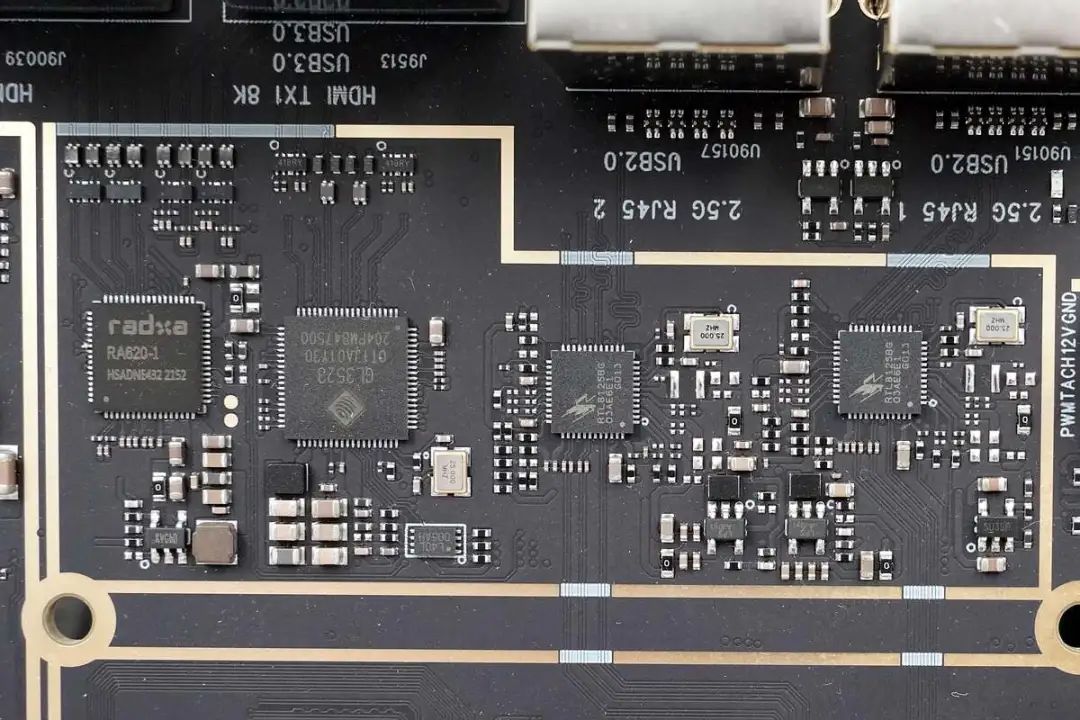 At the bottom are the video conversion chip, USB hub chip, and two network card chips.
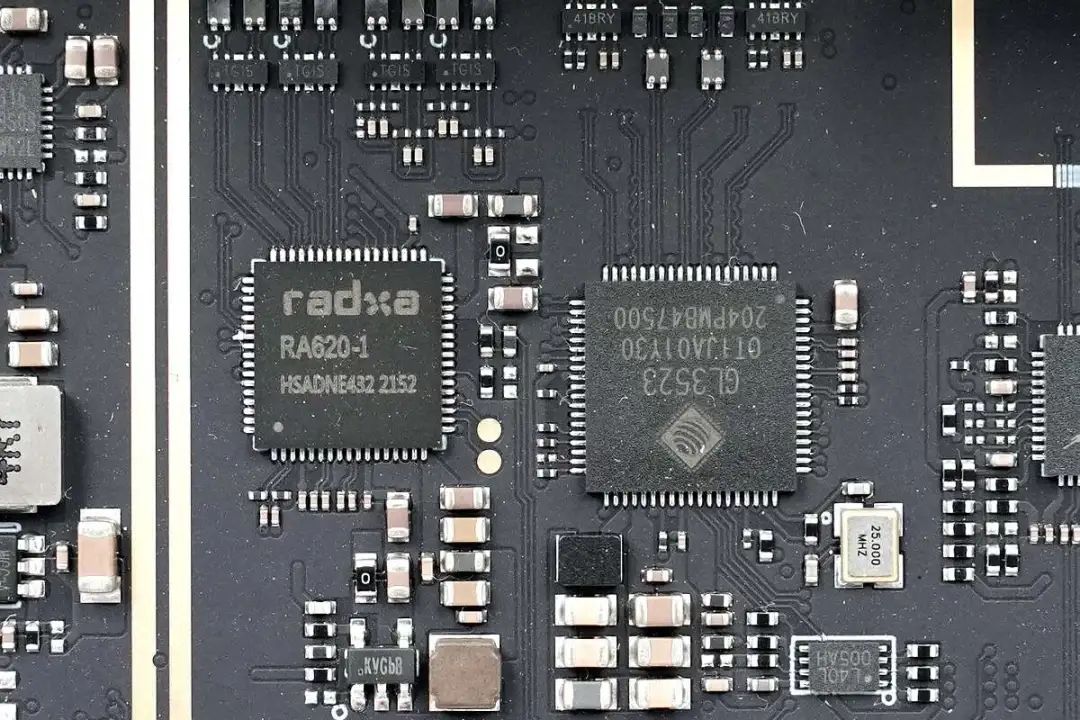 The Radxa RA620-1 is used for DP to HDMI conversion.
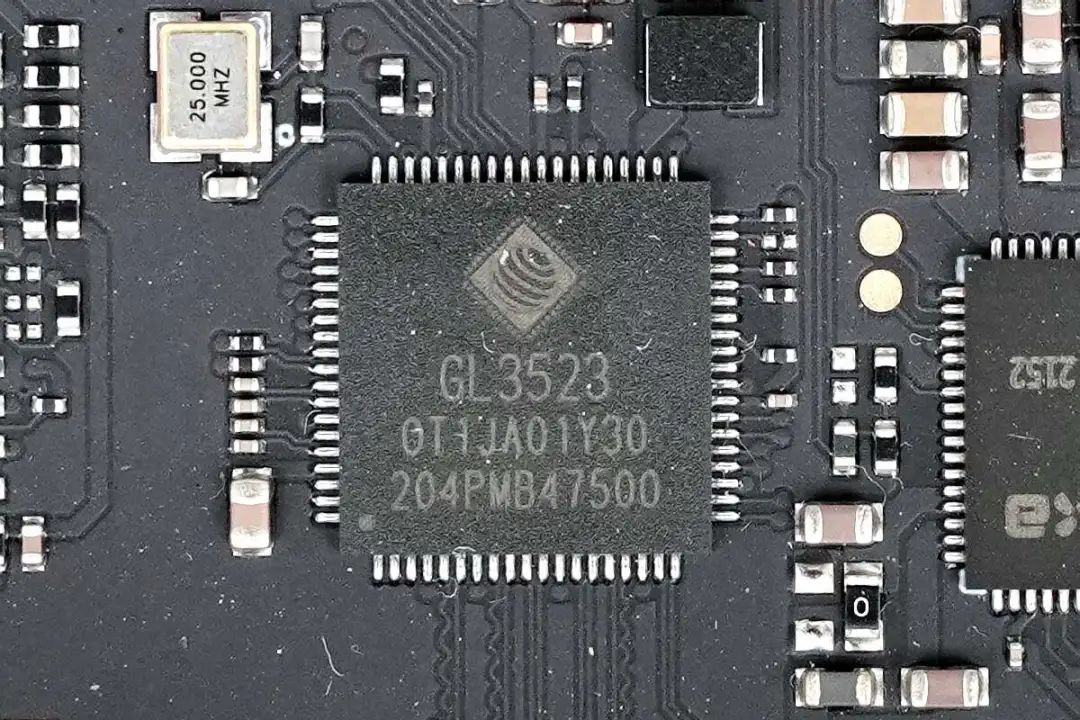 The USB 3.0 hub comes from Genesys Logic, model GL3523, with 4 downstream ports, supporting a 5Gbps transfer rate, and integrates 3.3V and 1.2V power supply, in QFN76 packaging.
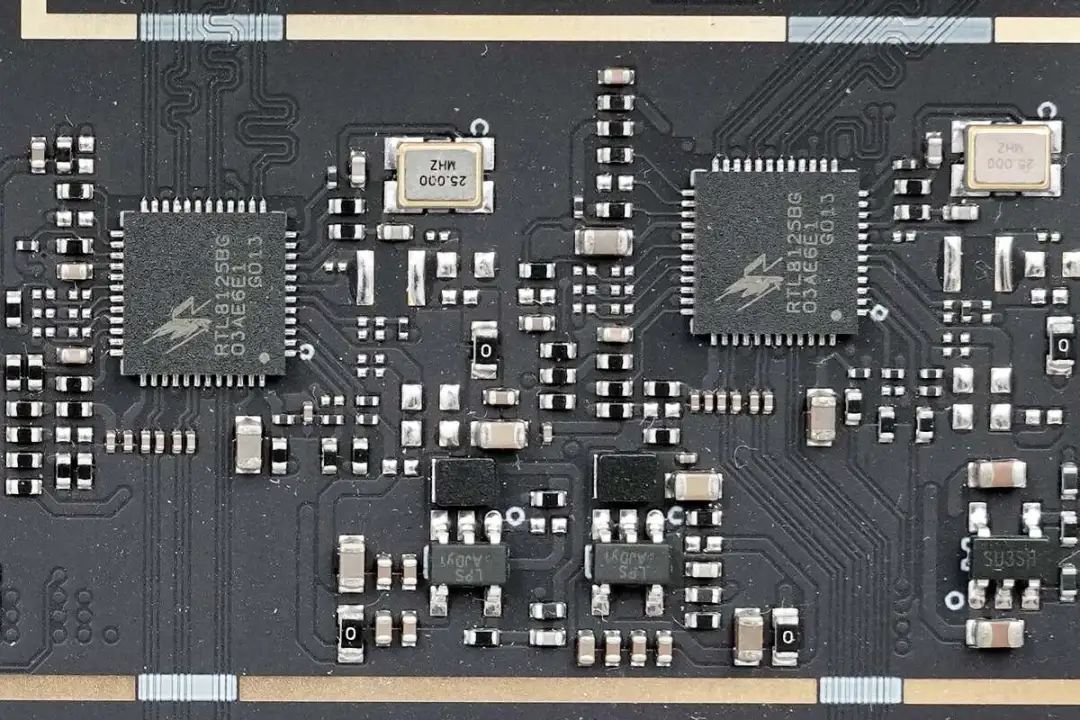 Close-up of the two network card conversion chips.
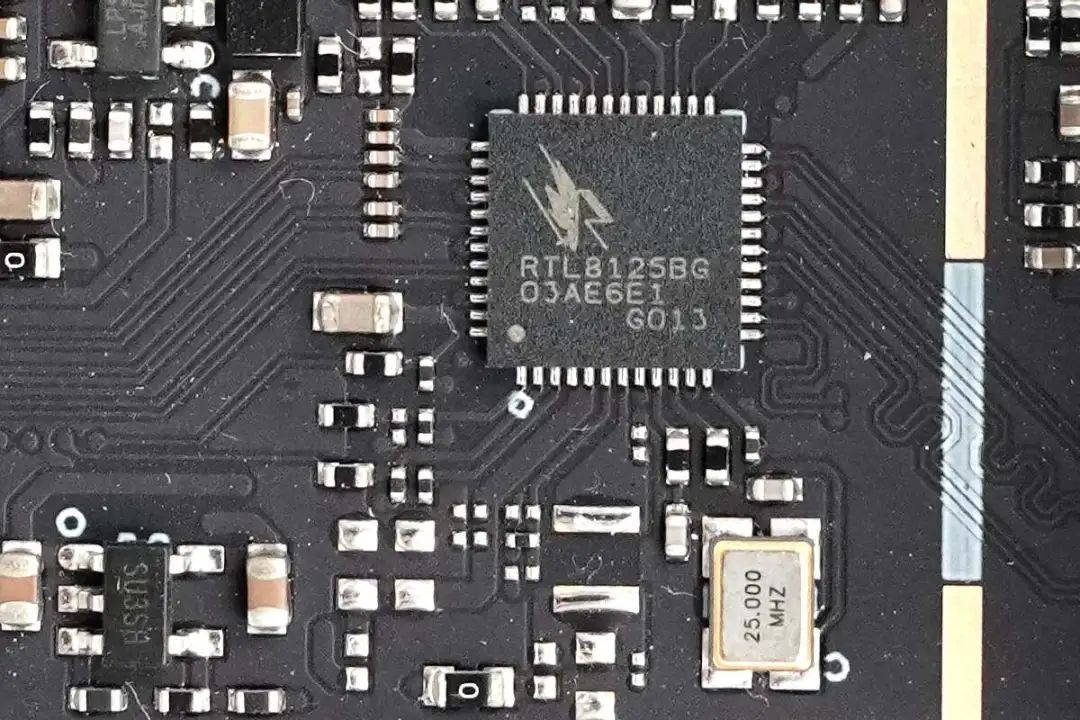 The network card conversion chip is from Realtek Semiconductor, model RTL8125BG, supporting 10/100/1000/2.5G network connections, in QFN48 packaging.
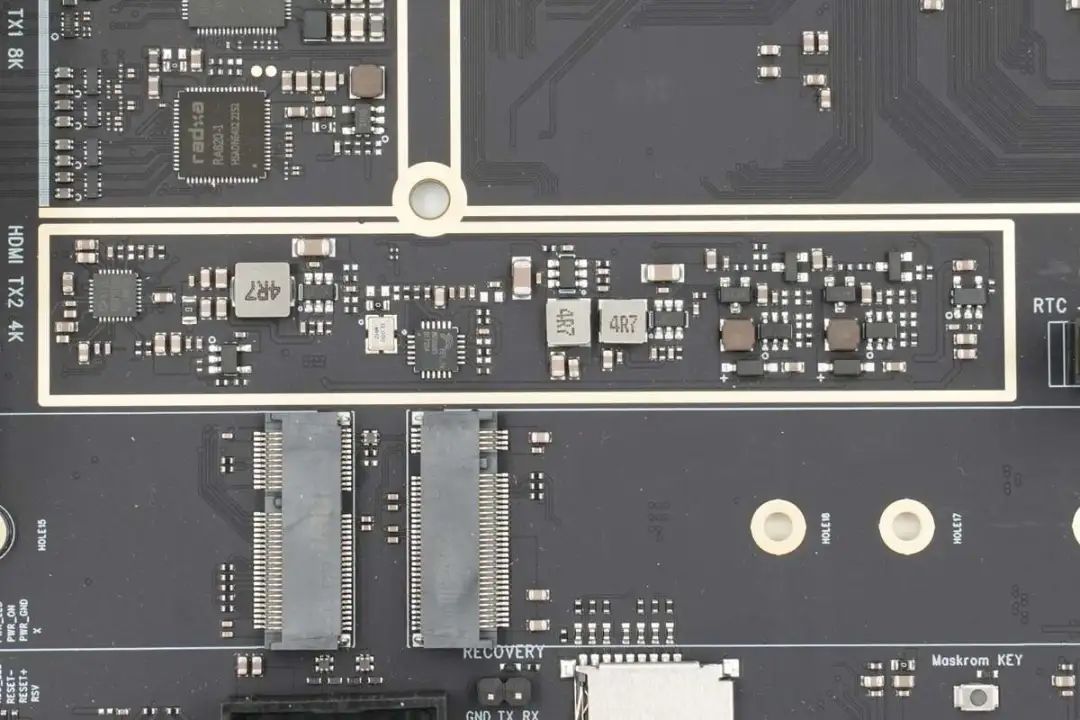 On the right side, there are audio chips, USB hub chips, and a buck converter circuit.
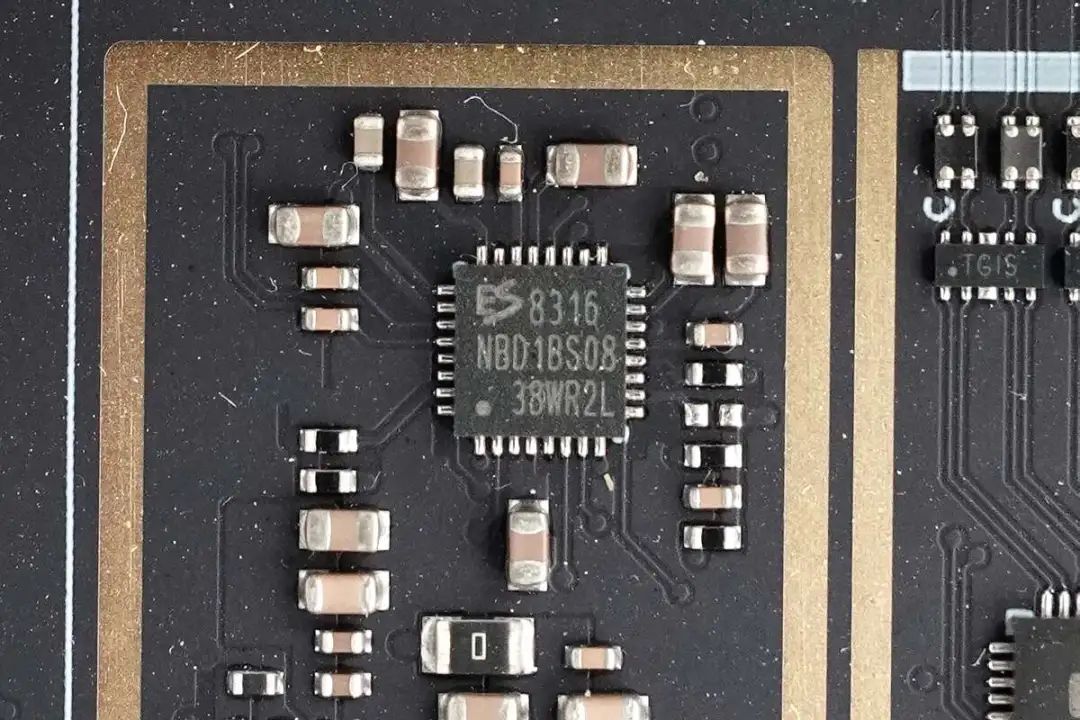 The audio chip is from Sunplus, model ES8316, a low-power high-performance audio codec, integrating a headphone amplifier, in QFN-32 packaging.
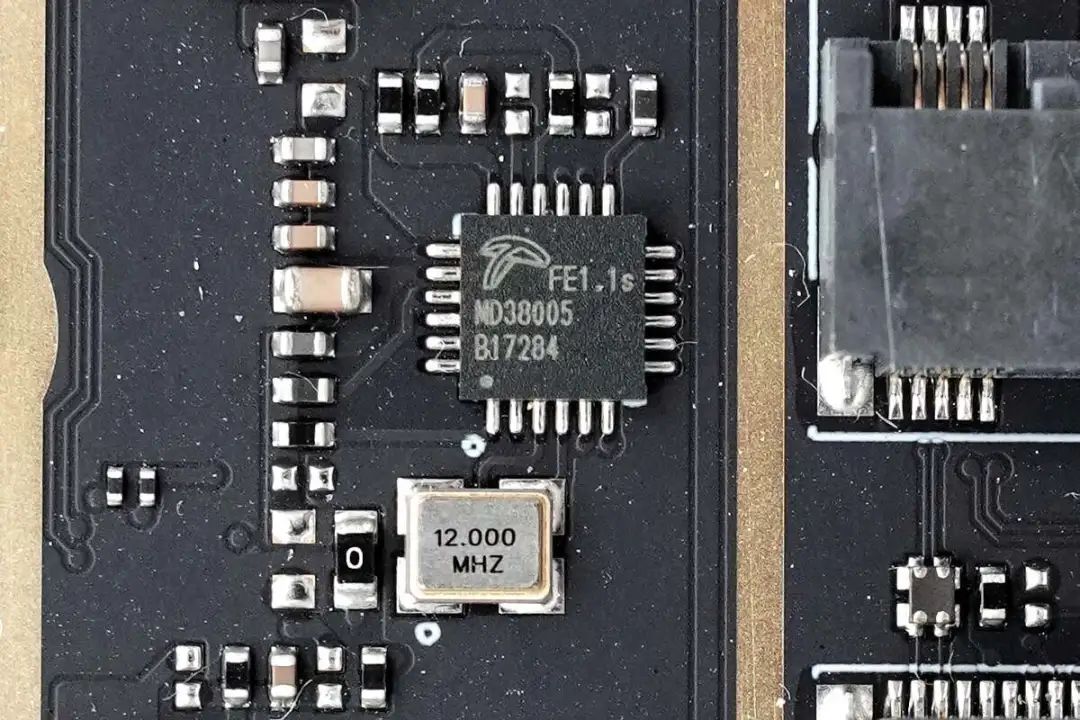 The USB 2.0 hub is from Taiming, model FE1.1s, a USB 2.0 hub with 4 downstream ports, in WQFN24 packaging.
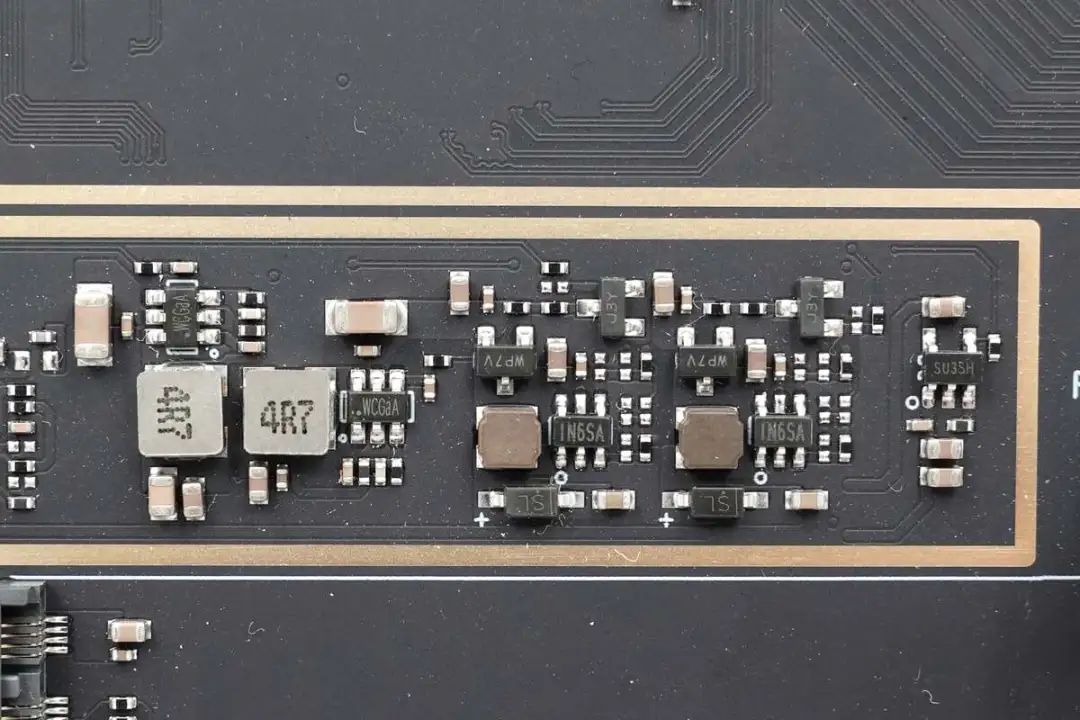 Close-up of the buck converter circuit used for power supply.
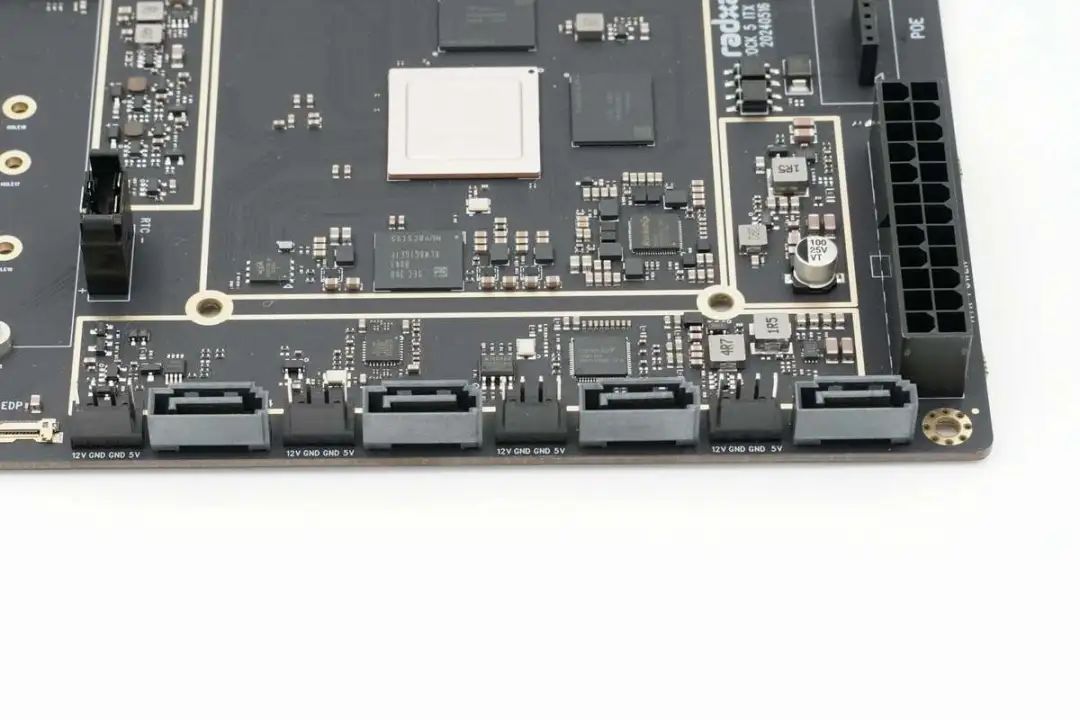 Close-up of the SATA interface conversion chip and the SATA interface below.
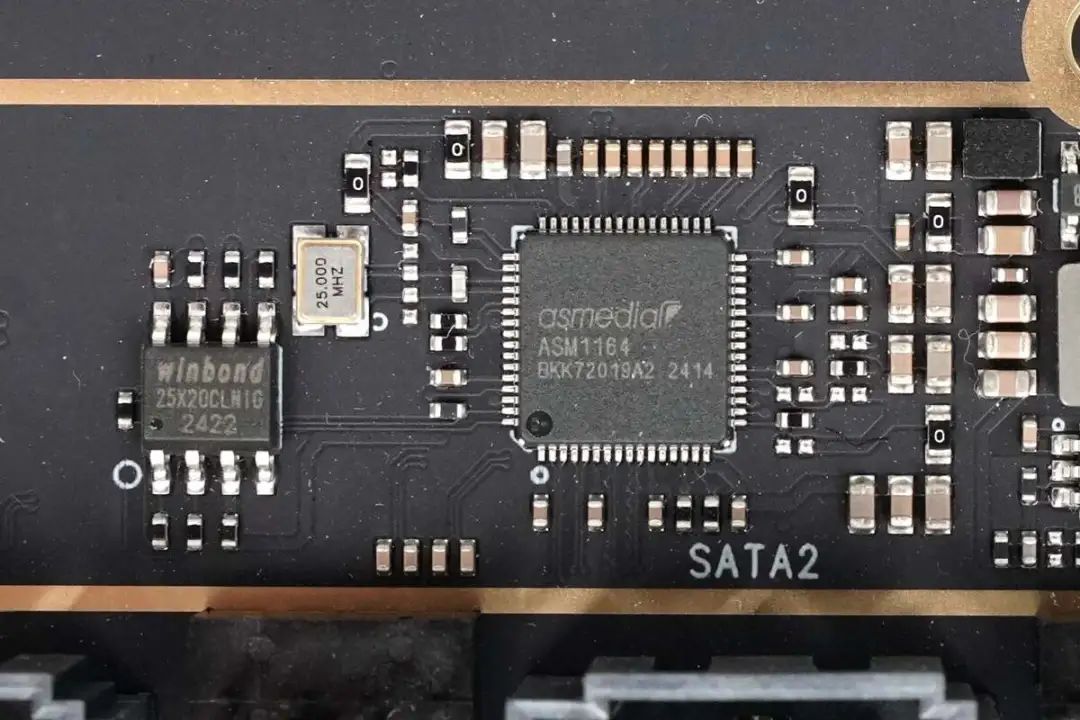 The SATA interface conversion chip is from ASMedia, model ASM1164, a PCIe Gen3*2 interface four-port SATA Gen3 converter, supporting NCQ and LED display connection status, in QFN64 packaging.
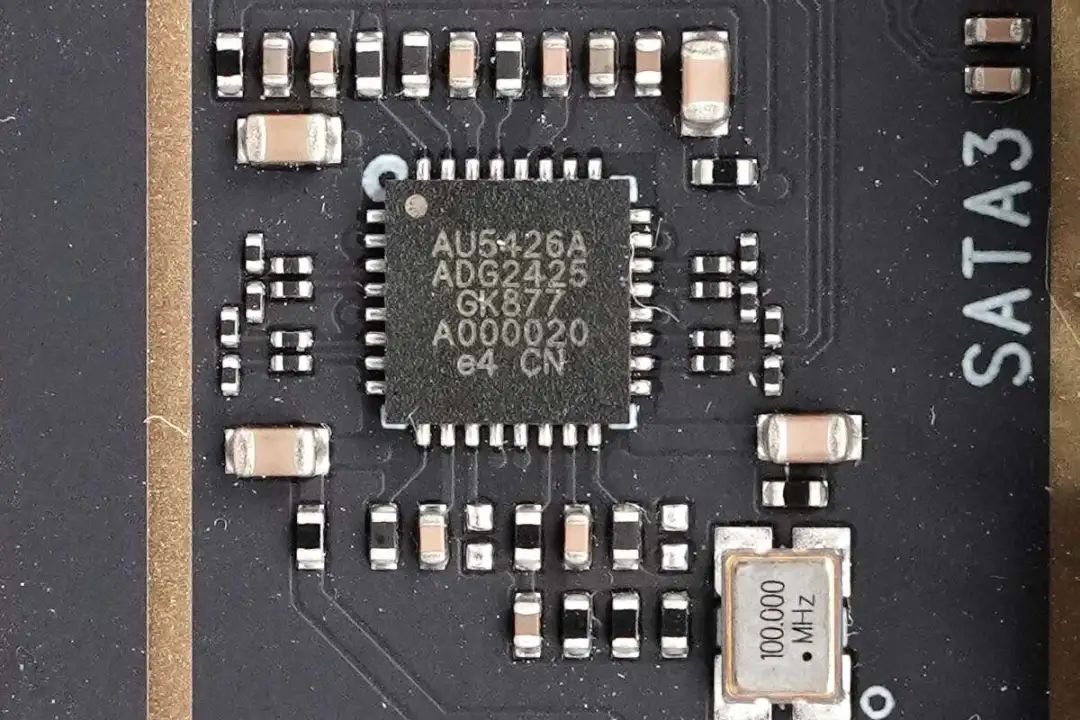 The clock driver is from OLA Semiconductor, model AU5426A, with four differential outputs and one LVCMOS output, in WQFN5*5 packaging.
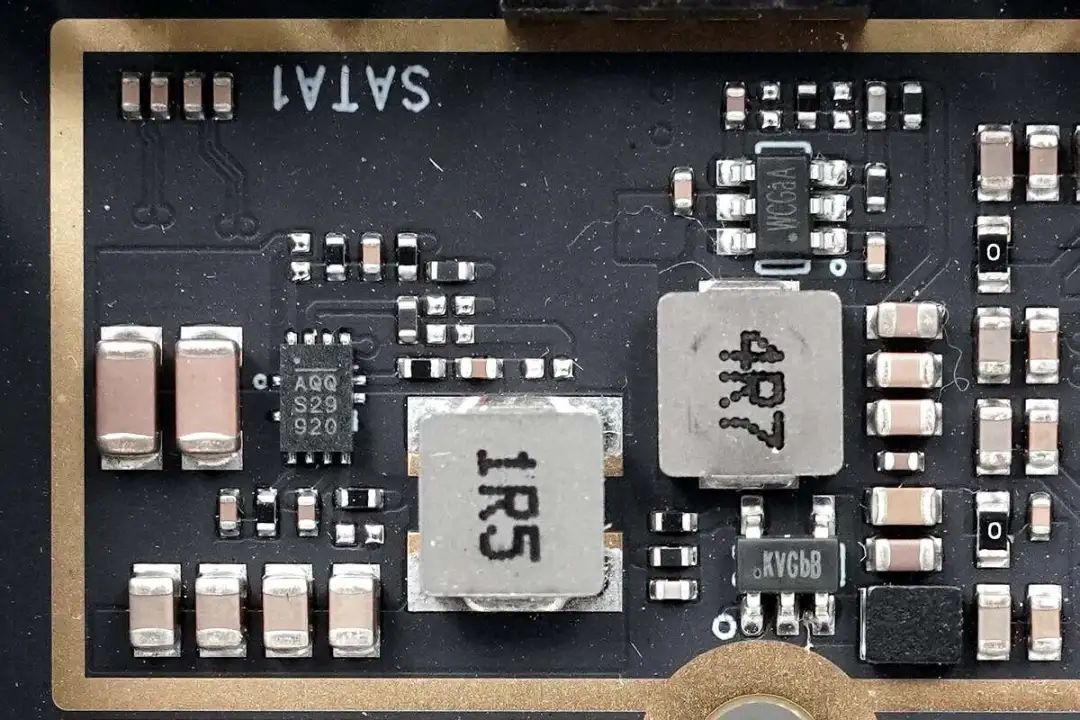 Close-up of the buck power supply circuit.
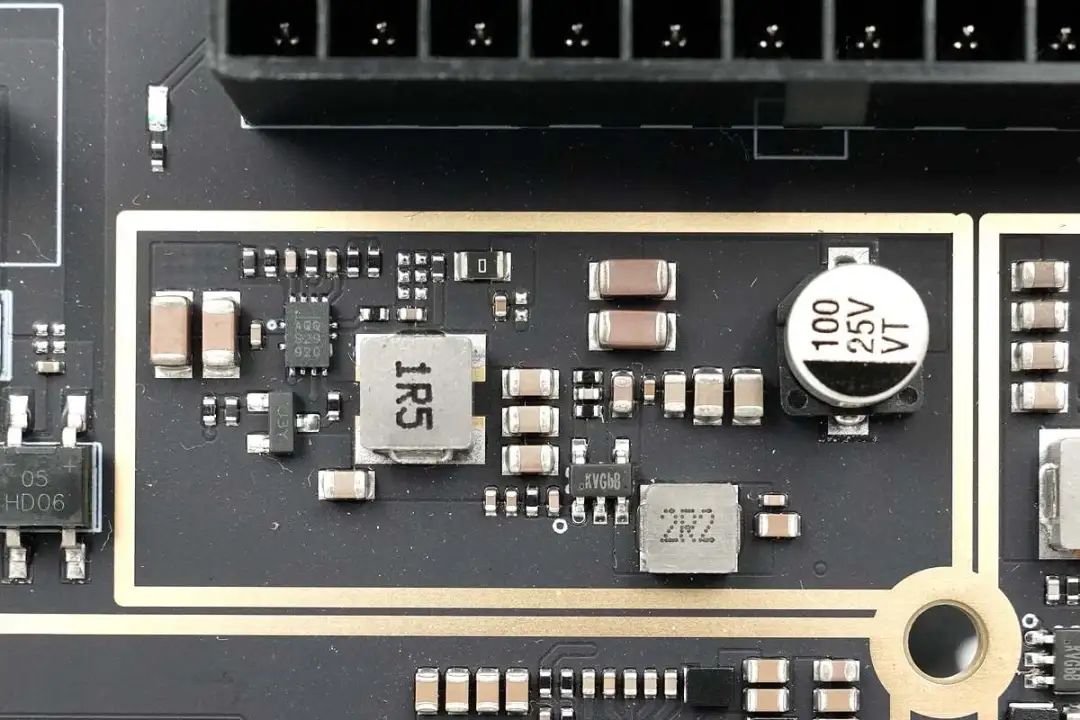 Close-up of the buck power supply circuit used for system power.
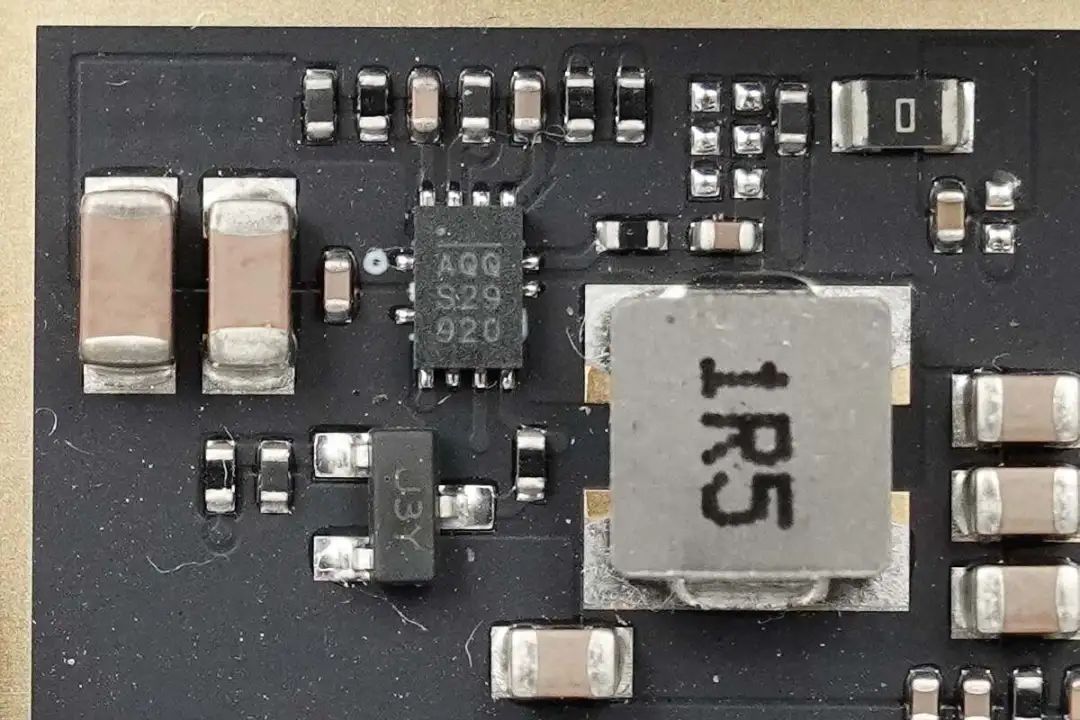 The synchronous buck chip from ChipSource, marked AQQ, model MP8759, is a synchronous buck converter with 26V input voltage tolerance and 8A output current, integrating the switch inside, with a switching frequency of 700KHz, supporting overcurrent protection, overvoltage protection, undervoltage protection, and overheat shutdown, in QFN12 packaging.
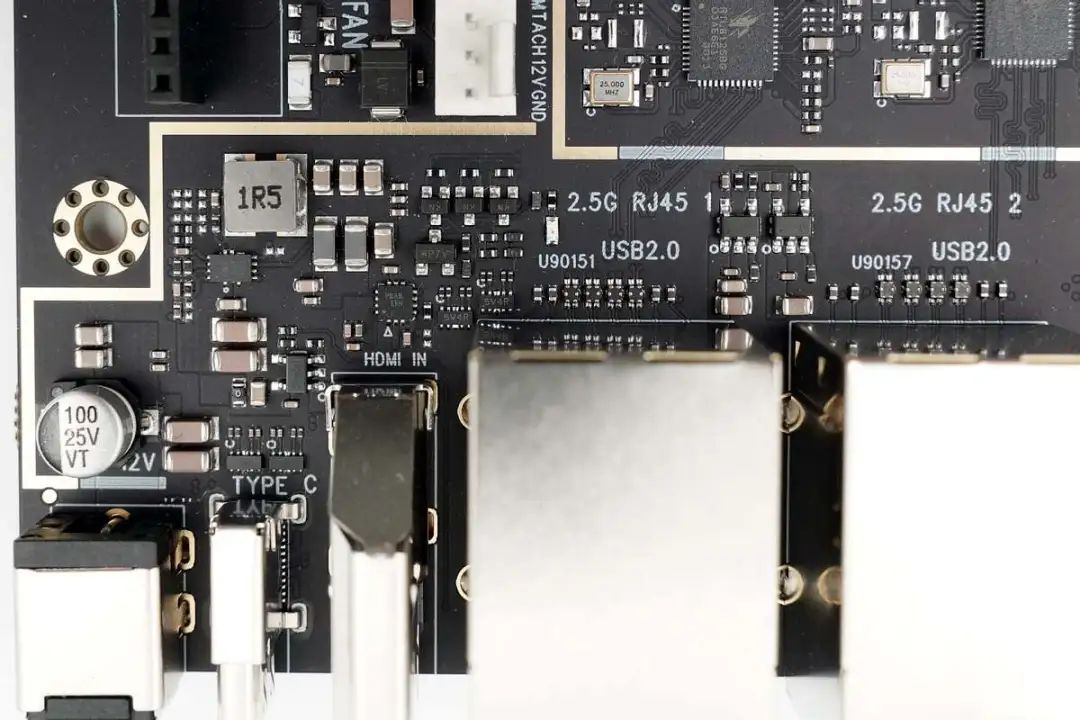 Overview of the power input, USB-C interface, HDMI interface, and network cable interface.
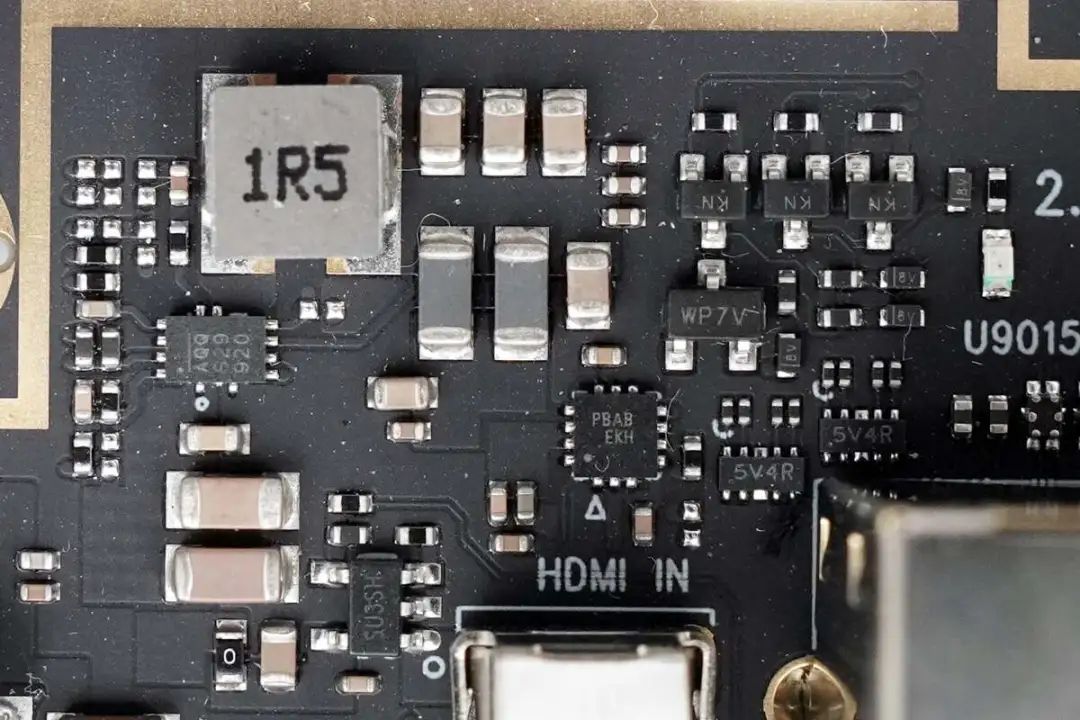 The full-featured USB-C interface uses ON Semiconductor FUSB302.
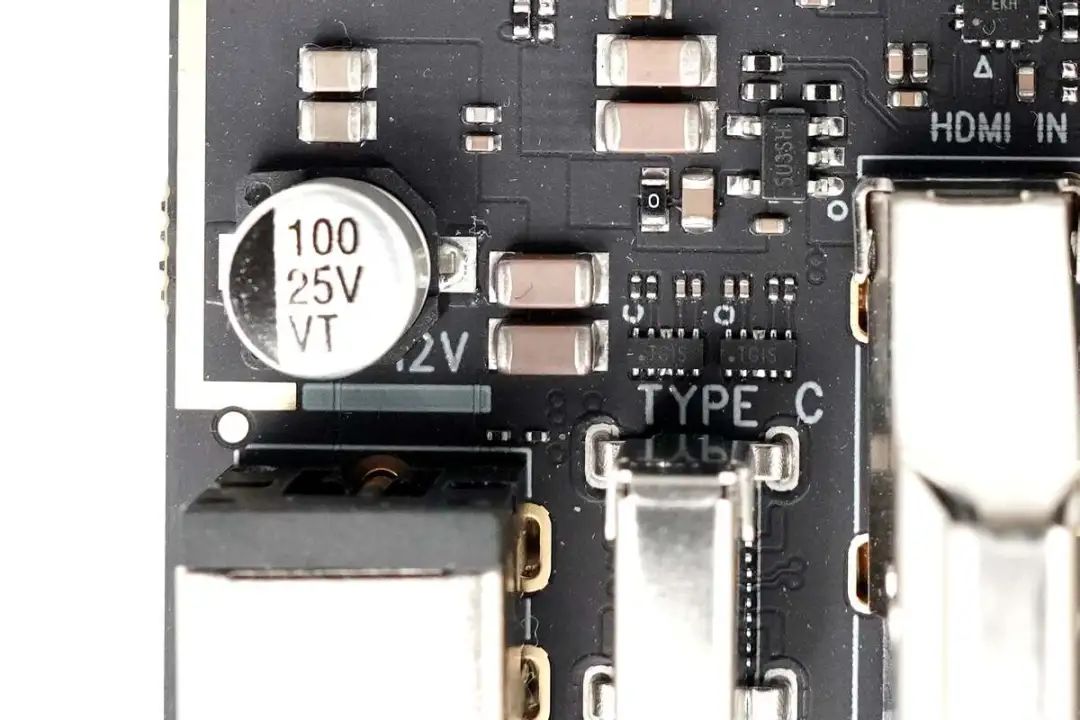 The power input terminal has filter capacitors, and the full-featured USB-C interface has a TVS array for ESD protection.
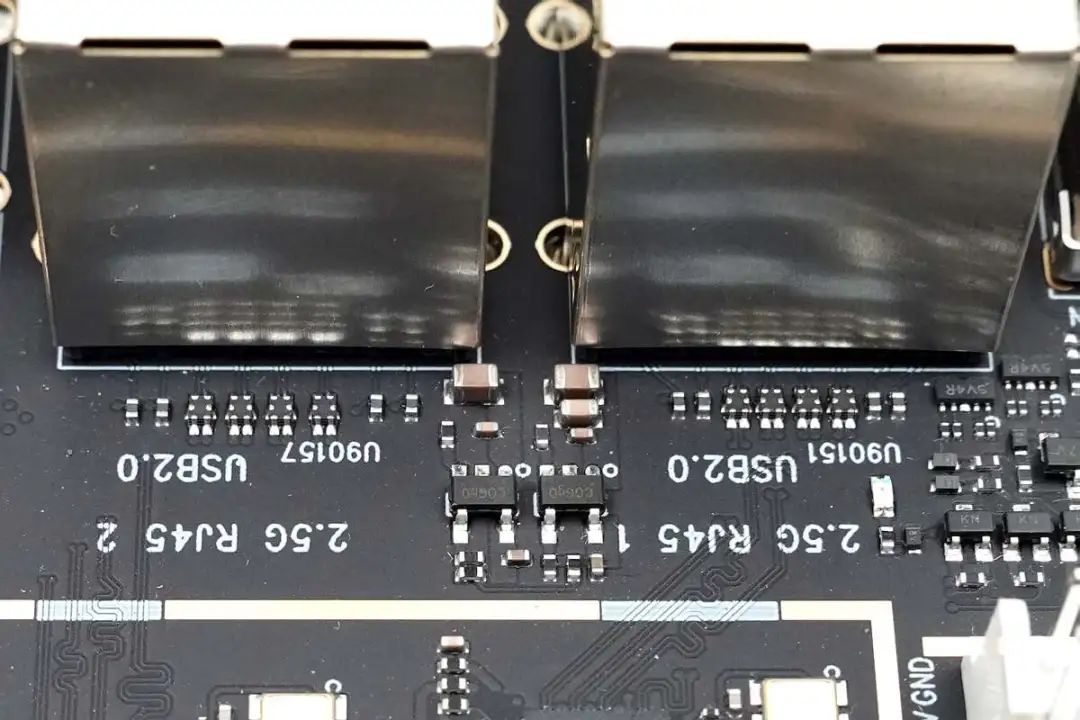 The corresponding network cable interface has a surface-mounted common-mode inductor, and the network cable interface uses metal housing for shielding.
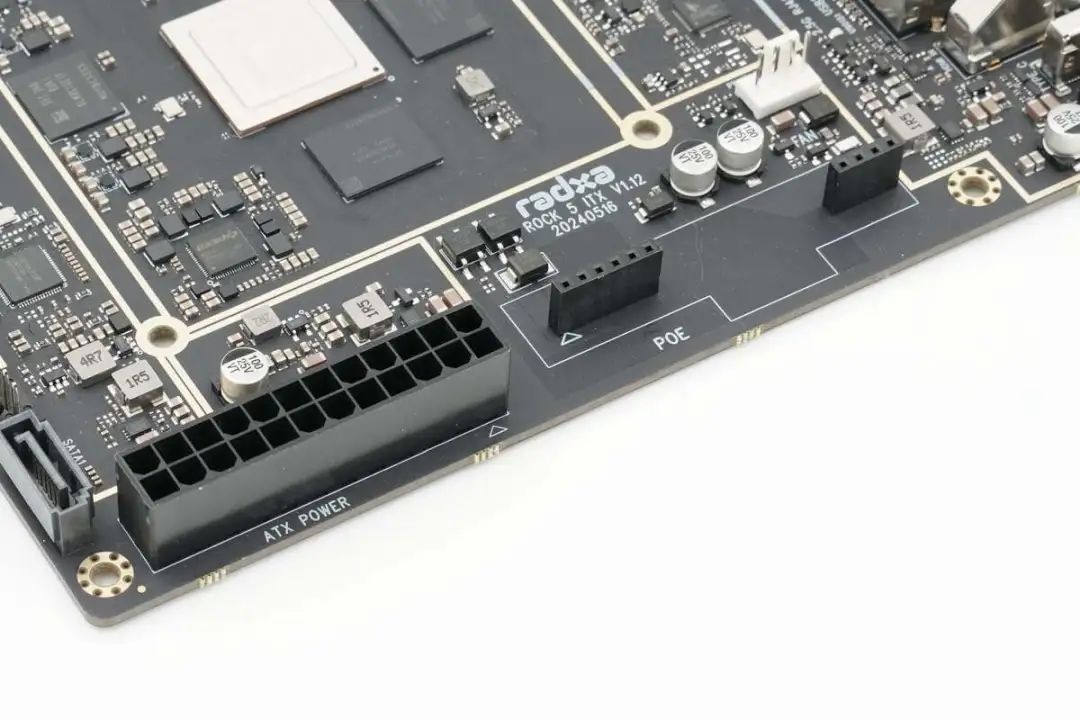 Close-up of the motherboard’s 24-pin power interface and POE power module.
 Close-up of the four SATA hard drive interfaces on the other side.
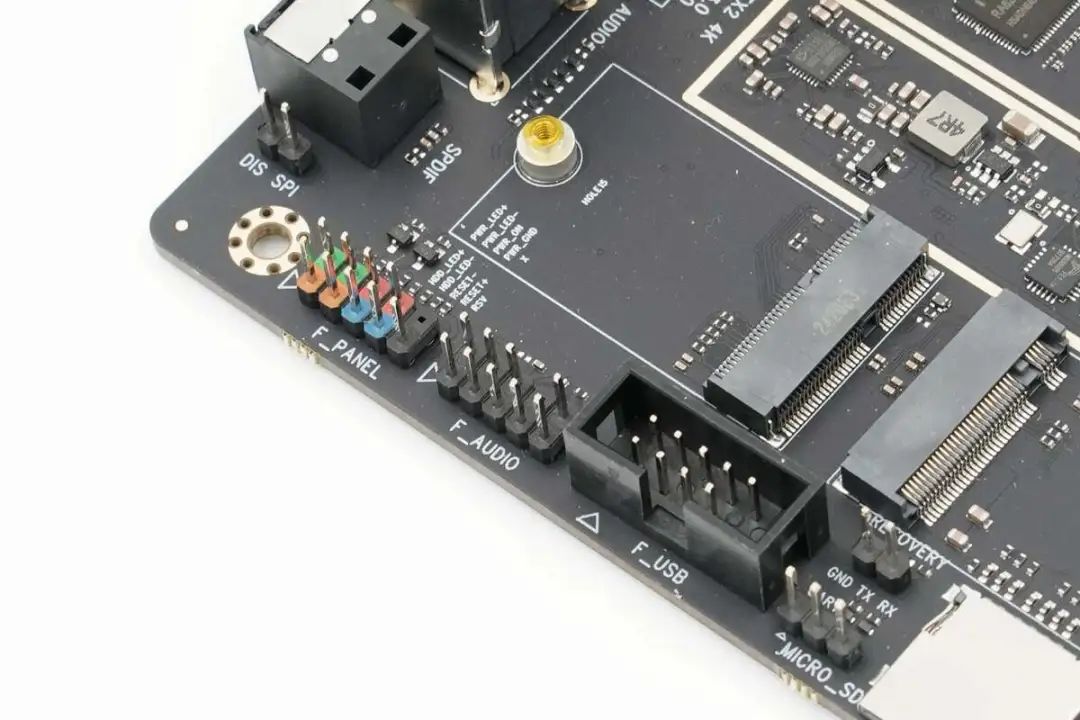
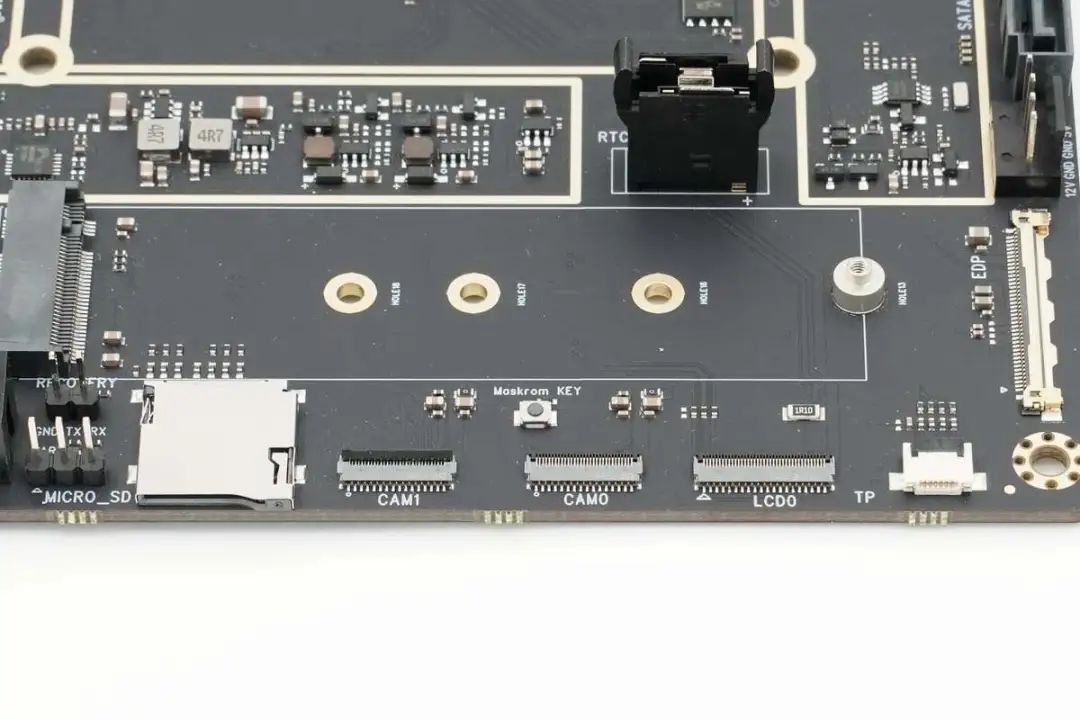 Close-up of the front panel, audio, and USB pin.Close-up of the TF card slot, camera interface, screen interface, and touch screen interface, with the EDP screen interface on the right side.
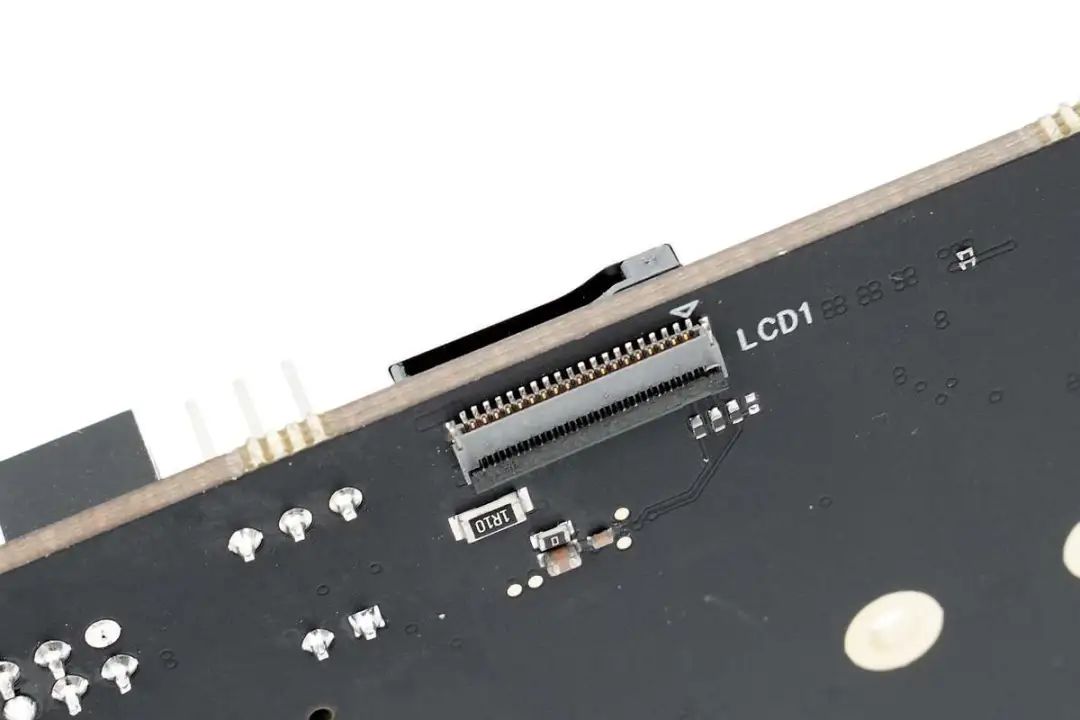 Close-up of the TF card slot and LCD screen interface.
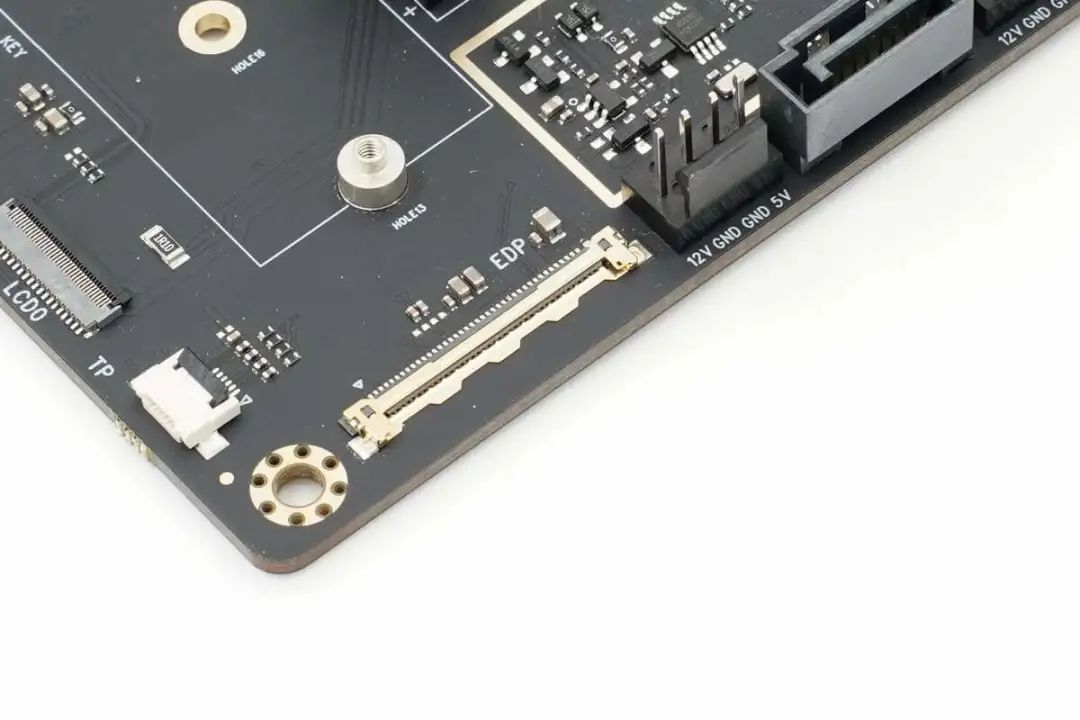 Close-up of the EDP screen interface.
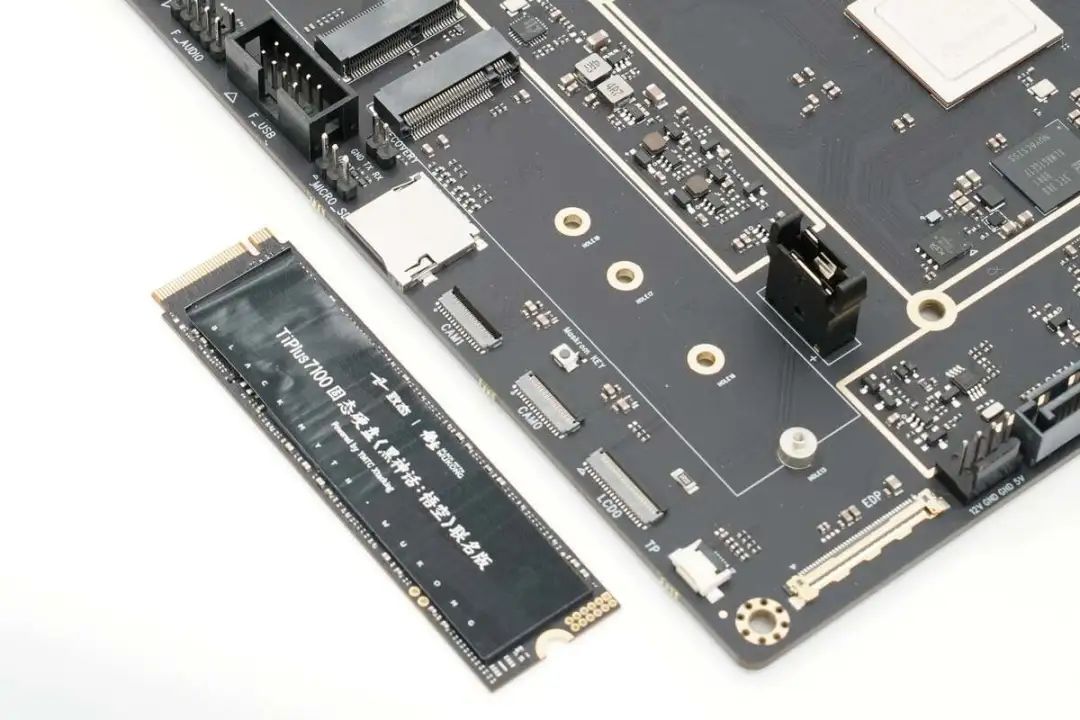 The motherboard has a 2280 M.2 M KEY hard drive interface.
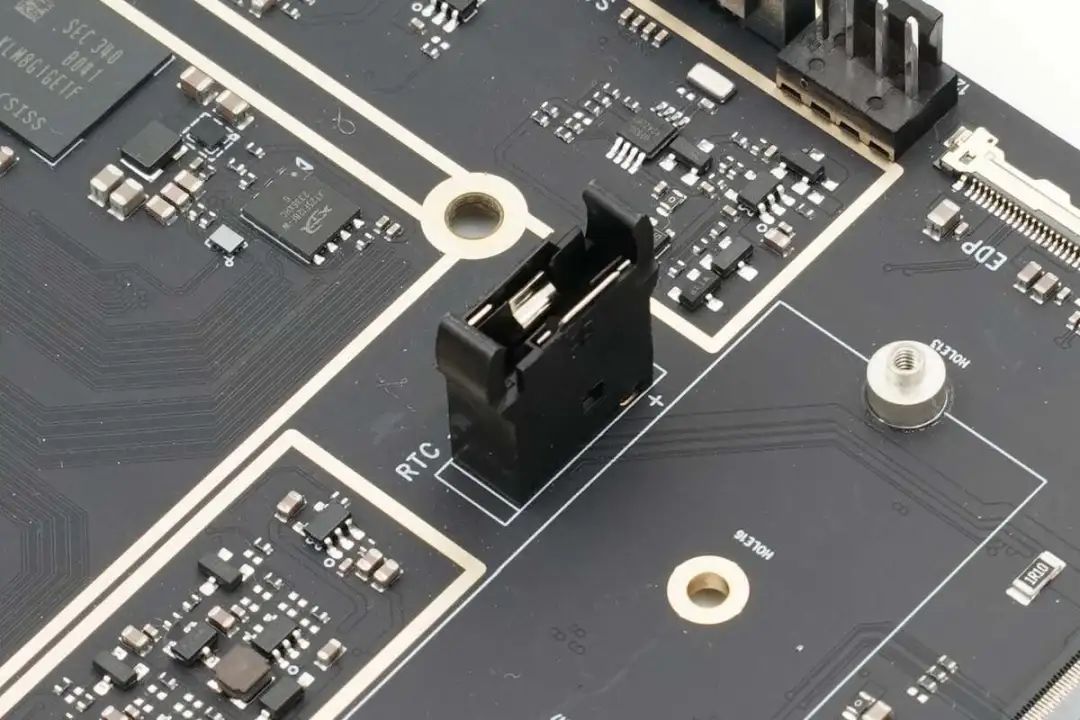 Close-up of the clock battery socket, which is upright.
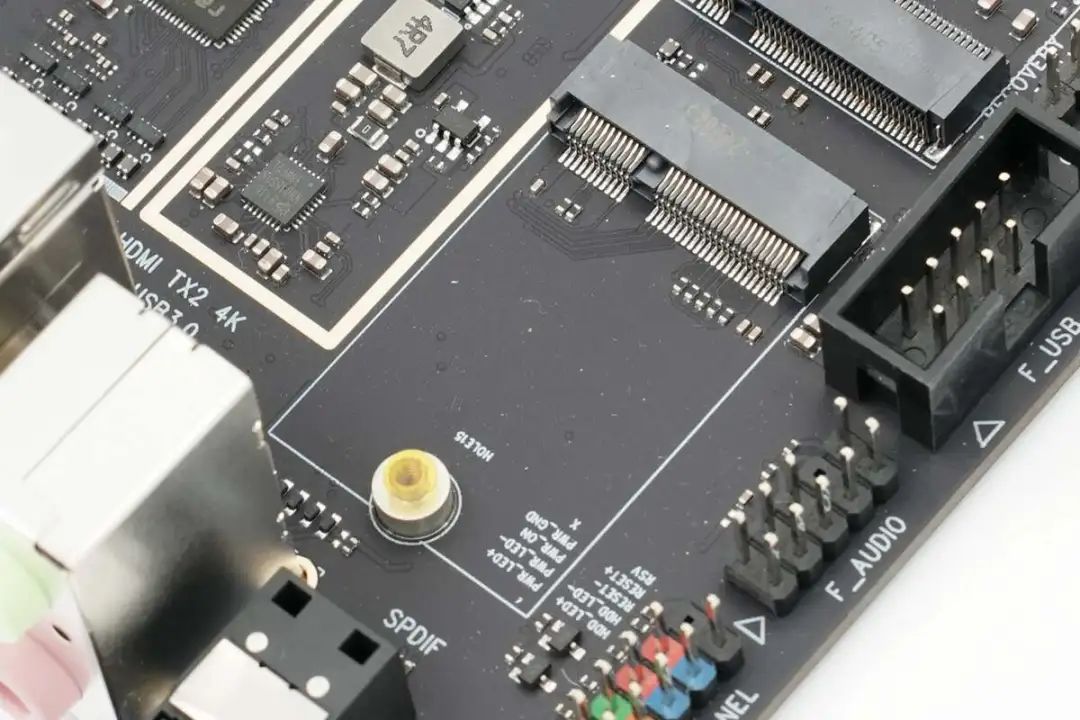 Close-up of the M.2 E KEY network card interface.
Charging Head Network Summary
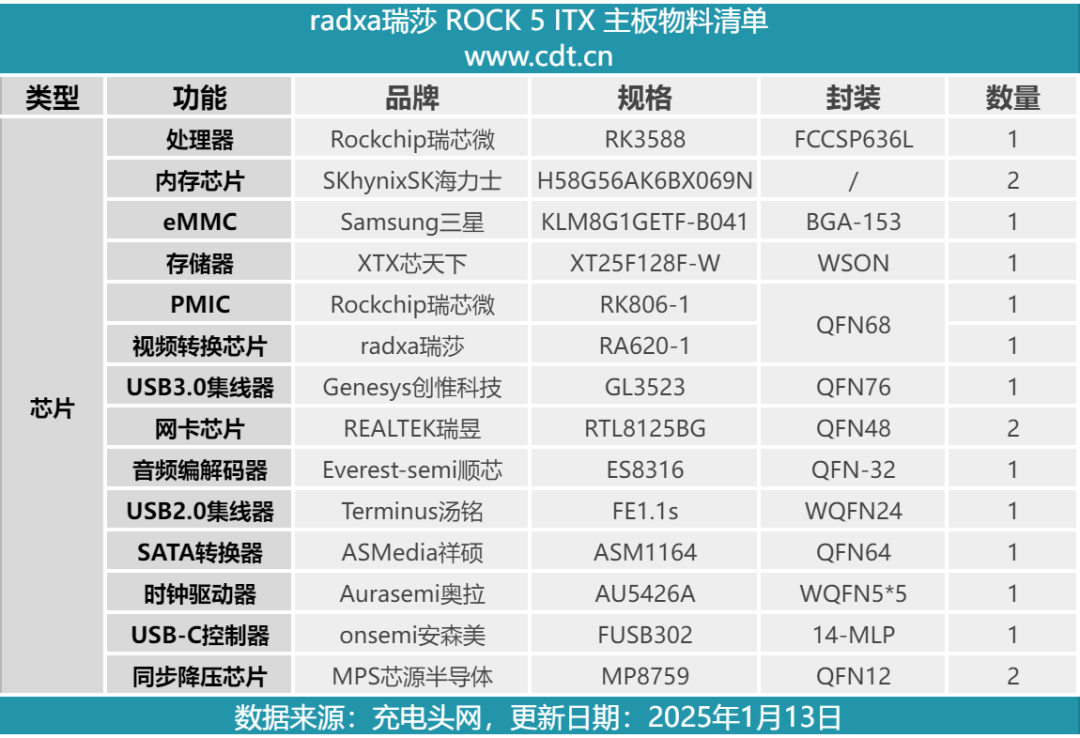 Finally, here is the core component list of the Radxa ROCK 5 ITX motherboard for your reference.The Radxa ROCK 5 ITX motherboard adopts a standard size design, compatible with standard PC components and peripherals. The motherboard has four SATA interfaces, an M.2 solid-state drive interface, a TF card slot, HDMI interface, USB-C interface, and EDP interface, USB2.0, and USB3.0 interfaces for expanding storage and connecting external display devices, supporting multiple power supply methods.Through disassembly, Charging Head Network learned that the Radxa ROCK 5 ITX motherboard uses the Rockchip RK3588 SoC chip, paired with two Hynix 4GB LPDDR5 memory chips, totaling 8GB of memory capacity, and uses a Samsung 8GB eMMC chip for system storage. The SATA interface is expanded using ASMedia ASM1164.The USB3.0 is expanded using Genesys GL3523, and USB2.0 is expanded using Taiming FE1.1s. The HDMI interface is converted from DP output using Radxa RA620-1, and the motherboard has MIPI LCD interfaces, camera interfaces, and a TF card slot, with a reserved PoE power module interface, demonstrating excellent compatibility and flexibility.
Below are popular topics that you can click on to learn more, or you can reply with the following keywords in the Charging Head Network WeChat backend to get the topic
「Annual Disassembly」
2024、2023、2022、2021、2020、2019年、2018年、2017年、2016年、2015年
「Disassembly Classification」
Outdoor Power Supply、Inverter、Charging Gun、Charging Pile、Server Power Supply、PC Power Supply、Charger、Power Bank、Wireless Charging、Car Charger、Charging Cable、Power Strip、Inflatable Treasure、Hair Dryer、Car Inverter、Electric Toothbrush、Docking Station、Inflatable Treasure、Cooling Back Clip、V Port Battery、Mobile Wi-Fi、Mini Fan、Electric Mosquito Swatter、Flashlight、Monitor、Power Tools
「Application Cases」
Nanxin、Yingjixin、Zhirong、BiYiWei、MeixinSheng、JieHuaTe、MaoRuiXin、HuaYuan、Silicon Power、TianDeYu、Dongke、Chipsea、Yichong、Qinheng、Yutai、Chengxinwei、Hengchengwei、Chipjin Electronics、TeRuiXiang、Wald、InnoSpectra、Nitride、Weizhao、Yuhongjin、ChuanTuWei、AOS Global、SongTian