AC Wiring Section:
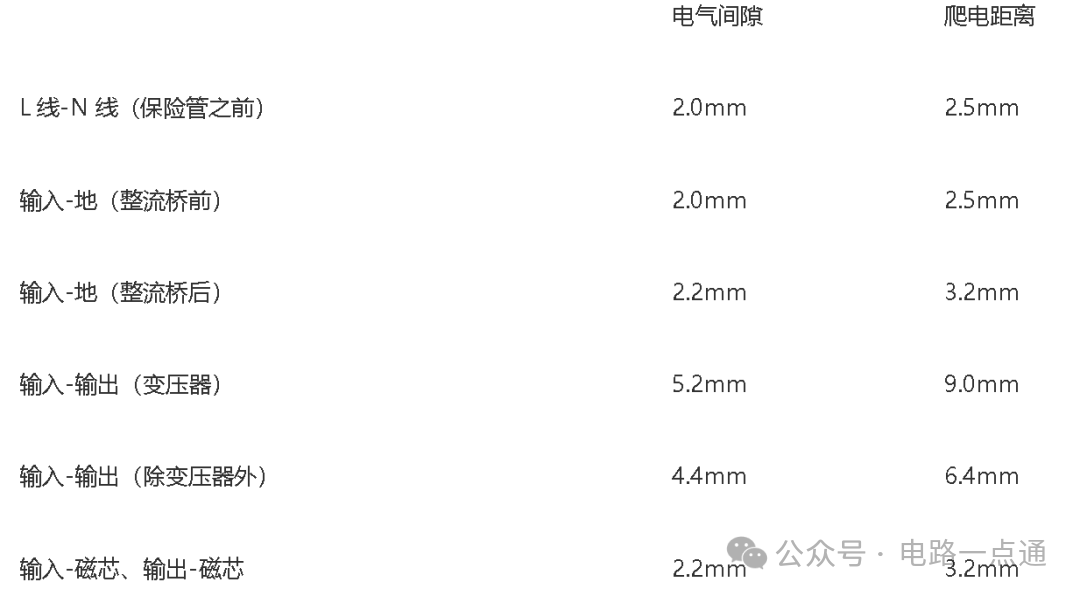
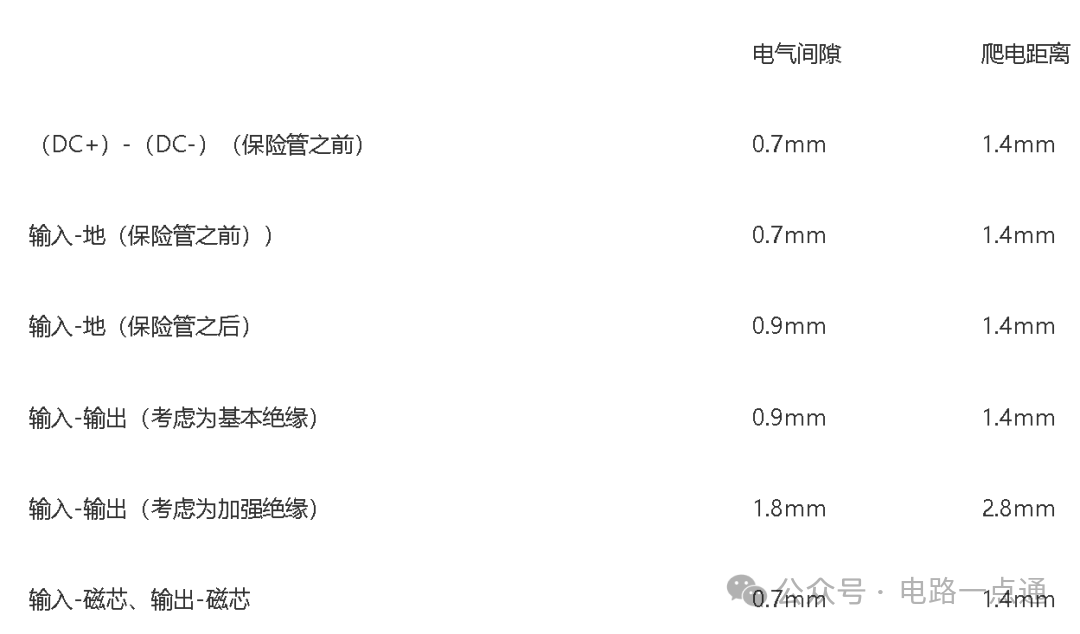
The creepage distance and electrical clearance are related to altitude, surge voltage, working environment, insulation voltage, etc. Specific values can be referenced from standards. Below are practical experience values summarized based on standards:
a. For AC-DC power supplies (taking those without PFC circuits and an input rated voltage range of 100-240V as an example)
 👆 View More Directory👆
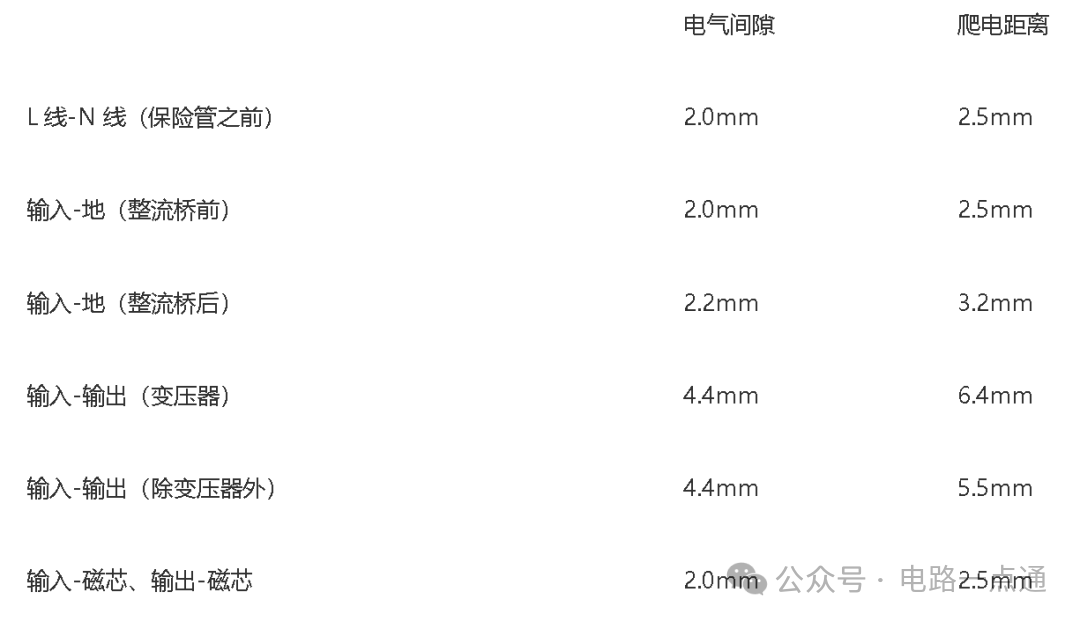
b. For AC-DC power supplies (taking those with PFC circuits and an input rated voltage range of 100-240V as an example)
c. For DC-DC power supplies (taking an input rated voltage range of 36-76V as an example)
Motor (Power Line) Wiring Section:
1. When the wiring in the corresponding section cannot meet the required width due to mechanical reasons, a window tinning treatment is necessary. The tinning must be done from the source to the end without any un-tinned areas; otherwise, the un-tinned parts will still not meet the requirements, posing a risk due to excessive power.
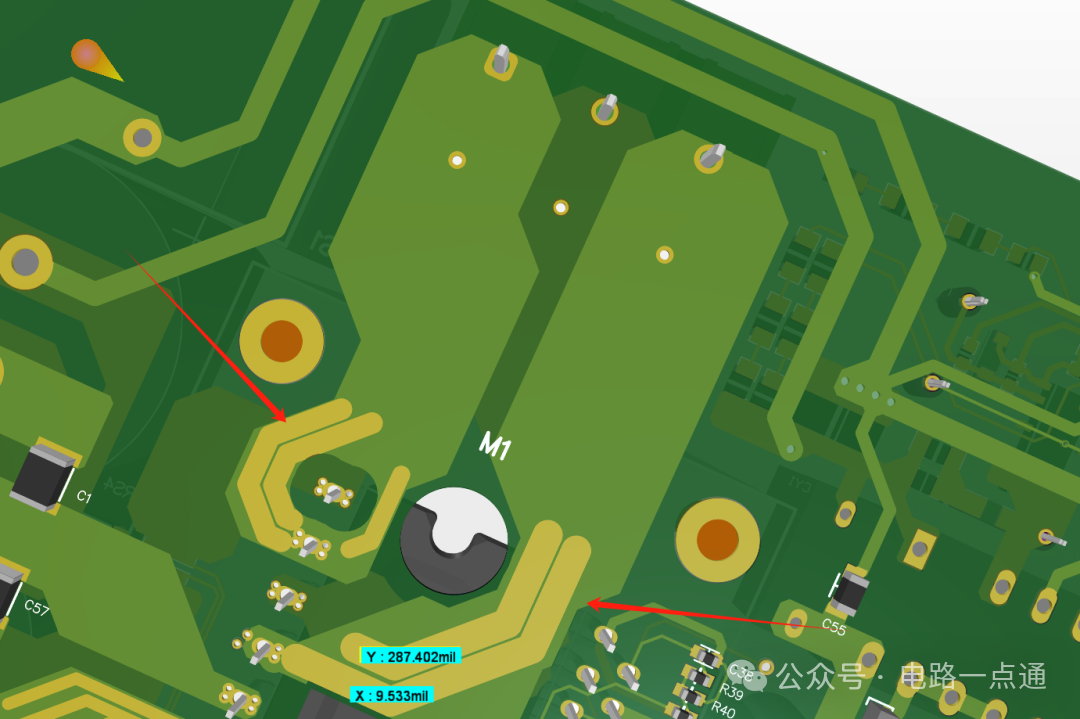
This wiring has significant issues; the right side is wide, the middle is narrow, and there is no window tinning:
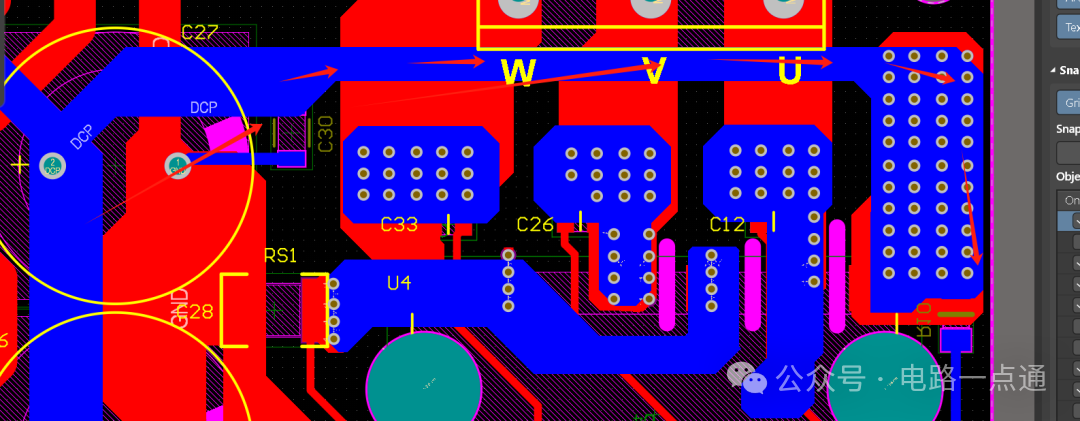
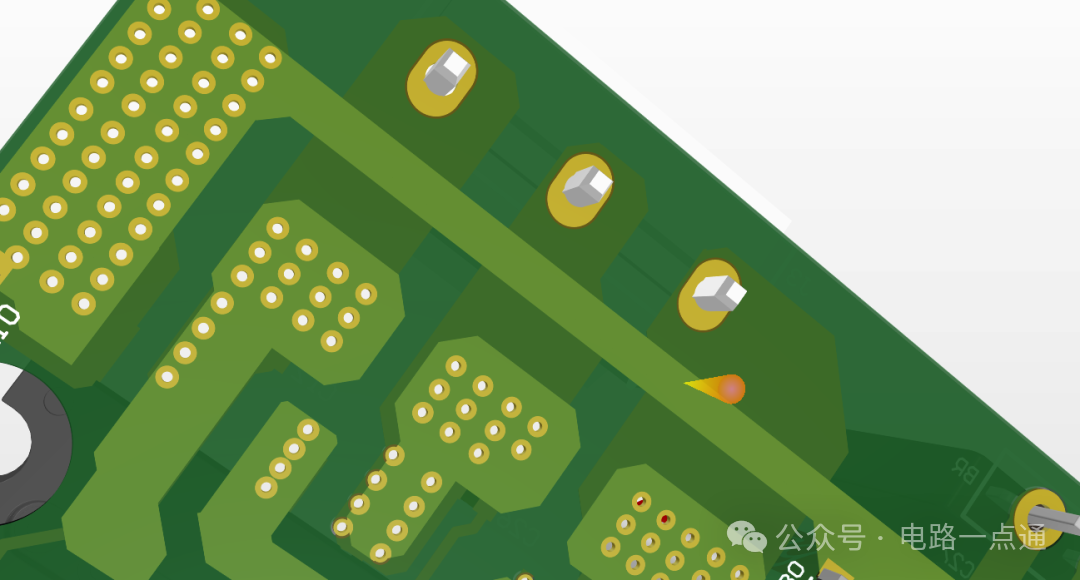
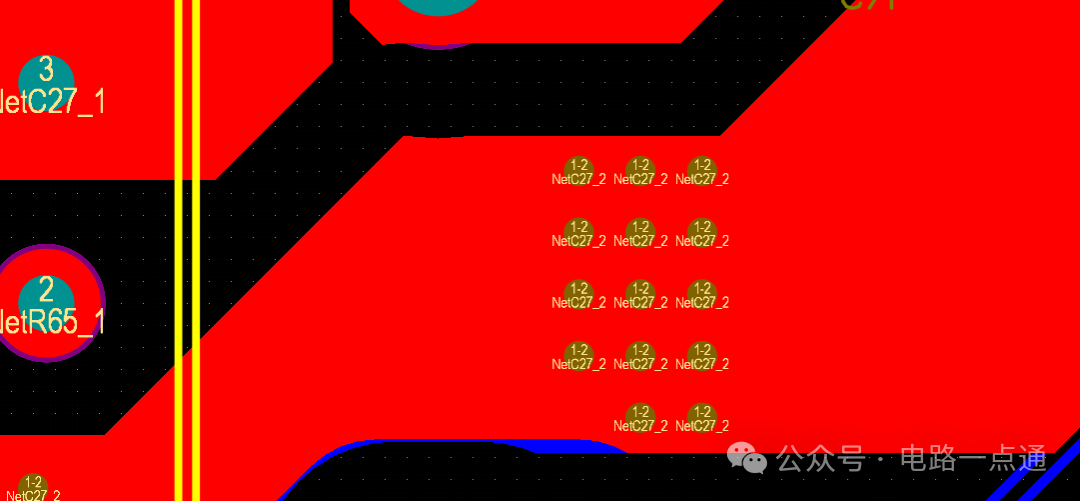
2. For layer transition vias, the maximum current passing through must be calculated, and based on the size of the holes, the number of vias needed must be determined:
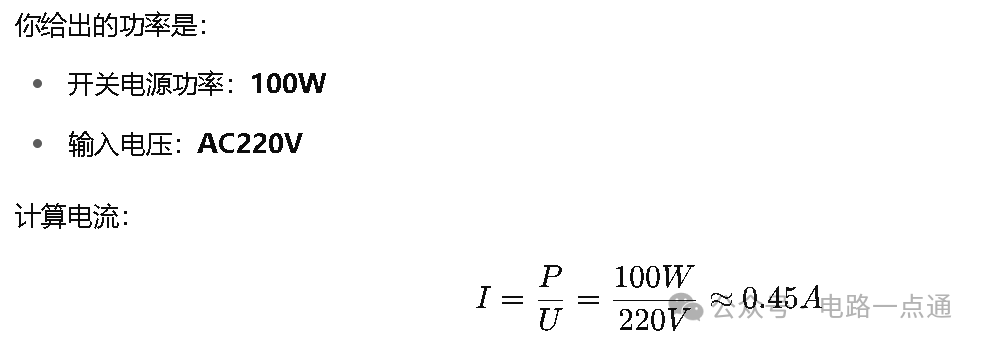
For example, how wide should the AC220V wiring on the PCB be:
When encountering connectors, if the wiring needs to change layers, a circle of vias should be placed around the connector to ensure that even if the connector becomes loose, the wiring connection remains intact:
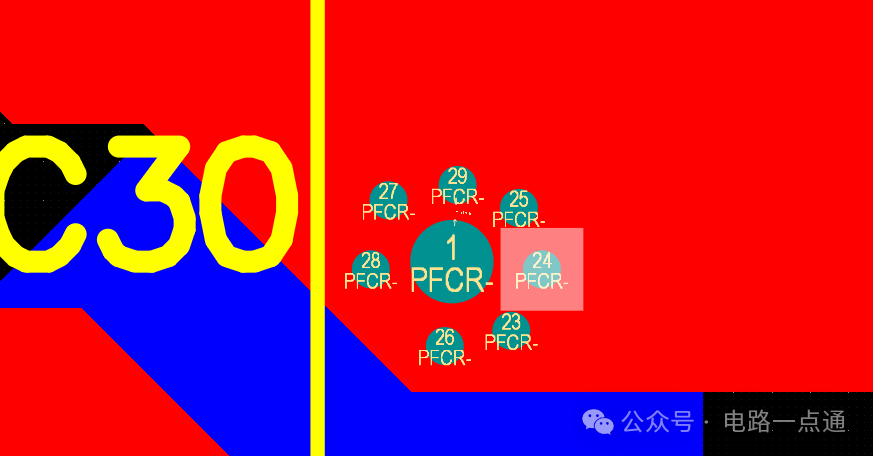
GND Wiring or Copper Pour Treatment:
1. By using GND wiring
The loop area of the signal return path should be as small as possible.
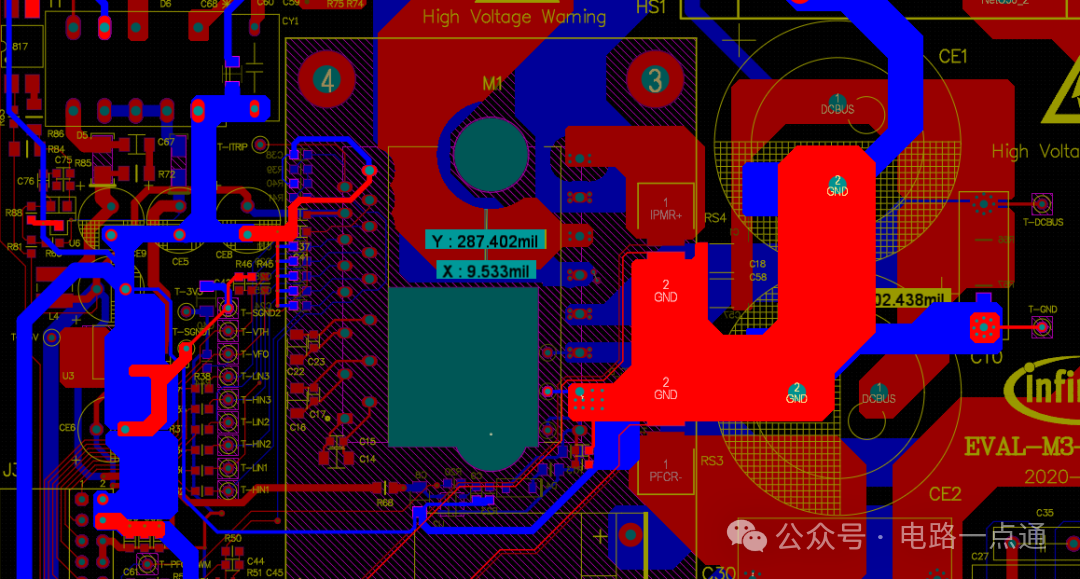
2. Local copper pouring method
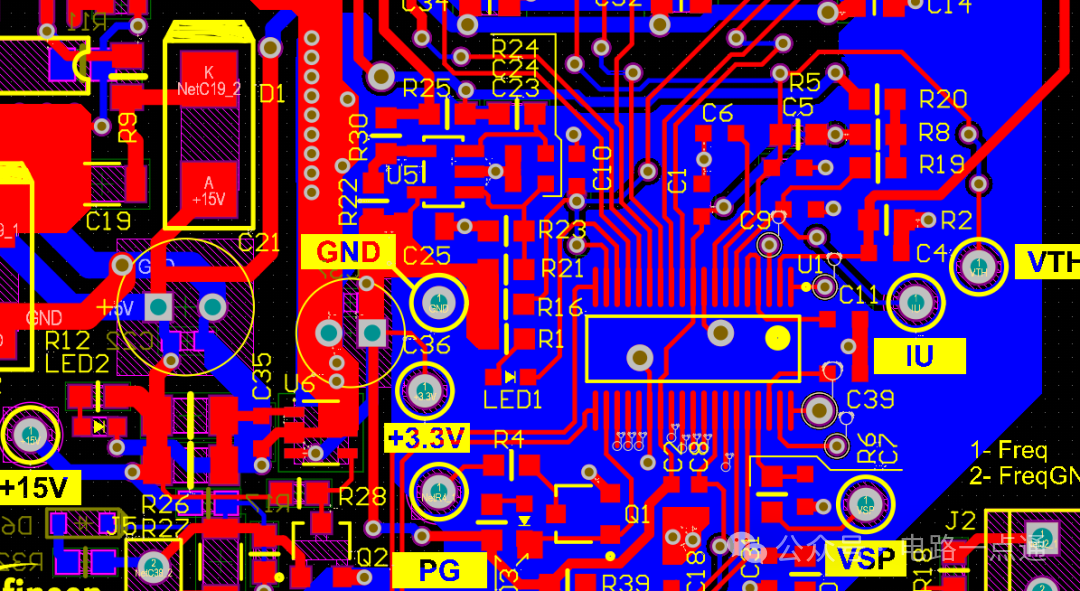
Calculate the wiring width to ensure the loop area is minimized:
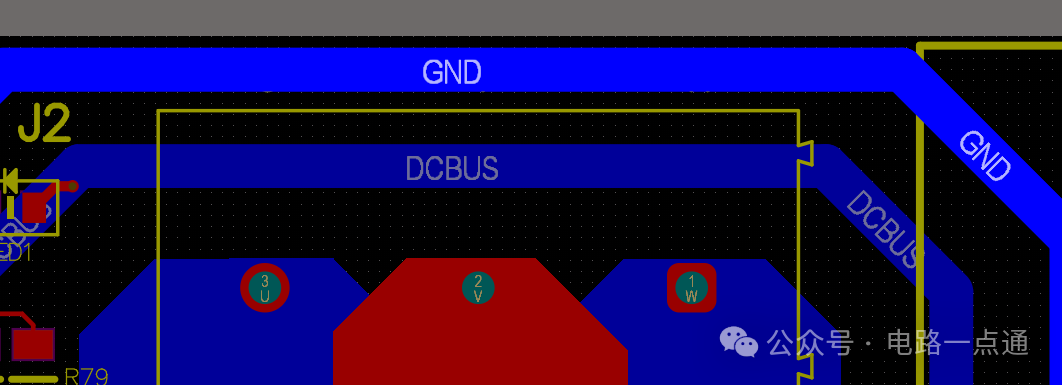
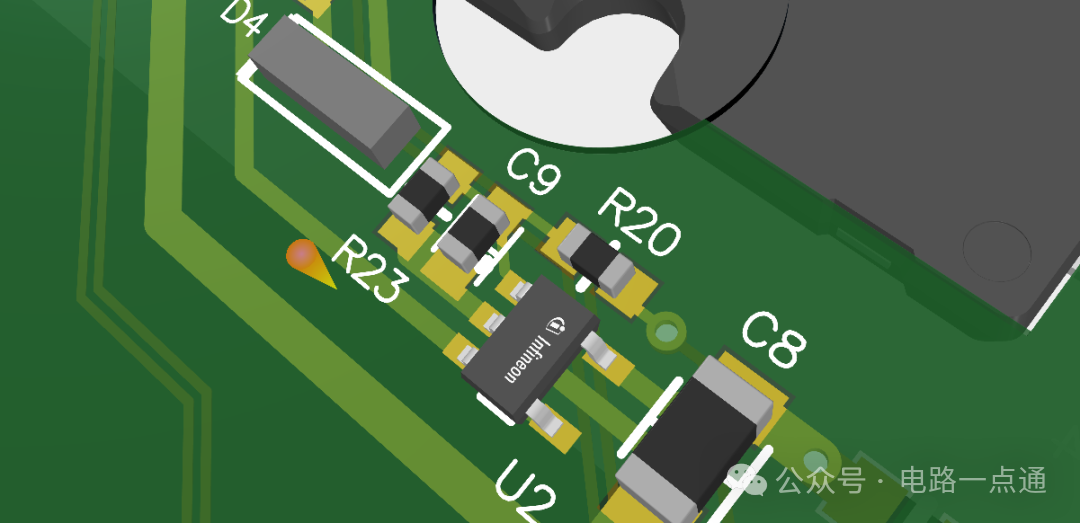
Correct Placement of Silkscreen:
Disclaimer:This article is for learning reference only and this account maintains neutrality regarding all original and reprinted articles’ statements and viewpoints. The articles and images are copyrighted by the original authors. If there is any infringement, please contact (WeChat haizililiang) for deletion.
 👆 Join the family⭕ to discuss and reply: Exchange
Here is an in-depth explanation of circuit knowledge, from basic principles to complex circuit analysis, along with interesting circuit experiment sharing, helping you keep up with the development pace in the electronic hardware field. To easily learn circuits, come to#CircuitOnePointZero (70,000+ followers).
Share💬 Like👍 View❤️