In July last year, news broke that ADI was acquiring its analog chip peer Maxim, which was later confirmed. ADI acquired Maxim in an all-stock transaction valued at $21 billion, resulting in a combined market capitalization of over $68 billion based on their respective market values at the time.
After more than a year of investigation and review, ADI and Maxim announced on August 23 that they had received antitrust approval from China’s State Administration for Market Regulation.
In the context of a global chip shortage, the identities of the two main players in this acquisition have changed significantly. The successful completion of this transaction will undoubtedly solidify ADI’s leadership position in the analog semiconductor field, butwhile ADI and Maxim celebrate, Xilinx has suddenly found itself in the spotlight.
Combined Market Value Exceeds $90 Billion
Founded in 1983, Maxim is a leading semiconductor design and manufacturing company, primarily providing advanced analog integration solutions for automotive, cloud data centers, mobile consumer electronics, and industrial applications. Its industrial products cover power management, sensors, analog signals, interfaces, communications, digital circuits, embedded security systems, and secure microcontrollers.
Founded in 1965, ADI is a world leader in the design, manufacturing, and marketing of high-performance analog, mixed-signal, and digital signal processing (DSP) integrated circuits (ICs), with products spanning nearly all types of electronic and electrical devices. ADI has long held the second position in the analog chip market.
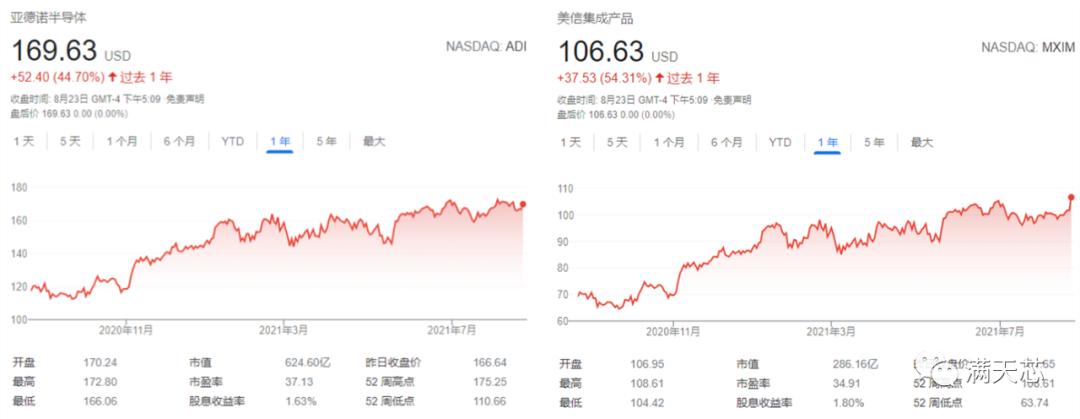 When the acquisition news first broke last year, ADI’s stock price was around $120, and Maxim’s stock price was just over $60, with a combined market value of about $68 billion. Over the past year, thanks to an unprecedented market situation, ADI’s stock price has increased by 33%, and Maxim’s stock price has risen by 66%. According to the latest data, their current combined market value has exceeded $91 billion. The market trend continues, and with the long-term bullish development of the U.S. stock market, another semiconductor company with a market value of over $100 billion is about to emerge.Strong Alliance
On June 2, the semiconductor industry research organization IC Insights released relevant data on analog chip manufacturers for 2020.
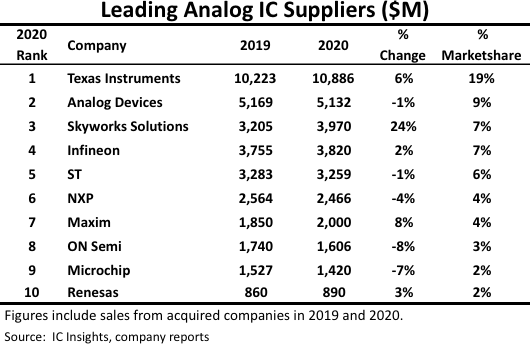
The top ten analog chip manufacturers are TI (Texas Instruments), ADI (Analog Devices), Skyworks, Infineon, STMicroelectronics, NXP, Maxim, ON Semiconductor, Microchip, Renesas.In 2020, ADI’s analog chip revenue was $5.132 billion, a decline of 1% compared to 2019.Its revenue and market share are more than half lower than TI’s.As the second-largest player in the global analog chip market, ADI has long been suppressed by TI, both in revenue and market share, and has not made significant progress, with revenue even declining in recent years.However, after the merger of ADI and Maxim, itsrevenue scale and market share will closely approach the leader TI.Regarding the ADI acquisition of Maxim, a well-known netizen in the WeChat community, Bobo Wang, commented:
To join the group, add the group manager on WeChat: ichunt_xin2
Xilinx: Why Am I Suddenly Involved?Stimulated by ADI’s acquisition of Maxim receiving antitrust approval in China, Xilinx’s stock surged 6.41% on Monday, closing at $153.52, a new historical high, with an increase of 8.29% this year.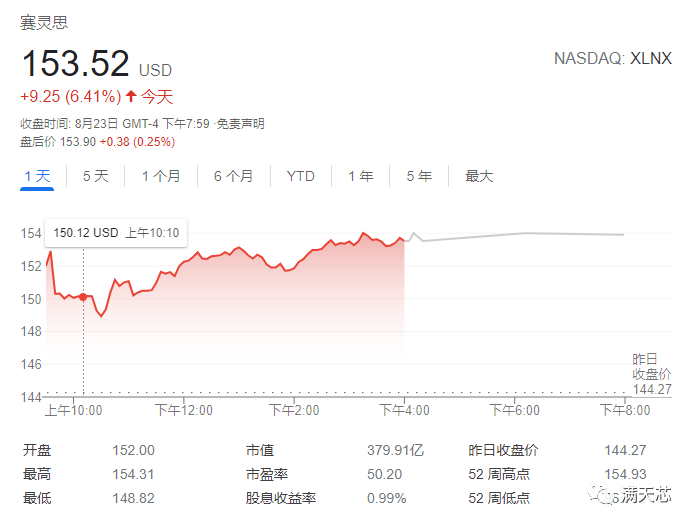 The reason Xilinx is suddenly mentioned in the news of ADI’s acquisition of Maxim is primarily due to its own involvement in a large acquisition case. In October last year, AMD announced its intention to acquire Xilinx for $35 billion. After the merger, the two companies will form a leading high-performance computing company, significantly expanding AMD’s product portfolio and customer base, covering all growth markets where Xilinx has established a leading position.As early as 2019, after Qualcomm’s acquisition of NXP was rejected by Chinese antitrust authorities, it left a psychological shadow on these large foreign chip manufacturers.Especially in recent years, the U.S.-China trade war and the U.S. government’s aggressive blockade of China’s high-tech sector have added to the concerns of companies interested in acquisitions.Now that ADI’s acquisition of Maxim has received approval from Chinese antitrust authorities, AMD and Xilinx can naturally breathe a sigh of relief.Acquisitions Are Not Easy, Samsung Is Still StrivingWatching U.S. companies take continuous action, the South Korean conglomerate Samsung, with its massive cash reserves, is eager to expand.According to SAMMOBILE reports, the semiconductor giant Samsung, which holds about $114 billion in cash, is actively seeking to expand its group portfolio, eyeing significant companies such as NXP, TI, and Renesas as acquisition targets.However, it has proven that acquiring these leading companies in a specific semiconductor field is not as easy as Samsung had hoped.According to sources, since automotive semiconductors are one of the most promising fields for the next 30 years, Samsung is considering restarting its plan to acquire NXP. However, NXP’s valuation has already risen significantly,
 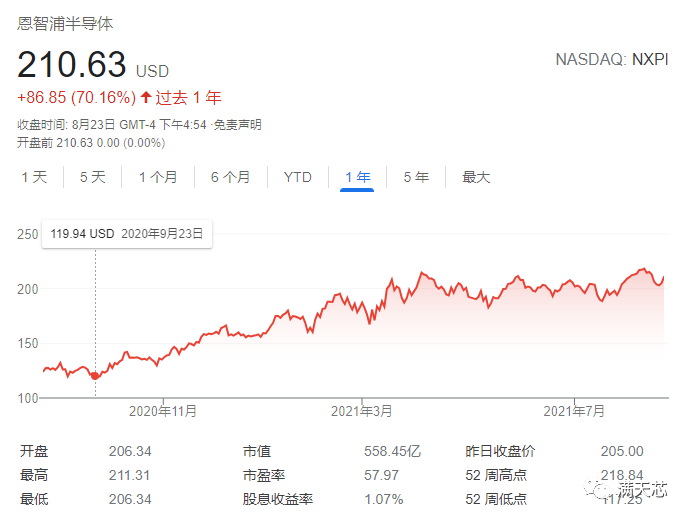 Over the past year, NXP’s stock price has risen by more than 70%, with a market value exceeding $55 billion in the U.S. stock market. When Qualcomm announced its acquisition of NXP, the initial offer was only $38 billion, which later rose to $44 billion but still failed.Current data shows that acquiring NXP now requires at least $68 billion, and there will also be subsequent legal issues, with additional costs gradually increasing. Although Samsung has the strength, it also needs to think carefully.Accelerated Mergers and Acquisitions in the IndustryIn 2020 alone, the total transaction value of four acquisitions, including ADI’s acquisition of Maxim, NVIDIA’s acquisition of ARM, SK Hynix’s acquisition of Intel’s memory business, and AMD’s acquisition of Xilinx, exceeded $105 billion. This makes Marvell’s $10 billion acquisition of Inphi and GlobalWafers’ $4.5 billion acquisition of Germany’s Siltronic seem somewhat insignificant.This large-scale merger and acquisition activity has also set a new record for annual mergers and acquisitions in the semiconductor industry in 2020.In the face of rapidly changing global circumstances and increasingly complex situations, giants are increasingly banding together to strengthen their advantages through mergers and acquisitions to enhance their competitiveness.After all, quality resources are limited, and if they don’t buy now, they may miss out.
 【Scan to Join the Group】To stay updated on the latest industry trends, you can add the group manager on WeChat:ichunt_xin Scan the QR code below to join the group