Apple’s every detail improvement in mobile phone design has always attracted industry attention. According to current leaks, the upcoming iPhone Air will adopt innovative 3D printed titanium USB-C port technology, which undoubtedly brings three significant advantages: a thinner body design, stronger structural strength, and an environmentally friendly feature that uses 33% less material.
Breakthrough Application of 3D Printing Technology
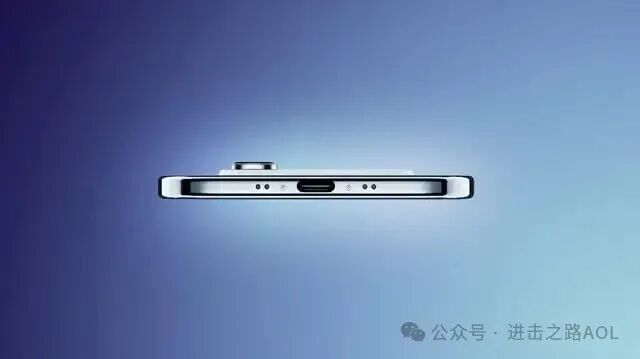
According to the latest news, the USB-C port of the iPhone Air will utilize an unprecedented 3D printed titanium manufacturing process. The core advantage of this technology lies in its ability to create a port structure that is thinner than traditional methods while maintaining or even enhancing material strength.
Although the opening size of the USB-C port must adhere to universal standards, there is significant room for optimization in the structural design surrounding the port. Through 3D printing technology, Apple can precisely control the distribution of materials, allowing for a thinner supporting structure around the port while ensuring structural strength.
Function Configurations Compromised for Ultra-Thin Design
However, while pursuing extreme thinness, the iPhone Air has made compromises in certain functionalities. The most obvious is that the USB port still only supports USB 2.0 transfer speeds, rather than the faster USB 3.0 standard.
Community users have mixed opinions on this. Some believe that for the average consumer, very few people frequently use data cables to transfer large files, as wireless transfer has become mainstream. However, photography enthusiasts have expressed that if they often need to import photos from professional cameras to their phones for editing, the USB 2.0 transfer speed will indeed affect efficiency.
Technical analysis indicates that although the iPhone Air is equipped with the same A19 processor as the iPhone 17 Pro, it may have had some chip functionalities trimmed down, with the USB 3.0 controller possibly being one of the simplified components.
Reflection of Environmental Philosophy
In addition to technological breakthroughs, the 3D printed USB-C port of the iPhone Air also reflects Apple’s commitment to environmental protection. Compared to traditional manufacturing processes, 3D printing technology can reduce material usage by 33%, which will have a considerable cumulative environmental effect for smartphones produced in large quantities annually.
Market Positioning and User Feedback
From the current community discussions, the positioning of the iPhone Air is very clear: it targets users who pursue lightweight and portability but do not have high demands for professional features. For professional users such as photographers and video creators who frequently need to transfer large files, the iPhone 17 Pro series remains the better choice.
Some users humorously imagine a room in Apple’s campus where 3D printers run around the clock, specifically producing these precision titanium ports for the iPhone Air.
Significance of Technological Development
Although this technology currently seems more like an engineering optimization to complement the ultra-thin design of the iPhone Air, it represents an important development direction for the manufacturing industry. The application of 3D printing technology in the mass production of consumer electronics may bring new manufacturing concepts to the entire industry.
If everything can be realized, the 3D printed titanium USB-C port of the iPhone Air will become another innovative attempt by Apple in material science and manufacturing processes. The successful application of this technology may influence the design thinking of more electronic devices in the coming years.
It can be said that this technological breakthrough in seemingly small components is a reflection of Apple’s long-standing pursuit of perfectionism. Regardless of the final market response, this extreme attention to detail is still worthy of the entire industry’s attention and learning.
As a side note: Personally, I find it quite awkward that the USB port is not vertically centered, 😂.
If this has been helpful to you, feel free to follow, share, like, and leave comments below 👇👇👇