
Sensor Fatigue:
When Data Overload Becomes a Problem
Smart buildings rely on data-driven approaches, but an excess of sensors and redundant information often leads to “sensor fatigue,” which not only reduces the efficiency of AI analysis but also obscures actionable insights.
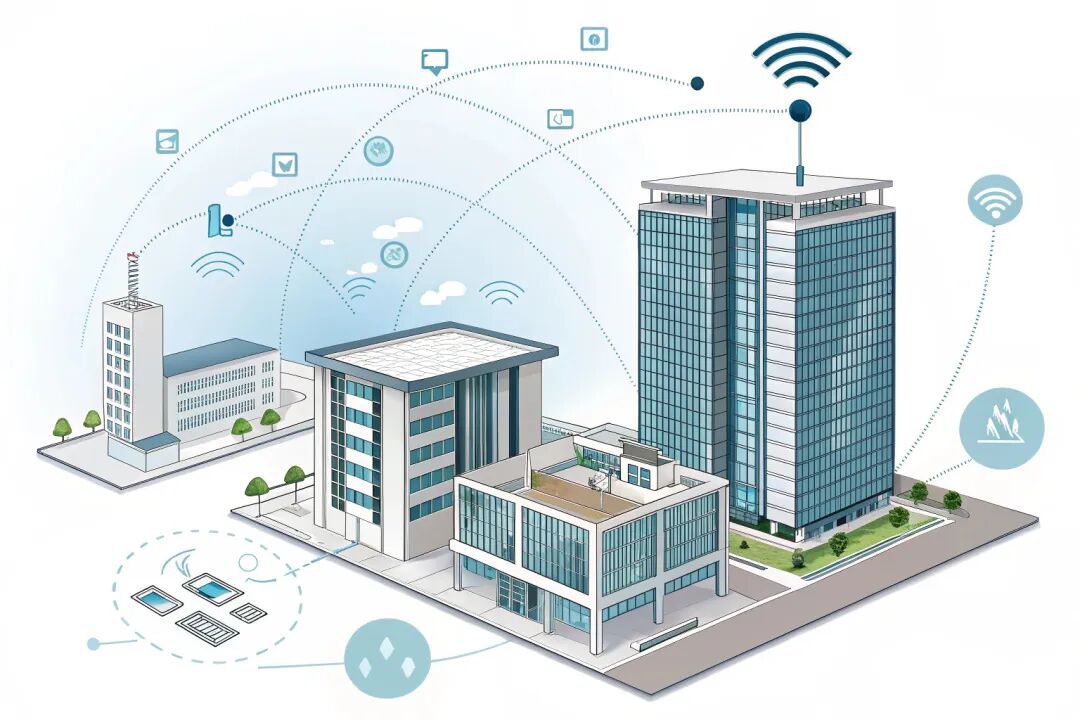
Core Summary
· The increase in the number of sensors does not necessarily enhance the performance of AI or building automation; high-quality data is far more valuable than massive amounts of data.
· Over-instrumentation can lead to an overflow of redundant information, which in turn obscures truly meaningful insights.
· A clear building management goal is a prerequisite for deploying sensors, helping to reduce investment costs and system complexity.
· Regularly auditing the sensor network to eliminate ineffective or redundant sensors is key to maintaining system efficiency.
· Simplified and structured visualization dashboards can highlight core metrics (KPIs), avoid information overload, and assist managers in making quick decisions.
Smart Buildings and “Sensor Fatigue”
In the context of the “dual carbon goals” and the construction of smart cities, smart buildings are accelerating their development. Through the Internet of Things (IoT), sensors, and automated control systems, buildings can achieve energy savings, comfort, and safety. However, as the number of deployed sensors rapidly increases, data overload has become a common issue, which is referred to in the industry as “sensor fatigue.”
Sensor fatigue not only burdens data processing systems but also causes AI decision-making models to become “lost” due to redundant and low-value data. For example, excessively frequent collection of minor temperature fluctuations obscures the truly concerning trends in energy consumption or air quality anomalies. The resulting problem is that both building management teams and AI systems struggle to focus on core issues, thereby increasing operational complexity.
The real value lies not in “big data volume,” but in “high-quality data.”
Why More Sensors ≠ Better AI Results
In recent years, as sensor prices have plummeted, many smart building projects tend to adopt a “more is better” approach. However, an increase in the number of sensors does not equate to an enhancement in building intelligence.
Excessive sensor data does not yield deeper insights, but rather:
· Data Redundancy — Multiple sensors monitoring the same environmental variables lead to information duplication.
· Noise Interference — An excess of minutiae obscures truly valuable data patterns.
· AI Training Difficulties — Overly complex data increases modeling costs and computational delays.
In contrast, a more scientific approach is to align with building goals (such as energy saving and carbon reduction, health and comfort, operational optimization) and prioritize the collection of data that directly drives KPIs. For instance, energy efficiency parameters of HVAC systems and key data from air quality sensors are far more valuable than indiscriminate large-scale data collection.
How to Avoid Over-Instrumentation and Reduce Costs
Over-instrumentation not only leads to data redundancy but also includes:
· Increased hardware and wiring investments;
· Rising maintenance and calibration costs;
· Increased complexity of system integration, leading to long-term risks.
Therefore, experienced building managers should adhere to a “three-step approach”:
· Goal-Oriented: Clearly define core objectives, such as reducing energy consumption by 15%, improving indoor air quality ratings, and reducing manual inspection workloads.
· Precise Deployment: Install sensors only in necessary spaces and systems, avoiding a “full coverage” mindset.
· Regular Audits: Use operational data analysis to identify redundant or ineffective sensors and promptly eliminate or adjust deployment strategies.
Simplifying Smart Building Dashboards
Another common issue is that while there is a lot of data, the dashboards are cluttered, making it difficult for managers to “see the key points.” Many operational staff report that traditional system interfaces are filled with data points, yet it is challenging to quickly identify anomalies or trends.
Improvement directions include:
· Data Layering and Classification: Group sensor data by system or area for clear logic.
· Highlighting Key KPIs: Real-time energy consumption, building occupancy rates, and Indoor Air Quality (IAQ) indices should be prominently displayed on the homepage.
· On-Demand Loading of Secondary Data: Reduce information interference by only calling upon secondary data during in-depth analysis.
For example, in a large office building project, the operations team placed real-time energy consumption and indoor comfort as primary indicators on the core position of the operations dashboard, while historical data and equipment operation logs were set as secondary menus, significantly improving management efficiency.
Addressing Sensor Fatigue to Create More Efficient Smart Buildings
Sensor fatigue reflects a misconception: more data ≠ higher value. In the development of smart buildings, only by driving with high-quality data can we truly unleash the potential of AI and automation.
To this end, building managers should:
· Clearly define core management objectives;
· Scientifically plan sensor deployment to avoid over-instrumentation;
· Regularly conduct sensor network audits;
· Optimize visualization interfaces to highlight core metrics.
Only in this way can data become the “intelligent fuel” for buildings, rather than a burden on the system. Ultimately achieving a balanced development of buildings in energy saving, carbon reduction, comfort, and intelligent operation.
Source: Qianjia Network
Disclaimer: Any information marked as sourced from other platforms is intended to convey more information and does not represent the views or positions of this public account. If there are any infringements or objections, please contact us for resolution.
Like, share, and take a look, we all appreciate it~