↑ ClickBlue text Follow the Open Source Workshop for Machine VisionIntroduction
In modern industrial production, tiny object detection (such as surface defects on parts and pin defects on electronic components) has always been a key challenge in the field of visual inspection. Traditional detection algorithms often suffer from significant accuracy degradation when faced with tiny objects smaller than 10 pixels due to insufficient information and a scarcity of positive samples. Recently, the team from the National University of Defense Technology proposed theSimD (Similarity Distance) technology in their paper titled Similarity Distance-Based Label Assignment for Tiny Object Detection, providing a new approach to address this issue. This technology achieves an improvement of 1.8% to 4.1% in AP (Average Precision) on mainstream datasets such as AI-TOD and VisDrone through an innovative bounding box similarity assessment method, particularly excelling in the detection of “extremely tiny objects” in the 2 to 8 pixel range.
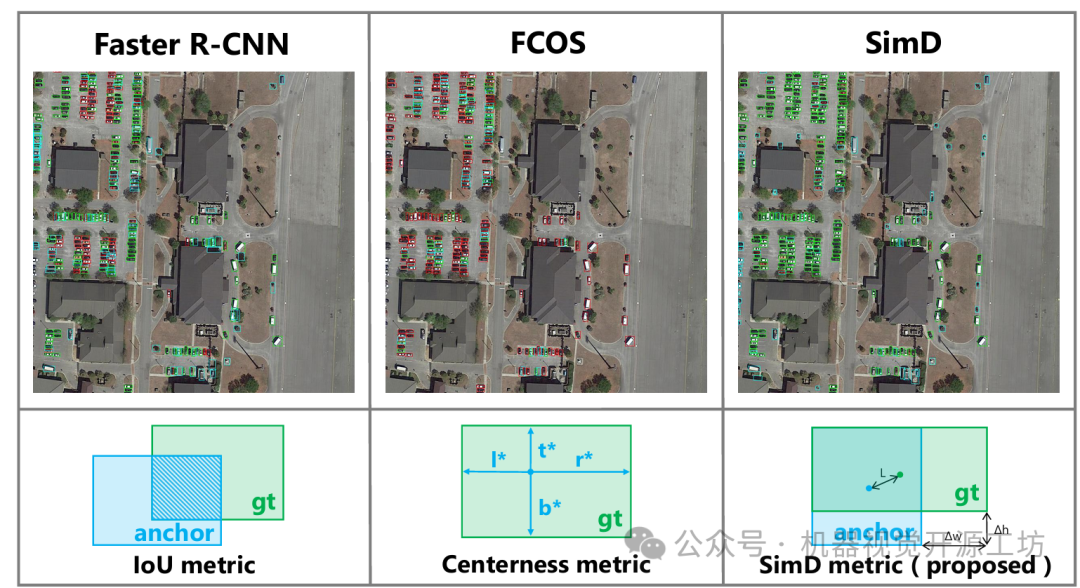 Core Highlights
1. Dual Assessment of Position and Shape Similarity
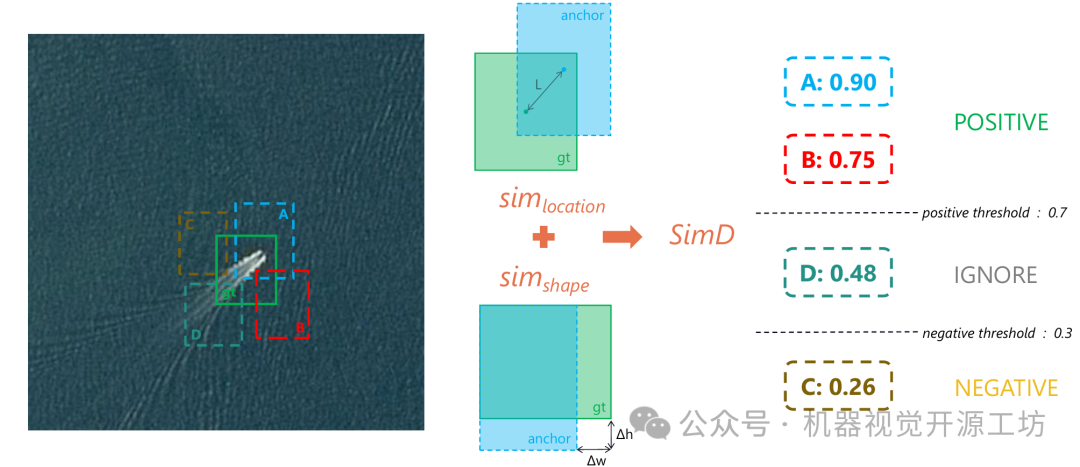
SimD breaks through the limitations of traditional IoU (Intersection over Union) that only focuses on overlapping areas, while also calculatingposition similarity (normalization of the distance between bounding box centers) andshape similarity (differences in width-to-height ratios), as shown in the following formula:This dual assessment mechanism allows the algorithm to more accurately identify the true boundaries of tiny objects, reducing false detections caused by the small size of the targets.
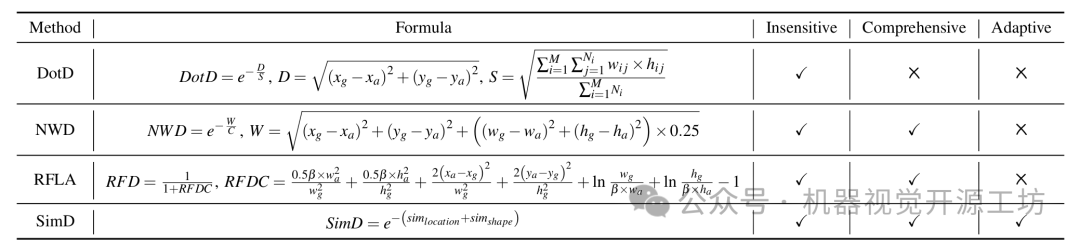
2. Adaptive Normalization Parameters with Zero Hyperparameter Design
By automatically calculating normalization coefficients (m and n) based on statistical features from the training set, SimD can adapt to the target size distribution of different datasets. For example:
- In the AI-TOD dataset (average target size of 12.8 pixels), it automatically adjusts the scale weights
- In the VisDrone dataset (which includes targets ranging from tiny to regular sizes), it maintains robustnessThe feature of not requiring manual parameter tuning allows for rapid deployment in diverse industrial scenarios.
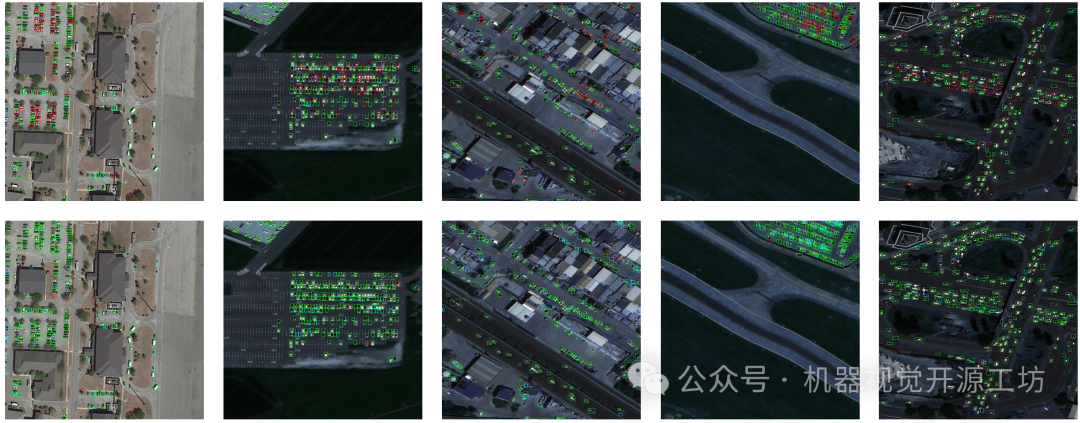
3. Performance Exceeds Existing Methods Across the Board
Test results on four major authoritative datasets show:
| Dataset | Model | AP Improvement (Compared to Traditional Methods) | Extreme Tiny Object AP Improvement |
|---|---|---|---|
| AI-TOD | DetectoRS w/SimD | +11.8% | From 0→13.4% |
| VisDrone2019 | Faster R-CNN | +4.2% | From 0.1%→7.5% |
Application Scenarios
1. Defect Detection of Precision Electronic Components
In semiconductor wafer inspection, the SimD technology can effectively identify defects such as metal line scratches and oxidation points that are only 5 to 20 pixels in size. Compared to traditional algorithms, itsmiss rate is reduced by 37%, making it particularly suitable for high-precision inspection needs in processes below 5nm.
2. Identification of Tiny Defects in Automotive Components
For tiny defects such as wear on engine gear tooth surfaces (width < 10 pixels) and indentations on bearing balls, SimD, combined with industrial cameras, can achieve:
- Detection speed increased to 30fps (meeting real-time requirements on production lines)
- False positive rate reduced by 22% (reducing unnecessary rework costs)
3. Quality Control of Pharmaceutical Packaging
In the sorting of capsule tablets, SimD can accurately identify issues such as incomplete printed characters (minimum detectable defect width of 0.1mm) and damage to aluminum-plastic blister packs, helping pharmaceutical companies meet GMP certification standards.
Access to Paper and Source Code
#Paper: https://arxiv.org/pdf/2407.02394v3#Code: https://github.com/cszzshi/SimDReply “SimD” in the backend of the Machine Vision Open Source Workshop to get the Baidu Cloud download link
End
Friends in the machine vision industry canprivate message in the public account 【Join Group】
Join the Machine Vision Exchange Group to get the latest technology sharing, project exchanges, and industry trends! Advertisers, please do not enter, do not trust private messages to avoid being scammed.
Reply “Open Source Collection” to get a compilation of 100+ open source upper computer, vision framework, and industrial AI resources
Recommended Articles
The Southern University of Science and Technology and Tencent YouTu jointly launched SoftPatch: A Noise-Resistant Tool for Open Source Industrial Visual Inspection – A Breakthrough in Unsupervised Anomaly Detection
Say goodbye to traditional barcode scanners! The open-source .NET barcode scanning tool turns your computer camera into a professional scanning device! (Source code included)
Groundbreaking AI technology open-sourced, specifically targeting power battery inspection! Solving the challenges of power battery defect detection! (Includes paper and source code)
UNICE: A New Breakthrough in Industrial Image Enhancement, One Model Solves All Lighting Issues (Includes paper and source code)
#Tiny Object Detection, #Industrial Vision, #SimD Algorithm, #Bounding Box Similarity, #Defect Detection, #Deep Learning, #Smart Manufacturing