This week, the 2017 IMT-2020 (5G) Summit, hosted by the IMT-2020 (5G) Promotion Group, opened in Beijing.
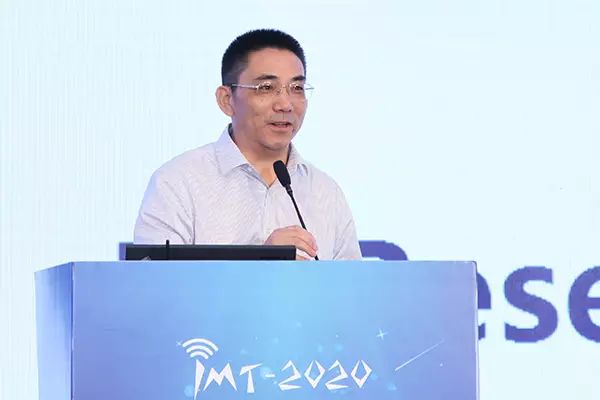
Yang Fengyi, Deputy Director of the China Telecom Technology Innovation Center, stated in his speech that China Telecom is actively participating in standardization and related work, both in 3GPP and IMT-2020.
China Telecom has submitted over 160 proposals related to 5G to 3GPP and applied for more than 60 patents; it has established a complete 5G evaluation system and is the only operator to submit simulation results of coexistence systems in both high and low frequency to 3GPP. In IMT-2020, China Telecom has submitted over 110 5G proposals in the past three years and has also actively participated in the 5G testing and validation work of the IMT-2020 Promotion Group, particularly in areas such as Massive MIMO, UDN, and SDN/NFV.
As a core technology of 5G, the introduction of Massive MIMO will significantly change the future network construction and architecture. To better validate Massive MIMO, China Telecom has built a simulation system to assess its performance. “We found that the evaluation efficiency of Massive MIMO in actual networking environments may not be as advantageous as theoretically expected, which is worth our consideration,” Yang Fengyi said.
In addition to performance testing, the China Telecom Technology Innovation Center has conducted in-depth research on product forms and has developed and tested modular Massive MIMO. Test results show that modular products can achieve comparable performance but greatly simplify early construction and later operational maintenance, providing significant advantages.
In terms of network cloudification, China Telecom has built three clouds based on the SDN/NFV concept, characterized by modular functions, software interfaces, and CU separation, which is essentially aligned with the SBA architecture defined by 3GPP.
In the area of multi-network integration, China Telecom is continuously promoting the integration of various access networks on the access network side. Currently, it has completed the aggregation work of LTE and WLAN in the laboratory and will continue to evolve along the concept and path of Multi-RAT.
As another key technology of 5G—MEC, China Telecom is also actively testing and validating it, as MEC is a very important means of supporting vertical applications, especially those with special requirements for latency and reliability. Yang Fengyi stated that China Telecom will not wait for 5G to mature before introducing MEC; exploratory work is already being done in the current 4G network.
5G, as a systematic innovation, is not only at the wireless air interface level. As the world’s largest optical network owner, China Telecom is also researching whether PON technology can be introduced into 5G transmission to solve problems related to cost and indoor coverage.
In September last year, China Telecom officially established a 5G open laboratory, mainly aimed at promoting cooperation between upstream and downstream industries and advancing the maturity and incubation of new technologies, products, and applications. The China Telecom 5G open laboratory is distributed across three cities: Beijing focuses on key technology research for 5G networks, such as NR, MEC, and slicing; Guangzhou focuses on integrated networks for 5G, including research and testing evaluation, as well as terminals; Shanghai mainly explores business aspects, discussing cooperation between 5G networks and vertical industries.
Currently, China Telecom has established a unified testing and validation environment and has jointly created a platform, completing the establishment of the laboratory testing phase. It has also begun deep cooperation with various parties in the industry chain and vertical applications, starting evaluations of various technologies and prototypes. According to the plan, China Telecom will continue to track the promotion experiments of IMT-2020 until 2018, and from 2019 onwards, it will begin building pre-commercial networks, aiming to provide commercial services by 2020.
Click to read the original article for more details.