When it comes to object-oriented programming, one might unconsciously think of C++ or Java. In fact, C language can also implement object-oriented programming. Object-oriented programming is a programming paradigm that is independent of the language tools used; some languages are just more suited for object-oriented programming.
 1. Code Reusability and Layered Thinking
What is code reusability?
In our programming process, we are constantly applying the idea of code reusability:
We define a function to implement a certain functionality, and then all programs can call this function without having to implement it separately again; this is coefficient-level code reusability;
We package some common functions into libraries and expose APIs for programs to call, achieving library-level code reusability;
If we look at the operating system from the perspective of code reusability, we will find that the operating system actually implements task scheduling and inter-task communication functionalities and exposes APIs for application programs to call, which is equivalent to achieving operating system-level code reusability.
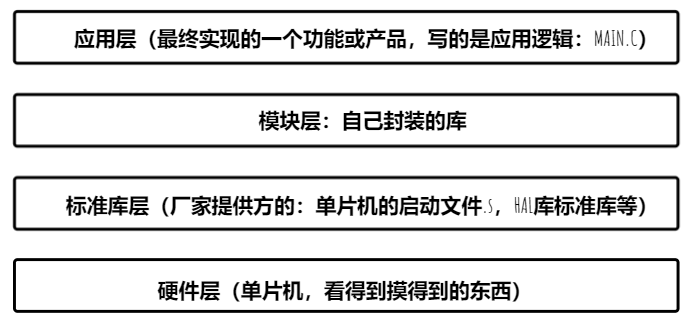
We usually encapsulate the code that we want to reuse, which has a specific functionality, into a module. Each module is independent of each other, and when used, they can be integrated into the system as a unit. As the system becomes more complex and the number of integrated modules increases, dependencies between modules may also arise. To facilitate system management and maintenance, layered thinking has begun to emerge, as shown in the diagram about the layered bare-metal system of microcontrollers;
2. Introduction to Object-Oriented Programming
Object-Oriented Programming (OOP) in C++ is a programming paradigm centered around “objects”. It achieves modularity, reusability, and maintainability of code through three main features: encapsulation, inheritance, and polymorphism.
Class: The “template” of an object, defining the object’s attributes and methods (e.g., class ElectricCar).
Attributes (Data): Describe the characteristics of the object (e.g., the color, speed, and battery level of a “car”).
Methods (Behavior): Describe the operations that the object can perform (e.g., acceleration, charging, braking of a “car”).
Object: An instance of a class (e.g., myCar in ElectricCar myCar).
Interface: In C++, interfaces are simulated through “pure virtual functions” (only method declarations without implementations), forcing subclasses to implement specific functionalities.
Encapsulation
Definition: Bundling an object’s attributes (data) and methods (behavior) together and restricting external access to internal data through access control (public/private/protected).
Function: Protects data security (prevents accidental modification).
Hides implementation details, exposing only necessary interfaces.
Inheritance
Definition: Allows one class (subclass/derived class) to inherit the attributes and methods of another class (parent class/base class), while also adding new features or overriding parent class methods.
Function: Code reusability, establishing a hierarchy between classes.
Polymorphism
Definition: The same interface (e.g., function name) exhibits different behaviors on different objects, divided into compile-time polymorphism (function overloading) and runtime polymorphism (virtual functions).
Function: Increases code flexibility and simplifies the implementation of common logic.
 3. Simulating Classes and Methods in C Language
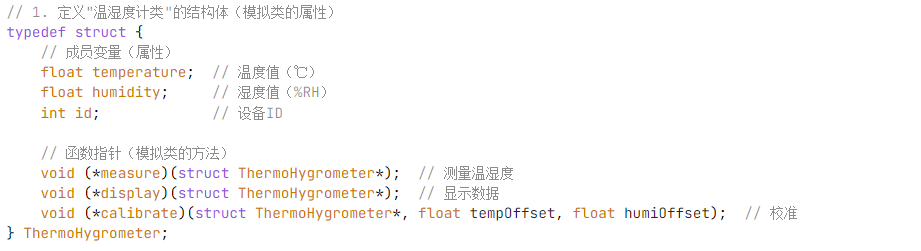
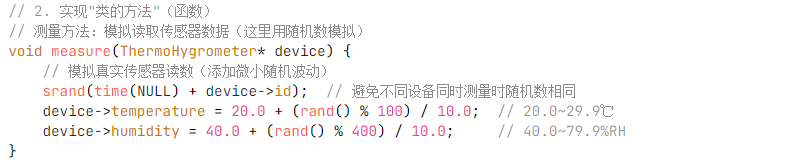
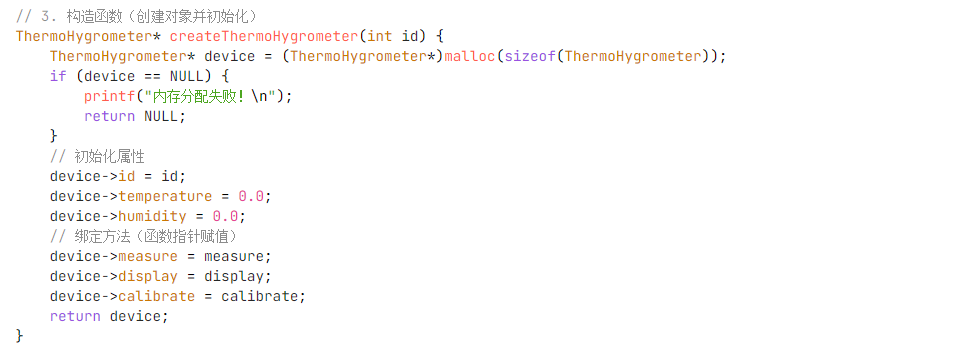
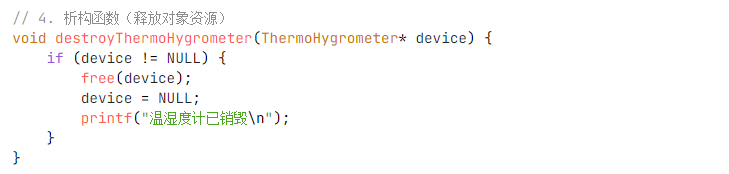
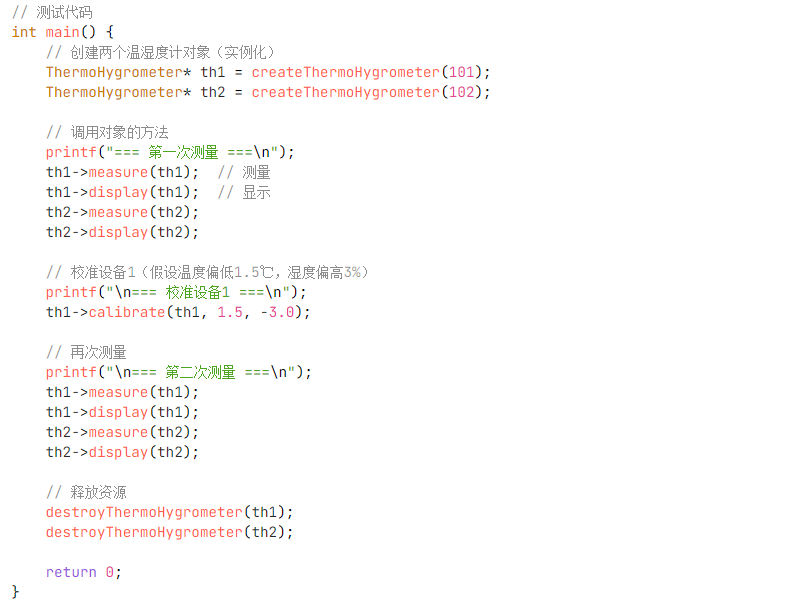
This method, while not true object-oriented programming, effectively simulates class encapsulation through a combination of structures and function pointers, making it suitable for implementing modular device control logic (such as sensors, instruments, etc.) in C language.
ENDPrevious Recommendations:
Want to learn embedded development? These majors are “golden partners”!
Essential “frequency hopping” black technology that embedded engineers must understand!
How to answer the “biggest challenge of the project” to secure job offers!
Three essential tools for embedded systems that make switch registers so simple!
Embedded development: What are the challenges? How to break through?
 Douyin Video QR Code