0 Introduction In recent years, China has actively promoted the development of the vehicle networking industry. By December 2023, over 8,500 Road Side Units (RSUs) have been deployed across the country. Various sections have seen the construction and deployment of millimeter-wave radars, laser radars, cameras, and other perception facilities, as well as edge computing servers, supporting the verification and promotion of new technologies such as vehicle-road collaboration and intelligent driving[1]. According to the “Summary Report on the Pilot Application Activities of C-V2X for Vehicle Networking (2022)” and the summary of testing experiences from various regions, it has been found that many areas still face issues such as inconsistencies between actual construction and standards, and insufficient accuracy of roadside information[2]. Additionally, there is a common lack of operational maintenance systems for infrastructure across regions, leading to insufficient guarantees for the continuous availability of facilities. This article attempts to propose an industry-wide system-level testing and evaluation framework for vehicle networking infrastructure, aiming to assist the industry in conducting inspection tests on vehicle networking infrastructure, maintaining efficient, stable, and long-term operations, and ensuring that the infrastructure effectively enhances road traffic safety and efficiency[3].1 Research on Testing and Operation Maintenance System for Vehicle Networking InfrastructureThe testing and evaluation system for vehicle networking infrastructure mainly involves two phases: first, acceptance testing during the construction phase, which primarily tests the performance and service capabilities of the equipment after system completion to verify whether the vehicle networking infrastructure has stable and efficient service capabilities; second, operational monitoring during the operation phase, which continuously verifies whether the vehicle networking infrastructure can provide stable services.1.1 Testing System during the Construction PhaseDuring the construction phase, performance and standard compliance testing should be conducted on key devices and systems within the infrastructure. The testing subjects should at least include vehicle networking roadside infrastructure, vehicle networking communication networks, vehicle networking platforms, and vehicle networking communication security certificates.The vehicle networking roadside infrastructure mainly includes roadside information and roadside perception systems. Protocol consistency testing and application message accuracy testing should be conducted on roadside information; for roadside perception systems, target perception performance testing and traffic detection performance testing should be performed.The vehicle networking communication network requires network coverage testing and radio frequency protocol consistency testing for Cellular Vehicle to Everything (C-V2X) communication networks, and network performance testing for 5G cellular networks, backbone networks, and bearer networks.The vehicle networking platform mainly conducts interface protocol consistency testing between the platform and RSUs, open interface testing, basic service capacity testing for device access, event handling, data analysis, and operational management capacity testing for device management and alarm management.The vehicle networking communication security certificates mainly include testing on certificate management mechanisms, security protocol consistency, security privacy protection, and secure communication performance. The framework of the vehicle networking infrastructure testing and evaluation system is shown in Figure 1.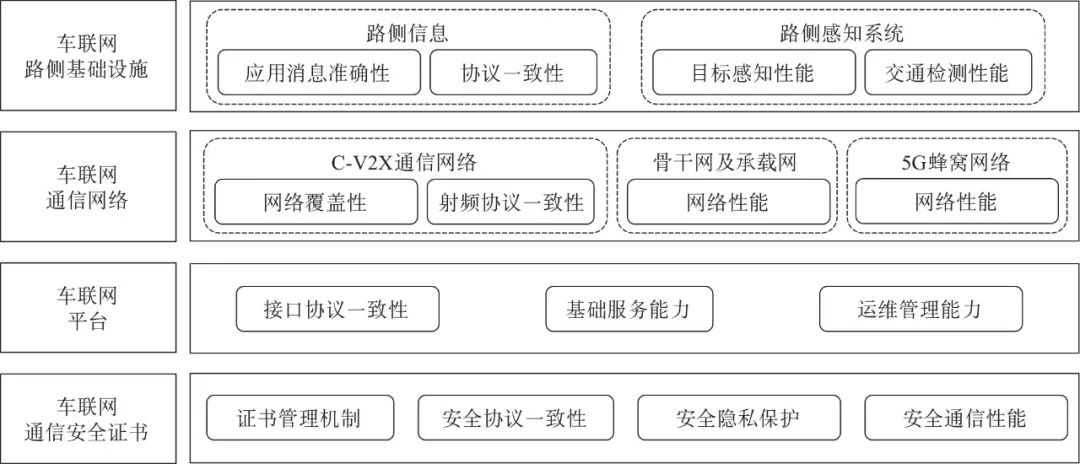 Figure 1 Framework of Vehicle Networking Infrastructure Testing and Evaluation System1.2 Monitoring System during the Operation PhaseAfter the vehicle networking infrastructure is put into operation, regular monitoring and daily inspections need to be conducted to establish an anomaly response mechanism, ensuring long-term stable operation of roadside facilities. The monitoring system during the operation phase primarily includes: establishing a regular monitoring mechanism, relying on real-time indicators from the vehicle networking platform to monitor the operational status of the infrastructure continuously; establishing a daily inspection mechanism, following existing standards and data specifications, using professional testing equipment to regularly test roadside infrastructure, vehicle networking communication networks, and communication security certificates to ensure the reliability and stability of roadside infrastructure data; establishing an anomaly response mechanism to promptly respond to abnormal data from regular monitoring and road inspections, addressing or preemptively avoiding risks, ensuring the continuous normal operation of equipment, and meeting the data requirements for various application scenarios. The framework of the vehicle networking infrastructure operation maintenance testing system is shown in Figure 2.
 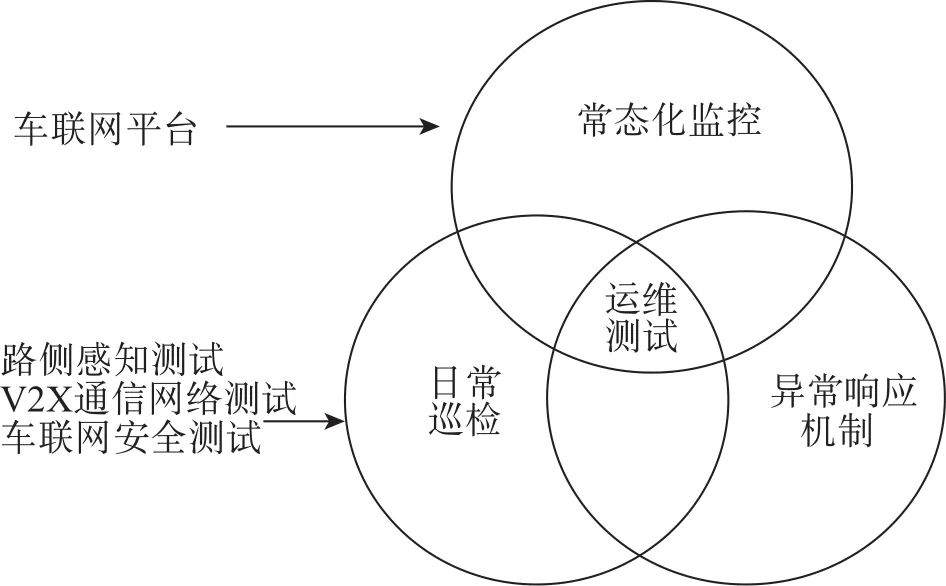 Figure 2 Framework of Vehicle Networking Infrastructure Operation Maintenance Testing System2 Testing Methods for Vehicle Networking Infrastructure during the Construction PhaseDuring the construction phase of the vehicle networking infrastructure, conducting testing on roadside infrastructure, communication networks, platforms, and communication security can verify the standard compliance and construction quality of the infrastructure, ensuring that it meets design operational conditions.2.1 Testing of Vehicle Networking Roadside Infrastructure2.1.1 Testing of Vehicle Networking Roadside InformationRSUs, as important communication units of vehicle networking infrastructure, are the main carriers of vehicle networking industry demonstration activities and pilot applications, responsible for continuously broadcasting roadside information. Therefore, protocol consistency and application message accuracy testing should be conducted on vehicle networking roadside information.Protocol consistency testing is based on the domestic Long Term Evolution Vehicle-to-Everything (LTE-V2X) network layer, security layer, and message layer (Phase 1 and Phase 2) to ensure RSU’s standard compliance and interoperability. Among them, network layer protocol testing includes testing the transmission of Dedicated Short Messages (DSM) and the parsing of DSM by the tested entity; application registration and management information library maintenance testing. Security layer protocol testing includes testing the issuance of Secured Protocol Data Units (SPDU), signature verification of SPDU, and security message validation testing. Message layer protocol testing includes: Phase 1 basic safety messages for assisted driving scenarios, map messages, traffic signal messages, roadside traffic messages, and roadside unit messages; Phase 2 cooperative driving enhanced scenario vehicle intent and request messages, roadside coordination messages, and perception sharing messages testing.Application message accuracy testing is conducted based on YD/T 3709—2020 “Technical Requirements for Message Layer of Wireless Communication Technology for Vehicle Networking Based on LTE” and CSAE 159—2020 “Technical Requirements for Roadside Units of Direct Communication System Based on LTE for Vehicle Networking”, verifying the accuracy of real road information, real-time traffic events, and data sent by RSUs at various points within the pilot and demonstration areas to ensure that onboard terminals can correctly trigger applications.2.1.2 Performance Testing of Vehicle Networking Roadside Perception SystemsThe vehicle networking roadside perception system is an important infrastructure that provides traffic participant information and traffic flow statistics for vehicle users and urban cloud platforms. On one hand, it utilizes sensors such as cameras, laser radars, and millimeter-wave radars to generate structured data through roadside edge computing units and sends this structured data to vehicle users and urban cloud platforms via LTE-V2X and 5G networks, assisting vehicles in achieving beyond-visual-range perception and blind spot warnings; on the other hand, it empowers urban digital traffic, supporting the construction of a real-time and highly accurate traffic monitoring system.
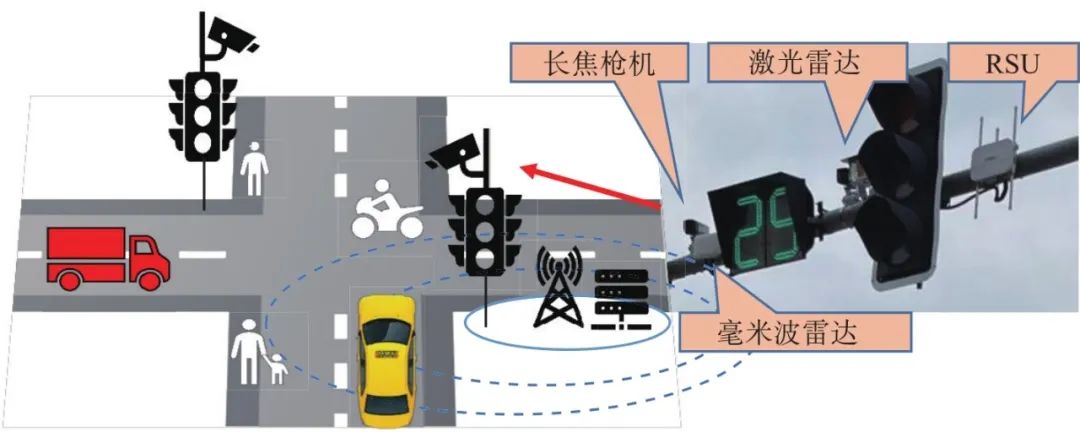 Figure 3 Architecture of Vehicle Networking Roadside Perception SystemThe performance testing of the vehicle networking roadside perception system mainly focuses on four dimensions: roadside system performance, traffic participant perception performance, traffic flow statistics performance, and traffic event detection performance. By evaluating the perception level, it ensures that the roadside perception system in the vehicle networking pilot and demonstration areas can support the application scenarios corresponding to the construction goals[4]. The architecture of the vehicle networking roadside perception system is shown in Figure 3.2.2 Testing of Vehicle Networking Communication NetworksThe vehicle networking communication network includes 5G cellular networks, C-V2X direct communication networks, and wired networks such as backbone networks and bearer networks. This article mainly introduces the testing methods for C-V2X communication networks, including radio frequency protocol consistency and network coverage testing. Ensuring that RSUs meet relevant technical standards from the communication radio frequency layer guarantees interoperability between devices of different brands and models, effectively supporting the validation of real vehicle applications, and ensuring that network coverage testing meets the coverage range and quality requirements for LTE-V2X applications.Radio frequency protocol consistency testing needs to be conducted according to the physical layer standards of C-V2X specified by the 3rd Generation Partnership Project (3GPP) and the China Communications Standards Association (CCSA), verifying the compliance of the transmitter and receiver of terminal devices to radio frequency standards and their anti-interference capabilities, ensuring that the roadside devices’ radio frequency performance meets standard requirements.Network coverage testing should be conducted based on communication industry standards YD/T 3709—2020 “Technical Requirements for Message Layer of Wireless Communication Technology for Vehicle Networking Based on LTE” and CSAE 159—2020 “Technical Requirements for Roadside Units of Direct Communication System Based on LTE for Vehicle Networking”, testing signal strength at different road locations and conducting coverage range tests in all directions at intersections to ensure that the network coverage quality meets the requirements for LTE-V2X applications[5]. The testing methods for V2X communication networks are shown in Figure 4.
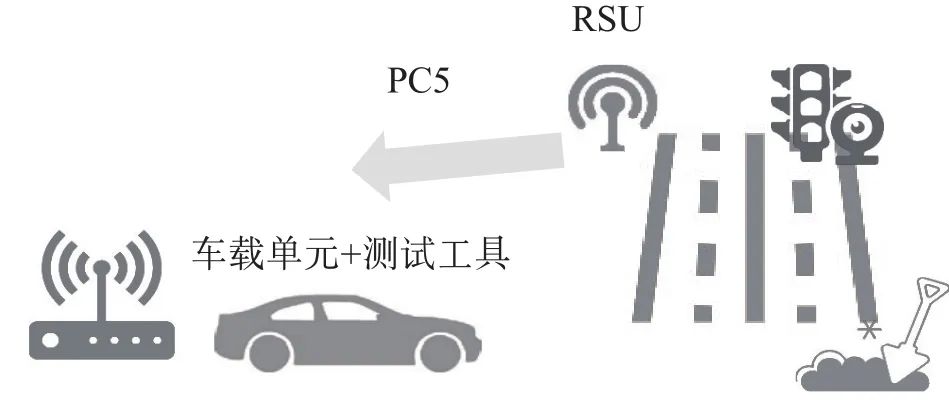 Figure 4 Testing Methods for V2X Communication Networks 2.3 Testing of Vehicle Networking Platforms2.3.1 Testing of Vehicle Networking Platform Interface Protocol ConsistencyThe vehicle networking platform is a key node connecting roadside infrastructure and urban cloud platforms. It enables real-time access and output of various dynamic/static information related to the real-time status of LTE-V2X roadside devices, road perception data, vehicle networking terminal users (including data from smart connected vehicles’ pre-installed terminal users and retrofitted terminal users), and other cloud platforms.T/CCSA 455 “Data Interface Communication Protocol Requirements between Vehicle Networking Platforms and Roadside Devices”[6] and T/CCSA 456 “Technical Requirements for Roadside Communication Device (RSU) Operation and Maintenance Management Platform”[7] specify the technical requirements and interface protocol specifications for business data interfaces and operation management between the vehicle networking platform and RSUs, roadside edge computing units (RSCUs)[8]. Among them, the business data interface is responsible for transmitting business-related uplink and downlink messages between RSUs, RSCUs, and the vehicle networking platform, while the operation management interface is responsible for transmitting operation management messages of RSUs, roadside perceptions, and computing devices. Therefore, compliance verification of communication interfaces between RSUs and the vehicle networking platform is necessary to ensure that the communication protocols and data transmission contents between roadside devices and the vehicle networking platform meet standard requirements. The testing environment for vehicle networking platform interface protocols is illustrated in Figure 5.
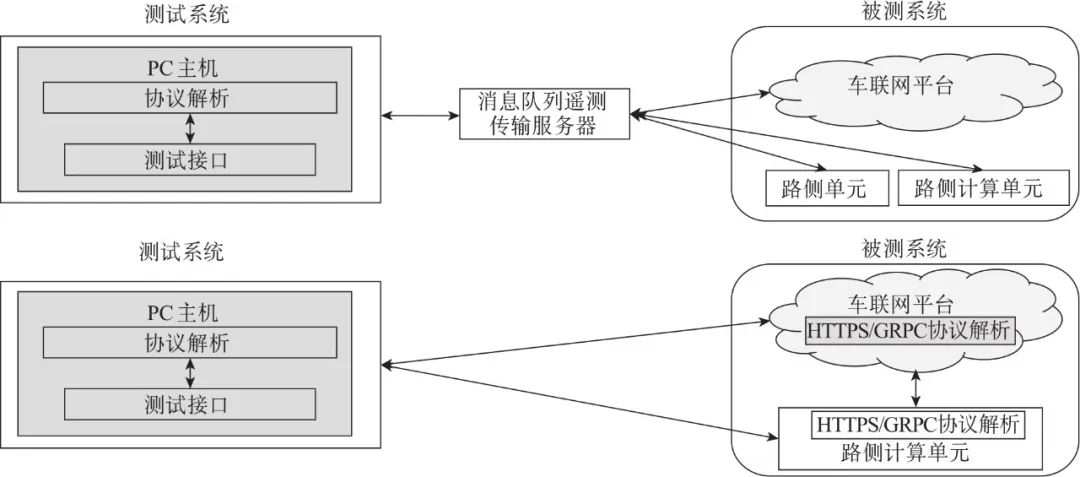 Figure 5 Testing Environment for Vehicle Networking Platform Interface Protocols2.3.2 Testing of Basic Service and Operation Management Capabilities of Vehicle Networking PlatformsConduct basic service capability testing for vehicle networking platforms. Testing should be conducted on device access and management to ensure that the platform can accurately access and manage RSUs, RSCUs, roadside perception devices, and C-V2X business terminals; testing should also be conducted on event handling and management to ensure the platform’s event type classification, event operation, and event handling capabilities; testing on data analysis and management should ensure that the platform can perform data analysis processing, data operations, data type operations, and data usage, as well as ensuring the technical and application levels of the vehicle networking platform; testing on supporting capabilities should ensure that the platform has edge application management, security platform, resource dynamic allocation, and business monitoring capabilities[9].Conduct operation management capability testing for vehicle networking platforms. Related functional testing should be conducted in areas such as device management, alarm management, configuration management, performance management, security management, remote upgrades, fault diagnosis, and data statistics to ensure the unified operation and maintenance capabilities of the vehicle networking platform across manufacturers and device types.2.4 Testing of Vehicle Networking Communication Security CertificatesRoadside infrastructure accessing C-V2X and testing vehicles need to install and use digital certificates that comply with national standards to ensure the authenticity and integrity of V2X communication processes. To prevent personal privacy and confidential data leaks, and to prevent attackers from spreading false information without confirmation, security certificate testing for C-V2X messages is necessary once the RSU starts providing roadside data. Security testing for C-V2X devices includes testing on certificate management mechanisms, security protocol consistency, security privacy protection, and secure communication performance testing. By testing security certificates, it can be ensured that C-V2X security certificate permissions are correct, updates are timely, devices have security protection mechanisms, and performance meets requirements[10]. The architecture of the vehicle networking identity authentication and security trust system is shown in Figure 6.
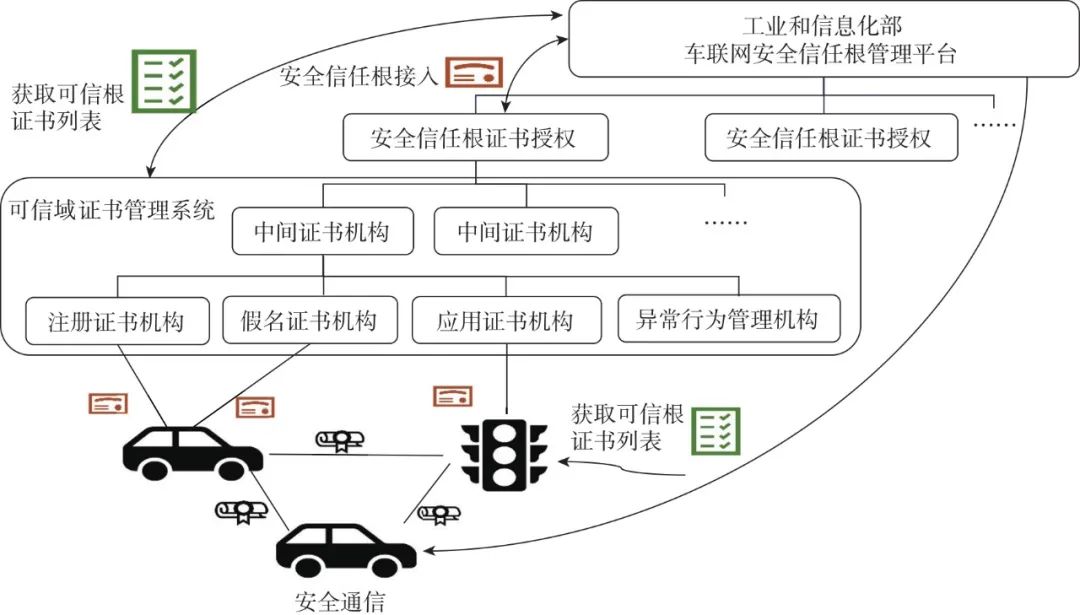 Figure 6 Architecture of Vehicle Networking Identity Authentication and Security Trust System3 Research on Monitoring System during the Operation PhaseAs the vehicle networking infrastructure enters the regular operation phase, it is necessary to establish a monitoring system for the infrastructure and the services provided, to timely discover facility faults and service defects, ensuring that the vehicle networking infrastructure continuously and accurately provides services to users[11].3.1 Regular Monitoring MechanismThe regular monitoring mechanism refers to the continuous automated data monitoring of cloud data from roadside infrastructure through the vehicle networking platform, reducing fault response times and improving the efficiency and quality of operation and maintenance work. First, monitoring indicators should be established, targeting key parameters such as performance parameters, resource occupancy, and network connection status of roadside devices for real-time monitoring and analysis. The effectiveness and accuracy of monitoring indicators should also be periodically evaluated, and adjustments and optimizations should be made based on actual operating conditions and business needs; secondly, by adopting technologies such as machine learning and deep learning, intelligent analysis and processing of monitoring data should be conducted, continuously upgrading anomaly detection algorithms to improve the accuracy and efficiency of anomaly detection; finally, based on the historical data and operating conditions of the devices, alarm thresholds should be dynamically adjusted to more accurately capture anomalies[12].3.2 Daily Inspection TestingFirst, confirm the content of the inspection testing work, mainly targeting roadside perception systems, vehicle networking communication networks, vehicle networking platforms, and vehicle networking communication security certificates for road testing. Tests should use more convenient and automated testing tools, with road test data as the primary basis and vehicle networking platform data as a supplement, ensuring consistency between roadside data and platform data.The focus of daily inspections on the C-V2X communication network testing is: confirming the operational status of RSUs on-site to ensure devices are powered on correctly, connected to the network, and sending messages comprehensively and accurately; verifying the accuracy of roadside information to ensure data timeliness and accuracy; checking the communication coverage range of RSUs to ensure there are no weak coverage points within the road range. The focus of testing for the roadside perception system is: testing the accuracy and perception delay indicators of the roadside perception system through true value data to ensure the roadside perception system can accurately detect traffic participants within the perception range; simulating some traffic events with test vehicles to ensure the roadside perception system can accurately identify traffic events and broadcast them via RSUs; counting traffic flow with test vehicles to ensure the roadside perception system correctly counts and uploads traffic-related data to the cloud. The focus of testing for the vehicle networking platform is: combining V2X communication network testing and roadside perception testing results to verify data consistency on the platform side, ensuring all functions of the vehicle networking platform operate normally. The focus of testing for vehicle networking communication security certificates is: ensuring security certificates are timely obtained and updated, guaranteeing the security and reliability of roadside messages for vehicle networking.Secondly, plan inspection routes and cycles, focusing on core areas for inspection work, ensuring that data for all points is tested during each inspection cycle. Based on the technical characteristics of different devices, the inspection cycle should be determined according to device workload and lifespan, ensuring that sufficient inspection testing data is generated annually for analysis of device performance degradation trends and potential fault modes, and providing a basis for device maintenance and repair.3.3 Anomaly Response MechanismThe anomaly response mechanism mainly responds to the anomalies detected during regular monitoring and daily inspections, promptly addressing fault issues to maintain efficient and accurate continuous operation of the infrastructure.When the regular monitoring detects anomalous data, an immediate response is required to verify the source of the abnormal data. The operation and maintenance team analyzes and judges the system fault situation, and based on the actual conditions of the on-site emergency fault, urgency, technical difficulty, spare parts, etc., dispatches and confirms technical engineers and emergency materials based on experience. After the fault is resolved, records of data and events should be made based on the actual progress on-site, analyzing the cause of the fault, feeding back to regular monitoring and daily inspection testing, focusing on testing the points and causes of the fault to ensure that subsequent risk points are reduced. A summary of the emergency response process should be conducted to continuously improve the efficiency of the anomaly response mechanism and enhance the service level of the vehicle networking infrastructure.After analyzing the daily inspection testing data, if performance degradation and potential faults are found in roadside devices, the inspection frequency for the current roadside devices and intersection points should be increased, and the causes of the issues should be located in detail. The operation and maintenance team should take necessary preventive maintenance measures based on the causes of the problems, such as replacing consumables, optimizing software configurations, and cleaning devices.4 Existing Issues in Vehicle Networking Infrastructure Testing and Operation Maintenance4.1 Lack of Established System-Level Testing Evaluation Standards and Certification SystemsThe “Reference Technical Guidelines for Vehicle Networking Infrastructure 1.0” proposed reference technical requirements for vehicle networking infrastructure construction[13]. However, after multiple practical activities and field tests, it was found that various pilot and demonstration areas face inconsistencies in standards and version unification in aspects such as equipment interfaces and data consistency due to different construction periods, resulting in a lack of a unified continuous service across the entire region. The industry has yet to propose a system-level testing and operation maintenance system for vehicle networking infrastructure construction, and various regions lack methodological guidance during construction verification and operation monitoring processes, with the construction of a certification system for facilities and services not yet being perfected.4.2 Shortage of Automated Testing ToolsAt present, vehicle networking testing tools mainly reference traditional cellular communication network testing tools for modification, with relatively insufficient investment in the development of testing tool products. Chip manufacturers, module manufacturers, and onboard terminal manufacturers have developed some self-use tools from their own needs, but they generally face issues of single testing capability and lack of accuracy guarantees. It is necessary to strengthen investment in the development of related testing tools for various links such as communication networks, roadside perception, and system platforms, formulate technical standards for testing tools, and establish a testing product certification mechanism.4.3 General Lack of Professional Operation and Maintenance TeamsCurrently, vehicle networking infrastructure operation maintenance testing is generally conducted by construction units independently, lacking effective operational team support for vehicle networking applications. As a new industry crossing information, communication, and transportation fields, vehicle networking requires professional engineering teams for support. In the face of faults or abnormal incidents, it often requires coordination with external manufacturers for personnel dispatch, leading to untimely responses. In terms of funding, various pilot and demonstration areas are still exploring business models, with some regions facing insufficient funding guarantees for operation and maintenance.5 ConclusionPromoting the establishment of a vehicle networking infrastructure testing and operation maintenance system supports continuous and consistent cross-domain services. Guided by the “National Guidelines for the Construction of Vehicle Networking Industry Standard System”, relevant units should jointly build a system-level testing and evaluation system for vehicle networking infrastructure, increasing the effective supply of standards. Relying on vehicle networking testing demonstration activities, the industry should organize upstream and downstream enterprises to conduct standard verification, deeply explore scenario application verification, and promote unified roadside messages across the country, achieving continuous vehicle applications nationwide. Strengthening communication and cooperation between regions, combining typical application scenarios with characteristic application scenarios, promotes sharing of testing results across regions.Accelerating the research and development of automated testing tools for vehicle networking infrastructure improves operation maintenance testing efficiency. Based on existing testing standards for roadside perception, vehicle networking communication networks, and vehicle networking communication security certificates, more convenient and automated testing tools should be developed. By designing standardized testing components, different testing needs can be met, increasing the flexibility and usability of testing tools. The operation maintenance testing process should approach automation, conducting daily inspection tests on a larger range of road infrastructure within a unit time, promptly discovering potential faults in vehicle networking infrastructure.Promoting the construction of professional operation and maintenance service capabilities ensures the continuous availability of vehicle networking infrastructure. Support should be given to the construction of professional operation and maintenance service teams, supporting the main bodies of infrastructure construction to carry out continuous operation maintenance monitoring, quickly responding to and addressing facility faults and service defects, ensuring the quality of infrastructure services. Encouraging professional operation and maintenance service teams to explore business models in collaboration with construction entities can expand user scale through high-quality services, exploring direct payment applications or indirect revenue services to achieve sustainable operation maintenance.
Author Information
Li Boxiong
Engineer in the Vehicle Networking and Smart Transportation Research Department of the Technical and Standard Research Institute of the China Academy of Information and Communications Technology, mainly engaged in research on technology, standards, and testing in the field of vehicle networking and intelligent connected vehicles.
Yu Rundong
Senior Engineer in the Vehicle Networking and Smart Transportation Research Department of the Technical and Standard Research Institute of the China Academy of Information and Communications Technology, mainly engaged in research on policies, technology, standards, safety, and testing in the field of vehicle networking.
Yu Shengbo
Engineer in the Vehicle Networking and Smart Transportation Research Department of the Technical and Standard Research Institute of the China Academy of Information and Communications Technology, mainly engaged in research on policies and regulations, technology, standards, and testing in the field of vehicle networking/intelligent connected vehicles.
Guo Meiying
Engineer in the Vehicle Networking and Smart Transportation Research Department of the Technical and Standard Research Institute of the China Academy of Information and Communications Technology, mainly engaged in research on building vehicle networking C-V2X testing systems and testing certification systems.
Citation Format:
Li Boxiong, Yu Rundong, Yu Shengbo, et al. Research on System-Level Testing and Operation Maintenance System for Vehicle Networking Infrastructure [J]. Information Communication Technology and Policy, 2024, 50(3): 66-72.

This article is published in “Information Communication Technology and Policy” 2024, Issue 3
Organized by: China Academy of Information and Communications Technology
“Information Communication Technology and Policy” is a professional academic journal sponsored by the Ministry of Industry and Information Technology and organized by the China Academy of Information and Communications Technology. This journal is positioned as “a barometer of the forefront of information communication technology and a think tank for exploring information society policies,” focusing on technology trends, public policies, national/industry/business strategies in the field of information communication, publishing cutting-edge research results, focus issue analysis, hot policy interpretation, etc., promoting innovation and development of technologies and industries such as 5G, industrial internet, digital economy, artificial intelligence, big data, and cloud computing, guiding national technology strategy choices and industrial policy formulation, and building a high-end academic exchange platform for production, learning, research, and application.
Journal Honors and Inclusion Status
AMI (2022 Edition) A-Category Expanded Journal
RCCSE Core Academic Journal in China
Selected in the High-Quality Science and Technology Journal Grading Directory of the China Association for Science and Technology in the Information Communication Field
Submission Guidelines for “Information Communication Technology and Policy”!
To further improve the journal’s information construction level and provide better services for scholars, our official website (http://ictp.caict.ac.cn) has officially been put into operation, and submissions are welcome!
Proofread by | Jin Yan, Shan Shan
Edited by | Ling Xiao

Recommended Reading
 Wang Hongyu et al. from China Academy of Information and Communications Technology: Research on Development Paths for Computing Networks Experts Discuss