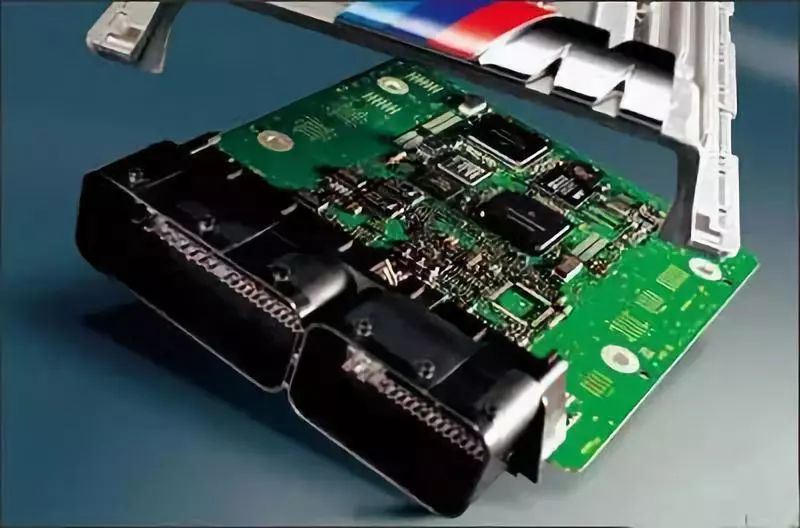
 If we compare the engine to the “heart” of a car, then the car’s “brain” should be the ECU. What is ECU? How does it work? This article provides a detailed analysis.What is ECU? ECU has two full names, namely Engine Control Unit and Electronic Control Unit. It is not hard to see that the former means “engine control unit” while the latter means “electronic control unit”. These are two concepts that can be easily confused, today we will mainly analyze the “Engine Control Unit”.
1. The Emergence of ECU
Before 1967, the fuel supply system of gasoline engines was controlled by carburetors, which is completely different from today’s electronic fuel injection (EFI) engines. Carburetors use the pressure difference before and after the throttle to draw fuel, which not only cannot precisely control the fuel supply amount but also limits the improvement of vehicle performance and environmental protection. As a result, companies like Bosch developed electronic fuel injection systems. The earliest BOSCH EFI system was D-Jetronic, followed by K-Jetronic and L-Jetronic. After the intervention of electronic technology, BOSCH developed several sets of electronic management fuel injection systems, among which KE-Jetronic is the EFI technology widely used today. Although the product names vary among companies, their structures are quite similar.The working characteristic of the EFI system is to inject fuel “quantitatively and timely”. How much fuel the engine needs and when it should be injected is directly related to the engine’s speed, air flow, and various parameters such as coolant temperature and oil pressure. How to process so many parameters and send injection commands to the injection system? This requires the intervention of the Engine Control Unit, and thus the ECU was born.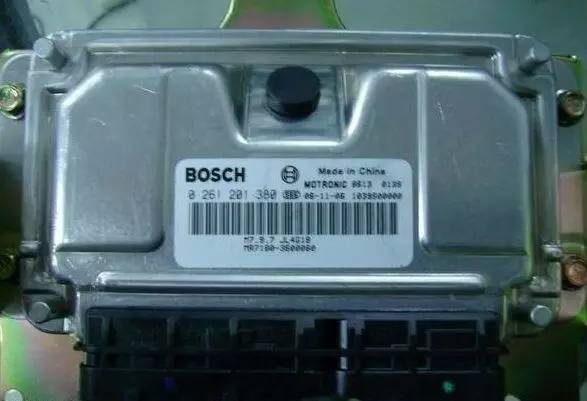
2. Working Principle of ECU
Similar to an ordinary microcontroller, the ECU consists of a microprocessor, memory, input/output interfaces, analog-to-digital converters, and integrated circuits for shaping and driving. The role of the ECU is to calculate the vehicle’s operating conditions through various sensors, thereby controlling multiple parameters of the engine, such as ignition, air-fuel ratio, idle speed, and exhaust gas recirculation. It operates in a temperature range of -40 to 80 degrees Celsius and can withstand significant vibrations, so the probability of ECU damage is very low. Additionally, the ECU has self-diagnostic and protection functions. When a fault occurs in the system, it can automatically record the fault code in memory and adopt protective measures by reading alternative programs from the inherent programs mentioned above to maintain engine operation, allowing the car to reach the repair shop.How does the ECU work? Simply put, it is a command process like that of a general: “think”, “command”, and finally “confirm”.The “reconnaissance” is done by sensors, which are responsible for “scouting” the entire engine. On an engine, there are dozens of sensors of various sizes. The throttle position sensor, crankshaft speed sensor, oxygen sensor, crankshaft position sensor, camshaft position sensor, intake temperature sensor, coolant temperature sensor, and knock sensor are the basic sensors in a car engine. Sensors are everywhere; they are responsible for collecting relevant information and sending it to the ECU in the form of electrical signals. After being converted into digital signals by the A/D converter, the ECU computes and determines the current working state of the engine, which is the “thinking” process of the ECU.What is the standard for the “thinking” process? Computers, of course, do not have thoughts; what is needed is the program stored in ROM. This is akin to software. When data is fed into the ECU, the ROM program compares the existing data with the collected signals to derive adjustment methods. This entire program is the soul of the ECU, and its writing is based on a large amount of experimental data, often requiring bench tests and road tests to establish. Typically, when tuning companies modify the ECU program, they rewrite or revise the ROM program to change the ECU’s computation criteria.Let’s delve deeper into this process:The amount of fuel supplied is calculated based on the duration of the fuel injector’s injection time. The fuel computer (ECU) calculates the required fuel time based on air flow, engine speed, and various compensatory signals provided by the sensors using the pre-set fuel program, which can be represented graphically.The fuel injection time calculated by the ECU is the sum of the “base injection time”, “compensatory injection time”, and “invalid injection time”, measured in microseconds (ms), where 1ms = 0.001 seconds. The amount of gasoline injected by the fuel injector in a unit time is determined by the size of the injector’s diameter and the injection pressure.1. Base Injection TimeThe base injection time is determined by the intake volume (which refers to weight here) and engine speed. When you press the accelerator pedal, it controls the opening angle of the throttle. The larger the opening, the greater the intake volume. The fuel computer compares the intake volume measured by the air flow meter and the current engine speed with the pre-set fuel program to calculate the required fuel amount and the corresponding injection time.2. Compensatory Injection TimeCompensatory injection, commonly referred to as “acceleration”, is determined by various sensors detecting the engine’s current working conditions and load. After sending the signal to the computer (ECU), it calculates the additional fuel required to maintain stable and smooth engine operation. The setting of the compensatory injection program is a complex task and varies from vehicle to vehicle.Generally speaking, the compensatory injection program roughly includes the following items: cold start compensation, warm-up compensation, idle start compensation, high-temperature compensation, acceleration compensation, high RPM/high load compensation, theoretical air-fuel ratio feedback compensation, and fuel cut control.3. Invalid Injection TimeThere is a delay time from when the injector is energized to when it fully injects fuel, known as “opening delay”, and there is also a delay time from when the coil is de-energized to when it completely stops injecting fuel, known as “closing delay”. Since the opening delay is longer than the closing delay, the actual fuel amount will be less than required, and the difference between the opening delay and the closing delay is referred to as “invalid injection time”. To obtain the correct fuel amount, the invalid injection time must be accounted for, meaning that after calculating the fuel amount, the amount of fuel injected during the invalid injection time must be added to match the desired amount. Therefore, invalid injection time can also be regarded as a part of compensatory injection.Of course, the ECU is not static; another function of the memory is akin to the “black box” of an aircraft, capable of recording data from the vehicle’s operation. Many ECUs have a “learning” capability, where under normal circumstances, the memory continuously records data during your driving, forming the ECU’s learning program, providing optimal control states to adapt to your driving habits. This program is also called the adaptive program. However, since it is stored in memory, just like error codes, once the battery is disconnected and power is lost, all data will be lost. The ECU can continuously learn the driver’s driving style from the recorded data in memory, making it more user-friendly. Of course, if a fault occurs, information can also be retrieved from memory to support repairs.After completing the “thinking”, the next step for the ECU is to “command”. The components controlled by the ECU include the injectors, responsible for adjusting the fuel amount and timing of injection, while the fuel pump is responsible for supplying fuel; the ignition controller and ignition coil are also controlled by the ECU for ignition. After this, the ECU needs to receive data again to confirm the end of a closed-loop control.With today’s advancements in automotive technology, the ECU is taking on more and more responsibilities. Technologies such as i-VTEC variable valve timing require the addition of camshaft position sensors, and through ECU calculations, the phase of the camshaft is adjusted. Especially in systems like BMW’s Double-VANOS, which requires precise calculations by the ECU to control its phase and valve lift. Currently, in some mid to high-end vehicles, not only is the ECU applied to the engine, but its presence can also be found in many other areas. For example, anti-lock braking systems, four-wheel drive systems, active suspension systems, airbag systems, and automatic transmissions all require separate control systems. More and more ECUs are appearing in vehicles, and many new devices added to cars require ECU management. The traditional “Engine Control Unit” can no longer meet the demands of the times and has become a module of the overall vehicle control system. Therefore, today we prefer to refer to the ECU as the “Electrical Control Unit”, that is, the electronic control system. With the increasing automation of vehicles, the number of ECUs will continue to rise, and the wiring will become increasingly complex. To simplify circuits and reduce costs, the information transfer between multiple ECUs in a car must adopt a technology called multiplex communication network technology, forming a network system of the vehicle’s ECUs, which is the CAN data bus, which will be mentioned later.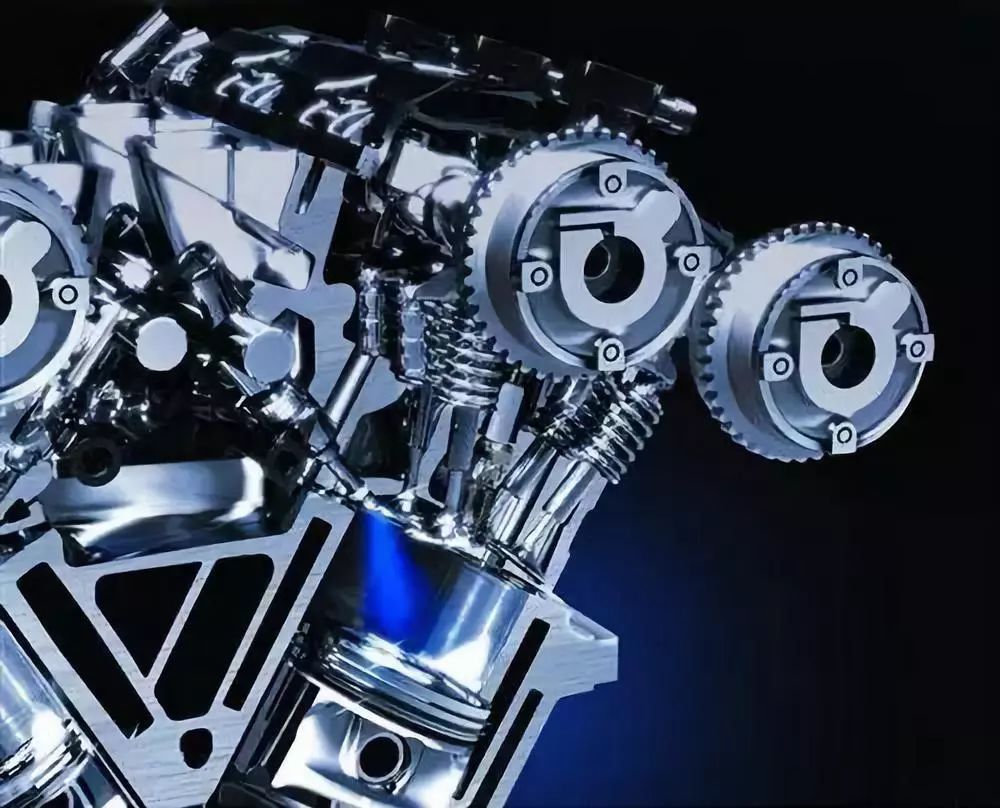
3. Upgrading the ECU
1. The Feasibility of ECU TuningECU manufacturers are all international multinational enterprises, such as BOSCH, SIEMENS, MM, etc. Their products are sold worldwide. Due to differences in gasoline quality, temperature, atmospheric pressure, humidity, and engine types in each country, the ECU program software settings must meet the conditions of various countries. Modern vehicles need to adapt to various weather and environmental conditions (such as high altitudes, deserts, severe cold, and poor-quality gasoline) as well as different driver requirements, while ensuring that they can still function smoothly in these complex situations and meet strict emissions and fuel consumption standards. Therefore, in most cases, the original ECU programs are the best compromise that meets many conditions to avoid being unsuitable for local conditions, leaving a lot of room for modifications. Additionally, when tuning engine parameters, automotive manufacturers generally consider that the engine should operate normally even in the worst conditions or under long-term neglect. In other words, manufacturers always set engine output in the most conservative way, so as long as the owner ensures regular maintenance, they can completely recalibrate engine parameters to achieve greater output and an extraordinary driving experience.For example, regarding the air-fuel ratio (AFR), the factory programmer may set a leaner air-fuel ratio during certain driving conditions (such as when driving at a constant speed) to reduce fuel consumption, in order to pass fuel consumption tests in some countries. However, during other times, the factory ECU’s AFR is mostly set at 1:14.7, as this is the most easily compliant ratio for emissions standards. However, for most engines, the AFR that produces maximum power is within a richer mixture range (meaning more fuel and less air). Similarly, to widen the fuel adaptability of the vehicle (to accommodate different fuel octanes in different regions), the factory-set ignition advance angle is generally adaptable to lower octane fuels (the engine outputs different power at different ignition advance angles), meaning that the current ignition advance angle of your engine may not be the best match for the octane fuel you are currently using. If the original program can be modified towards performance, it could increase horsepower by around 5-8%, with some turbo cars achieving up to 15%.2. Methods of ECU TuningECU chip tuning: When manufacturers design an engine, they burn the originally set fuel program onto the ROM, which is usually a product of compromise among fuel consumption, pollution, and operational smoothness, and is non-modifiable. Because it is non-modifiable, if one wishes to change the fuel program, they must replace it with a different type of ROM. Typically, professional tuning shops provide modified computer chips for various models. During tuning, the original chip must be removed (as the factory fuel computer’s ROM is usually directly soldered onto the circuit board), and an IC socket is soldered on (which makes it easier to replace in the future), and then the modified chip is inserted. The resulting fuel program remains fixed; it only corrects the original car’s program. One important aspect is that it can delay or even cancel the fuel cut control time in the compensatory injection program.It is important to note that each modified chip has its set applicable conditions (which refers to the level of modification), and when tuning, one must select a chip that closely matches the modification status of their car to achieve the best effect; otherwise, the results may be counterproductive. The selection of chips should only be consulted with experienced tuning shops. One chip corresponds to one fuel program, and smart readers might think: what if I install two or three? Indeed, in the past, some tuning shops in China have installed two or three different fuel mode chips on the same circuit board, allowing the driver to switch between the required fuel modes via an external switch, similar to switching between the P, E, and S modes of an automatic transmission to meet different needs of the driver.ECU computer programming: This is a more professional aspect of ECU system tuning, and the most familiar one in the domestic tuning community is HALTEC computers. Through this computer, car owners can set the best fuel program according to the modification level of their engine, in conjunction with measurements from air-fuel ratio meters, including the basic injection program and various compensatory injection programs, which can be modified at will using a laptop. Its greatest difference from chip modification is also its biggest advantage: if the engine undergoes further modifications in the future, and the original fuel program becomes unsuitable, it can be immediately resolved through program correction. After computer programming, the original fuel program of the car becomes obsolete, but higher-grade computers can retain all functions of the original car’s sensors, meaning that various fuel compensatory programs can still operate normally and can be modified without sacrificing smoothness and practicality for high performance.The biggest difficulty in modifying a programmable ECU is not in installation, but in setting and optimizing the fuel program. This often requires experience and instruments, achieved through continuous testing. Currently, tuning shops usually select a basic mode as a foundation and then gradually adjust based on actual operation and testing until satisfied.3. Common Issues During ECU ModificationUnlike other mechanical systems, the functions and working principles of the ECU are “invisible”, and since most auto repair shops, even 4S stores, do not understand or cannot repair or resolve ECU issues, this creates a sense of mystery around the ECU. Below, we will discuss several common issues during ECU flashing.1) Use Original ECU or a Brand New ECU?For general civilian modifications, I personally prefer to use the original ECU for tuning. This is because the original ECU has very powerful functions, and its program is developed through long-term data accumulation and countless tests by manufacturer engineers, protecting the engine under any circumstances, and will not produce fault codes or warning lights. It will not cause conflicts with other systems like ABS, anti-skid, and anti-theft systems, nor will it delete important functions from the vehicle. On the other hand, the modification cost is relatively low.2) The Degree of ECU Modification and Tuning StyleFrom a performance tuning perspective, ECU modification is an indispensable step. The ECU can help the engine perform at its best mechanical function, but it cannot exceed the limits originally designed. For example, when professional racing teams develop racing engines, they first design the combination of camshafts, pistons, connecting rods, etc., determine the engine’s compression ratio and maximum RPM, and only then consider the ECU issue. Without a powerful engine, no matter how “capable” the ECU is, it is all in vain. Therefore, regarding the tuning methods of the ECU program, unless it is for racing, one generally does not focus solely on extracting maximum horsepower at full throttle. More attention is typically paid to the car’s acceleration capability and throttle response at low to mid RPM ranges, as it is rare for civilian vehicles to be driven at full throttle and maximum RPM. Thus, the focus is on achieving smooth and progressive horsepower and torque curves in the 2000rpm-4000rpm range, ensuring that the driver feels the throttle is particularly responsive and powerful. The maximum horsepower figure may attract attention in marketing, but in real-world scenarios, no one enjoys driving a car that accelerates unsmoothly. Therefore, it is unnecessary for modified street cars to reach performance levels comparable to racing cars. A more correct understanding should be whether such modification products can increase power output while ensuring vehicle safety without compromising safety!This includes smoothness at startup, mid to high RPM extension and smoothness, and re-acceleration capability. Meanwhile, the test data and trend graphs from the dynamometer, along with the driver’s actual sensory experience, serve as important evidence to validate the quality of the product and the effectiveness of the modification!3) Will ECU Upgrades Affect Vehicle Lifespan and Safety?Many people may have doubts about whether ECU upgrades will affect the vehicle’s lifespan and safety. In fact, there is no need to worry; flashing the ECU only optimizes the vehicle’s driving computer data comprehensively, rather than striving to maximize a single indicator, unleashing the engine’s full capabilities. Its optimization is based on ensuring longevity, economy, and safety, providing the vehicle with absolutely safe operational space and creating the most comfortable operating environment for the engine. However, there is another situation; due to cost and technical levels, some car enthusiasts may resort to installing some so-called “secondary air intake” or “fuel addition” components to increase the fuel and air entering the engine. These components essentially deceive the ECU by bypassing the original sensors or altering sensor voltages, causing it to unknowingly change the air-fuel ratio entering the engine, improving engine performance under certain conditions. This incomplete modification method can lead to other side effects or even safety issues, while the legitimate ECU modification method, although more costly, can avoid many adverse side effects.4) Differences in ECU Settings Between Street Cars and Racing CarsECU settings are generally divided into two types: street cars and racing cars. For racing cars, since the fuel, venue, and driver factors are predetermined, the focus of the computer settings is on how to respond to changing weather, temperature, and other environmental factors. In contrast, street cars are much more complex; there are no restrictions on driving time, and fuel can vary. Even if high-quality fuel is used, different gas stations may yield different results. Compared to racing cars, street car modifications require more consideration of safety factors; thus, the computer settings must retain some reserve. After comprehensively considering the driver’s driving style and vehicle characteristics, settings can then be made. Moreover, even under the same conditions with the same car, variations will exist, so using the same data for settings may not necessarily yield the best results.5) Points to Note When Flashing ECUMany car owners focus solely on how much horsepower the car has, neglecting torque, which is a common situation. In fact, modifying a car should not be a blind pursuit of horsepower; before modifying, one should clarify the vehicle’s intended use and their driving habits.For tuning shops, when modifying the ECU, it is advisable not to focus solely on fuel injection timing but also to ensure that fuel supply is sufficient. Attention should also be paid to the arrangement of ignition timing, as the ignition advance angle is extremely important. Additionally, any hardware installed on the vehicle must be understood for its characteristics, so that the ECU can be modified accordingly to achieve the best effect.Furthermore, if the engine uses a high-angle camshaft, it complicates the programming process as it alters the timing of valve openings and closings, requiring more precise calculations and adjustments. The ability to fully realize the performance of modified parts is entirely dependent on the ECU’s adjustments, but changing the engine’s characteristics through ECU data modification is a very challenging task.
4. Future Trends in Automotive Control
Let’s count on our fingers how many systems need control systems. Automatic transmissions, ABS systems, in-car entertainment systems, all-wheel drive torque distribution systems, active suspension systems, airbag + seatbelt systems, etc. So many systems have their own sensors and processors, performing separate calculations, each minding their own business… However, the automatic transmission and engine need to cooperate. For instance, the shifting process requires the engine to reduce throttle, and full throttle requires the transmission to kick down… Under various conditions, both need to share a lot of data, such as the engine’s crankshaft speed. Establishing a new set of sensors for the automatic transmission would incur unnecessary costs and is also impractical. The best solution is for the transmission and engine ECU to share data, which has led to the emergence of an information network system between ECUs—the CAN data bus. The same CAN data bus is also adopted in chassis electronic devices, such as the four-wheel drive torque distribution system and ABS sharing many chassis sensor parameters.The development of the CAN data bus will inevitably integrate all control systems into one. There is a saying that future ECUs will be powerful computer systems that integrate all components requiring management, including the engine, automatic transmission, ABS system, in-car entertainment system, all-wheel drive torque distribution system, active suspension system, airbag + seatbelt systems, etc. We can enjoy the car’s audio-visual system, play PC games, receive GPS signals, and even a cup holder will be managed by the ECU.More interestingly, future ECUs may establish an open interactive software system, like the Windows operating system, on which a bunch of engine management systems, transmission management systems, ABS systems, etc., can be installed. At that time, the engine “ECU” management system will merely be a software that can be updated in real-time; you can choose version 1.1 or version 2.0. Of course, you will also need to install a firewall to prevent hackers from intruding.


Disclaimer: This article is a network reprint, and the copyright belongs to the original author. If the videos, images, or texts used in this article involve copyright issues, please inform us promptly, and we will verify the copyright based on the proof materials you provide and pay remuneration according to national standards or delete the content immediately! The content of this article reflects the original author’s views and does not represent the views of this public account or its authenticity.

