Introduction:
Previously, when developing with STM32, I thought that the UART hardware could only map a few specific pins. However, I was surprised to find that the ESP32 allows “arbitrary pin assignment” for its UART. This arbitrary assignment must avoid certain special function pins, such as GPIO12 (MTDI) in the strapping pins, as connecting it to other UART devices can change the default state of this pin, leading to issues such as failure to download programs and boot.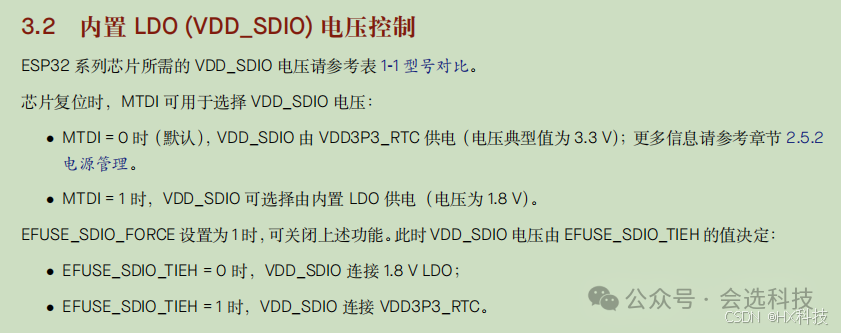
1. Hardware Preparation
2. Porting the Official Code
- myUart.h
#ifndef __MYUART_H
#define __MYUART_H
#include "driver/uart.h"
#include "driver/gpio.h"
/**
 * This is an example which echoes any data it receives on UART back to the sender using RS485 interface in half duplex mode.
*/
#define TAG "RS485_ECHO_APP"

// Note: Some pins on target chip cannot be assigned for UART communication.
// Please refer to documentation for selected board and target to configure pins using Kconfig.
#define ECHO_TEST_TXD   GPIO_NUM_13
#define ECHO_TEST_RXD   GPIO_NUM_14

// RTS for RS485 Half-Duplex Mode manages DE/~RE
#define ECHO_TEST_RTS   (UART_PIN_NO_CHANGE)

// CTS is not used in RS485 Half-Duplex Mode
#define ECHO_TEST_CTS   (UART_PIN_NO_CHANGE)

#define BUF_SIZE        (127)
#define BAUD_RATE       (9600)

// Read packet timeout
#define PACKET_READ_TICS        (100 / portTICK_PERIOD_MS)
#define ECHO_TASK_STACK_SIZE    (2048)
#define ECHO_TASK_PRIO          (10)
#define ECHO_UART_PORT          (UART_NUM_1)

// Timeout threshold for UART = number of symbols (~10 tics) with unchanged state on receive pin
#define ECHO_READ_TOUT          (3) // 3.5T * 8 = 28 ticks, TOUT=3 -> ~24..33 ticks

void echo_task(void *arg);

#endif- myUart.c
#include "myUart.h"
#include "esp_log.h"

static void echo_send(const int port, const char* str, uint8_t length)
{
    if (uart_write_bytes(port, str, length) != length) {
        ESP_LOGE(TAG, "Send data critical failure.");
        // add your code to handle sending failure here
        abort();
    }
}

// An example of echo test with hardware flow control on UART
void echo_task(void *arg)
{
    const int uart_num = ECHO_UART_PORT;
    uart_config_t uart_config = {
        .baud_rate = BAUD_RATE,
        .data_bits = UART_DATA_8_BITS,
        .parity = UART_PARITY_DISABLE,
        .stop_bits = UART_STOP_BITS_1,
        .flow_ctrl = UART_HW_FLOWCTRL_DISABLE,
        .rx_flow_ctrl_thresh = 122,
        .source_clk = UART_SCLK_DEFAULT,
    };

    // Set UART log level
    esp_log_level_set(TAG, ESP_LOG_INFO);

    ESP_LOGI(TAG, "Start RS485 application test and configure UART.");

    // Install UART driver (we don't need an event queue here)
    // In this example we don't even use a buffer for sending data.
    ESP_ERROR_CHECK(uart_driver_install(uart_num, BUF_SIZE * 2, 0, 0, NULL, 0));

    // Configure UART parameters
    ESP_ERROR_CHECK(uart_param_config(uart_num, &uart_config));

    ESP_LOGI(TAG, "UART set pins, mode and install driver.");

    // Set UART pins as per KConfig settings
    ESP_ERROR_CHECK(uart_set_pin(uart_num, ECHO_TEST_TXD, ECHO_TEST_RXD, ECHO_TEST_RTS, ECHO_TEST_CTS));

    // Set RS485 half duplex mode
    ESP_ERROR_CHECK(uart_set_mode(uart_num, UART_MODE_RS485_HALF_DUPLEX));

    // Set read timeout of UART TOUT feature
    ESP_ERROR_CHECK(uart_set_rx_timeout(uart_num, ECHO_READ_TOUT));

    // Allocate buffers for UART
    uint8_t* data = (uint8_t*) malloc(BUF_SIZE);

    ESP_LOGI(TAG, "UART start receive loop.\r\n");
    echo_send(uart_num, "Start RS485 UART test.\r\n", 24);

    while(1) {
        //Read data from UART
        int len = uart_read_bytes(uart_num, data, BUF_SIZE, PACKET_READ_TICS);

        //Write data back to UART
        if (len > 0) {
            echo_send(uart_num, "\r\n", 2);
            char prefix[] = "RS485 Received: [";
            echo_send(uart_num, prefix, (sizeof(prefix) - 1));
            ESP_LOGI(TAG, "Received %u bytes:", len);
            printf("[ ");
            for (int i = 0; i < len; i++) {
                printf("0x%.2X ", (uint8_t)data[i]);
                echo_send(uart_num, (const char*)&data[i], 1);
                // Add a Newline character if you get a return character from paste (Paste tests multibyte receipt/buffer)
                if (data[i] == '\r') {
                    echo_send(uart_num, "\n", 1);
                }
            }
            printf("] \n");
            echo_send(uart_num, "]\r\n", 3);
        } else {
            // Echo a "." to show we are alive while we wait for input
            echo_send(uart_num, ".", 1);
            ESP_ERROR_CHECK(uart_wait_tx_done(uart_num, 10));
        }
    }
    vTaskDelete(NULL);
}
3. Joint Debugging Test
- main.c
/*
 * SPDX-FileCopyrightText: 2010-2022 Espressif Systems (Shanghai) CO LTD
 *
 * SPDX-License-Identifier: CC0-1.0
 */

#include <stdio.h>
#include <inttypes.h>
#include "sdkconfig.h"
#include "freertos/FreeRTOS.h"
#include "freertos/task.h"
#include "esp_chip_info.h"
#include "esp_flash.h"
#include "include/mySystem.h"
#include "include/myUart.h"

void app_main(void)
{
    xTaskCreate(echo_task, "uart_echo_task", ECHO_TASK_STACK_SIZE, NULL, ECHO_TASK_PRIO, NULL);
    printf("Hello world!\n");
}