New Intelligence Report
Editors: Mengjia, Baifeng
[New Intelligence Guide] Yu Chengdong, CEO of Huawei Consumer Business, admitted that due to sanctions, Huawei only accepted orders for chip production before May 15, and production will cease by September 15. Therefore, this year may be the last generation of Huawei’s high-end Kirin chips. Will you still support Huawei without Kirin high-end chips?
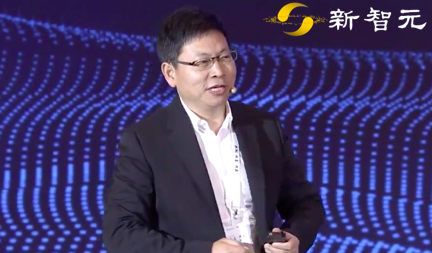
At the 2020 China Information Technology Hundred People Conference held on August 7, Yu Chengdong delivered a speech titled “Solidly Winning the Next Era”.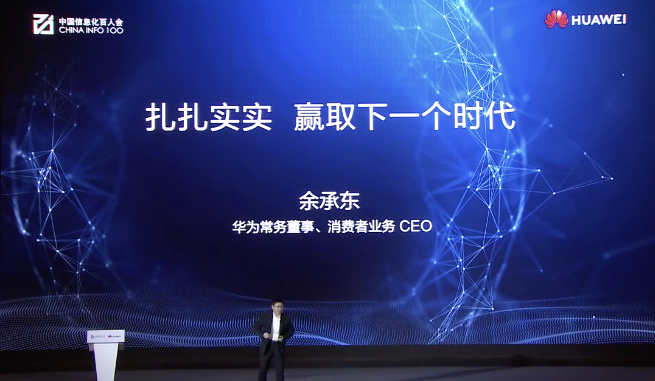 In his speech, he mentioned that the Mate 40, equipped with Huawei’s new generation Kirin 9000 chip, will be launched this fall. “Unfortunately, due to sanctions, Huawei only accepted orders before May 15, and production will cease by September 15, so this year may be the last generation of Huawei’s high-end Kirin chips, a limited edition.“
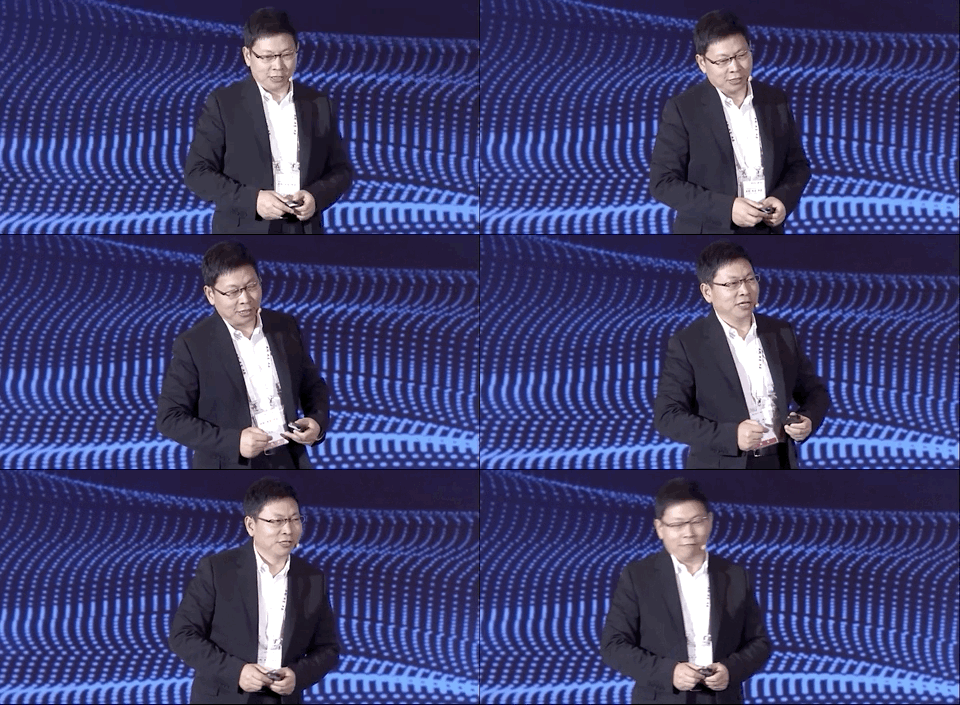
“China’s semiconductor manufacturing capabilities have not yet improved. The second round of U.S. sanctions states that as long as any U.S. technology is used in semiconductor production, it cannot be supplied to Huawei.” Yu Chengdong stated that Huawei’s mobile phone chips are currently in a shortage phase, which may result in this year’s shipment volume being lower than last year. He predicts that Huawei’s annual mobile phone shipment volume may be less than 240 million units in 2019. He also mentioned, “If it weren’t for U.S. sanctions, our market share would have been far ahead last year. After the U.S. sanctions last year, Huawei shipped 60 million fewer smartphones.”
Is Huawei still worth supporting without Kirin chips?
Upon hearing this, many began to sing the blues, suggesting that the Kirin chip has become a swan song. The term “swan song” may be too much; Yu Chengdong only stated that (currently) there is no chip supply. The key is not to be blindly optimistic, nor overly pessimistic.  Yu Chengdong’s original words were, “We only accepted orders before May 15, so this year may be the last generation of our high-end Kirin chips, a limited edition.” Due to the supply shortage from TSMC, Huawei has to move forward cautiously. Currently, the Mate 40 series will still largely use Kirin chips. However, as TSMC’s supply cutoff takes effect, TSMC’s supply cannot keep up with the expected shipment volume, and Huawei may need to purchase a large number of processors from other brands. SMIC’s foundry capacity is clearly still lacking. According to reports from the semiconductor industry, Huawei has not only signed a procurement letter of intent with Qualcomm but also signed a cooperation letter of intent and a large procurement order with MediaTek, with the order amount exceeding 120 million chips. If we calculate Huawei’s estimated annual mobile phone shipment volume of about 180 million units in the next two years, MediaTek’s market share will exceed two-thirds, far surpassing Qualcomm.
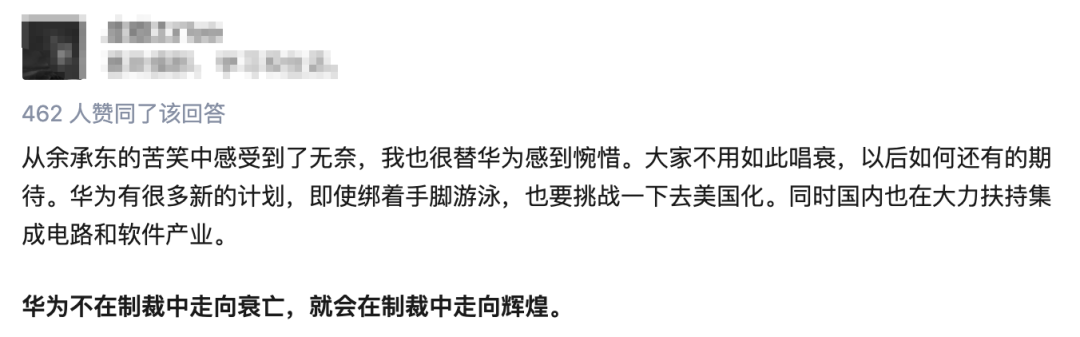
  “The fundamental issue is that Huawei only does chip design and does not manufacture chips. HiSilicon can design advanced Kirin chips, but to produce finished products, it still relies on foundries like TSMC. Under pressure from the U.S., TSMC has announced a supply cutoff for Huawei, and Huawei’s high-end chip production is indeed facing difficulties.” Yu Chengdong admitted, “Our exploration in chips has gone from being severely behind to relatively behind, to somewhat behind, to finally catching up, to leading. We have invested a tremendous amount in R&D and gone through a difficult process, but unfortunately, in the field of semiconductor manufacturing, which requires heavy asset investment and is capital-intensive, Huawei has not participated; we only did chip design and did not engage in chip manufacturing.” However, some netizens pointed out that Huawei has demonstrated strong independent innovation capabilities throughout its historical development, including self-developed 5G; it is unreasonable to expect everything to be self-developed. Even Apple does not have the capability to manufacture its own chips. “I feel sorry for Huawei; everyone shouldn’t be so pessimistic; there is still hope for the future.”
  Is Huawei still worth supporting without Kirin chips? Some professional digital bloggers stated that Kirin chips have indeed become one of the core selling points of Huawei phones. It is precisely because of the Kirin chips that Huawei phones ensure a better user experience, such as system smoothness, camera quality, and energy efficiency, etc. Without the high-end Kirin chips, Huawei phones lose their differentiated advantages. The answer lies in the hearts of the people. Some say, “The only reason to buy Huawei products is that they are made by Huawei.”
  Moreover, some netizens stated that support should be based on one’s ability, but there is no need to overly sympathize with Huawei. Support is incidental, but it does not mean one has to compromise oneself.
Multiple links are missing; the development of semiconductors is not just Huawei’s pain.
So the question arises, regardless of whether it is the “swan song” of Kirin chips, the future of rooting in semiconductors and building a new ecosystem is of utmost importance.
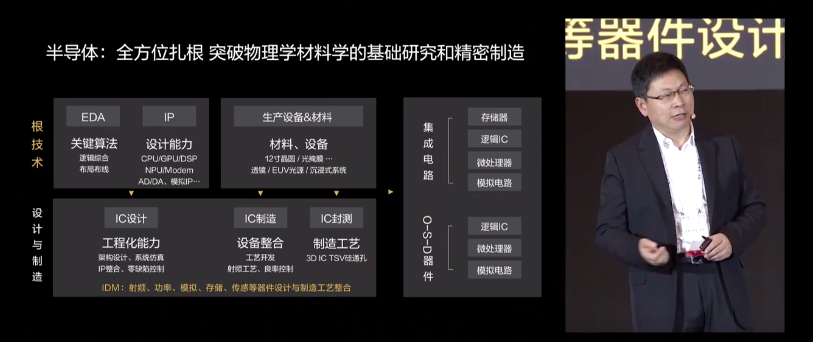 As mentioned earlier, Huawei’s biggest obstacle is not chip design but precision manufacturing. As a pioneer, Huawei has faced strong resistance from the U.S., but it has also made us more aware that many links in the mainland semiconductor industry are severely lacking. From Yu Chengdong’s presentation slides, it is clear that Huawei has many weak links, such as key algorithms and other software-related issues, which may be able to catch up in a short time. HiSilicon has chip design capabilities, but there is not much layout in production equipment, basic materials, IC manufacturing, and packaging/testing, and the development of related industries in the mainland is at a medium to low level. First, the basic material silicon used for manufacturing chips requires electronic-grade high-purity silicon with a purity of 99.999999999%. Some companies in the mainland can currently produce it, but the output is limited, and most still need to be imported, so this area still requires industrial upgrading and collaboration.
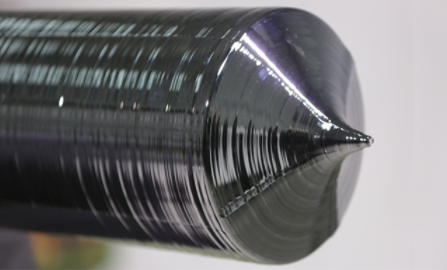
Purifying silicon requires rotation, so the resulting monocrystalline silicon looks like this, but such thick monocrystalline silicon cannot be used directly; it needs to be cut into thin slices, known as wafers, and then thousands of circuits are “drawn” on the wafers. This part of the work is done by wafer fabs. 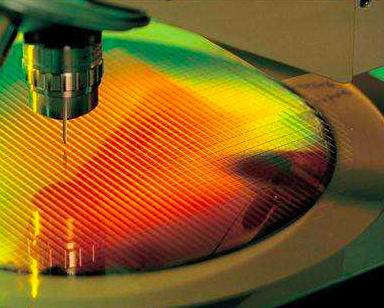 Recently, TSMC, the world’s largest foundry, announced a supply cutoff for Huawei’s high-end chips. According to Taiwanese media reports, MediaTek has received a 120 million chip order from Huawei, but MediaTek mainly focuses on mid-to-low-end processes, which lag behind TSMC in technology. Reports indicate that TSMC’s 5nm process is already mature and has secured large orders from Apple. Currently, only SMIC can “barely compete” in mainland foundries, and SMIC’s 14nm process has already entered mass production. Why is it necessary to work hard on process technology? A smaller process on the same wafer can produce more chips, significantly reducing costs and improving yield rates.
 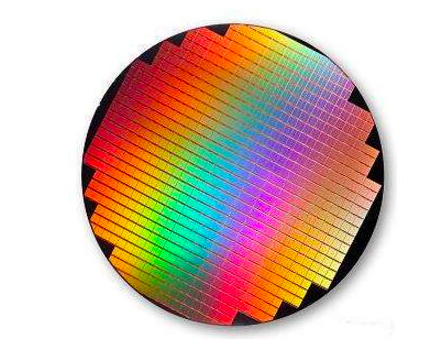 How can we reduce the process while improving processing accuracy? This requires a core device called a “lithography machine.”
 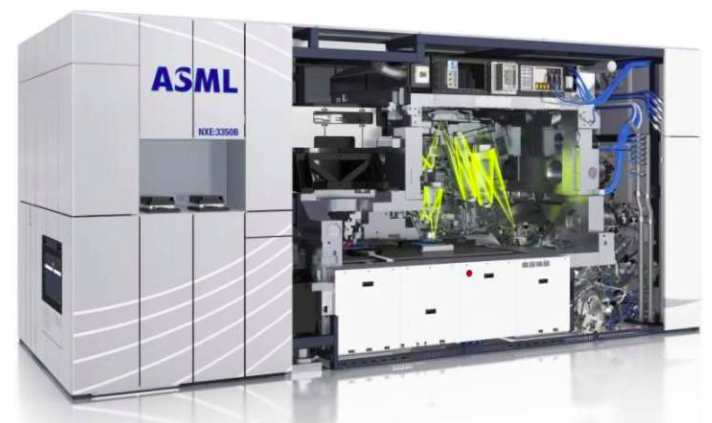 However, the world’s most advanced lithography machines can only be produced by ASML in the Netherlands, and the output is very low. Intel and TSMC are major shareholders of ASML, and if the shareholders oppose, along with U.S. pressure, it is extremely difficult to purchase lithography machines from ASML. The core technology development of lithography machines has a long way to go. The U.S. trade war has ultimately developed into a situation of “one world, two systems”; decoupling and separation will be long-term issues for many years to come. Yu Chengdong stated, “We see some problems; China is still behind in controlling core technologies and ecosystems in the semiconductor industry compared to the U.S., Japan, and Europe, especially in the most fundamental materials and manufacturing equipment.” Yu Chengdong mentioned, “Regarding the U.S.-China trade war, the trend of sanctions or decoupling, we need to build our ecosystem, our operating system, our ecological services, our chips, our equipment, and our entire foundational system capabilities. For us, sanctions are painful, but they also present a significant opportunity, forcing us to upgrade our industry as quickly as possible.” Although the sanctions are severe, they have made us more aware of our own gaps. In the long run, on the path of de-Americanization, it is not just Huawei; vigorously supporting the integrated circuit industry, “saving the nation and preserving its existence” is key. Ultimately, R&D relies on people. Currently, Huawei’s “Nanniwan Project” and “HarmonyOS” are urgently recruiting internally, and they previously issued advertisements for lithography machine engineers. According to data from the “China Integrated Circuit Industry Talent White Paper,” it is estimated that by around 2021, there will be a talent gap of nearly 300,000 in China’s integrated circuit industry. The government has also begun to formulate relevant policies to encourage talent cultivation in the semiconductor-related industries. On July 30, the State Council’s Academic Degrees Committee voted to approve the proposal to establish integrated circuits as a first-level discipline. The revolution has not yet succeeded; the hard battles are still ahead.
Reference link:
https://www.zhihu.com/question/412679912