
Detecting car battery drain with a multimeter
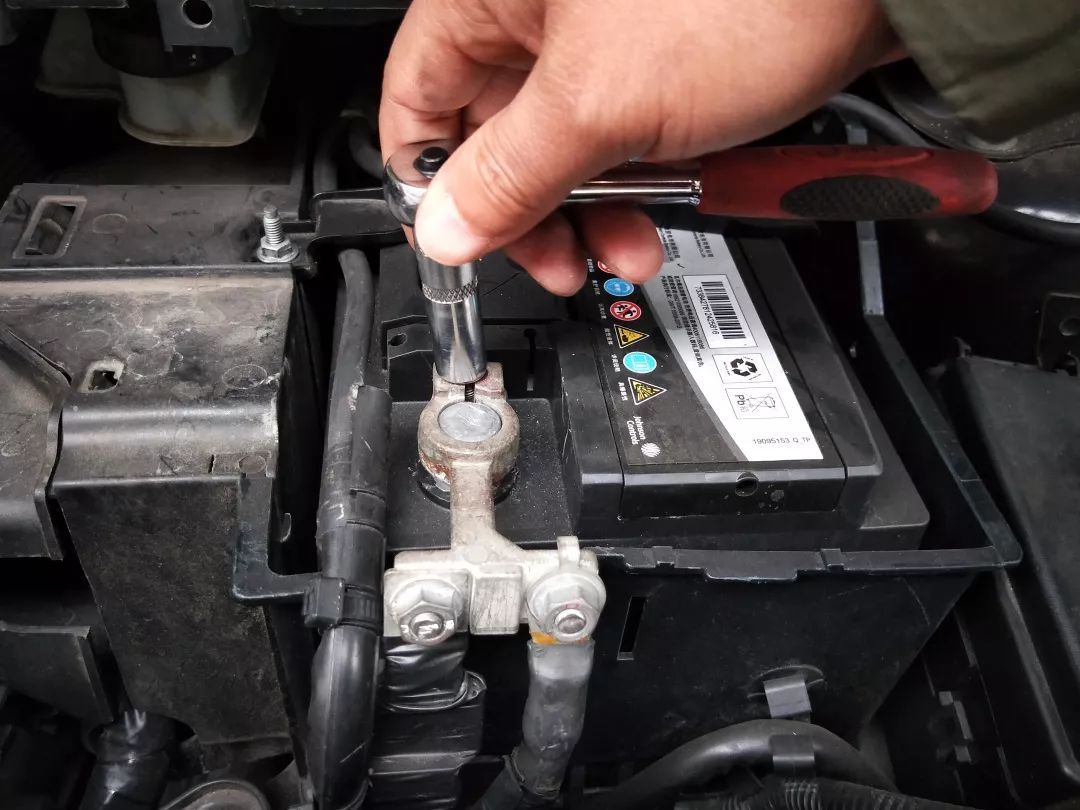
Step 1: Disconnect the negative terminal of the battery.
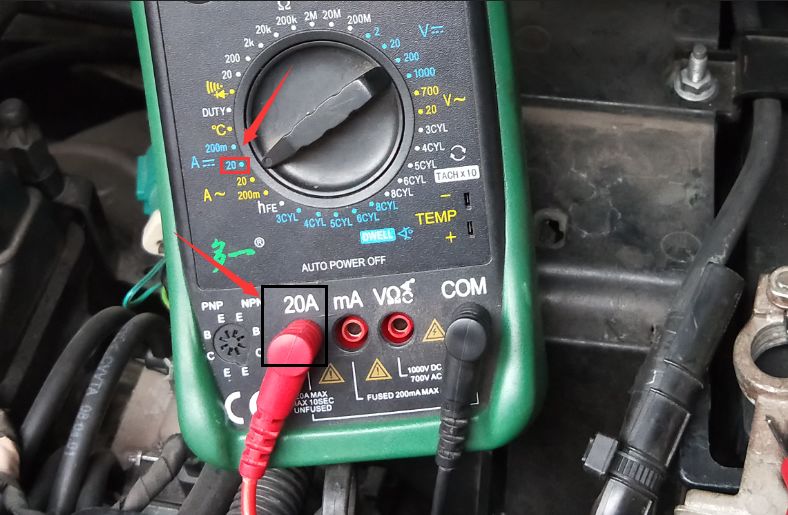
Step 2: Insert the red probe of the multimeter into the 20A current socket and set the dial to DC 20A.
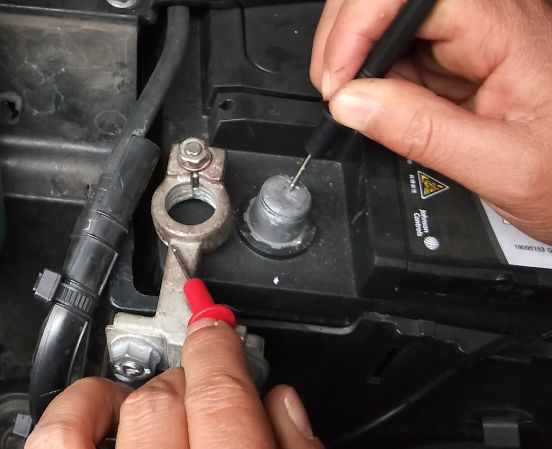
Step 3: Connect the probes as shown in the image above, with the red probe touching the battery wire and the black probe touching the battery terminal. It is also acceptable to reverse the probes.
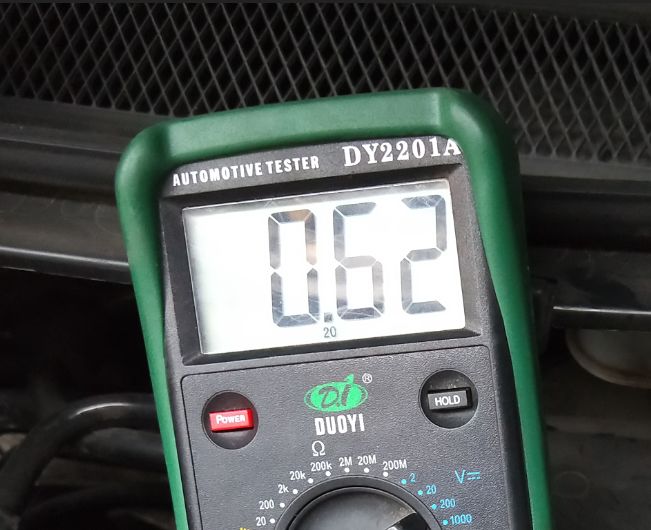
Step 4: At this point, the multimeter will display the amount of current drain.
So, what is a normal drain level?
A reading of 0.6A indicates a significant drain. A normal drain should be below 30-50mA, and this data is for reference only.
1000mA = 1A
0.6A = 600mA, which is certainly not small.
Generally, a 65AH battery means it can discharge at a rate of 1A for 65 hours.
We can calculate how many days it would take to drain the battery at this rate:
Total Capacity ÷ Current Drain = Drain Hours
Drain Hours ÷ 24 (hours in a day) = Days
65 ÷ 0.6A = 108.33 hours.
108.33 hours ÷ 24 hours/day = 4.5 days.
If the car is parked for 4.5 days, the battery will be completely drained. If it only fails to start, the time will be even shorter. It is estimated that after one day, it will not be able to start. 0.6A × 24 = 14.4A, leaving a battery with 65-14 = 51A.
For a 65A battery with a 0.6A drain, after one day, the battery will only have 51A left.
If there are any inaccuracies in the above analysis method, please provide feedback so we can learn and improve together.

Start testing at 20A, then switch to a lower range once below 200mA.
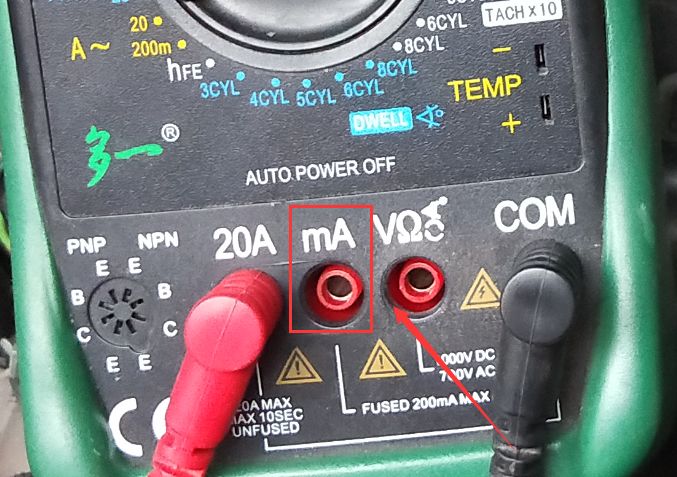
Once the multimeter is switched to 200mA, the red probe must also be moved to the mA socket. If you use the lower range directly, high current may burn out the multimeter.
Note
For some high-end cars with multiple computer modules, we must wait for them to enter sleep mode before measuring the current drain to ensure accurate results.
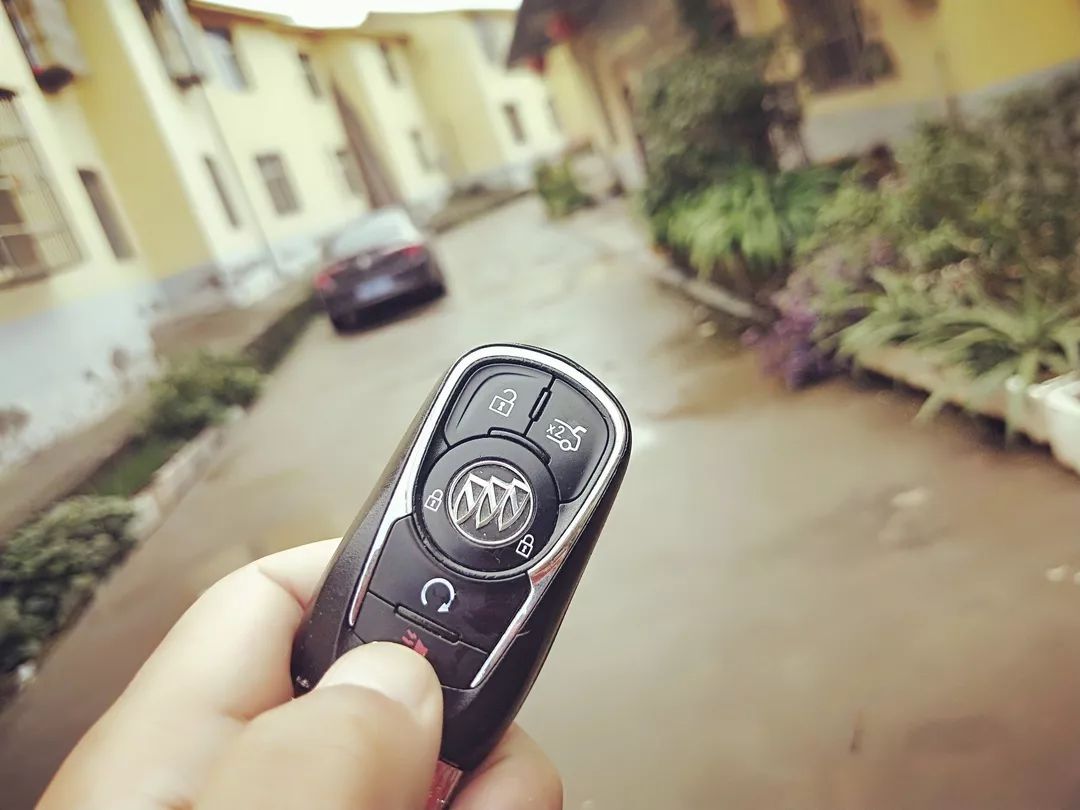
Remove the car key and keep it away from the vehicle.
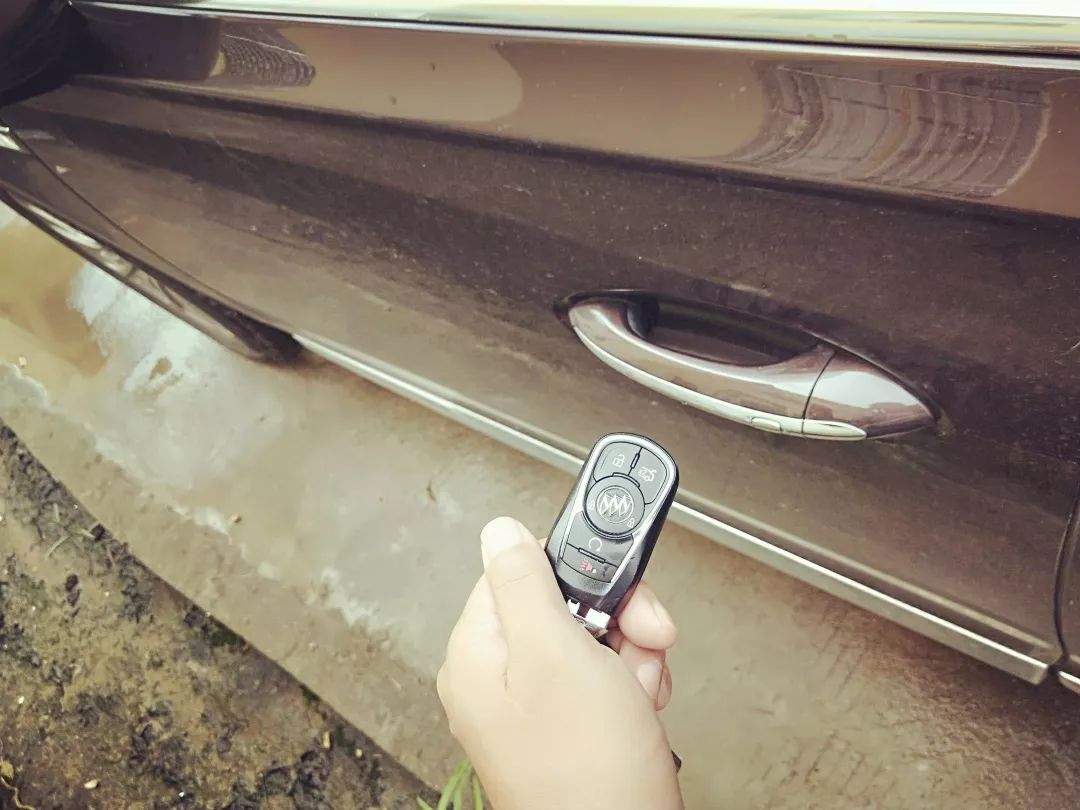
The image above shows an incorrect operation method, where the key is still within the vehicle’s sensor range. At this time, the key and the vehicle are communicating, which may lead to inaccurate current drain measurements.
How to identify where the drain is coming from?
1
Preliminary judgment through calculation.
Basic formula: Power = Voltage × Current (P=UI)
From the above, with 600mA, how many watts of drain does that represent?
12 × 0.6 = 7.2W, which indicates a 7.2W electrical device. A small light bulb is 5W. This simple calculation can help identify potential sources of drain. The specific wattage of the device will require experience accumulated during repairs.
2
By removing the fuses and relays of suspected devices.
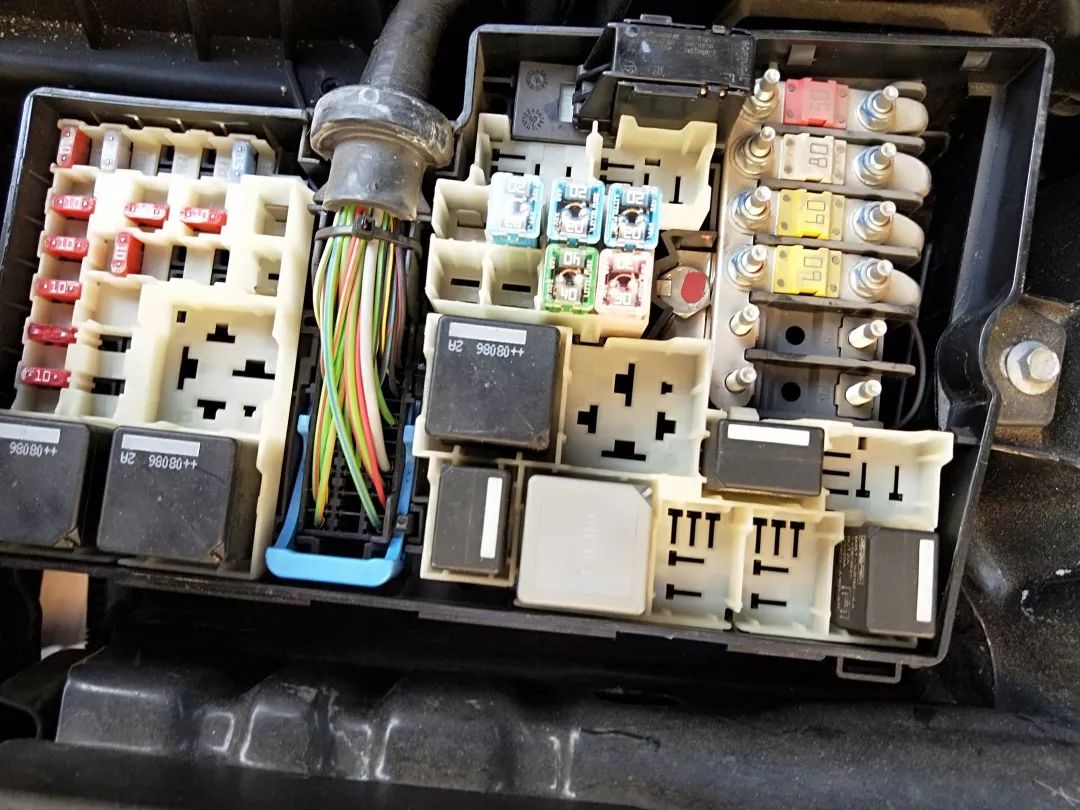
Be careful with 4-pin and 5-pin relays; when reinstalling, they must not be mixed up. Start by removing the fuses of suspected devices. For some devices that require matching after power off, this method can avoid complications. Remove the fuses or relays one by one; if the drain stops, it indicates that the device powered by that fuse or relay is causing the drain, narrowing down the target area.
Note
-
If there are any aftermarket installations on the vehicle, these are more likely to be sources of drain.
-
If a specific computer module is draining, it can be unplugged for measurement.
To measure current drain, a clamp meter can also be used, which simplifies the measurement process and avoids the need to disconnect power (avoiding many matching issues). The analysis method is consistent with that of the multimeter, and further details will not be elaborated here.
Due to the author’s limited expertise, any inaccuracies should be pointed out for correction!

Author Biography
Name: Tang Chunsheng
Founder of the China Automotive Alliance
Engaged in the automotive repair industry for over 10 years, started explaining automotive repair knowledge online in 2012, possessing rich practical experience and theoretical knowledge. To date, he has helped thousands improve their automotive repair skills and trained many technical talents with management and marketing abilities.

How to Become an Automotive Repair Expert?

Click “Read Original” to listen to more free courses!