Tapeout is one of the most exciting nodes in chip design, meaning that the design team can finally hand over the GDSII files to the foundry for production. However, before the foundry starts working, there is a crucial step: preparing the mask set. This thing is costly and technically complex, directly affecting the project’s budget and risks. Today, we will discuss the differences between several mainstream masking schemes to help you avoid some “pits”.
The term “tapeout” was created in the 1970s. Historically, engineers used tapes to store all ASIC design files. Therefore, the event of transporting the tape to the foundry was called “tapeout”.
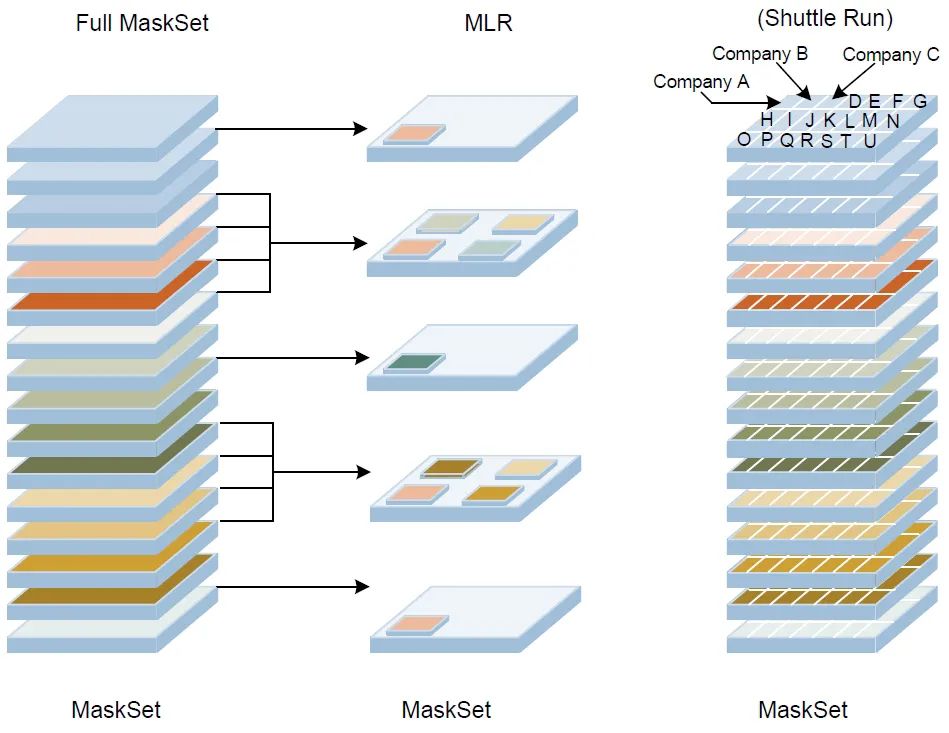
1. MPW (Multi-Project Wafer): Carpooling Scheme for Small Teams
MPW stands for Multi-Project Wafer, which you can understand as “carpooling tapeout”. The foundry packs multiple designs from different clients using the same process onto the same wafer, sharing the mask costs. For example, if you design a sensor chip and the neighboring team creates an AI accelerator, everyone shares the same mask set and gets a few samples back for testing.
Applicable Scenarios:
- Small companies, startup teams, or university labs with limited budgets.
- Function verification stage, uncertain if the design is reliable, first make a few samples to test the waters.
- Low production demand (like a few hundred), no need for mass production.
Advantages and Disadvantages:
- Advantages: Low cost (but note, it’s not dirt cheap).
- Disadvantages: Must wait for the foundry’s schedule; delivery time is inflexible; the number of chips allocated may be insufficient for testing.
Example: A university lab wants to tape out a low-power IoT chip with a budget of only $100,000. Using MPW, they can carpool with nine other teams and get 50 chips for testing.
2. MLM/MLR (Multi-Layer Mask): Save Money but “Installment Payment”
MLM (Multi Layer Mask) or MLR (Multi Layer Reticle) is based on the idea of “merging layers”. In traditional mask sets, each process layer (like metal layer, oxide layer) requires a separate mask, while MLM can merge up to four layers into one mask. This reduces the total number of masks and lowers the upfront costs (NRE).
Applicable Scenarios:
- Medium volume projects (like thousands to tens of thousands).
- Limited budget but can accept “installment payments”—save on NRE upfront, but each wafer is more expensive later.
Advantages and Disadvantages:
- Advantages: Low initial investment, suitable for companies with tight cash flow.
- Disadvantages: High cost per wafer; foundries may be reluctant to accept (merging masks affects production efficiency).
Example: A startup company plans to make a Bluetooth chip, expecting to sell 50,000 units. Using MLM saves 30% on NRE, but each wafer costs 15% more.
3. Full Mask Set: Exclusive for the Wealthy, Large Volume Ensured
Full Mask is a fully customized mask set for your project, producing only your chips on a wafer. This scheme has the highest upfront costs but the lowest cost per wafer, suitable for mass production.
Applicable Scenarios:
- Mature designs, confirming that the functionality is not an issue.
- High production volume (like over a million).
Advantages and Disadvantages:
- Advantages: Lowest wafer cost, stable production cycle.
- Disadvantages: NRE is painfully expensive (starting at a million dollars), and revision costs are extremely high.
Example: A flagship chip from a smartphone manufacturer with an annual shipment of over 100 million units. Although using a full mask set costs $5 million upfront, the cost per wafer is reduced to $50, making the cost per chip almost negligible.
How to Choose? Consider Volume and Budget!
- MPW: Suitable for the “let’s try” stage, low-cost trial and error.
- MLM/MLR: Medium volume, betting that sales can cover later costs.
- Full Mask Set: Go for volume without worrying about money, the first choice for large manufacturers. Of course, it may also be to catch the market cycle.
Finally, a reminder: Always confirm the schedule with the foundry before tapeout! Especially for MPW, missing one schedule may mean waiting for half a year. Additionally, mask costs account for a significant portion of NRE; don’t just look at the quotes, make sure to account for production and packaging testing costs as well.
Tapeout is not easy, cherish it as you go. Wishing everyone success on the first try and fewer pitfalls! 🚀