With the advancement of automation technology, in industrial equipment, in addition to liquid column pressure gauges and elastic pressure gauges, pressure sensors that can convert pressure into electrical signals are increasingly being adopted.
Pressure sensors are the most commonly used type of sensor in industrial practice, and the pressure sensors we typically use are mainly made using the piezoelectric effect, and such sensors are also known as piezoelectric sensors.
We know that crystals are anisotropic, while amorphous materials are isotropic. Certain crystalline media, when subjected to mechanical force along a specific direction, undergo deformation and produce a polarization effect; when the mechanical force is removed, they return to a non-charged state. This means that when pressure is applied, certain crystals may generate electrical effects, which is known as the polarization effect. Scientists have developed pressure sensors based on this effect. The piezoelectric materials mainly used in piezoelectric sensors include quartz, sodium tartrate, and diammonium phosphate. Among them, quartz (silicon dioxide) is a natural crystal where the piezoelectric effect was discovered. The piezoelectric properties persist within a certain temperature range, but once the temperature exceeds this range, the piezoelectric properties completely disappear (this high temperature is referred to as the “Curie point”). Due to the small change in electric field with stress (indicating a low piezoelectric coefficient), quartz has gradually been replaced by other piezoelectric crystals. Sodium tartrate has a high piezoelectric sensitivity and coefficient, but it can only be used in environments with low temperature and humidity. Diammonium phosphate is a synthetic crystal that can withstand high temperatures and relatively high humidity, so it has been widely used. Currently, the piezoelectric effect is also applied to polycrystalline materials, such as modern piezoelectric ceramics, including barium titanate piezoelectric ceramics, PZT, niobate piezoelectric ceramics, and lead magnesium niobate piezoelectric ceramics, etc. The piezoelectric effect is the main working principle of piezoelectric sensors, which cannot be used for static measurements because the charge generated by external force can only be preserved when the circuit has infinite input impedance. In reality, this is not the case, which determines that piezoelectric sensors can only measure dynamic stress. Piezoelectric sensors are mainly used in measuring speed, pressure, and force. Piezoelectric accelerometers are a commonly used type of accelerometer. They have excellent characteristics such as simple structure, small size, light weight, and long service life. Piezoelectric accelerometers have been widely used in measuring vibrations and impacts in aircraft, automobiles, ships, bridges, and buildings, especially in the aerospace field, where they can measure both large and small pressures. Piezoelectric sensors are also widely used in biomedical measurements; for example, ventricular catheter microphones are made from piezoelectric sensors. Since measuring dynamic pressure is so common, the application of piezoelectric sensors is very broad.
In addition to piezoelectric sensors, there are also piezoresistive sensors made using the piezoresistive effect, and strain sensors that utilize the strain effect. These different types of pressure sensors utilize different effects and materials, allowing them to perform unique functions in various situations. Piezoelectric sensors can also be used to measure combustion pressure inside engines and vacuum levels. They can also be used in the military industry, for example, to measure the changes in chamber pressure at the moment a bullet is fired from a gun and the pressure of the shock wave at the muzzle.
1. Classification of Pressure Sensors
There are many types of pressure sensors, which can be classified into different categories based on different classification criteria. Common classifications are as follows:
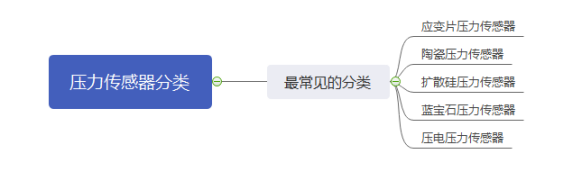
1. Piezoresistive Force Sensors
The resistance strain gauge is one of the main components of piezoresistive strain sensors. The working principle of the resistance strain gauge is the phenomenon where the resistance changes due to mechanical deformation when it is adhered to a substrate material, commonly known as the resistance strain effect.
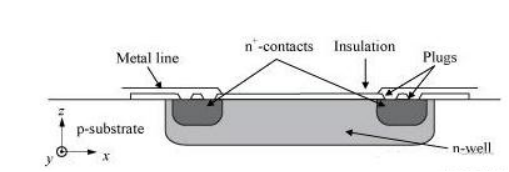
Piezoresistive pressure sensors are generally connected to a Wheatstone bridge through lead wires. Normally, when no external pressure is applied to the sensitive core, the bridge is in a balanced state (referred to as the zero position). When the sensor is pressurized, the resistance of the chip changes, causing the bridge to lose balance. If a constant current or voltage source is applied to the bridge, it will output a voltage signal corresponding to the pressure, thus converting the change in resistance of the sensor into a pressure signal output through the bridge. The bridge detects the change in resistance value, which is amplified and then converted into a corresponding current signal through voltage-current conversion. This current signal is compensated through a nonlinear correction loop, resulting in an output signal that has a linear correspondence with the input voltage.
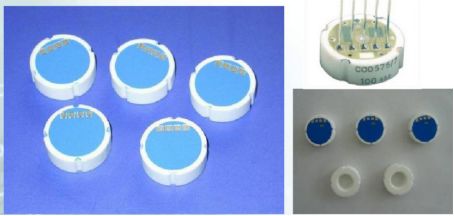
2. Ceramic Pressure Sensors
Ceramic pressure sensors are based on the piezoresistive effect, where pressure directly acts on the front surface of the ceramic diaphragm, causing a slight deformation. Thick film resistors are printed on the back of the ceramic diaphragm, connected to form a Wheatstone bridge. Due to the piezoresistive effect of the pressure-sensitive resistor, the bridge generates a highly linear voltage signal that is proportional to the pressure and also proportional to the excitation voltage, with standard signals calibrated to different pressure ranges such as 2.0/3.0/3.3mV/v, etc., which can be compatible with strain sensors.
3. Diffused Silicon Pressure Sensors
Diffused silicon pressure transmitters are made by encapsulating isolated silicon piezoresistive pressure-sensitive elements within a stainless steel housing. They can convert the liquid or gas pressure they sense into a standard electrical signal for external output.
The working principle of diffused silicon pressure sensors is also based on the piezoresistive effect. The pressure of the measured medium directly acts on the diaphragm of the sensor (stainless steel or ceramic), causing a micro-displacement proportional to the medium pressure, which changes the resistance value of the sensor. This change is detected by electronic circuits and converted into a standard measurement signal corresponding to this pressure. They are widely used in the measurement and control of industrial processes such as water supply/drainage, thermal power, petroleum, chemical, metallurgy, etc.
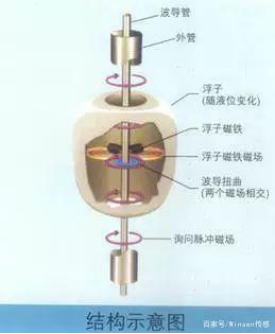
4. Sapphire Pressure Sensors
Using the strain gauge working principle, silicon-sapphire is used as the semiconductor sensitive element, which has unparalleled metrological characteristics. Therefore, semiconductor sensitive elements made from silicon-sapphire are insensitive to temperature changes and maintain good working characteristics even under high-temperature conditions; sapphire has strong radiation resistance; additionally, silicon-sapphire semiconductor sensitive elements do not exhibit p-n drift.
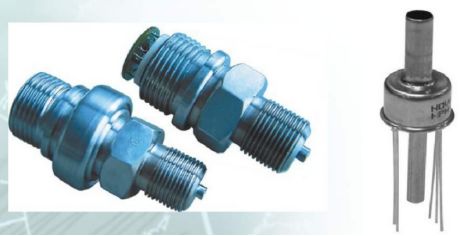
5. Piezoelectric Pressure Sensors
The sensitive element is made from piezoelectric materials. The piezoelectric effect is the main working principle of piezoelectric sensors. So what is the piezoelectric effect? The piezoelectric effect is divided into direct piezoelectric effect and inverse piezoelectric effect. The direct piezoelectric effect explains that certain dielectric materials generate polarization phenomena when deformed under external force in a specific direction, resulting in positive and negative charges appearing on its two opposing surfaces. When the external force is removed, it returns to a non-charged state. The inverse piezoelectric effect explains that when the direction of the applied force changes, the polarity of the charges also changes. Conversely, when an electric field is applied in the polarization direction of the dielectric, these dielectrics will also deform, and when the electric field is removed, the deformation of the dielectric disappears.
A piezoelectric pressure sensor generates surface charges when the piezoelectric material is subjected to external force. These charges are amplified through a charge amplifier and measurement circuit, and after impedance conversion, they are output as an electrical quantity proportional to the external force. It can be seen that piezoelectric pressure sensors can only work under external force, so they can only be applied in dynamic measurements.
2. Main Performance Parameters
1.Rated Pressure Range. The rated pressure range is the pressure range that meets the standard specified values. This means that within the highest and lowest temperatures, the sensor outputs pressure that conforms to the specified working characteristics. In practical applications, the pressure measured by the sensor falls within this range.
2.Maximum Pressure Range. The maximum pressure range refers to the maximum pressure that the sensor can withstand for a long time without causing permanent changes in output characteristics. Especially for semiconductor pressure sensors, to improve linearity and temperature characteristics, the rated pressure range is generally significantly reduced. Therefore, even continuous use above the rated pressure will not cause damage. Generally, the maximum pressure is 2-3 times the highest value of the rated pressure.
3.Damage Pressure. The damage pressure refers to the maximum pressure that can be applied to the sensor without damaging the sensor element or the sensor housing.
4.Linearity. Linearity refers to the maximum deviation of the linear relationship between the sensor output and pressure within the working pressure range.
5.Pressure Hysteresis. This is the difference in sensor output when approaching a certain pressure from the minimum working pressure and maximum working pressure at room temperature and within the working pressure range.
6.Temperature Range. The temperature range of pressure sensors is divided into compensated temperature range and working temperature range. The compensated temperature range is the temperature range within which the accuracy enters the rated range due to temperature compensation. The working temperature range is the temperature range that ensures the pressure sensor can operate normally.
3. Applications
1. Application of Pressure Sensors in Weighing Systems
In commercial weighing systems of industrial control technology, pressure sensing technology is increasingly being applied. In many pressure control processes, it is often necessary to collect pressure signals and convert them into electrical signals that can be used for automation control. Pressure control devices made from pressure sensors are generally referred to as electronic weighing systems. As online control tools for material flow in various industrial processes, electronic weighing systems are becoming increasingly important. Electronic weighing systems can optimize production during the manufacturing process, improve product quality, and collect and transmit data related to material flow during production to data processing centers for online inventory control and financial settlement.
In the automation control of weighing processes, pressure sensors are required not only to sense gravity signals but also to have reliable performance, good dynamic response, and strong anti-interference capabilities. The signals provided by pressure sensors can be directly displayed, recorded, printed, stored, or used for feedback regulation control through detection systems. By integrating technology, pressure sensors can be integrated with measurement circuits, significantly reducing the size of the entire device; additionally, the development of shielding technology will ensure the anti-interference capability of weighing pressure sensors, further improving the level of automation control in the weighing process.

2. Application of Pressure Sensors in the Petrochemical Industry
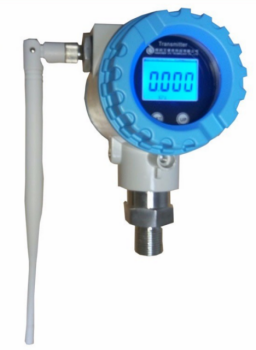
Pressure sensors are one of the most used measuring devices in automatic control in the petrochemical industry. In large chemical projects, almost all applications of pressure sensors are included: differential pressure, absolute pressure, gauge pressure, high pressure, micro differential pressure, high temperature, low temperature, and various materials and specially processed remote flange pressure sensors. The demand for pressure sensors in the petrochemical industry mainly focuses on reliability, stability, and high precision. Among them, reliability and many additional requirements, such as range ratio and bus type, depend on the structural design, mechanical processing level, and structural materials of the transmitter. The stability and high precision of pressure transmitters are mainly guaranteed by the stability and measurement accuracy of pressure sensors.
The measurement accuracy of pressure sensors corresponds to the measurement accuracy and response speed of pressure transmitters, while the stability of pressure transmitters corresponds to the temperature characteristics, static pressure characteristics, and long-term stability of pressure sensors. The demand for pressure sensors in the petrochemical industry is reflected in four aspects: measurement accuracy, fast response, temperature characteristics, static pressure characteristics, and long-term stability.
3. Application of Pressure Sensors in Water Treatment
In recent years, China’s environmental protection water treatment industry has developed rapidly, and the future prospects are broad. In the processes of water supply and sewage treatment, pressure sensors provide important control and monitoring means for system protection and quality assurance.
4. Application of Pressure Sensors in the Medical Industry
With the development of the medical device market, higher requirements have been put forward for the use of pressure sensors in the medical industry, such as accuracy, reliability, stability, and size, all of which need to be improved. Pressure sensors have good applications in minimally invasive catheter ablation and temperature sensor measurements.
Minimally invasive surgery not only reduces trauma at the surgical site but also significantly alleviates patient pain, and the recovery process is much faster. Achieving such requirements depends not only on the surgical experience of the doctor but also on various medical monitoring devices. Many medical instruments used for this operation are small, such as various catheters and ablation devices. Catheters include thermal dilution catheters, urethral catheters, esophageal catheters, central venous catheters, and intracranial pressure containers, etc. They not only have conductive functions but also provide important guarantees for temperature or pressure sensors, patient pathological examinations, and the smooth progress of minimally invasive surgeries, as temperature and pressure parameters are key parameters for successful operations.
It is crucial for many applications that sensors can be placed close to the patient; for example, in dialysis applications, accurately measuring the pressure of dialysis fluid and venous pressure is very important. Pressure sensors must be able to accurately monitor the pressure of dialysis fluid and blood to ensure it remains within the set range.
This type of application requires sensors to be compact and able to withstand liquid media. In many cases, sensors that are incompatible with liquid media require additional protective components to be installed, increasing the size, cost, and complexity of the product. The ability to withstand liquid media is particularly important when monitoring a patient’s breathing, as the sensors must be able to withstand the patient’s cough and the humid air exhaled.
4. Application of Pressure Sensors in the Automotive Industry
The automotive application remains the largest market for MEMS pressure sensors, with mainstream applications including tire pressure monitoring systems (TPMS), intake pressure sensing devices (MAP), and atmospheric absolute pressure sensing devices (BAP). Yole Developpement points out that the MEMS pressure sensor market in automotive, medical, industrial, and high-end applications has an average growth rate of about 4-7%, while the average growth rate in the consumer application market (in terms of monetary scale) is as high as 25% (with a shipment growth rate of 38%), mainly benefiting from new opportunities brought by smartphones and tablet devices.
4. Industry Chain Structure
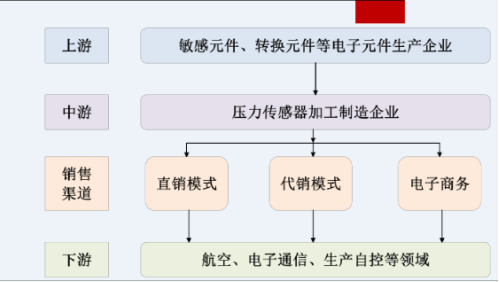
The sensor entrepreneurial chain can be roughly divided into research and development → design → manufacturing → packaging → testing → application, etc. The upstream raw materials for pressure sensors mainly include sensitive elements, conversion elements, and other electronic components, while the downstream mainly involves fields such as electronic communication, aviation, automotive, automatic production, and home appliances. Let’s take a look at a diagram:
High Upstream Technical Barriers, Fragmented Enterprises
The upstream of the pressure sensor industry consists of enterprises that produce its raw materials. Sensors are application-oriented products that must be combined with application scenarios to function, so the development and demand of downstream application enterprises directly affect the layout of upstream enterprises.
Although sensor technology is continuously advancing, the early start of the sensor industry in China has led to a reliance on imports for many sensors and sensor technologies. In terms of pressure sensors, the theoretical level of the domestic industry is not much different from the international level, but there is still a certain gap in basic technologies, including material technology, manufacturing equipment, testing technology, and reliability research, compared to international standards. These factors also directly lead to the slow development of upstream enterprises. Technology is the primary productive force for development, but most advanced technologies are held by foreign enterprises. Pressure sensors are high-end products with high technical barriers, and only a few domestic enterprises can produce them. Most are small and medium-sized enterprises, and from the perspective of the sensor entrepreneurial chain, most enterprises start from manufacturing, doing similar OEM work.
However, with the government’s emphasis on research and development in the sensor industry, the country will encourage, support, and cultivate leading enterprises with an output value exceeding 1 billion yuan in the future.
Downstream Application Scenarios Flourishing, Creating Millions of Opportunities
In basic scientific research, sensors hold a prominent position. For example, in the exploration of new energy and new materials, various cutting-edge technology research with far-reaching implications, such as ultra-high temperature, ultra-low temperature, ultra-high pressure, ultra-high vacuum, ultra-strong magnetic fields, and ultra-weak magnetic fields, etc. Clearly, obtaining a large amount of information that human senses cannot acquire is impossible without corresponding sensors. Many obstacles in basic scientific research stem from difficulties in obtaining information about the research subjects, and the emergence of new mechanisms and sensitive detection instruments often leads to breakthroughs in that field. The development of some sensors often serves as a precursor to some marginal disciplines.
Previously, pressure sensors were mainly applied in booster cylinders, turbochargers, gas-liquid booster cylinders, gas-liquid boosters, pressure machines, compressors, air conditioning refrigeration equipment, etc. In industrial automatic control environments, they are involved in industries such as water conservancy and hydropower, railway transportation, intelligent buildings, production automation, aerospace, military industry, petrochemicals, oil wells, electricity, ships, machine tools, pipelines, and home appliances.
Nowadays, the entire ecosystem brought by the Internet of Things, which is at the forefront, will be a potential application market for pressure sensors. The rise of the Internet of Things has ushered in an intelligent era, along with concepts that have become widely known, such as smart cities, smart transportation, smart industry, smart homes, smart agriculture, and smart healthcare, etc. The development of these fields is inseparable from sensors as a driving force, and pressure sensors will undoubtedly see broader application scenarios and stronger demand.
Whether upstream or downstream enterprises in the pressure sensor industry, the flourishing application scenarios brought by the Internet of Things will create significant opportunities. Whether enterprises can seize these opportunities during the outbreak will determine their development direction.
5. Development Trends
Miniaturization: Currently, the market demand for small pressure sensors is increasing. These small sensors can operate in extremely harsh environments and require minimal maintenance, having little impact on the surrounding environment. They can be placed in various important organs of the human body to collect data without affecting normal human life. For example, sensors produced by the American company Entran have a range of 2 to 500 PSI and a diameter of only 1.27 mm, allowing them to be placed in human blood vessels without significantly affecting blood flow.
Integration:Pressure sensors are increasingly being integrated with other measuring sensors to form measurement and control systems. Integrated systems can improve operational speed and efficiency in process control and factory automation.
Intelligence:Due to the emergence of integration, microprocessors can be added to integrated circuits, enabling sensors to have functions such as automatic compensation, communication, self-diagnosis, and logical judgment. Another development trend for pressure sensors is expanding from the mechanical industry to other fields, such as automotive components, medical instruments, and energy environmental control systems.
Standardization:The design and manufacturing of sensors have formed certain industry standards, such as ISO international quality systems; American ANSI, ASTM standards; Russian ГOCT; and Japanese JIS standards.
6. Selection
Based on different application scenarios and requirements, we need to make reasonable selections for sensors. The principle of selection is to purchase pressure sensors that meet their intended use, pressure range, accuracy requirements, temperature range, electrical and mechanical requirements at the most economical price.
1. Confirm the Type of Pressure to be Measured
Pressure sensors can be divided into those that measure absolute pressure, relative pressure to the atmosphere, and differential pressure. When measuring absolute pressure, the sensor has a vacuum reference pressure inside, and the measured pressure is independent of atmospheric pressure, being relative to vacuum pressure. Relative pressure to the atmosphere uses atmospheric pressure as the reference pressure, so one side of the sensor’s elastic membrane is always connected to the atmosphere. Additionally, fluid pressures can be introduced from both sides of the sensor’s elastic membrane to measure the differential pressure between different locations or between fluids. Different structures of pressure sensors should be selected for different purposes.
2. Confirm the Range of the Pressure Sensor
Generally, it is necessary to choose a sensor/transmitter with a pressure range about 1.5 times greater than the maximum value. In many testing systems, especially in hydraulic measurements and processing, there are peak and continuous irregular fluctuations. These instantaneous peaks can damage the pressure sensor, and sustained high pressure values or slightly exceeding the calibrated maximum value of the sensor/transmitter can shorten the sensor’s lifespan.
For example, the impact force on the sensor during the lifting moment of a loader is quite severe, and such occasions often require a safety overload of more than three times, but this will affect its overall accuracy. A damping device can also be used to reduce pressure shocks, but this will reduce the sensor’s response speed. Therefore, when selecting a sensor/transmitter, it is essential to fully consider the pressure range, accuracy, and stability to choose the most suitable solution.
3. Determine the Measurement Medium of the Pressure Sensor
Generally speaking, viscous liquids (such as crude oil), slurries, mud, and other sediments can often block the pressure interface, affecting the normal operation of the sensor. In such cases, it is necessary to use isolation membranes (i.e., flat membrane structures) for sensors that come into direct contact with the medium for pressure measurement. When solvents contain corrosive substances, materials compatible with these media should be selected for the isolation membrane; otherwise, it will affect the product’s lifespan.
4. Determine the Accuracy of the Pressure Sensor
The accuracy mentioned here mainly refers to: non-linearity, hysteresis, repeatability, zero and full-scale deviation, and the influence of temperature and other environmental factors. Generally, the higher the accuracy, the more additional processes and calibration techniques are added during production, which increases costs and consequently raises the selling price. Therefore, users should not simply pursue high accuracy but should make reasonable selections based on actual measurement needs.
5. Confirm the Temperature Range of the Pressure Sensor
Typically, a transmitter will be calibrated for two temperature ranges: the normal operating temperature range and the temperature compensation range.
The normal operating temperature range refers to the temperature range in which the product can operate without damage. If the temperature exceeds the compensation range, it may not meet its performance specifications.
The temperature compensation range is the range within which the product will definitely meet its performance specifications.
Temperature changes affect zero drift and full-scale output, impacting the accuracy of pressure sensors. To eliminate the influence of temperature, various temperature compensation techniques must be applied. The wider the temperature range, the more challenging the compensation technology becomes, and the greater the calibration workload, resulting in lower guaranteed accuracy across the full temperature range. Therefore, reasonable requirements should be proposed based on the actual temperature range and accuracy requirements of the pressure sensor.
6. Electrical Requirements
Generally, the output of ordinary pressure sensors is an analog signal, and the voltage of the output signal will attenuate over long distances, so current signal output should be used. After amplification by the pressure transmitter, a current signal below 20mA can be output. This significantly increases the cost.
Therefore, the choice of output type depends on the distance between your sensor and the system control or display components, noise, and other electrical interference, as well as whether amplification is needed and the best placement for the amplifier.
Additionally, digital signals and frequency signals can only be obtained after A/D and V/F conversion.
Constant current sources and constant voltage sources are the two common excitation sources used by sensors. The two excitation methods differ in their functions. Constant current excitation is beneficial for compensating thermal sensitivity drift. The type of output may determine the required excitation voltage. Many amplified sensors have built-in voltage regulators that can operate under a wide range of unregulated voltage sources.
Some sensors are proportional and require a regulated excitation source. The power supply used will determine whether you use a regulated or unregulated power supply. This requires a trade-off between system costs and all excitation sources. Pressure sensors can be powered by batteries, but more commonly, DC regulated power supply technology is used.
7. Operating Mode
The operating mode is also an important issue to consider. When the working environment of the pressure sensor is harsh, such as with significant vibrations, shocks, and strong electromagnetic interference, stricter requirements are placed on the sensor. It must not only have strong overpressure capability but also require reliable mechanical sealing, anti-loosening, and correct installation of the sensor. The sensor’s leads, pins, and external wires should all be electromagnetically shielded and well-grounded.
8. Requirements for Pressure Sealing
Common pressure sealing methods include rubber gaskets (or O-rings), epoxy resin, polytetrafluoroethylene gaskets, tapered hole fits, pipe thread fits, and welding. The sealing materials used determine the working temperature range of the pressure sensor.