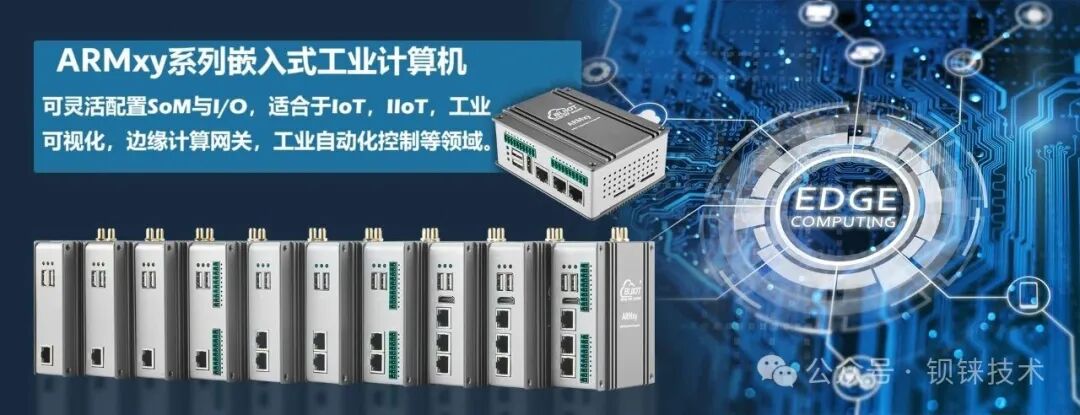
In the industrial world, there is a particularly poignant saying: “It’s not that the devices are not smart enough, but that the latency is not fast enough.”
In recent years, whether it is industrial robots, photovoltaic energy storage, AGVs, small PLCs, or various edge gateways, they have all been converging towards one direction——lower latency, more stable control, and more deterministic execution.
Behind this, a trend is rapidly taking shape: Real-time Linux (Linux RT / Ubuntu RT) is becoming the mainstream choice for industrial operating systems.
So what exactly has changed? Why is everyone moving towards real-time capabilities? And what enhancements has Baile Technology made to the ARMxy series? Let’s clarify everything today.
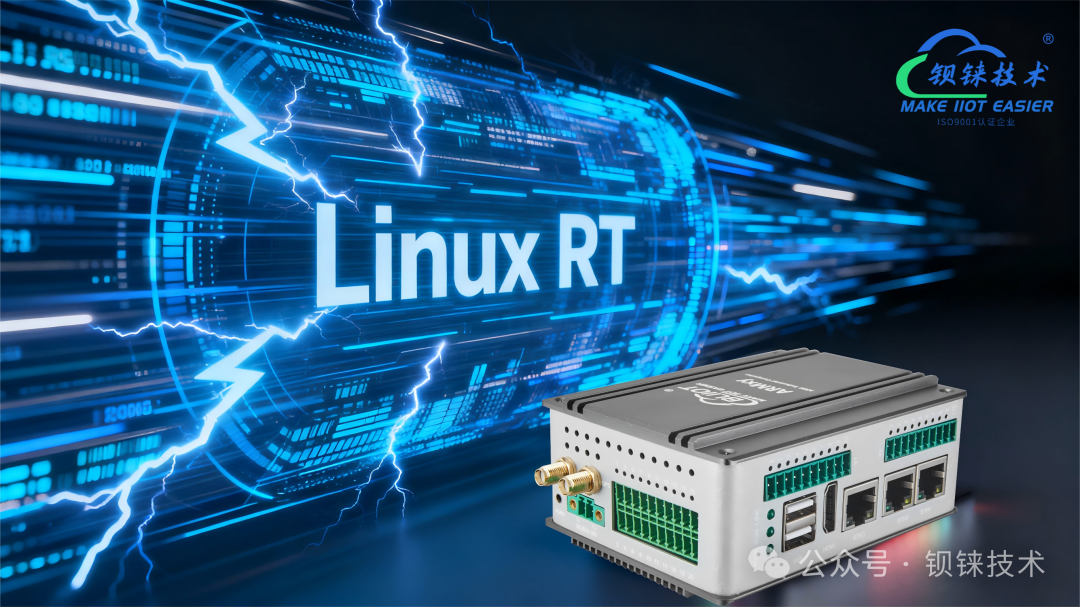
1
Why is Real-Time Linux Indispensable in Industrial Settings?
Industrial devices are increasingly resembling “edge brains,” while also needing to perform like traditional PLCs withstrict timing, strong determinism, high concurrency, and robustness..
While standard Linux is stable, it still leans towards “home logic”:
-
Kernel scheduling is flexible but unpredictable
-
System processes can “squeeze” task time
-
CPU may automatically downclock
-
Multitasking preemption is not aggressive enough
The result is: unstable latency and uncertain execution, which is fatal for industrial control.
Real-time Linux (PREEMPT_RT/Ubuntu RT) is specifically designed for such scenarios:
-
Interrupts are thread-based
-
Critical tasks have higher priority
-
The kernel is preemptible
-
Latency reduces from milliseconds to microseconds
-
Control loops are more stable
-
Data sampling jitter significantly decreases
In short: Linux gains “PLC-level control capabilities.”
2
Three Technical Routes of Real-Time Linux (Must-Know)
1) PREEMPT (Preemptive Kernel) — Lightweight and Sufficient
Many industrial gateways and protocol machines use this setup:
-
Latency generally ranges from 1–3ms
-
Suitable for Modbus, CAN, MQTT, high-speed acquisition
-
Simple configuration, minimal impact on business
Suitable for the vast majority of industrial communication devices.
2) PREEMPT_RT (RT Linux) — Strong Real-Time Standard Option
This is an industrial-grade strong real-time solution:
-
Latency of 50–200μs
-
Interrupts can be preempted by real-time tasks
-
Commonly used in master protocols (e.g., EtherCAT)
You will find: the vast majority of domestic “soft PLC / industrial master stations” are using RT Linux.
3) Xenomai / Dual Kernel — Stronger Real-Time (but Complex Development)
-
Latency can be below 10μs
-
Very friendly for motion control and servo drives
-
Compatible with the Linux ecosystem, but has the highest threshold
Suitable for top real-time scenarios, but deployment costs are prohibitive for most companies.
3
Ubuntu RT: A “Trump Card” Many Engineers Overlook
Ubuntu itself is not a real-time system, but its real-time patch support is very mature.
The advantages are:
-
Extensive software ecosystem
-
Easy installation of various libraries via apt
-
Supports containers (Docker)
-
Very compatible with industrial control + AI environments
-
Good support for embedded ARM platforms
Ubuntu RT achieves “near PLC” level stability for a general-purpose operating system.
Today, many robot chassis, digital twin platforms, and machine vision systems have quietly switched to Ubuntu RT.
4
Baile Technology ARMxy Series: Industrial Gateways Born for Real-Time
Baile Technology has fully supported the ARMxy series (BL450/BL410/BL370/BL360, etc.):
① Linux RT (PREEMPT_RT) Kernel Version
Suitable for:
-
EtherCAT master stations
-
High-frequency acquisition tasks
-
Timed loop execution
-
High-frequency serial/485 queue processing
-
Edge control tasks
The RT kernel has been optimized by Baile:
-
Fixed CPU frequency
-
Default isolated cores
-
Optimized IRQ binding
-
Reduced scheduler jitter
No complex configuration is required on the user side to achieve more deterministic real-time execution.
② Ubuntu RT (Suitable for AI + Real-Time Control Integration)
Particularly friendly to performance platforms like RK3588 / ARM Cortex-A series.
Suitable for:
-
Running AI inference + industrial control simultaneously
-
Node-RED graphical workflows + real-time tasks
-
Mixed real-time development in Python + C
-
High concurrency with TSN, OPC UA, Modbus
Many customers have reported: Running Ubuntu RT on BL450 / BL410 is one level more stable than standard Ubuntu.
③ Three Enhanced Real-Time Capabilities by Baile Technology
1. CPU Real-Time Core Isolation (isolcpus)
Important tasks are bound to independent cores, unaffected by other business processes.
2. Interrupt Affinity Group Direction (irq affinity)
High-frequency serial, CAN, and EtherCAT interrupts no longer compete for CPU resources.
3. Precise Scheduling of Timed Tasks (edge-timer)
Baile’s optimized timer reduces control cycle jitter.
These are all “soft and hard integration” engineering optimizations, resulting in: more stable acquisition, lower latency, faster protocols, and more precise control.
5
What Can the ARMxy Series Do with Real-Time Linux?
Here are some direct use cases for engineers:
-
EtherCAT master station cycle control (500μs–1ms)
-
High-frequency 485/Modbus RTU master station
-
Millisecond-level filtering of CAN messages
-
Real-time acquisition for photovoltaic inverters
-
Stable reporting of BMS data streams
-
High-concurrency data aggregation in industrial sites
-
Sensor fusion for robot chassis
-
AI + control mixed load scenarios
In short: The ARMxy series can serve as both an “edge server + soft PLC + protocol machine.”
6
Conclusion: The Future Belongs to Real-Time Linux
Industrial devices are transitioning from “being able to run” to “running stably,” from “as fast as possible” to “consistently fast every time.”
Real-time Linux is the foundation of this era.
And Baile Technology’s ARMxy series is accelerating the opening of real-time capabilities to more industries, allowing Linux to perform AI, handle protocols, and control as stably as a PLC.
If you are working on: robotics, energy storage, photovoltaics, power, industrial master stations, protocol acquisition…you will find: Real-time Linux + ARMxy is the combination you need that offers everything you want.