
During the “Mitral Valve Intervention Forum” held at the 36th Great Wall Cardiovascular Conference and the Asian Heart Conference 2025, Professor Song Guangyuan from Beijing Anzhen Hospital, Capital Medical University, delivered a keynote report on the theme of “Current Status of China’s Self-Developed Mitral Valve New Devices,” systematically reviewing the research and development achievements and overall layout of transcatheter edge-to-edge repair (TEER) in China, showcasing the strong momentum of domestic innovative devices accelerating breakthroughs and fully entering clinical practice.
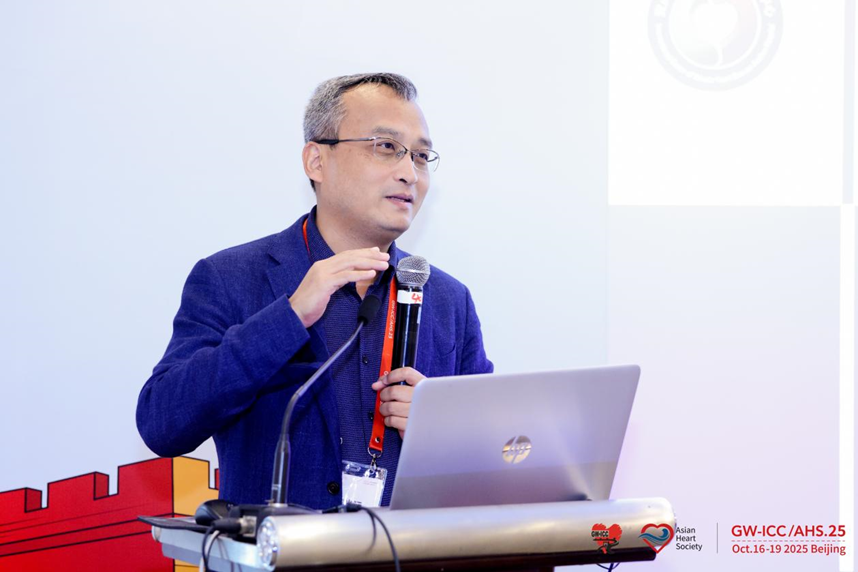
Professor Song Guangyuan pointed out that mitral regurgitation (MR) is the most prevalent valvular disease in China, with approximately 7.5 million MR patients in urgent need of treatment, among which over 5.5 million are severe cases. However, traditional surgical thoracotomy poses extremely high risks for elderly patients with multiple comorbidities, making it difficult for many patients to receive timely and effective treatment. With the rapid global development of TEER technology, the number of transcatheter mitral valve clip implantations worldwide has been increasing at a rate of over 50,000 cases per year, and interventional treatment is becoming an important direction for managing mitral valve diseases. Compared to the previous decade dominated by foreign enterprises, China is rapidly catching up, with independent technologies rising swiftly.
Professor Song Guangyuan highlighted several domestic mitral valve intervention systems that have been approved or are in clinical research stages, covering various technical routes including traditional “figure-eight” and “linear” designs, as well as transapical approaches. These include representative systems such as the DragonFly system, NeoNova, NovoCLasp, and GeminiOne TEER systems, along with the ValveClamp that utilizes the transapical approach, gradually forming a treatment device lineage that is characteristic of China and adaptable to various types of lesions.
Among them, the DragonFly system stands as a landmark achievement in domestic mitral valve intervention technology, demonstrating good maneuverability and adaptability in complex cases. The results of the DRAGONFLY-DMR study indicate that this system can significantly reduce mitral regurgitation, laying a solid foundation for China’s independent innovation in DMR treatment. The “linear” design of NeoNova shows significant advantages in addressing central and off-center lesions, effectively reducing the risk of chordal entanglement and lowering the probability of chordal rupture. Data from a one-year follow-up also show that approximately 79.66% of patients improved their MR to 1+ or better after treatment, indicating reliable efficacy. Additionally, NovoCLasp has completed patient enrollment at Anzhen Hospital, with data showing that 84.8% of patients achieved MR≤1+ postoperatively, and 98% achieved MR≤2+, reflecting further improvements in treatment consistency and safety of domestic innovations. Other systems such as SQ Kyrin M and GeminiOne have also achieved encouraging clinical results, providing more solutions for the treatment of mitral regurgitation. The ValveClamp TEER system, utilizing the transapical approach, also occupies an important position in structural heart disease, offering new interventional options for special populations that cannot be treated via the femoral vein route.
As domestic mitral valve intervention devices continue to mature, China’s mitral valve intervention treatment has entered a phase of rapid development. From continuously improving the ability to handle complex degenerative mitral regurgitation lesions, to gradually perfecting comprehensive management strategies for functional mitral regurgitation patients, and to increasingly standardized patient selection systems, the overall level of mitral valve intervention is moving towards the international forefront. Professor Song Guangyuan emphasized that with the expansion of indications, diversification of technical routes, and the iterative improvement of domestic innovative products in clinical settings, China is about to enter a critical window period for the development of mitral valve interventions. In the future, large-scale, high-quality randomized controlled trials will still be needed to further clarify the optimal timing, long-term safety, and prognostic value of transcatheter mitral valve interventions. Only with sufficient evidence-based support can China’s self-developed mitral valve devices truly promote the upgrade of treatment concepts and provide a more solid basis for clinical decision-making.
Professor Song Guangyuan’s presentation comprehensively presented the overall picture of China’s self-developed mitral valve devices from technological innovation to clinical transformation, showcasing the immense potential of domestic structural heart disease devices in addressing the vast demand of mitral regurgitation patients in China. As more innovative devices accelerate their entry into clinical practice, a new era of mitral valve intervention centered on Chinese original technology, tailored to the characteristics of the Chinese population, is rapidly approaching.
GW-ICC/AHS 2025
Click to read the original text for the latest information