On the eve of the fourth round of tariff talks between China and the U.S., the Trump team attempted to exert pressure through a tough stance, only to be met with a swift counter from China. On September 13, 2024, the Chinese Ministry of Commerce announced the initiation of an “anti-dumping” investigation into U.S. analog chips and an “anti-discrimination” investigation regarding U.S. integrated circuit measures. These two “double anti” measures are not only a direct response to U.S. trade pressure but also reflect China’s confidence and strategic ambition in the chip industry layout. From the “precise strike” on analog chips to the “market breakthrough” in mature processes, and to the “strategic adaptation” in the international landscape, China’s counterattack is no coincidence but a “precision war” that has been long in the making.
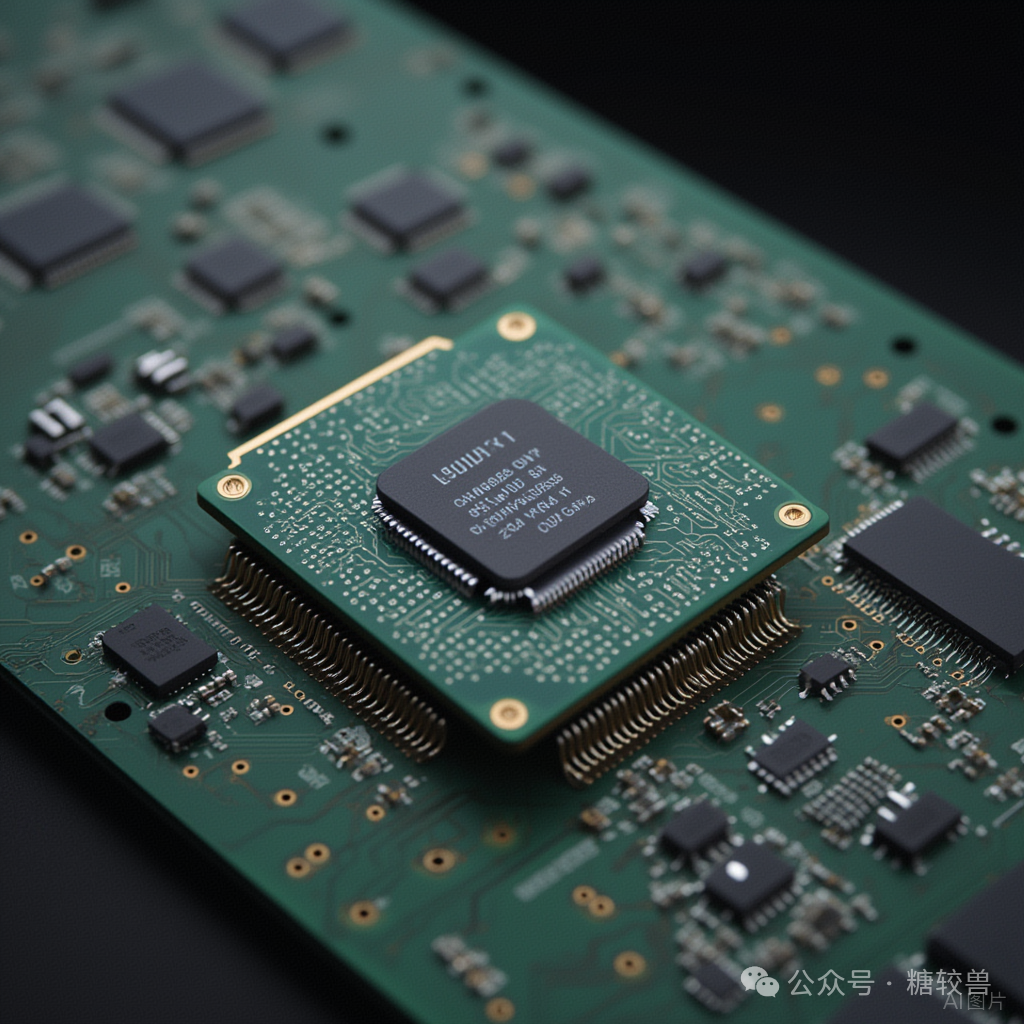
1. Understanding Analog Chips: The Underestimated “Nerve of the Industry” and the Key Cut for China’s Counterattack
To understand the significance of China’s counterattack, it is essential to break a cognitive misconception: in the wave of digitalization, analog chips are not “marginal roles” but rather the “key bridge” connecting the digital world and the real physical world.
1. Analog Chips: A “Necessity Component” from Life to Industry
The core function of analog chips (referred to as “analog chips” in Taiwan) is to achieve the conversion of analog signals to digital signals— the continuous analog signals of sound, light, temperature, etc., in nature must be converted into digital signals of 0s and 1s through analog chips to be processed by computers, mobile phones, and other devices; conversely, the instructions output by digital devices must also be converted into analog signals through analog chips to drive speakers, sensors, motors, and other terminals.
The application scenarios cover almost the entire industry:
- Consumer electronics: power management in mobile phones, signal amplification in speakers, noise reduction in headphones;
- Industrial field: signal modulation in 5G base stations, data collection from sensors, equipment control in smart manufacturing;
- Emerging tracks: battery management in new energy vehicles, vital sign monitoring in medical devices, environmental perception in smart homes.
The U.S. has absolute industry giants in this field—Texas Instruments (TI), as the “leader” in the global analog chip market, holds nearly 20% of the global market share, and even the former chairman of TSMC, Morris Chang, came from this background. By targeting analog chips, China aims at the U.S.’s “advantageous field,” using the strategy of “returning the favor” to break the logic of U.S. trade pressure.
2. The “Dumping Evidence” Behind the Data: A Rational Basis for China’s Counterattack
This investigation by China is not baseless but is based on solid market data: from 2022 to 2024, U.S. exports of analog chips to China increased by about 37.5%, while export prices plummeted by 52%. This abnormal phenomenon of “increased volume and decreased price” is a typical “dumping strategy”—as China’s domestic analog chip technology gradually matures, the U.S. attempts to squeeze the survival space of Chinese enterprises through low-price dumping, hindering the independent progress of China’s chip industry.
From the perspective of international trade rules, China’s initiation of the anti-dumping investigation fully complies with the WTO framework, responding to the reasonable demands of the domestic industry while conveying the attitude of “abiding by the rules but never condoning unfair competition” to the international community.
2. China’s Strategic Layout: Breaking Through from “Mature Processes” and Following the “Rural Encircling the City” Path
This double anti-investigation of analog chips is just the “first shot” in China’s chip counterattack. The deeper logic behind it is to build industrial advantages around “mature processes” and gradually break through to advanced processes. This strategy resembles the “rural encircling the city” approach, aligning with the realistic foundation of China’s chip industry while precisely targeting the strategic soft spots of the U.S.
1. Mature Processes: The “Basic Plate” and “Breakthrough Point” of China’s Chips
Chip processes can be divided into “mature processes” (28nm and above) and “advanced processes” (14nm and below) based on technical difficulty. Compared to advanced processes that require “neck-choking” equipment like EUV lithography machines, mature processes have lower technical barriers, less equipment dependency, and broader application scenarios (accounting for over 60% of the global chip market size), making them the best entry point for China’s chip industry to “establish strength before becoming strong”.
Data shows that in 2023, China imported 658.1 billion analog chips, with a total value of 307.5 billion yuan, accounting for 13%-15% of the total chip import value—over 90% of these analog chips use mature processes of 28nm and above. By starting with analog chips, China is essentially paving the way for “domestic production of mature processes”: reducing the impact of low-priced U.S. products through the double anti-investigation to secure market space for domestic enterprises.
2. SMIC’s “Breakthrough Achievements”: Dual Breakthroughs in Yield and Scale
China’s confidence to “draw swords” in the mature process field comes from the breakthroughs of leading enterprise SMIC:
- Yield soaring to 98%: In 2024, SMIC’s 28nm process yield increased to 98%—yield is the “lifeline” of chip manufacturing, and a 98% yield means significantly reduced product costs, approaching international first-class levels;
- Revenue and market share both growing: In 2024, SMIC’s revenue grew by 27.7% year-on-year, reaching a historical high, even though net profit fell by 45.4% year-on-year due to “price reduction and expansion”, the gross margin remained at a healthy level of 18%.
This achievement is backed by SMIC’s clear strategy: to seize the mature process market with “low price + high yield”, further dilute costs through economies of scale, and reinvest profits into R&D, gradually breaking through to advanced processes like 14nm and 7nm. This “war-sustaining war” model is replicating China’s successful paths in photovoltaics and new energy vehicles—using market share to exchange for technological iteration time.
3. From Analog to Digital: The “Next Move” of China’s Counterattack
Analog chips are just the starting point. According to China’s strategic logic, once the advantages of mature processes are solidified, the counterattack scope will gradually expand to digital chips (such as CPUs, GPUs, and memory chips):
- Short-term: Consolidate the domestic production achievements of analog chips through the double anti-investigation, promoting local enterprises (such as Silan Micro and China Resources Micro) to replace U.S. products;
- Medium-term: Build a complete industrial chain covering design, manufacturing, and packaging/testing based on mature processes, reducing dependence on external equipment and technology;
- Long-term: Achieve breakthroughs in memory chips (Yangtze Memory Technologies) and AI chips (Cambricon, Horizon Robotics), breaking the U.S. monopoly in advanced processes.
3. The Timing of the Counterattack: From “Enduring and Accumulating Power” to “Acting in Accordance with the Situation”, the Dual Maturity of International Climate and Self-Strength
From the trade war initiated by Trump in 2018 to the chip blockade against Huawei in 2020, China maintained “restraint” for four years. Why choose to counterattack in 2024? The answer lies in the “timing maturity”—both in terms of its own industrial strength and the international landscape, conditions are now ripe for “drawing swords”.
1. Early Accumulation: Solving the “Whether or Not” Problem
From 2018 to 2022, China’s core task was to “solidify the foundation”:
- Technical Breakthroughs: Concentrating resources to break through mature process technology, solving the “neck-choking” issues in key areas such as lithography machines (from Zhongwei Company etching machines, Shanghai Micro Electronics DUV lithography machines), and photoresists;
- Industrial Chain Coordination: Establishing the National Integrated Circuit Industry Investment Fund (Big Fund) to support enterprises in design, manufacturing, and packaging/testing, building an independent industrial chain;
- Internationalization of the Renminbi: Promoting the use of the Renminbi for settlement in energy and trade, reducing dependence on the U.S. dollar, and avoiding U.S. pressure through financial means.
This phase of “restraint” is not weakness but a strategy to avoid “premature confrontation” when strength is insufficient, preventing the U.S. from uniting allies for a comprehensive blockade.
2. International Climate: From “Isolation” to “Alliance”, Expanding the Anti-U.S. Hegemony Camp
After 2022, the international landscape underwent significant changes, creating a favorable environment for China’s counterattack:
- De-dollarization Wave: Russia, due to the Ukraine conflict, has taken up the banner against dollar hegemony, and China has taken the opportunity to promote Renminbi clearing agreements with countries like Pakistan and Brazil, with the Renminbi’s share in global trade settlements exceeding 8% in 2023;
- Expansion of Multilateral Organizations: In 2023, the Shanghai Cooperation Organization welcomed Iran, and the BRICS countries added four new members, forming a “political + economic” anti-hegemony alliance, significantly enhancing China’s international discourse power;
- Public Opinion Initiative: In February 2023, China released a report titled “The Hegemony, Bullying, and Harm of the U.S.”, systematically exposing U.S. trade protectionist actions, laying the groundwork for subsequent counterattacks.
In May 2023, China initiated a cybersecurity review of Micron Technology, prohibiting the procurement of its products for critical infrastructure—this was the “first shot” in China’s chip counterattack, and the recent double anti-investigation into analog chips marks the “second shot”, indicating that the counterattack has entered a “normalization” phase.
3. Military Deterrence: Hard Power Safeguarding Trade Games
During the 2024 National Day parade, China showcased a series of advanced military equipment, including hypersonic missiles, stealth fighters, and unmanned combat systems. The display of these capabilities not only reflects national defense strength but also conveys a message of “bottom-line thinking” to the U.S.: China’s counterattack in trade and technology has sufficient hard power support and will not retreat due to U.S. military deterrence.
4. The Future of China-U.S. Competition: From “Policy Confrontation” to “Market Competition”, China’s Long-Term Advantages
The Trump team clearly did not understand China’s strategic intentions—before the Madrid talks, Trump called on NATO to stop purchasing Russian oil and threatened to impose tariffs of 50%-100% on China. This kind of “verbal pressure” has long been seen through by China: if the U.S. truly had strength, there would be no need for “calls”; if it is merely bluster, China’s counterattack will only be more resolute.
1. The “Elastic Space” of the Double Anti-Investigation: “Bargaining Chips” at the Negotiation Table
This double anti-investigation by China is not a “one-time decision” but leaves room for “negotiation”: whether and to what extent it is implemented ultimately depends on the U.S. attitude at the Madrid talks. If the U.S. is willing to lift restrictions on Chinese chips and stop tariff pressure, China may adjust the investigation progress accordingly; if the U.S. continues to be tough, the double anti-measures will become a “substantial punishment”, directly affecting the market share of U.S. analog chip companies in China.
This strategy of “using strikes to promote negotiations” not only seizes the initiative in negotiations but also avoids a comprehensive escalation of the situation, reflecting China’s “strategic composure”.
2. Long-Term Trend: Market Forces Will Become the “Ultimate Arbiter”
Even if the double anti-investigation is temporarily shelved for negotiation needs, the overall direction of China’s counterattack against U.S. chips will not change—because the support for the counterattack will gradually shift from “policy measures” to “market forces”:
- When Chinese domestic chip companies achieve “cost-performance advantages” in mature processes, U.S. products will gradually exit the market due to market competition, even without double anti-investigations;
- When China builds a complete chip industrial chain, U.S. technology blockades will lose significance—just as in the new energy vehicle sector, where China transitioned from “reliance on imports” to “global leader”, driven by market forces and technological iteration.
For the U.S., the real threat is not China’s double anti-investigation but the resilience of China’s chip industry in “exchanging market for technology”. When China becomes the world’s largest chip consumer market (accounting for over 50% globally) while also possessing independent production capabilities, the U.S.’s “chip war” will ultimately collapse on its own.
5. Conclusion: China’s Counterattack Has Just Begun
This double anti-investigation into U.S. analog chips marks a milestone in China’s chip industry “from weak to strong” and signifies the entry of China-U.S. competition into a “new phase”. China’s strategy is clear and firm: based on mature processes, using market share as a weapon, and supported by international alliances, gradually breaking the U.S.’s technological monopoly and trade hegemony.
Trump’s team’s “verbal threats” cannot hinder the progress of China’s chip localization; the U.S.’s “tariff stick” will only accelerate China’s determination to build an independent industrial chain. In the future, the China-U.S. chip competition will shift from “policy confrontation” to “market competition”, and China’s advantages—huge domestic demand market, complete industrial system, and continuous R&D investment—will be the key to ultimate victory.
It is certain that the double anti-investigation into analog chips is not the end but a “new starting point” for China’s systematic counterattack. When China truly achieves “self-control” in chips, the balance of China-U.S. competition will tilt completely in favor of China.