The lattice structure in 3D printing is a powerful design tool that can make parts lighter, stronger, more effective at absorbing impact, and better customized for different uses.
Currently, it is mainly applied in various fields such as aerospace, medical, industrial, and footwear, with broad application prospects. At the same time, parts manufactured with complex internal lattice structures through 3D printing have unique advantages that cannot be achieved with traditional manufacturing techniques.
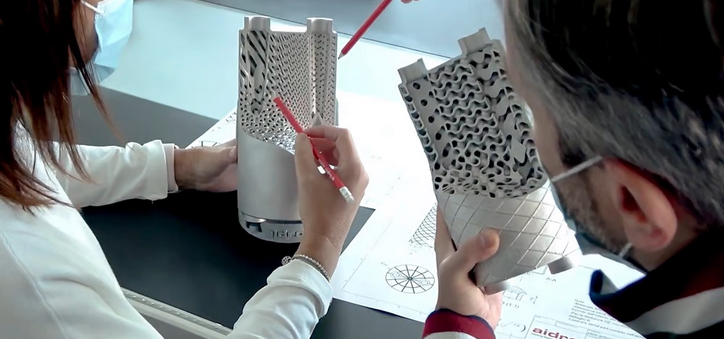
In this article, we will first introduce what lattice structures are and their advantages and disadvantages; then we will list typical application cases that currently use this structure, from Adidas running shoes and professional bicycle saddles to industrial heat exchangers and orthopedic knee implants. Finally, we will introduce different types of lattice structures and how to design them.
1. What are Lattice Structures and Their Advantages and Disadvantages
Simply put, a 3D printed lattice structure is a repeated or non-repeated three-dimensional collection of connected nodes. In its simplest form, multiple lattice nodes are interconnected by beams. The collection of beams and nodes adopts regular and repetitive three-dimensional shapes, such as cubes or tetrahedrons, which are commonly referred to as cells. The shape and density of these cells will determine how the part behaves under load.
Advantages of Lattice Structures
-
Reduced Material Usage
Using lattice designs can significantly reduce material usage by removing most of the material from non-critical areas. For example, in the aerospace industry, the introduction of lattice structures will reduce the use of titanium or chromium-nickel-iron alloys, saving substantial costs without sacrificing the structural integrity of the parts.
-
Lightweight
Reducing material usage has another benefit—weight reduction. In many applications, the final weight of parts or components is often better when lighter. This has many advantages, from reducing fuel consumption in automotive applications to improving patient recovery times in medical cases, as well as reducing the weight of aircraft and spacecraft.
-
Energy Absorption
Lattice structures have many properties that are beneficial for energy absorption, making them very effective at dissipating impacts and shock loads. By varying the density in different areas, and even the cell types, energy can be effectively absorbed in different directions during compression.
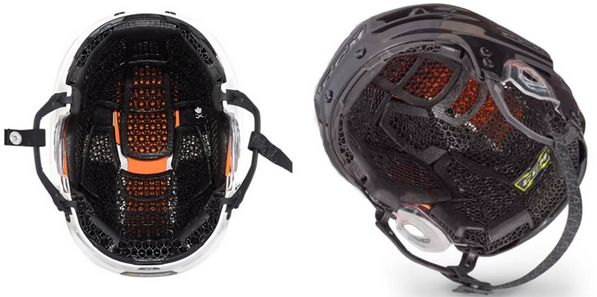
CCM Super Tacks X3D Printed Hockey Helmet Interior (Source: Carbon 3D)
Complex lattice types can be redirected while better distributing energy in multiple directions to absorb impacts based on various material properties.
-
Increased Surface Area
Lattice structures provide parts with more curved surfaces, significantly increasing their surface area compared to similarly sized parts without increasing their overall footprint.
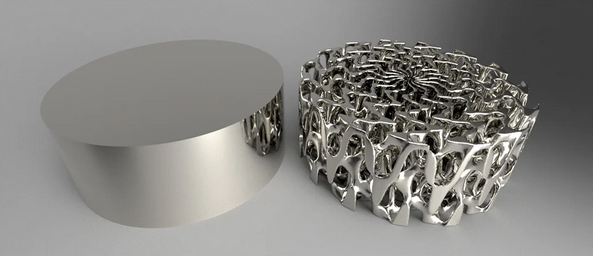
Despite being the same size, the surface area of the lattice structure on the right is four times larger than that of the cylindrical part on the left, while its weight is also four times lighter (Source: Printpool)
This is very useful for applications involving heat exchange or chemical catalysis, which rely on high surface areas to function, where heat transfer or chemical reactions are the primary goals.
Other advantages include creating lattice structures in medical implants to promote bone growth, forming a stronger bond with the patient’s own bone structure.Limitations of Lattice StructuresWhile lattice structures have obvious advantages, allowing parts to be lighter, use less material, cost less, and perform better, there are indeed some limitations. When manufacturing complex non-planar lattice structures, careful consideration should be given to the economics, time, print size, and material selection unique to 3D printing, compared to traditional processing methods, rather than forcibly using 3D printing lattice designs.When it comes to large lattice structures, stress simulation, especially those using finite element methods, can be computationally intensive. Similarly, when parts with large lattice sections are converted to STL files, file sizes exceeding 500MB or even 1GB are common. This often means that further processing and slicing may be a slow and difficult process, except on the most powerful computers.The type of unit cell is one of the most important features of lattice structures, and currently, the options available to most engineers and designers are limited. At the same time, this is also a highly specialized and technical task, which has a certain technical threshold for use.
2. Typical Applications of Lattice Structures
Many different industries have utilized the characteristics of lattice structures when designing new products, and in recent years, new products, applications, and ideas that leverage lattice structures as key features have continuously emerged. Here are some typical application cases.
-
Automotive
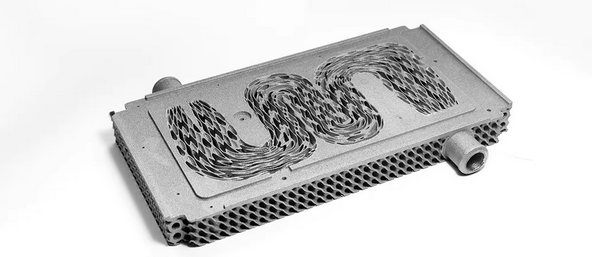
Puntozero Cold Plate for Dynamis PRC Electric Racing Car (Source: nTopology)The Italian product development agency Puntozero collaborated with the Formula SAE team Dynamis PRC to design a twisted version of their high-pressure converter cold plate based on gyroid units, which is 25% lighter than previous designs and has a 300% increase in surface area.
-
Medical
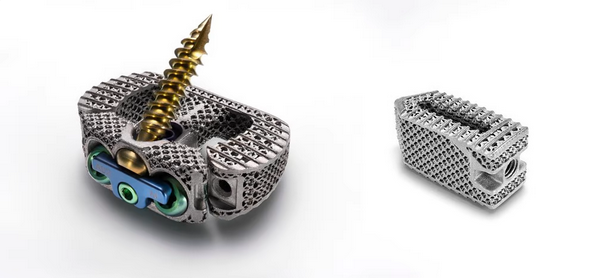
NanoHive Medical Orthopedic Implant Using Lattice Structure to Promote Bone Growth (Source: NanoHive Medical)NanoHive Medical is a US medical company specializing in designing unique spinal implants used during surgery to treat degenerative spinal diseases. In this case, the lattice design is used to reduce the stiffness of the implant, allowing forces to be transmitted more to the spine itself, thereby reducing bone atrophy around the titanium implant.
-
Sports Equipment
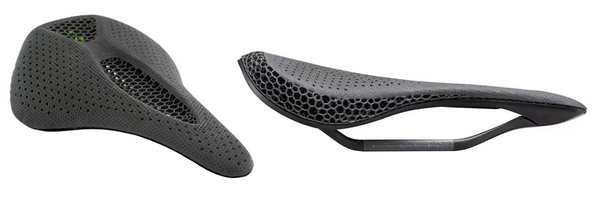
Bicycle Seat Made with Carbon Lattice Design Software Design Engine (Source: Carbon 3D)
This 3D printed bicycle seat designed by Carbon 3D for Specialized can reduce ischial pressure by up to 26%, with its lattice structure containing approximately 22,200 pillars and 10,700 nodes, all individually adjusted to achieve the right balance of support and comfort.
-
Electronics
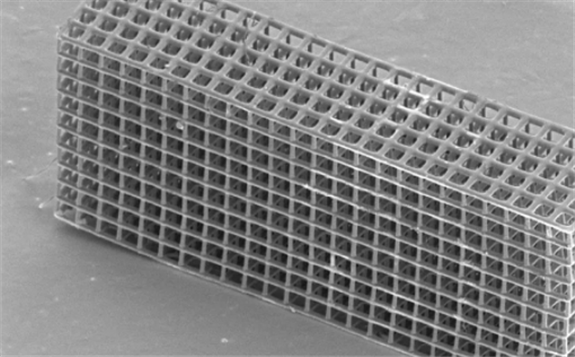
Complex Electrode Geometry Printed via DLP 3D Printing (Source: California Institute of Technology)Researchers at Caltech have developed a new method for 3D printing lithium-ion battery electrodes using DLP 3D printing technology to create complex polymer structures, which are then converted into useful electrode materials through thermal post-processing. The final carbon and lithium cobalt oxide structures have been shown to serve as anodes and cathodes, respectively, exhibiting excellent battery performance and stability.
-
Industrial
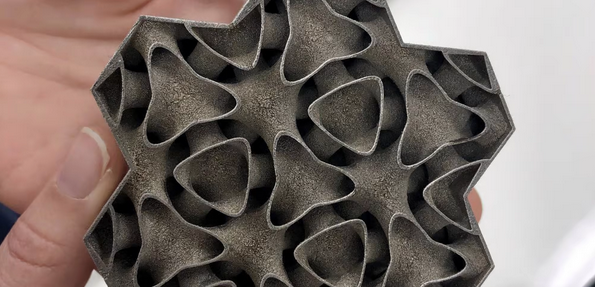
GE Additive Heat Exchanger Designed with Lattice Structure (Source: GE Additive)This complex heat exchanger made by GE is designed to optimize the flow of carbon dioxide at 900°C, serving as a great example of the combination of complex lattice structures and metal 3D printing to achieve outstanding performance. GE’s design employs a biomimetic approach, reflecting the characteristics of human lungs to promote effective heat exchange.
-
Consumer Products
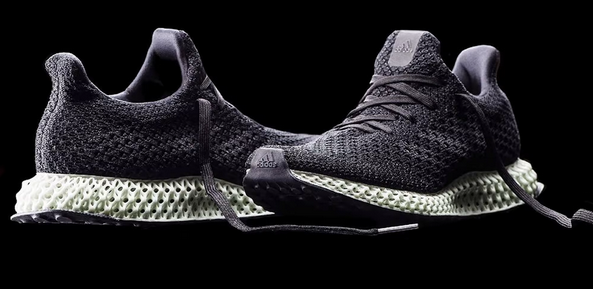
Adidas Futurecraft 4D Limited Edition Custom Running Shoes Featuring 3D Printed Lattice Structure (Source: Carbon 3D)Adidas collaborated with Carbon to launch the 4DFWD shoe in 2021, using resin materials, with the midsole featuring a lattice structure 3D printed by Carbon. The lattice shapes and densities at the heel and forefoot are completely different, and the overall midsole lattice structure density also varies continuously, providing ample cushioning for the foot.
3. Types and Design of Lattice Structures
Types of Lattice Structures
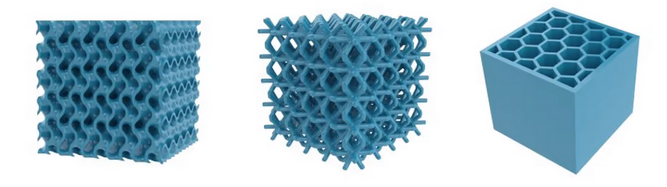
TPMS Lattice, Pillar Lattice, and Plane Lattice Types (Source: Gen3D)Lattices are based on a unit cell, which is a repeating unit that is replicated in multiple directions to form a whole. Here, we will explain some commonly used types of lattices.
-
TPMS Lattice
Triple Periodic Minimal Surface, TPMS creates unit cells such as “gyroid” when using triangular equations. TPMS units consist of all points within the unit, and different but similar equations will produce different types of TPMS lattices.
-
Pillar Lattice
The pillar lattice consists of interconnected beams connected in various patterns defined by the unit cell. Pillars can be connected at the vertices, edges, and faces of cubic units, and different combinations of these connection points will produce different types.
-
Plane Lattice
The plane lattice is the simplest type of lattice, created by compressing a 2D unit cell into 3D. The most common type of plane lattice is the honeycomb structure. By randomly varying its parameters in different directions, each of these types of lattices can also transition from periodic to random lattices. By giving similar properties to the structure in each direction (making it isotropic), it may be more advantageous in certain applications.Lattice Structure DesignThere are currently many software options available for creating lattice designs. Here, we have compiled a list of common ones, with varying levels of complexity in operation, allowing for multiple installations and comparisons to choose one that suits you.
-
nTopology
By using implicit modeling instead of solid modeling, nTopology produces an extremely fast and powerful package for designing parts that cannot be achieved with traditional CAD. The lattice functionality included in nTop is very powerful, allowing almost complete control over all aspects of the lattice structure, including the ability to define your own unit cell.
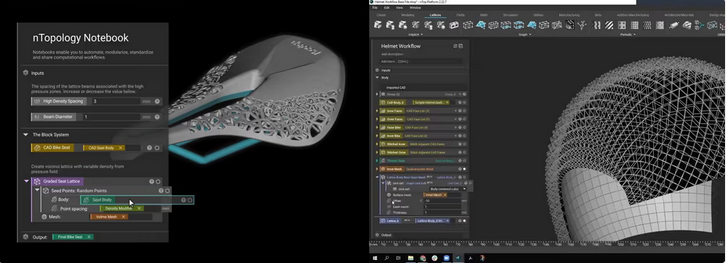
nTop has many other features, including advanced simulation and generative design options, but meshing is at the core of nTop’s functionality.
-
Fusion 360 and Netfabb
Whether using Fusion 360 or Netfabb, new lattice structure options are now available. Initially, only Netfabb had this feature, but in January 2022, Autodesk added a simplified version to Fusion 360, which is available as an optional purchase (free trial for 7 days). Currently, these are still basic functions that only allow real-time viewing of the lattice effects.
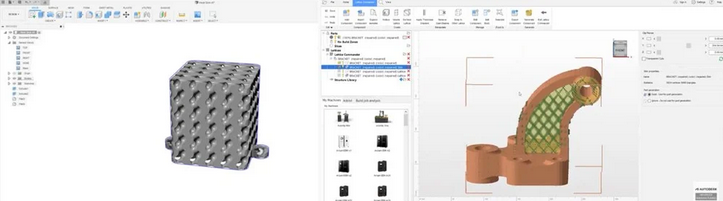
Autodesk Netfabb has powerful lattice generation capabilities, capable of producing very complex lattice designs. Based on the built-in Simulation Utility and Optimization Utility modules, users can directly modify designs during optimization based on analysis results, improving the success rate of 3D printing parts and reducing trial-and-error costs, which is especially important in metal printing.
-
Carbon Design Engine
This is a 3D printing lattice design software launched by 3D printing company Carbon. Currently, Carbon has designed and produced some high-performance, groundbreaking products through this software, such as sports shoes, bicycle saddles, and helmets.
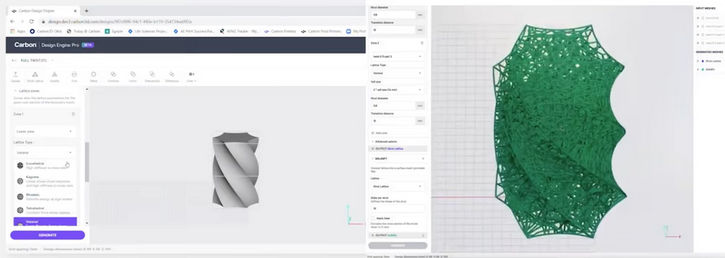
This software was announced for external sales in early 2022, with new versions offering standard, professional, and enterprise editions. However, the truly useful design functionality types are only available in the more expensive “Pro” professional version, which introduces transitions and gradients between lattice types.
-
Grasshopper
Grasshopper (abbreviated as GH) is a visual programming language that runs on the Rhino platform, with internal modules that integrate perfectly with Rhino, making operations more efficient and faster.
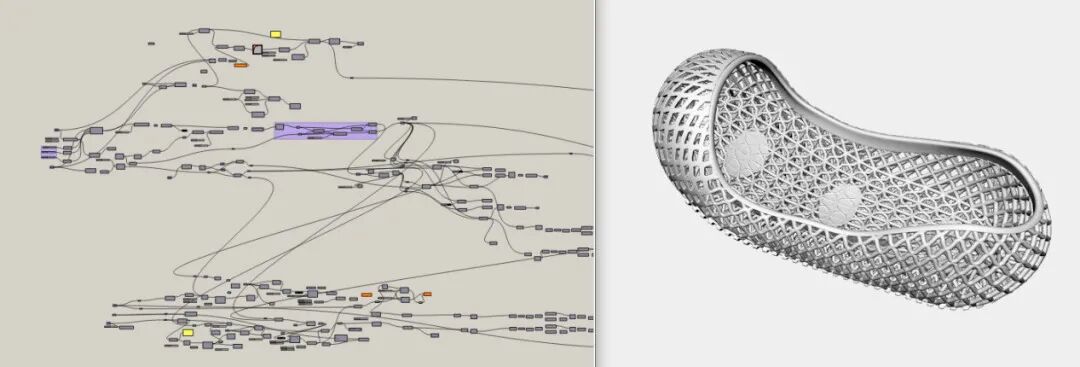
GH also contains nearly a thousand plugins for users to freely mix and match, and if you have programming skills, you can even develop your own plugins, offering high openness and flexibility.
-
3-matic
3-matic is a forward engineering software based on digital CAD (stl) produced by Materialise, where all operations are processed based on triangular facets.
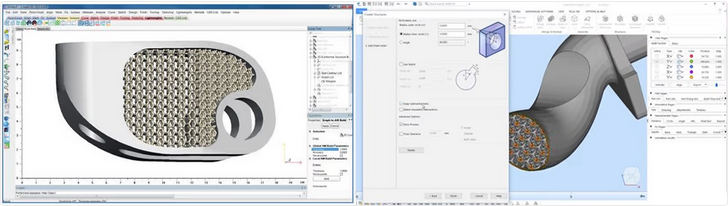
However, the lattice’s conformal design and arrangement mainly rely on UV-mapped divisions, which also leads to insufficient flexibility in lattice distribution, especially when dealing with conformal surfaces, where UV-mapped divisions can easily deform, causing uneven lattice distribution.
-
Hyperganic
Hyperganic, a startup founded in 2015, focuses on designing complex 3D printed structures, with functionalities similar to nTopology. Hyperganic is like a set of cloud software interfaces that integrate design, simulation, automatic placement, slicing, and other functions all on the cloud platform.
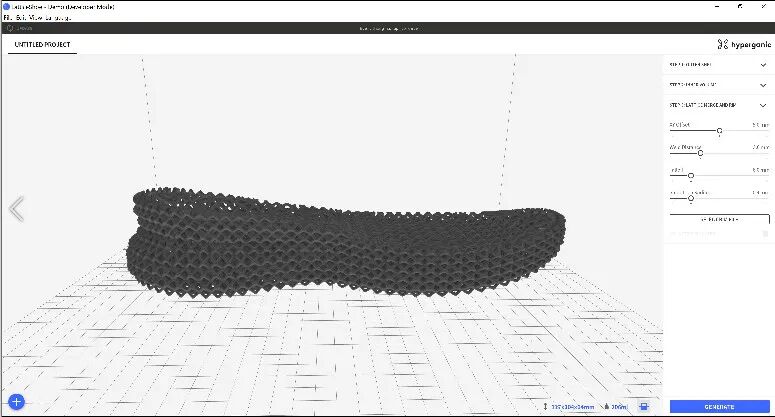
By inputting customer 3D printer parameters, lattice parameters, and other control parameters, it can output formats directly usable for 3D printers, achieving a fully automated process. For example, after inputting a midsole model, adjustable parameters can automatically generate a cli slicing format for 3D printed lattice shoe soles.
-
3D-xpert
3D-xpert is a one-stop solution software for metal 3D printing developed by 3D Systems. It covers the entire process of metal additive manufacturing.
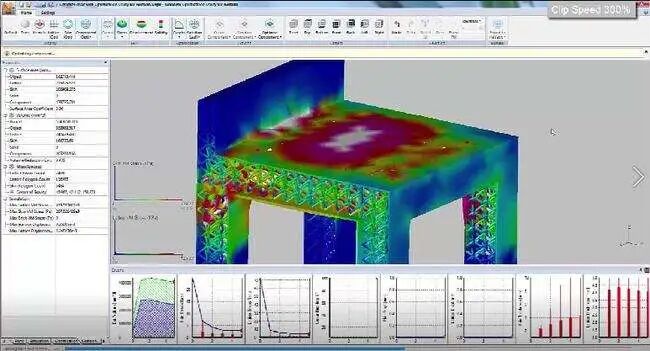
The 3D modeling module within 3D-xpert has all the modeling capabilities of Cimatron, while the lightweight design module includes conformal, homogeneous, radial, random, minimal surface, and other parameter lattices, and can display the number of elements of the selected lattice in real-time, such as angles, nodes, volume, porosity, etc., helping users design 3D printable lattice structures faster.
-
NX
Siemens NX expanded the lattice options in the new version released in February 2022.
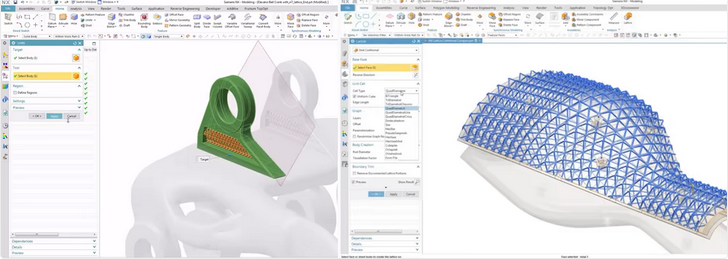
Additionally, the lattice structures in NX can now be optimized using Siemens’ Simcenter 3D simulation, achieving the best lattice structure in a single environment. This eliminates the multiple design analysis steps traditionally required.
-
Optistruct
OptiStruct is an excellent finite element structural analysis and optimization software, containing an accurate and fast finite element solver for conceptual and detailed design. It can generate a variety of different lattice types using its design optimization feature set.
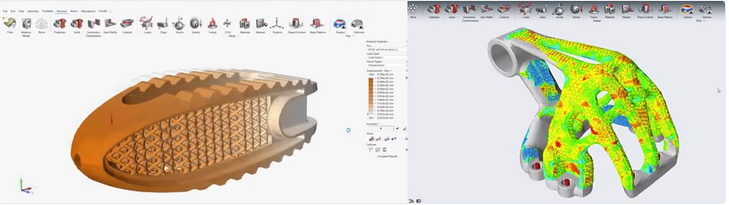
OptiStruct’s approach to lattice structures is unusual because it is inherently associated with the topology optimization process. The ability to accurately simulate the lattice after design is also very useful.


-END-
 Disclaimer:This public account forwards or edits content solely for academic exchange purposes and not for commercial use. If there are any issues related to intellectual property protection or others, please contact the editor in a timely manner, and we will coordinate to handle it as soon as possible.