PART 03
The Challenges of Implementing AI Agents in Enterprise Management: Technology, Security, and Organizational CollaborationDespite the tremendous opportunities that AI Agents bring to enterprise management, companies still face three major challenges during implementation: technology adaptation, data security, and organizational collaboration. These challenges not only affect the effectiveness of AI Agent applications but also impact the overall process of digital transformation within enterprises.(1) Technology Adaptation: Breaking Down “Siloed Systems” for Seamless IntegrationExisting IT systems in enterprises are often the result of “phased construction”. Systems used by different departments and business scenarios (such as ERP, CRM, OA) may come from different vendors, leading to differences in data formats and interface standards, creating “siloed systems”. For AI Agents to achieve cross-scenario collaboration, they must be able to integrate seamlessly with these existing systems; otherwise, their resource integration capabilities cannot be fully realized.For example, a retail company wishing to optimize supply chain management through an AI Agent needs to connect to sales systems (to obtain real-time sales data), inventory systems (to obtain inventory level data), logistics systems (to obtain logistics delivery data), and supplier systems (to obtain supply cycle data). However, since these systems are developed by different vendors with non-unified interfaces, the AI Agent cannot directly access the data, resulting in the “inventory optimization model” being unable to function due to insufficient data.To solve this problem, companies need to start with “top-level design”: on one hand, establish unified data standards and interface specifications to promote the transformation and upgrading of existing systems, ensuring smooth data flow; on the other hand, choose an AI Agent platform with “low-code integration capabilities” to achieve rapid connections with different systems through visual configuration, reducing technology adaptation costs. Additionally, companies can adopt a “cloud-native” architecture, migrating core business systems to the cloud, leveraging the openness and compatibility of cloud platforms to provide a more flexible resource invocation environment for AI Agents.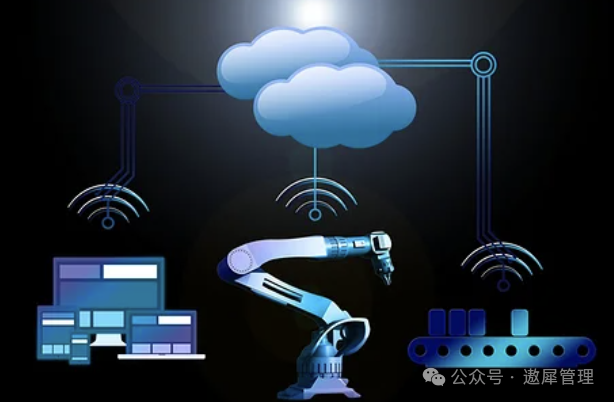 (2) Data Security: Balancing “Data Value” and “Privacy Protection”The operation of AI Agents relies on a large amount of data, which includes both core business data of the enterprise (such as financial data and customer information) and personal data of employees (such as attendance records and training files). The security and privacy protection of this data is a “red line” that enterprises must cross when applying AI Agents.On one hand, the risk of data leakage can lead to significant losses for enterprises. For example, if an AI Agent has a security vulnerability when accessing customer data, resulting in the leakage of customer names, phone numbers, and purchase records, it could not only trigger customer complaints and a crisis of trust but also violate laws and regulations such as the “Data Security Law” and the “Personal Information Protection Law”, leading to hefty fines.On the other hand, “excessive data collection” may infringe on the privacy of employees and customers. For instance, some enterprises’ AI Agents in employee training scenarios excessively collect data on employees’ learning durations, correct answer rates, and video viewing behaviors, even monitoring employees’ private communication records, which can easily provoke resistance among employees and affect organizational cohesion.To balance “data value” and “privacy protection”, enterprises need to build a “comprehensive data security system”: in the “data collection” phase, adhere to the “minimum necessary principle”, collecting only the data essential for the operation of the AI Agent to avoid excessive collection; in the “data storage” phase, use encryption technologies (such as data desensitization and blockchain storage) to protect sensitive data and prevent unauthorized access; in the “data usage” phase, establish strict permission management mechanisms to clarify the data access rights of AI Agents and relevant personnel, preventing data misuse; in the “data destruction” phase, establish standardized destruction processes to ensure that data no longer in use can be completely deleted, preventing leakage risks.(3) Organizational Collaboration: Promoting “Human-Machine Collaboration” and Reshaping Work ModelsThe application of AI Agents is not only a technological transformation but also a reshaping of organizational work models. In traditional work models, employees are accustomed to “human-led, tool-assisted” processes; however, the involvement of AI Agents requires employees to adapt to a new model of “human-machine collaboration and intelligent complementarity”, which may face dual challenges from organizational culture and employee capabilities.From an organizational culture perspective, some employees may harbor feelings of “distrust” or “resistance” towards AI Agents. For example, middle managers may worry that the decision-making suggestions from AI Agents will undermine their authority, while frontline employees may fear that AI Agents will replace their jobs, leading to a decrease in job security. If these feelings are not addressed in a timely manner, they can affect the collaboration efficiency between AI Agents and employees, even causing AI Agent application projects to stagnate.From an employee capability perspective, the operation of AI Agents requires employees to possess “data thinking” and “collaboration skills”. For instance, when using AI Agents for marketing decisions, employees need to understand the analytical logic of the AI Agent (such as data sources and algorithm models) and supplement and adjust decision-making suggestions based on business experience; when using AI Agents for team management, employees need to learn to collaborate with AI Agents (such as AI Agents being responsible for task allocation and progress monitoring, while employees are responsible for execution and creative output). However, currently, some employees, especially those in traditional industries, lack the necessary skill reserves, making it difficult to fully leverage the value of AI Agents.To address organizational collaboration challenges, enterprises need to focus on both “cultural development” and “capability training”: in terms of cultural development, through internal training and case sharing, convey the idea that “AI Agents are partners, not adversaries” to employees, demonstrating the actual effects of AI Agents in improving work efficiency and reducing workload, thereby enhancing employee acceptance; in terms of capability training, develop targeted training plans to enhance employees’ “data literacy” (such as data interpretation skills and data application abilities) and “human-machine collaboration skills” (such as communication skills with AI Agents and decision-making complementarity), helping employees adapt to the new work model.
PART 04
The Future Trends of AI Agents: From “Decision Support” to “Strategic Partners”As technology continues to evolve and applications deepen, the role of AI Agents in enterprise management will further upgrade, gradually transforming from a current “decision support tool” to a “strategic partner”, providing deeper support for the long-term development of enterprises. In the future, the development of AI Agents will present three major trends:(1) Deep Integration of “Industry-Specific” and “Scenario-Based” ApplicationsCurrently, the application of AI Agents is still primarily “generic”, suitable for common scenarios across multiple industries (such as recruitment and financial accounting); in the future, AI Agents will develop towards “industry-specific customization”, creating dedicated functional modules and algorithm models tailored to the characteristics and needs of different industries.For example, in the healthcare industry, AI Agents will integrate electronic medical record data, medical imaging data, and clinical guidelines to develop “clinical decision-making agents” that provide diagnostic suggestions, treatment plan recommendations, and patient follow-up reminders for doctors; in manufacturing, AI Agents will connect production equipment data, quality inspection data, and supply chain data to develop “production optimization agents” that achieve real-time monitoring of production processes, fault warnings, and capacity scheduling; in finance, AI Agents will integrate customer financial data, market trend data, and risk models to develop “wealth management agents” that provide personalized investment advice and risk control plans for clients.The deep integration of “industry-specific” and “scenario-based” applications will make AI Agents more aligned with the actual needs of enterprises, enhancing application value. For instance, a commercial bank’s “credit approval agent” can not only analyze a customer’s financial status (such as income and debt) but also consider industry characteristics (such as cyclical risks and policy impacts) and regional economic data (such as the default rate of enterprises in a certain area) to more accurately assess credit risk and reduce the rate of non-performing loans.(2) “Multi-Agent Collaboration” Becomes the NormAs enterprise management scenarios become more complex, a single AI Agent may not meet the needs of cross-domain and multi-task requirements; in the future, “multi-agent collaboration” will become the mainstream model, where multiple AI Agents work together through a unified collaboration mechanism to complete complex tasks.For example, in a company’s “new product launch” project, multiple AI Agents will be involved in collaboration:
- “Market Analysis Agent”: responsible for collecting market demand data and competitor information, analyzing the market potential and competitive advantages of the new product;
- “Product Design Agent”: proposes product function design plans based on market analysis results and connects with the R&D system to track design progress;
- “Marketing Planning Agent”: develops marketing plans for the new product, including pricing strategies, channel selection, and promotional content;
- “Supply Chain Agent”: coordinates suppliers for raw material procurement and production planning based on sales forecasts from marketing planning;
- “Customer Feedback Agent”: collects user feedback after the product launch, analyzes existing product issues, and pushes improvement suggestions to other agents.
The core of multi-agent collaboration lies in a “unified collaboration protocol” and “data sharing mechanism”. By establishing standardized communication protocols, it ensures smooth communication between different AI Agents; by creating a real-time data sharing platform, it achieves information synchronization among agents, avoiding inefficiencies caused by “information asymmetry”. Multi-agent collaboration will significantly enhance enterprises’ ability to tackle complex tasks, promoting a shift from “departmental fragmentation” to “overall collaboration” in enterprise management.(3) The Gradual Improvement of the “Human-Machine Trust” System“Human-machine trust” is key to the long-term development of AI Agents—only when employees and management trust the decision-making capabilities of AI Agents can their value be fully realized. In the future, AI Agents will build a more complete “human-machine trust” system through “transparent decision-making” and “explainable technology”.On one hand, AI Agents will achieve “transparency in decision-making processes”. The decision-making processes of traditional AI models are often “black boxes”, making it difficult for employees to understand why a certain decision was made, leading to insufficient trust; in the future, AI Agents will record the basis for decisions (such as the data used, algorithms adopted, and rules referenced) through “decision logs” and “process visualization” features, presenting them to employees in forms such as charts and text, making the decision-making process “traceable and understandable”. For example, when an AI Agent suggests adjusting the price of a product, it will also display the input data of the pricing model (such as cost data, market demand data, and competitor pricing), calculation processes, and key parameters, allowing employees to understand the rationale behind the pricing suggestion.On the other hand, AI Agents will possess “self-correcting” capabilities. When an AI Agent’s decision deviates (such as a significant gap between predicted and actual sales), it will automatically analyze the reasons for the deviation (such as inaccurate data or algorithm model misalignment) and make self-adjustments, while also providing feedback to employees on the correction process and results. This “self-correcting” capability will enhance the reliability of AI Agents’ decisions and strengthen employees’ trust in them.
PART 05
Conclusion: Embracing AI Agents to Start a New Journey in Enterprise ManagementThe rise of AI Agents is not only a breakthrough in technology but also a revolution in enterprise management philosophy. They are shifting enterprise management from “experience-driven” to “data-driven”, from “human-led” to “human-machine collaboration”, bringing multiple values of efficiency improvement, cost reduction, and strategic upgrading to enterprises.For enterprises, applying AI Agents is not a “choice question” but a “must-answer question”—in today’s increasingly fierce digital competition, those who can embrace AI Agents first and achieve intelligent management transformation will gain a competitive edge in the market. However, enterprises also need to be aware that AI Agents are not a “panacea”; their implementation requires alignment with their own business needs, technological foundations, and organizational culture, progressing gradually.In the future, as technology matures and applications deepen, AI Agents will become the “core partners” in enterprise management, working alongside employees to drive innovation and development. Embracing AI Agents means embracing the future of enterprise management—in this transformation, only by maintaining an open mindset and a proactive exploratory spirit can enterprises navigate the digital wave and achieve sustainable development.