Why Are Compilers So Critical?
On resource-constrained embedded platforms, compilers are not only responsible for translating source code into machine instructions but also undertake multi-level optimization tasks:
Code Optimization and Size Reduction: Through function inlining, loop unrolling, constant propagation, and link-time optimization (LTO), firmware performance is enhanced and size is minimized.
Hardware-Related Parameter Configuration: By combining the target MCU’s register mapping and architectural features, efficient instruction sequences are generated to reduce pipeline stalls.
Static Analysis and Safety Checks: Early detection of potential errors, such as null pointer dereferences, buffer overflows, and uninitialized variables, is crucial, especially in fields like medical and automotive.
Debugging and Simulation Support: Integration of advanced tracing, timing analysis, and power consumption statistics tools accelerates problem localization and optimization iterations.
If the compiler cannot fully leverage hardware potential, projects may face risks such as stack overflow, memory fragmentation, response delays, or excessive power consumption. Therefore, choosing the right compiler is akin to equipping your beloved car with the best transmission, determining the overall system’s stability and efficiency.
1. Compilers Based on ARM Architecture
-
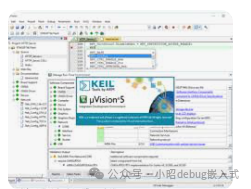
Keil MDK (ARMCC/Arm Compiler)
- Arm Compiler 6 (based on Clang/LLVM)
- CMSIS (Cortex Microcontroller Software Interface Standard)
-
Vendor: Arm (formerly Keil)
-
Features: Commercial license (limited functionality in trial version), high optimization level, integrated µVision IDE; supports Cortex-M series (M0/M3/M4/M7/M23, etc.).
-
Main Components:
-
Applicable Scenarios: Commercial/industrial projects with high performance and code size requirements.
-
GNU Arm Embedded Toolchain (arm-none-eabi-gcc)
- Vendor/Source: GNU Community / Arm Officially Hosted
- Features: Open-source, free; based on GCC, supports various Cortex-M/X/R cores; works well with OpenOCD, STM32CubeMX, CubeIDE, etc.
- Applicable Scenarios: Open-source projects, academic/learning purposes, or cost-sensitive commercial projects.
IAR Embedded Workbench (IAR EWARM)
- Vendor: IAR Systems
- Features: Commercial license, strong compiler optimization capabilities (code size, speed), high integration of debugger and IDE; supports Cortex-M/R/A series and provides a wealth of examples and libraries.
- Applicable Scenarios: Embedded applications with strict requirements for execution efficiency and code size; safety-critical fields (e.g., automotive, medical).

-
Atollic TrueSTUDIO (now integrated into STM32CubeIDE)
- Vendor: Atollic (later acquired by ST)
- Features: Based on Eclipse + GNU toolchain, the free version has complete basic functionality; deeply integrated and optimized for STM32 series.
- Applicable Scenarios: Mainly used for STM32 series development, very convenient when combined with STM32CubeMX for code auto-generation.
Arm Development Studio (Arm DS)
- Vendor: Arm
- Features: Aimed at higher-end Arm processors (Cortex-A/R) and SoC-level debugging and optimization; includes compiler, performance analysis tools, and multi-core debugging capabilities.
- Applicable Scenarios: High-end applications, large embedded projects requiring multi-core/heterogeneous SoC debugging and performance analysis.
2. Compilers Based on 8051/51 Series
-
Keil C51 (μC/51)
- Vendor: Keil
- Features: Widely used, commercial license; good code optimization for 8051 series (e.g., STC89, NXP 51); integrated µVision IDE.
- Applicable Scenarios: Classic 8051 embedded projects, learning, or small control systems.
SDCC (Small Device C Compiler)
- Vendor/Source: Open-source community
- Features: Free, open-source; supports multiple 8-bit MCUs (including 8051, Z80, HC08, etc.); average code optimization, but actively developed.
- Applicable Scenarios: Budget-limited or open-source-oriented 8-bit projects; educational purposes.
3. AVR/Arduino Series Compilers
-
AVR-GCC
- Vendor/Source: GNU Community
- Features: Open-source, free; provides a rich library of functions with AVR Libc; commonly used with Atmel Studio (now Microchip Studio).
- Applicable Scenarios: Arduino, AVR microcontroller (ATmega, ATTiny, etc.) development.
-
Microchip XC8 (formerly MCC18)
- Vendor: Microchip Technology
- Features: Supports PIC10/12/16/18 series (8-bit); divided into free and paid versions, with better optimization in the paid version.
- Applicable Scenarios: 8-bit PIC microcontroller projects; integrated with MPLAB X IDE, MPLAB Code Configurator (MCC).
TinyCC (TCC) for AVR
- Vendor/Source: Open-source project
- Features: Lightweight C compiler, fast code generation, but limited optimization capabilities.
- Applicable Scenarios: Small projects focused on compilation speed and rapid prototyping.
4. PIC/dsPIC Compilers
-
MPLAB XC Series
- Vendor: Microchip Technology
- XC8: For 8-bit PIC (PIC10/12/16/18); average optimization in the free version, better optimization in the paid version.
- XC16: For 16-bit PIC24, dsPIC33; also divided into free/paid versions.
- XC32: For 32-bit PIC32 series (MIPS architecture); strong optimization in the paid version.
- Features: Deeply integrated with MPLAB X IDE, MPLAB Code Configurator (MCC), and robust support for debuggers (ICD/RealICE).
HI-TECH C (now integrated into XC8)
- Vendor: HI-TECH Software (acquired by Microchip)
- Features: Originally a commercial compiler for 8-bit PIC, later integrated into XC8.
5. TI (Texas Instruments) Series Compilers
-
Code Composer Studio (CCS)
- Vendor: Texas Instruments
- CCS supports TI C2000, MSP430, Tiva-C (ARM Cortex-M) chips
- Features: Based on Eclipse, integrates TI’s self-developed compiler (ti-cgt*) and TI-RTOS; also supports GCC options; powerful debugger (XDS series).
- Applicable Scenarios: Various applications in the TI ecosystem, including C2000 (motor control), MSP430 (ultra-low power), Tiva (ARM Cortex-M).
MSP430-GCC
- Vendor/Source: GNU Community
- Features: Open-source, free; compatible with Code Composer Studio, can replace TI’s self-developed compiler; reliable performance.
- Applicable Scenarios: MSP430 series ultra-low power applications, cost-sensitive projects.
6. Renesas Series Compilers
-
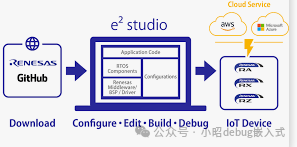
Renesas e2studio + CC-RL / CC-RX / CC-RH Compilers
- Vendor: Renesas
- Features: Aimed at RL78, RX, RH850 (automotive-grade MCUs) series; commercial license, specifically optimized for each generation of cores; corresponding to e2studio IDE.
- Applicable Scenarios: Projects in automotive/industrial fields requiring high reliability, using Renesas platforms.
-
GCC for Renesas
- Vendor/Source: GNU Community / Front-end scripts provided by Renesas
- Features: In recent years, Renesas has also provided some GCC-based toolchain options; however, commercial projects usually prefer the official compiler.
7. Microchip / Atmel SAM (ARM Cortex-M) Series Compilers
-
Atmel Studio / Microchip Studio
- Vendor: Microchip Technology (formerly Atmel)
- Features: Based on Microsoft Visual Studio Shell, built-in AVR-GCC, ARM-GCC; free to use; supports SAM D/E/F, SAMD21, SAML21, etc. ARM Cortex-M0+/M4.
- Applicable Scenarios: Development based on SAM chips such as Arduino Zero, MKR series, Adafruit Feather M0.
8. Green Hills and Other Commercial Compilers
-
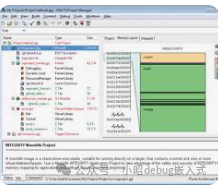
Green Hills MULTI / Green Hills C/C++ (Green Hills Compiler)
- Vendor: Green Hills Software
- Features: Aimed at high-security/high-reliability (aerospace, automotive safety ISO 26262, medical) applications; excellent optimization but expensive; integrates MULTI IDE.
- Applicable Scenarios: Safety-critical embedded systems.
-
Cosmic & TASKING
- Cosmic C: Mainly for 8/16/32-bit MCUs (e.g., Freescale 68HC08, HC12, ColdFire, etc.).
- **TASKING VX+**: Aimed at Infineon Tricore, MCU32, TriCore, Renesas RH850, etc.
- Features: Commercial license, highly optimized, providing professional support for specific platforms.
- Applicable Scenarios: Projects with high performance or certification requirements for specific industries/architectures.
9. RISC-V Open Source and Commercial Compilers
-
GCC for RISC-V (riscv-none-elf-gcc)
- Vendor/Source: GNU Community
- Features: Open-source toolchain, supports various RISC-V configurations (e.g., RV32IMAC, RV64IMA, etc.); can be used with OpenOCD, Freedom Studio (SiFive official IDE).
- Applicable Scenarios: Development based on open-source RISC-V microcontrollers/SoCs (e.g., SiFive architecture, GD32V).
LLVM/Clang for RISC-V
- Vendor/Source: LLVM Community
- Features: As LLVM/Clang support improves, it can also be used for RISC-V embedded development; developed in parallel with GCC.
- Applicable Scenarios: When specific static analysis, error detection features, or more flexible compilation front-end/back-end extensions are needed.
SiFive Freedom Studio
- Vendor: SiFive
- Features: Based on Eclipse + GNU toolchain, integrates SiFive’s BSP (Board Support Package), example projects; free to use.
- Applicable Scenarios: Development for SiFive RISC-V evaluation boards and custom designs.
10. Other Common Toolchains and IDEs
-
PlatformIO
- Features: Cross-platform IDE, based on VSCode plugin, built-in numerous development frameworks (Arduino, mbed OS, ESP-IDF, etc.); various compilers can be selected at the lower level (arm-none-eabi-gcc, xtensa-esp32-elf-gcc, etc.).
- Applicable Scenarios: Multi-platform/cross-architecture projects; rapid prototyping; IoT development.
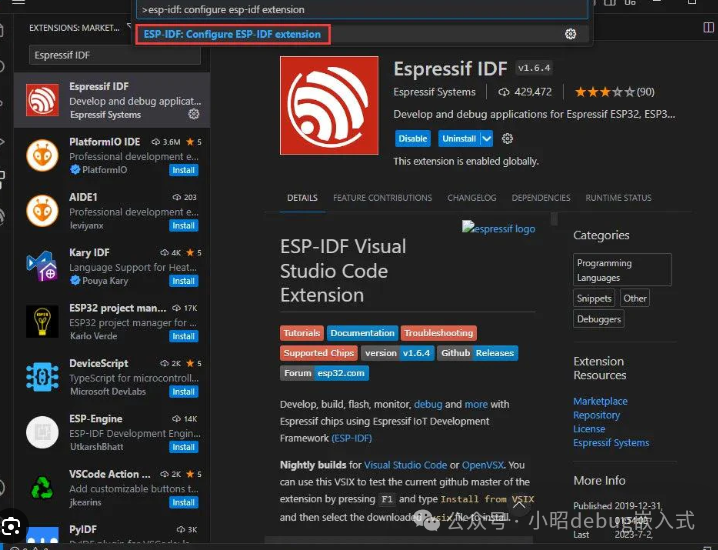
Espressif ESP-IDF (xtensa-esp32-elf-gcc)
- Vendor: Espressif
- Features: Specifically for ESP32/ESP8266 series Wi-Fi/Bluetooth SoCs; based on GCC, integrates FreeRTOS; supports Linux/macOS/Windows.
- Applicable Scenarios: Development of Wi-Fi/Bluetooth IoT devices.
-
MBed OS / Mbed CLI (armgcc)
- Vendor: Arm
- Features: Based on Arm GNU toolchain for ARM Cortex-M series development, encapsulating RTOS and peripheral drivers; can be used with command line or online IDE.
- Applicable Scenarios: Rapidly building ARM Cortex-M IoT prototypes; teaching and learning.
Selection Recommendations
-
Based on MCU/CPU Architecture
- ARM Cortex-M: Keil MDK, arm-none-eabi-gcc, IAR EWARM, Atollic/STM32CubeIDE.
- ARM Cortex-A/R: Arm DS, GCC, IAR EWARM.
- RISC-V: riscv-none-elf-gcc, Freedom Studio, LLVM/Clang.
- DSP/Specialized: TI CCS (C2000, C66x, etc.), Green Hills (safety-critical), TASKING (TriCore, RH850, etc.), TI DSP compiler.
-
8-bit MCUs (e.g., 8051, AVR, PIC): SDCC, Keil C51, AVR-GCC, XC8, etc.
-
16-bit MCUs (e.g., MSP430, PIC24/dsPIC): MSP430-GCC, IAR EW430, XC16, CC-RL, etc.
-
32-bit MCUs
Do You Need Commercial Support or Advanced Optimization?
- For projects with extremely high requirements for code size, execution efficiency, and harmful code checks, commercial compilers like IAR, Keil, Green Hills, TASKING, Cosmic, etc., are recommended.
- For cost-sensitive or open-source-oriented projects, GNU toolchains (GCC, Clang) or vendor-provided free tools (like STM32CubeIDE, Atmel Studio, Freedom Studio, PlatformIO) can be selected.
Development Environment and Debugging Needs
- For IDE-friendly environments with many demonstration examples, Keil µVision, IAR Embedded Workbench, STM32CubeIDE, Atmel/Microchip Studio, Code Composer Studio are recommended.
- For command-line/automated builds (CI/CD), open-source GCC/Clang toolchains can be prioritized, combined with scripting solutions like Makefile, CMake, PlatformIO, etc.