With the trend of software-defined vehicles and the rise of smart cars in China, the power within the entire automotive supply chain is being redistributed, and former chip giants are also experiencing growing pains and challenges.
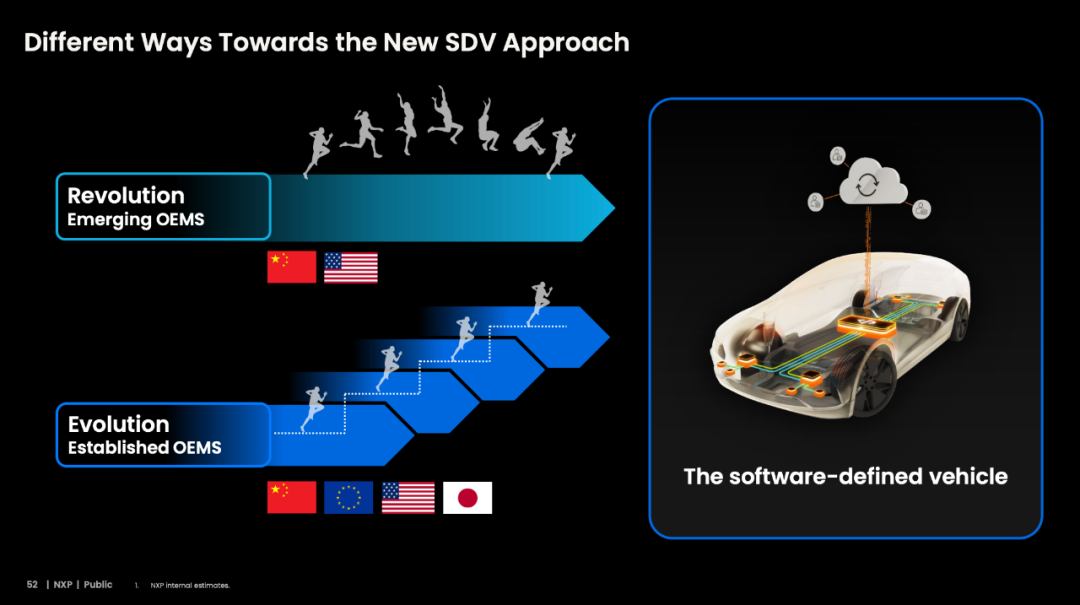
This article analyzes the advantages and challenges of NXP in terms of products, technology, and business based on the public documents presented at NXP’s Investor Day in 2024:
Product Advantages
- 1. Core Market Competitiveness
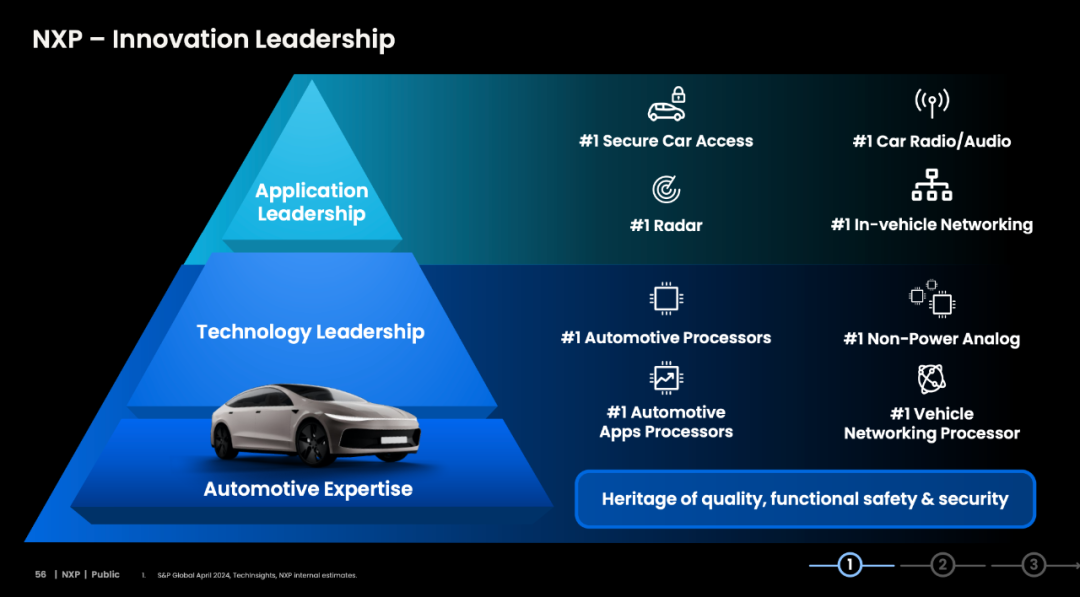
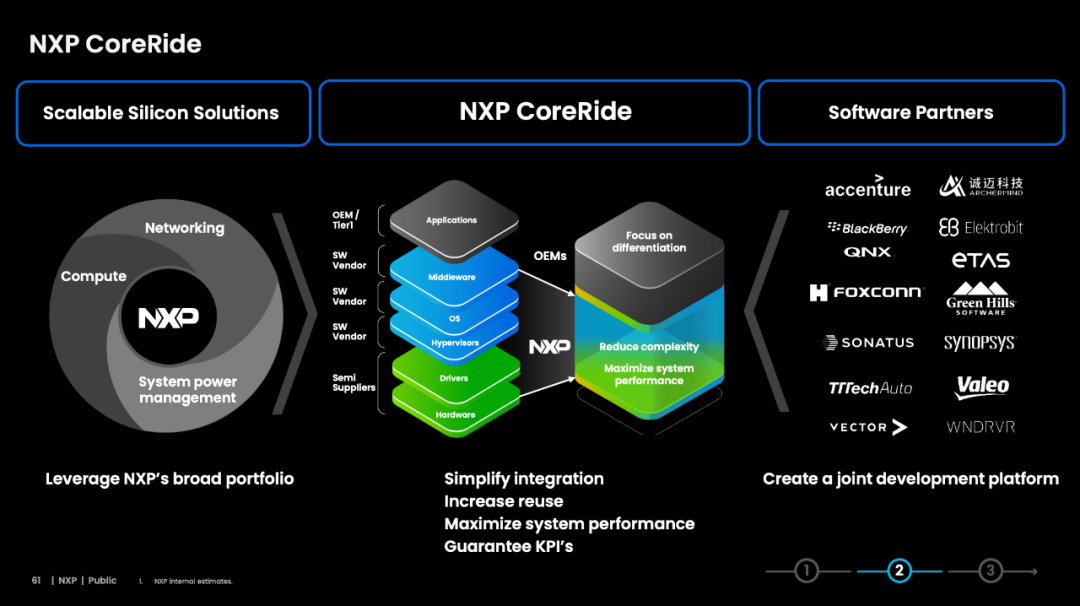
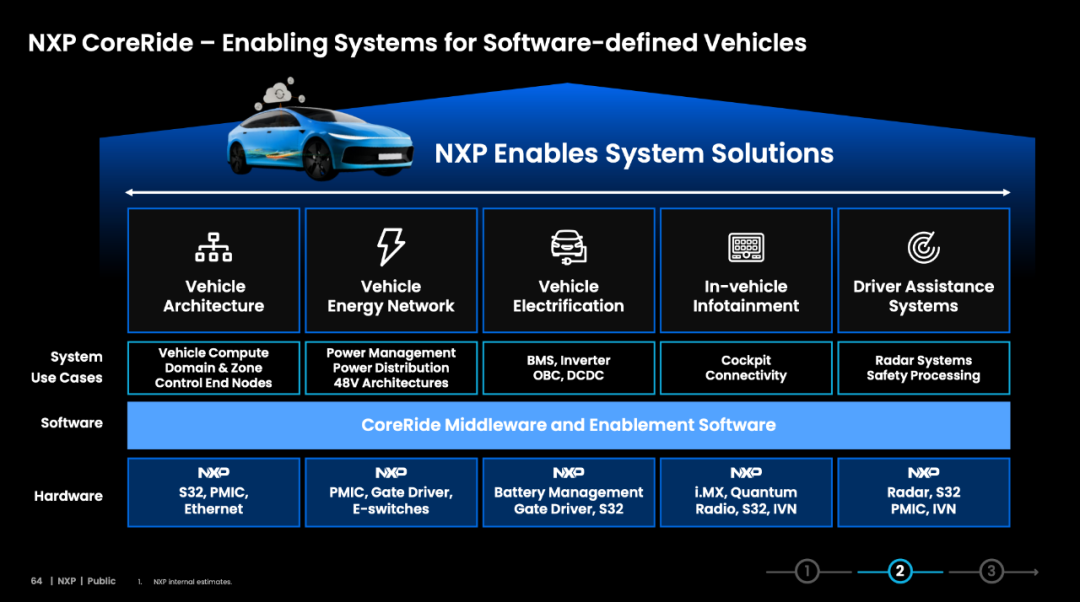
- Automotive Sector: Holds a global leading position, such as #1 in radar systems, secure automotive access, in-vehicle network processors, and application processors, providing standardized solutions (like the S32 automotive-grade platform) and a software-hardware integrated “CoreRide” system, supporting software-defined vehicle (SDV) architecture.
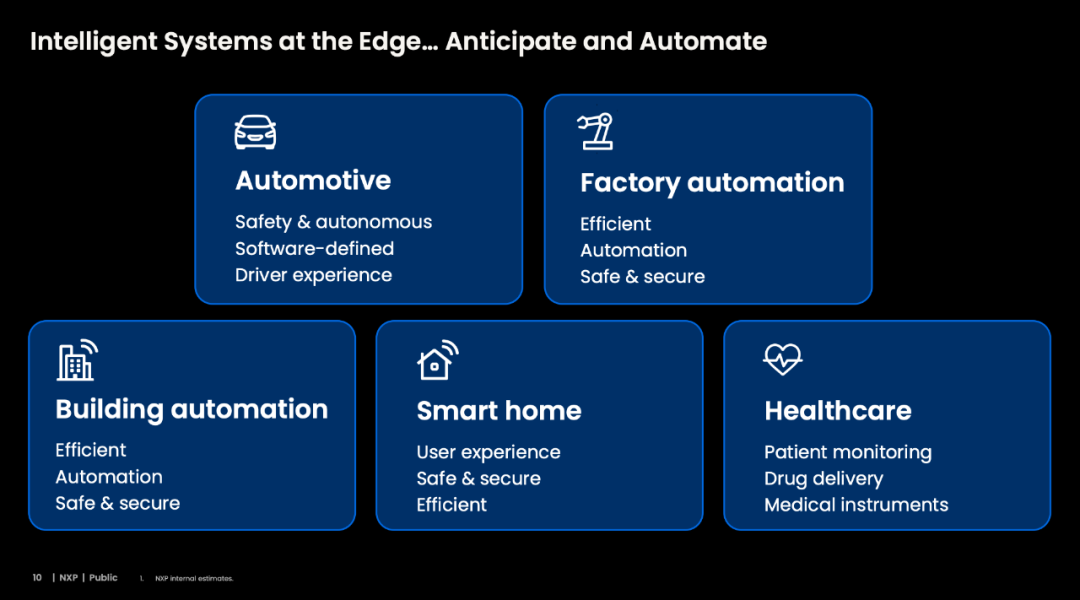
- Industrial and IoT: Covers scenarios such as factory automation, energy management, and smart homes, providing high-performance MCUs, AI edge inference solutions (like the i.MX RT series), and security technologies to promote “smart edge systems” applications.
- Cross-Industry System Support: Supports end-to-end solutions from perception to computation through mixed-signal technology and general platforms (like the MCX series), reducing customer development complexity.
- 2. Product Portfolio and Innovation
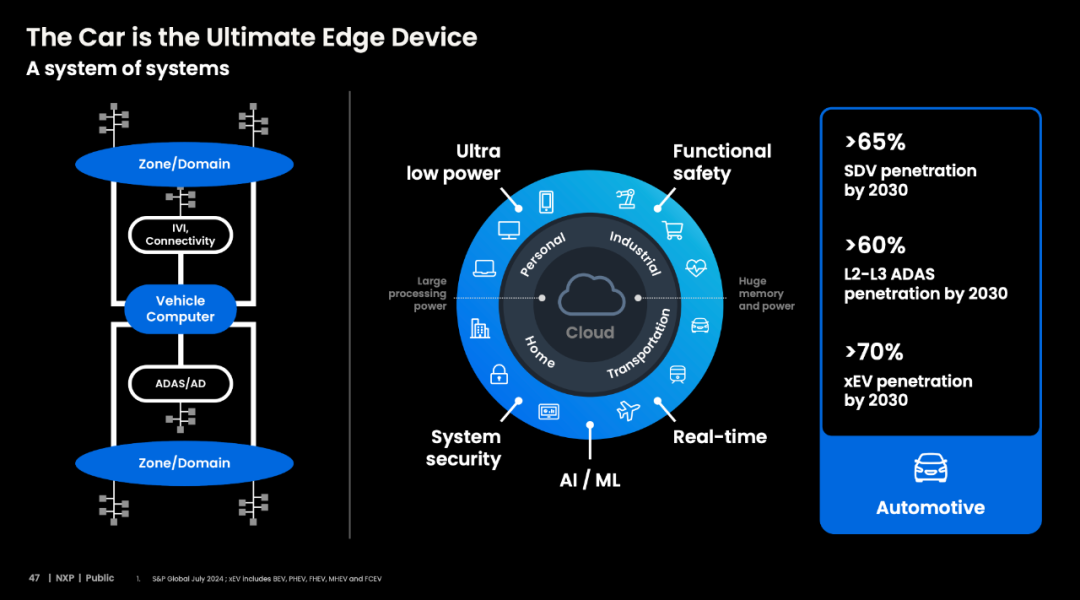
- Emerging Growth Drivers: Maintains an expected growth rate of 20%-30% in fields such as smart vehicle computing (S32 SDV), ADAS radar, and electric vehicle electrification, accelerating the commercialization of system-level solutions (like vehicle-cloud integration).
Technical Advantages
- 1. Core Technology and Manufacturing Capability
- Hybrid Manufacturing Model: Expansion of 300mm wafer fabs (such as establishing a joint venture factory with TSMC) ensures capacity flexibility and advances more advanced processes (like below 7nm).
- Leading Security Technology: Provides full lifecycle data protection through the EdgeLock security solution, supporting functional safety (ASIL-D) and post-quantum cryptography (PQC-ready).
- System-Level R&D Capability: Integrates perception, processing, connectivity, and execution functions, combining AI/ML to optimize energy efficiency (like the eIQ toolchain), reducing power consumption of edge devices.
- Open Platform Strategy: Accelerates customers’ time to market through the MCUXpresso toolchain, reference designs, and partnerships (like Honeywell, Leapmotor).
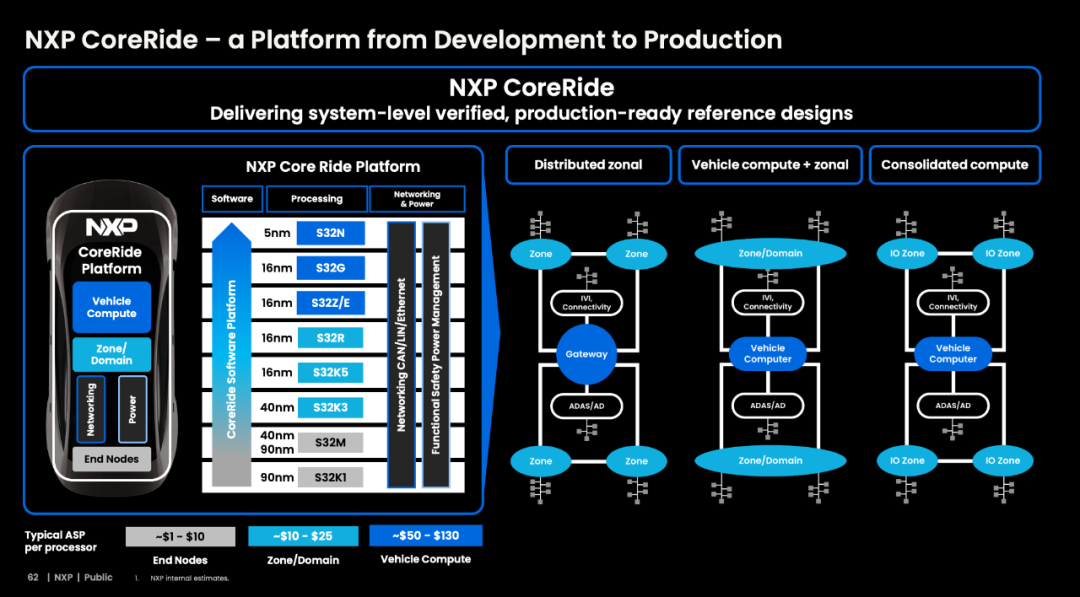
- Industry Standard Participation: Dominates the technological evolution in in-vehicle networks (CAN FD, Ethernet TSN) and wireless protocols (UWB, Wi-Fi 6).
Business Advantages
- 1. Strategic Positioning and Customer Stickiness
- Top Customer Coverage: Establishes long-term partnerships with global Top 10 automotive OEMs (like Hyundai, Toyota) and industrial giants (like Honeywell), with a market share exceeding 50% in core businesses (like radar, in-vehicle networks).
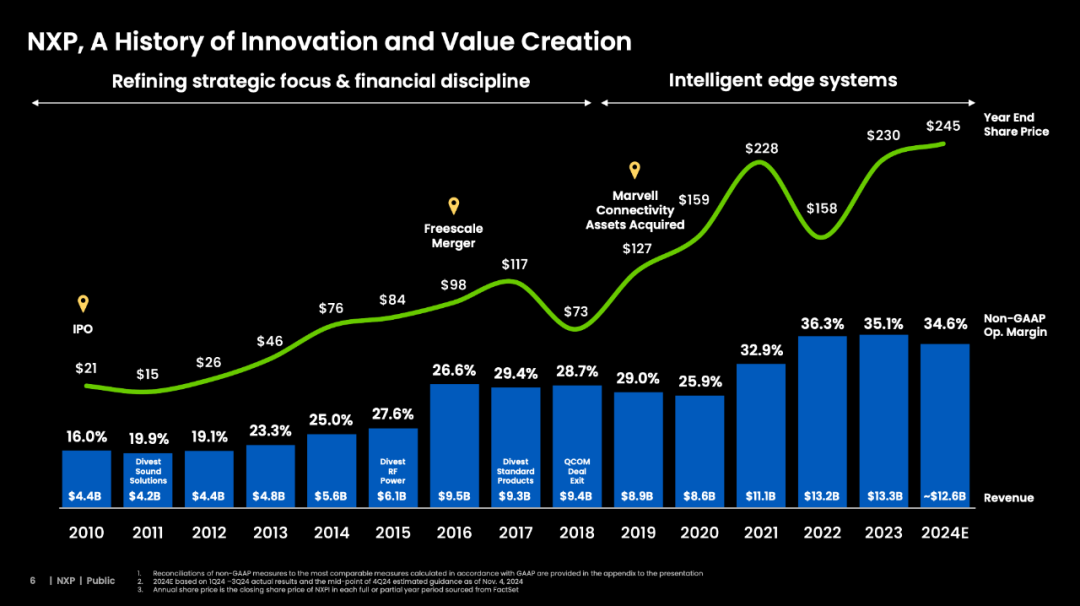
- High Profit Growth Potential: Focuses on high-value markets (automotive, industrial), aiming to achievegross margins exceeding 60% by 2030, with non-GAAP earnings per share doubling.
- 2. Capital Allocation and Financial Resilience
- Supply Chain Optimization: Mitigates regional risks through joint ventures (like VSMC) and external foundries (TSMC), ensuring wafer capacity and cost competitiveness.
- Shareholder Return Policy: Commits to returning100% of excess free cash flow (FCF) to shareholders, with the cumulative stock buyback and dividend ratio continuously increasing.
Challenges and Risks
- 1. Market Demand and Competitive Pressure
- Industry Volatility Risk: The automotive market relies on global macroeconomic factors (SAAR growth in low single digits) and supply chain stability (27% of revenue is related to TSMC). If geopolitical issues (China-US trade, European energy) impact demand, revenue growth may fall short of expectations (original target 6%-10%).
- Technological Substitution Threat: Under the trend of software definition, AI chips (like Nvidia) and open architectures (like RISC-V) may squeeze the traditional MCU market.
- R&D and Capital Investment: Needs to maintain annual R&D investment exceeding $1.1 billion (16% of revenue) while expanding 300mm capacity (like VSMC’s $2.8 billion investment), which will intensify cash consumption in the short term.
- Manufacturing Cost Risk: Advanced processes (like TSMC’s 3nm) and regional production (like the German factory) may increase unit costs, hindering the improvement of gross margins.
- Environmental Target Pressure: Commits to a carbon-neutral path by 2035, requiring continuous investment in emission reduction technologies (currently reducing carbon emissions by 24%), which may increase operational costs.
- Regulatory Uncertainty: US technology export restrictions to China may affect market expansion in China (which accounts for 50% of global automotive sales).
Conclusion
NXP, with its technological accumulation, hybrid manufacturing model, and system-level solutions, occupies a differentiated advantage in the automotive and industrial markets. However, its high dependence on the automotive industry, geopolitical policy uncertainties, and high R&D investments may constrain short- to medium-term profitability. In the future, it needs to balance technological innovation with cost control and deepen cross-industry ecosystem cooperation to consolidate long-term competitiveness.
*Reprinting and excerpting without permission is strictly prohibited – Reference materials:
-
NXP Investor Day 2024 PPT
Join our knowledge community to download a wealth of first-hand materials in the automotive industry containing the above reference materials.. >>>>
>>>>
Related Articles
-
2025: A Key Year in Tesla’s History, Sales Challenges, FSD, Optimus Robot, and the Technical Evolution and Planning of Electric Vehicles
- The Smart Driving Dream of BYD: Can “Smart Cars” Really Become Popular by 2025?
- Analysis of GM’s 2024 Full-Year Financial Report and 2025 Forecast
-
Using ChatGPT-like Large Models as the Core of Autonomous Driving Algorithms – Waymo’s End-to-End Multimodal Algorithm EMMA
- The Evolution of Smart Driving Technology and Future Challenges: From Target Object Recognition to Large Models in Vehicles
- 2025 China Auto Market Forecast: High-Level Smart Driving Popularization, the Year of Mass Production for L3 Autonomous Driving