FPGA: The Communication ‘Transformers’ Born for Extreme Environments
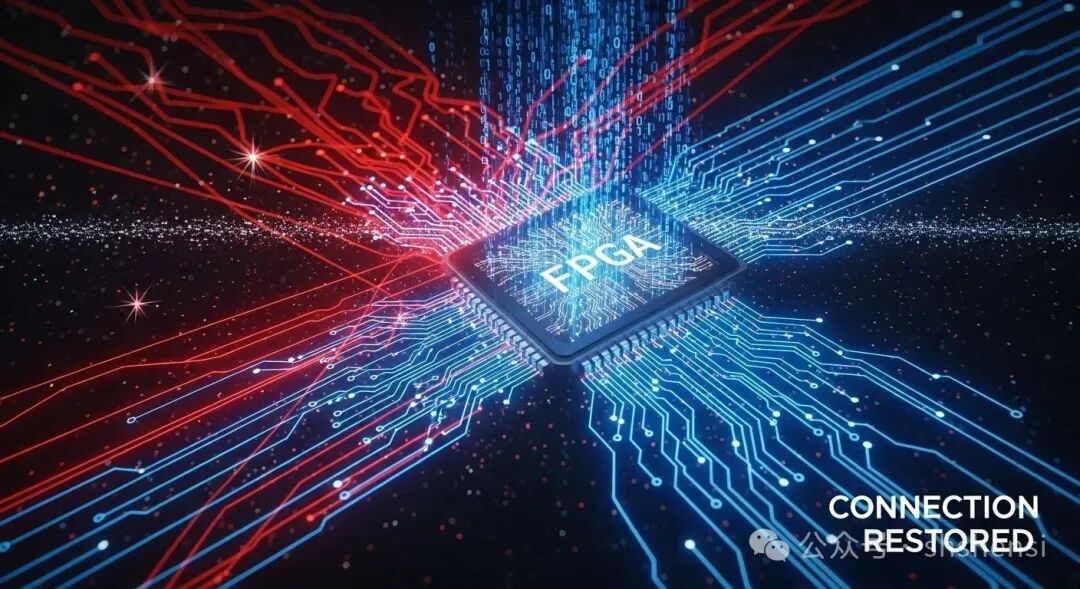
The ‘Rigidity’ Pain of Emergency Communication
In the event of natural disasters or emergencies, communication infrastructure often bears the brunt. Base stations collapse, fiber optic cables are cut. Conventional communication methods fail instantly. At this moment, the communication capability of rescue teams directly affects the efficiency of rescue operations and the safety of lives. They must rely on emergency communication equipment that can be quickly deployed.
However, the reality is far more complex than imagined. Different departments involved in rescue operations may use equipment that adheres to different communication standards. The electromagnetic environment on-site is also filled with unknown interferences due to the operation of various devices. These situations require communication equipment to be not only stable but also highly flexible. It needs to be able to adjust instantly to accommodate different protocols and environments.
This is precisely the Achilles’ heel of traditional communication hardware. Most dedicated communication chips (ASICs) are fixed in functionality at the design stage. They are manufactured to efficiently execute a specific task. This hardware-level ‘fixation’ often leaves them powerless in the face of dynamically changing disaster scenarios. This highlights a critical need: we need hardware that can define its functions on-site.
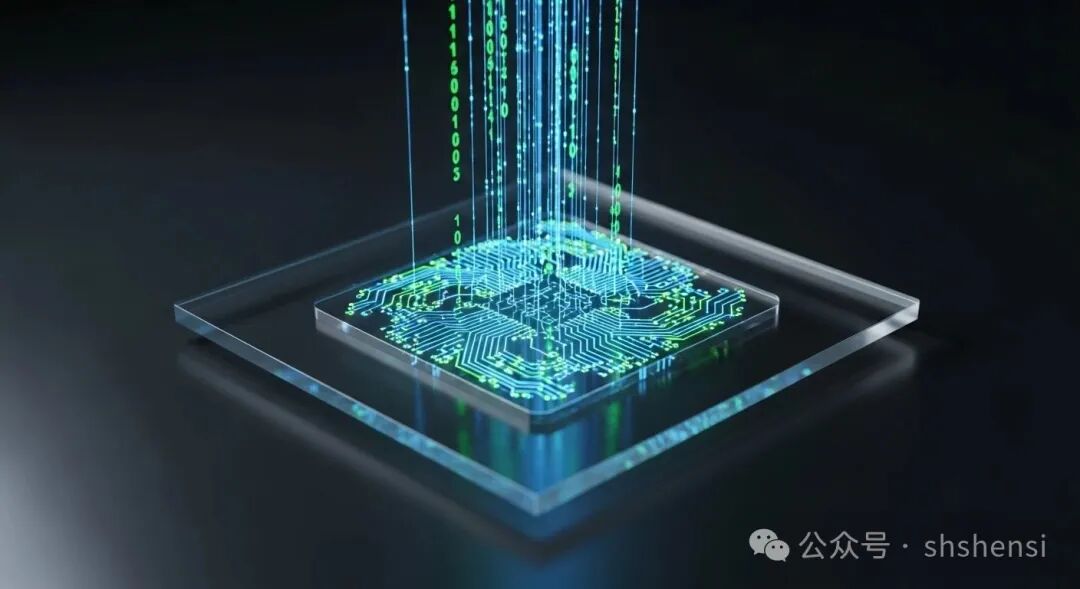
What is FPGA? A ‘Hardware Whiteboard’ Defined by Software
In response to the above challenges, Field Programmable Gate Arrays (FPGAs) provide a solution.
FPGA can be understood as a ‘hardware whiteboard’ for digital circuits. It is not designed for a specific function at the factory. It contains a vast number of configurable logic units and interconnection resources. Engineers can precisely define how these units connect and operate by writing hardware description language code.
This means that the same FPGA chip can implement one radio protocol today and can be erased and reconfigured tomorrow to achieve a completely different signal processing function. The functionality of the hardware is no longer fixed but defined by software. This characteristic is referred to as ‘reconfigurability’. It fundamentally addresses the ‘rigidity’ problem of traditional hardware.
Why FPGA? Three Core Advantages Addressing Pain Points
The value of FPGA in emergency communication mainly stems from its three core advantages. These advantages directly respond to the stringent requirements of disaster sites.
Reconfigurability:
This is the most fundamental advantage of FPGA. The rescue site may need to simultaneously accommodate various military and civilian communication standards. FPGA-based devices can dynamically load different communication protocol stacks, switching hardware functions like a software update, achieving interoperability with different devices.
Parallelism:
Communication devices need to handle multiple tasks simultaneously, such as signal reception, filtering, demodulation, and encoding. General-purpose processors (CPUs) execute instructions serially, while the internal structure of FPGAs allows these tasks to be processed truly in parallel. This brings extremely high processing efficiency, ensuring real-time communication.
Low Latency:
Since data processing is completed directly at the hardware logic level, bypassing the complex scheduling of the operating system, the signal processing latency of FPGAs is extremely low. In command control and data transmission scenarios that require rapid response, millisecond differences can impact critical decisions.
From Theory to Practice: FPGA Applications and Future
These advantages are not just theoretical. One of the most successful applications of FPGA in emergency communication is Software Defined Radio (SDR). SDR platforms use FPGA as their core processing unit, allowing a radio to operate in different frequency bands and use different waveforms and protocols by loading different software. This is the ultimate flexibility sought in emergency communication.
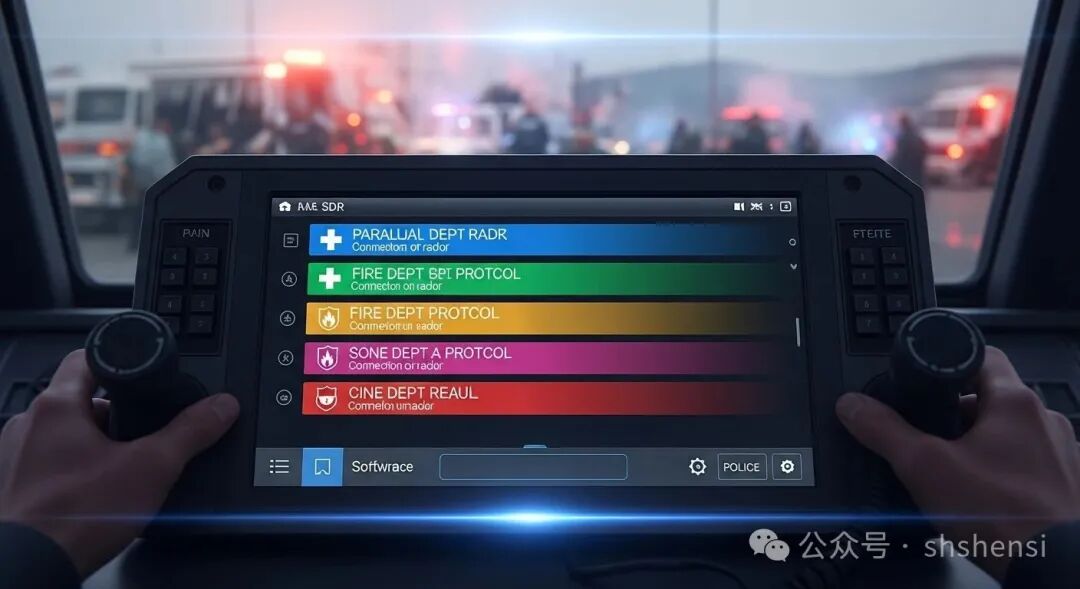
Looking ahead, the role of FPGA will become even more important. With the development of Artificial Intelligence (AI) technology, FPGAs are being used for intelligent signal recognition and interference suppression at the network edge. This means that future emergency devices will not only adapt to the environment but also ‘understand’ the environment and autonomously optimize.
In summary, FPGA, with its reconfigurable and highly parallel characteristics, provides unprecedented flexibility and efficiency for emergency communication. It transforms hardware from a fixed tool into a powerful platform that can adapt to changing needs, ensuring that lifelines remain uninterrupted in critical moments.
Stay in touch with us
Company website:https://www.shshensi.com
Service email: [email protected]
Welcome to follow us