▼ Click to follow the Dalian Dalian public account for industry trends and more information!
As AI technology continues to heat up, intelligent terminals are becoming a key driving force for innovation across various industries. Nuvoton has launched the M55M1 microcontroller solution specifically designed for endpoint AI, helping products quickly integrate AI capabilities and ushering in a new era of intelligent applications.
AI is currently mainly divided into cloud AI, edge AI, and endpoint AI.
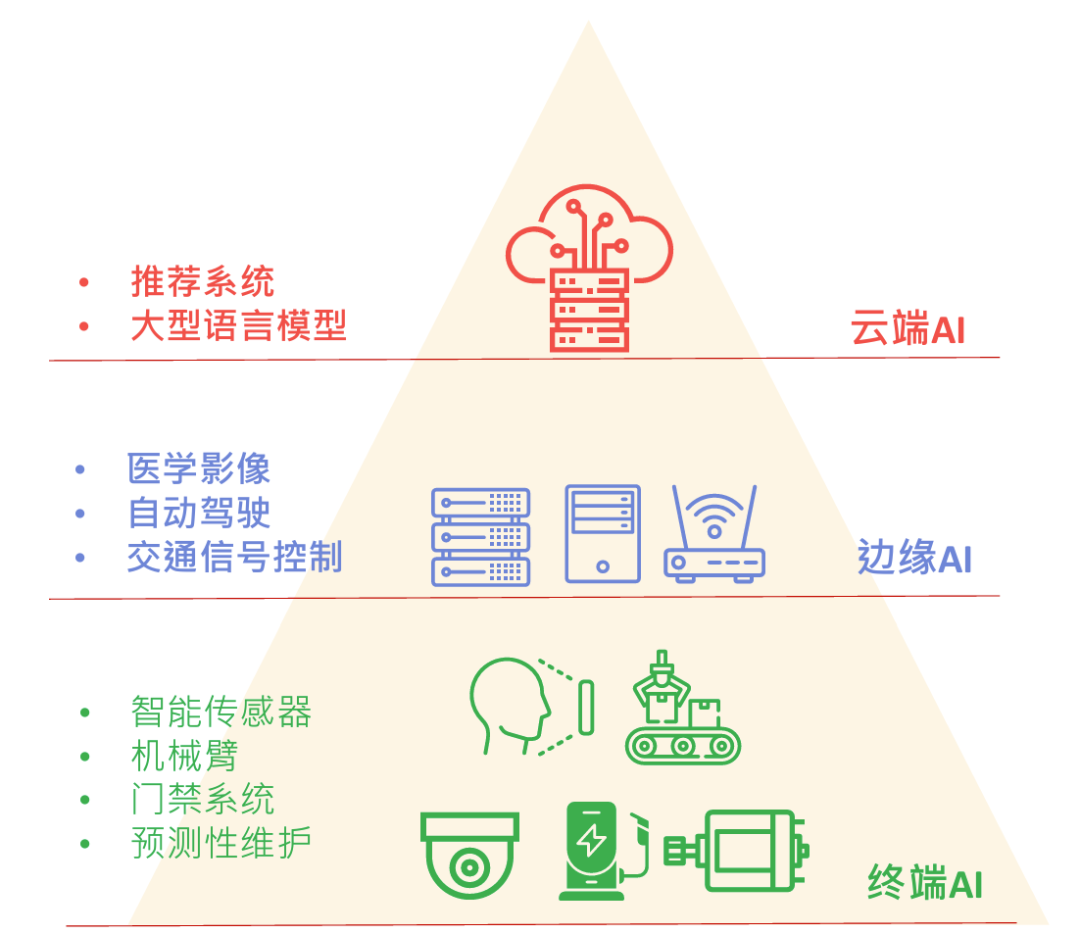
What is endpoint AI?
It refers to the implementation of artificial intelligence inference locally on the device, without relying on cloud or edge servers, enabling real-time responses and energy-efficient operations. The M55M1 is Nuvoton’s AI MCU developed in response to this trend, featuring an Arm Ethos-U55 NPU with inference performance of up to 110 GOPS, specifically designed to accelerate machine learning models for images, audio, and sensors, compatible with mainstream toolchains such as TensorFlow Lite Micro and NuML Tool, greatly simplifying the AI application development process.
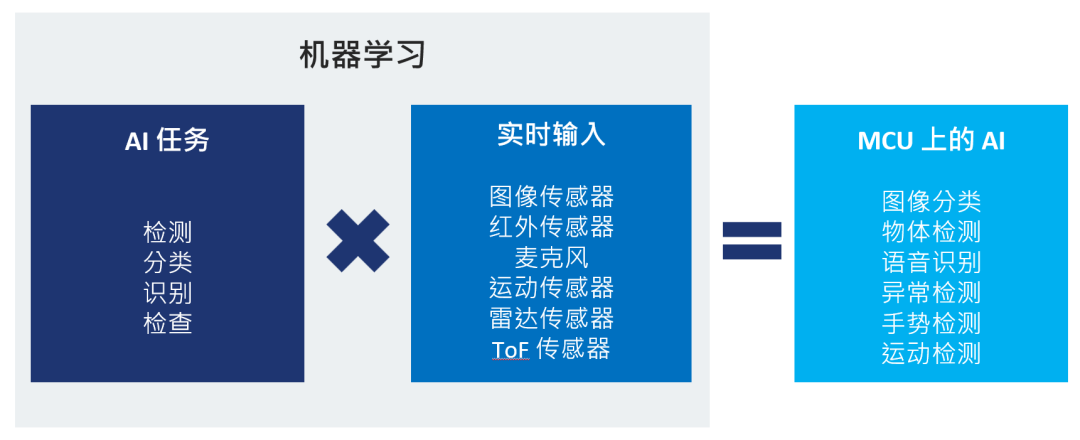
Its AI inference capability can achieve real-time recognition, human-computer interaction, intelligent voice control, and edge data filtering under low power consumption and without the need for external DDR. In addition to the NPU, the M55M1 also features a complete Helium vector processor, ultra-low power design, USB PD, and HyperRAM expansion interfaces, making it an advanced AI microcontroller platform with a “NPU + MCU” dual computing architecture. It is suitable for AI application scenarios such as endpoint intelligent recognition, sound event detection, image classification, and sensor fusion, especially efficient for deployment in scenarios where power consumption is limited but AI functionality is still required.
Nuvoton’s Endpoint AI Products
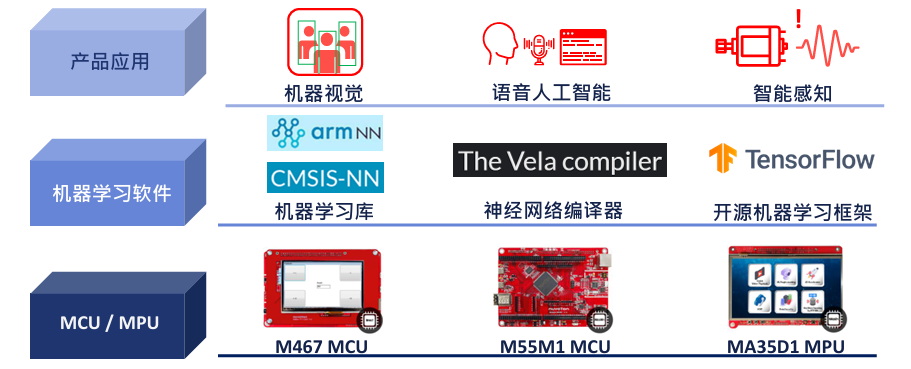
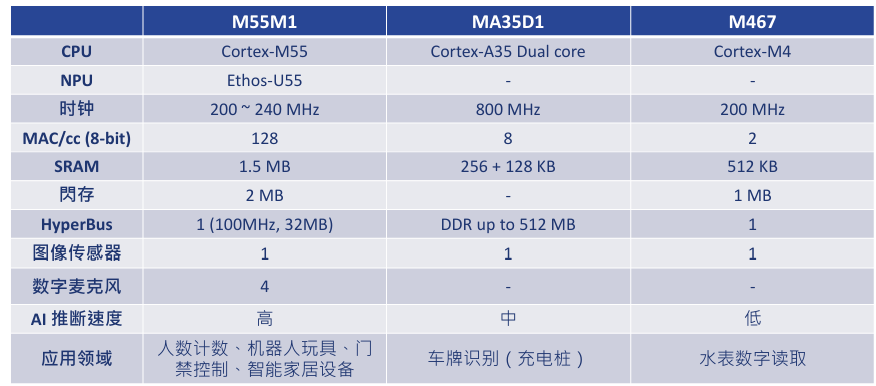
Setting up the NuML Toolkit and integrating it with the Keil development environment is also very convenient. Developers can refer to the official steps to quickly generate and deploy AI models, accelerating the product launch process.
Refer to the following steps:
1. Illustration of NuML Toolkit
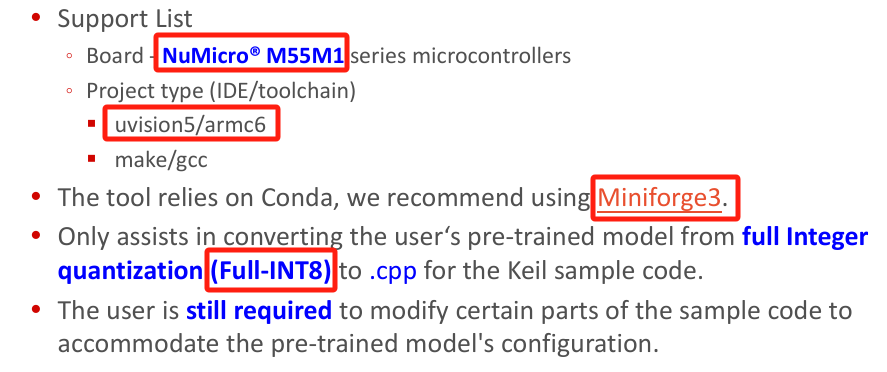
2. How to Set the NuML Toolkit
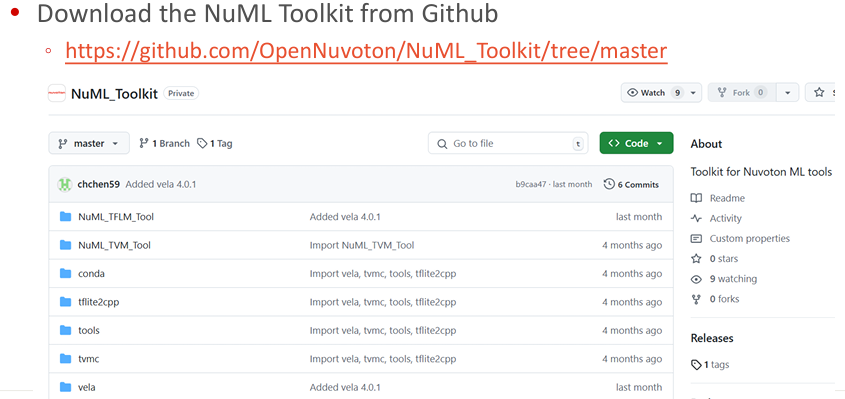
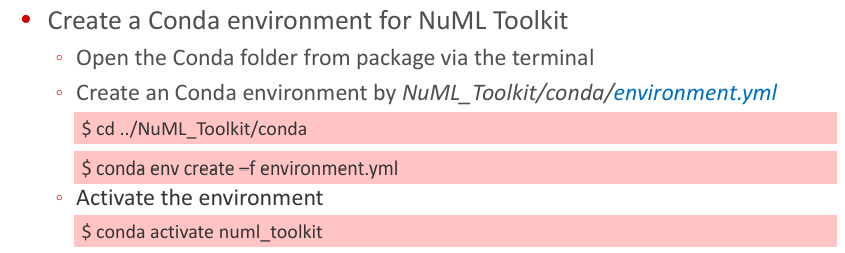
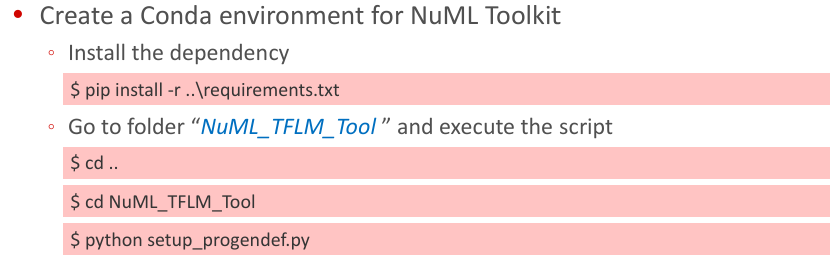
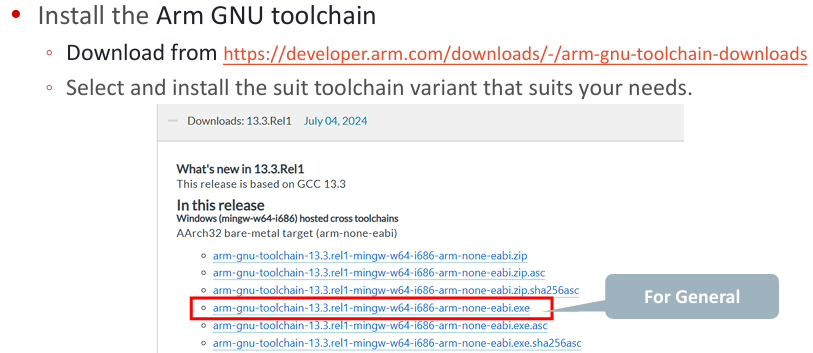
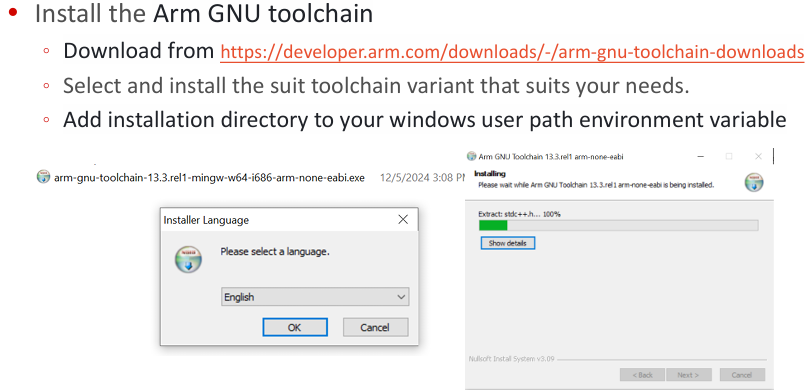
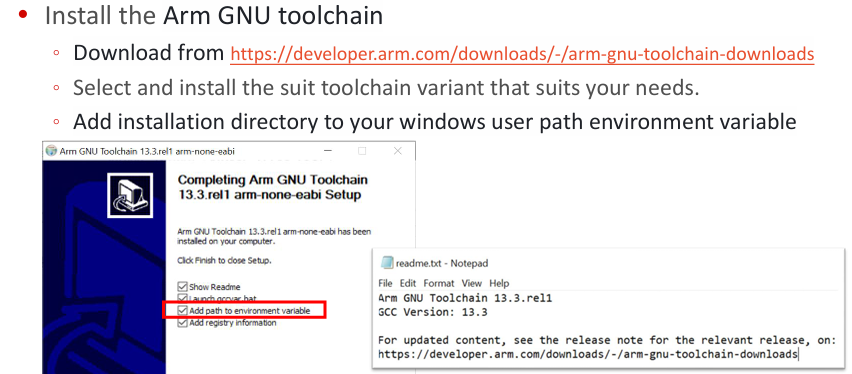
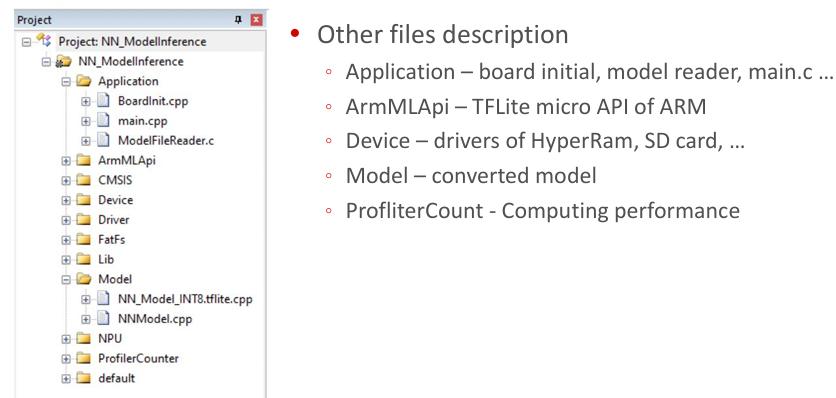
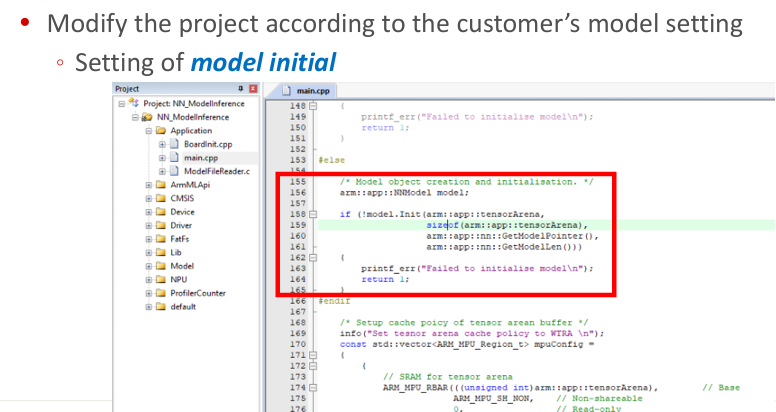
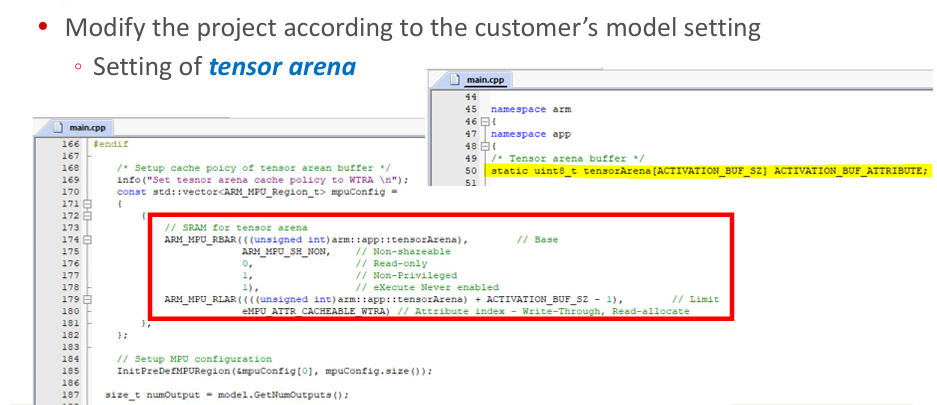
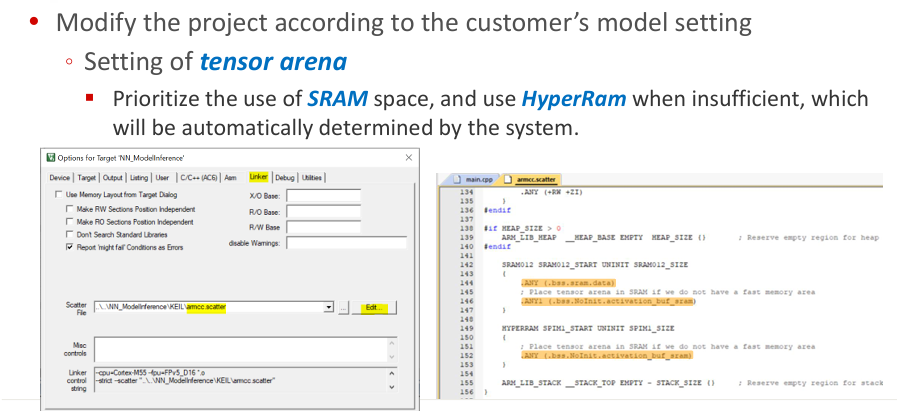
3. Modify the KEIL Project
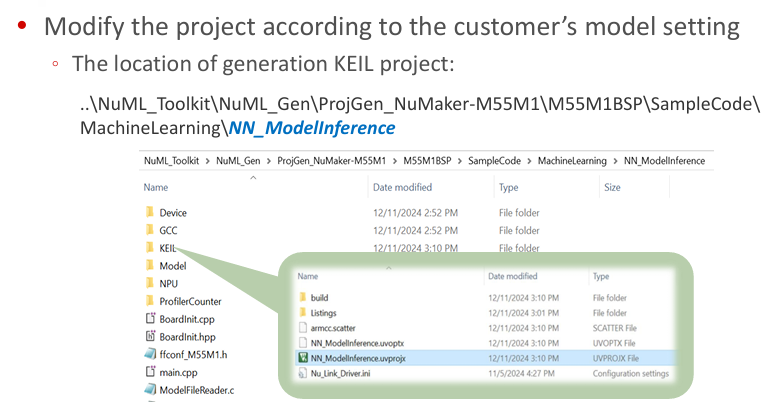
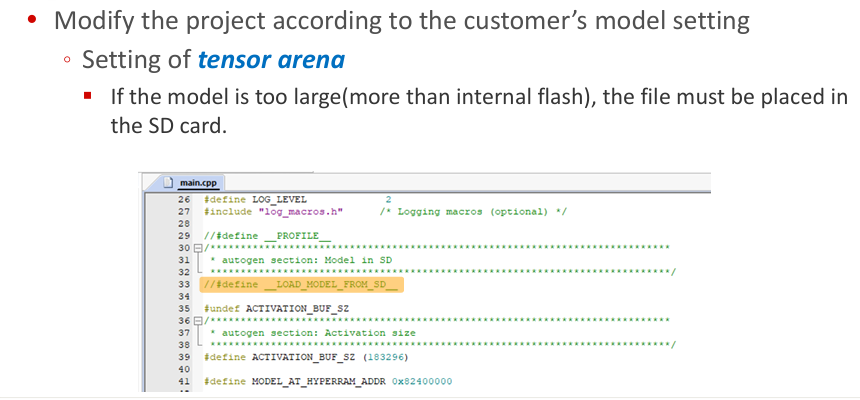
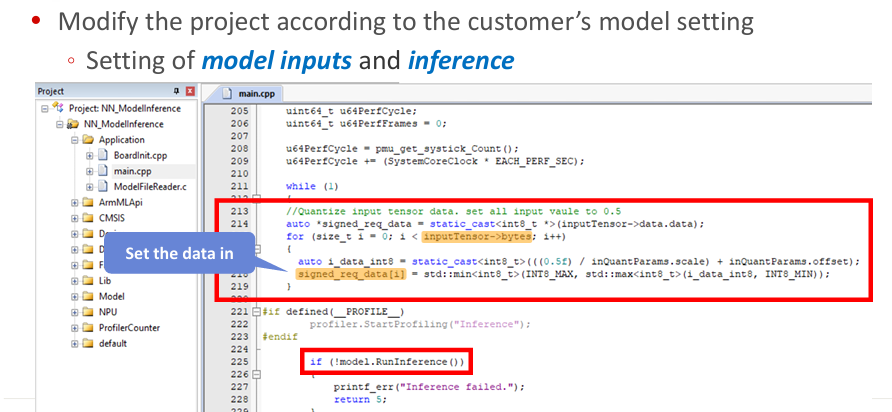
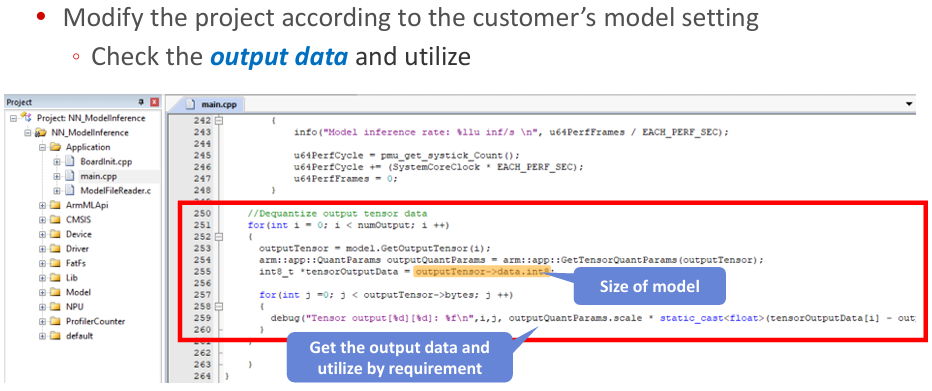
► Application Scenario Diagram
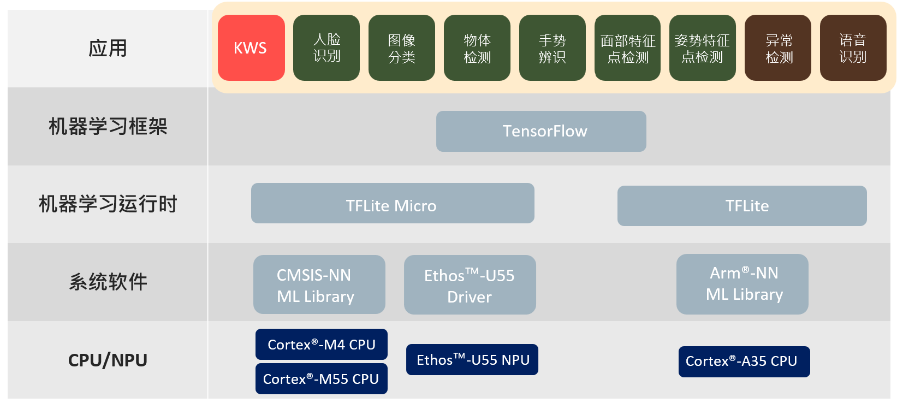
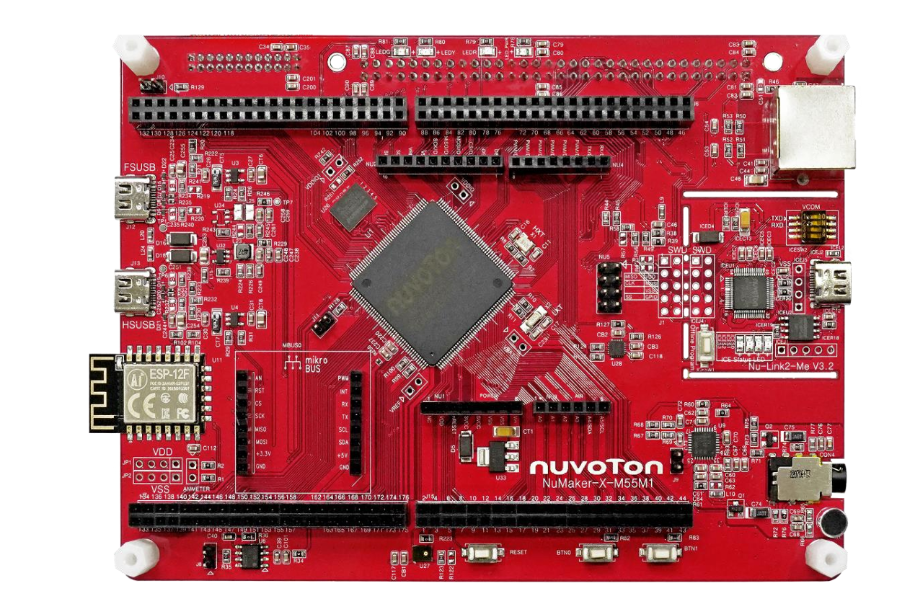
► Product Physical Diagram
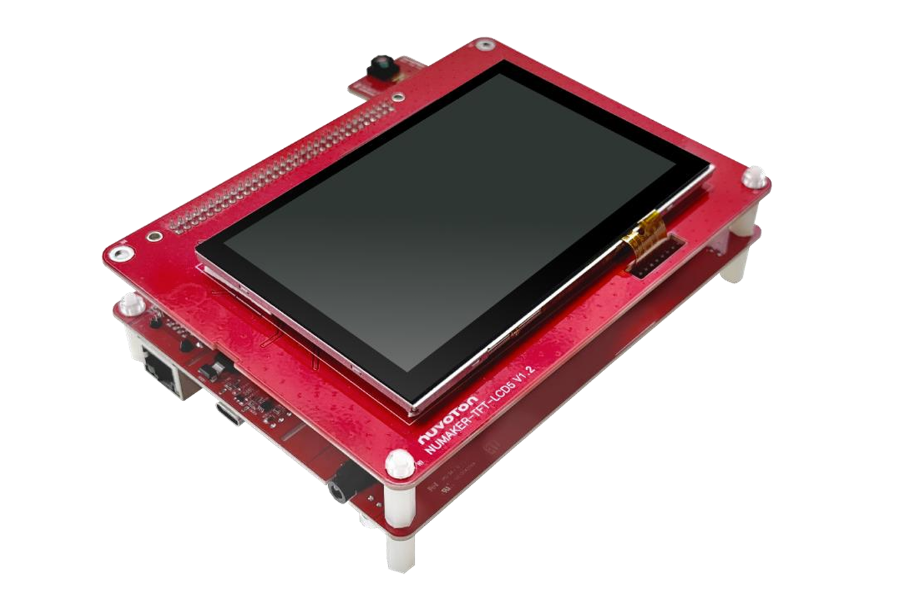
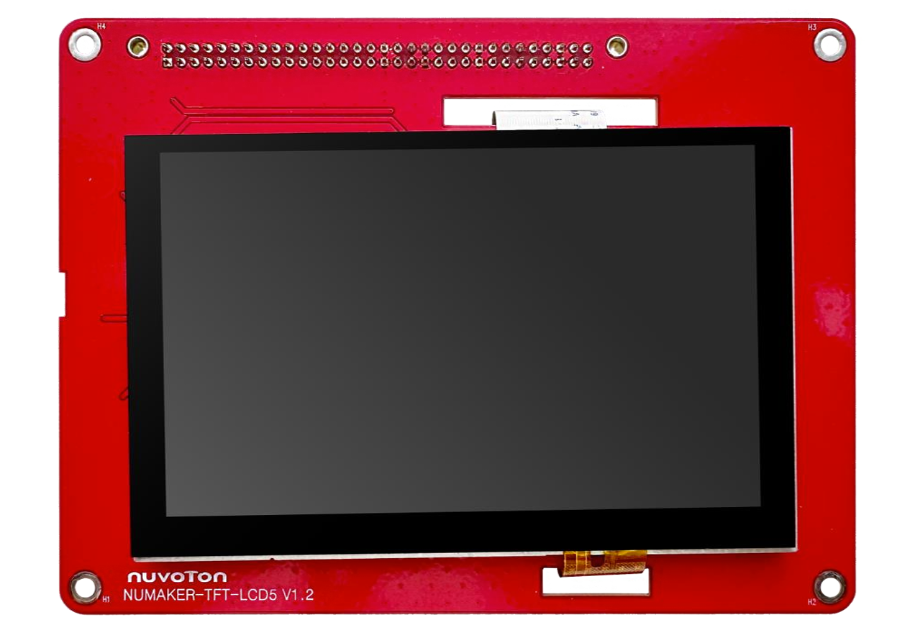
► Display Board Photo
► Solution Block Diagram
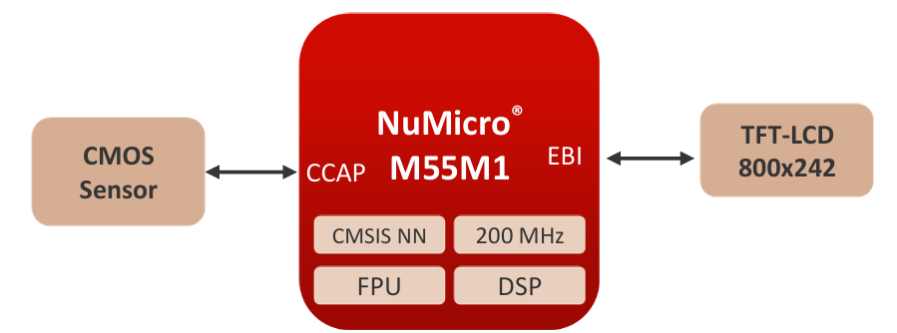
► Core Technical Advantages
CPU
• 200MHz Cortex-M55
• Helium vector processing extension
• Scalar floating-point unit (FPU) supporting fp16, fp32, and fp64
Memory
• 1.5MB Static Random Access Memory (SRAM)
• 2MB Flash memory
• Provides HyberBus for external memory expansion
Bus
• 64-bit, 200MHz AXI bus
• For CPU, NPU, and SRAM
200MHz Ethos-U55 NPU – for machine learning inference acceleration
• Supports 128 MAC/cc
• Equivalent to 50 GOP/s
• Supports major CNN/RNN operations
► Solution Specifications
Core
• Arm Cortex-M55 core, maximum operating frequency of 220 MHz
• Supports Arm M-profile vector extension (Helium)
• IEEE 754 compliant floating-point unit (FPU) capable of vector and scalar half-precision, single-precision, and double-precision floating-point operations
• Arm TrustZone technology, containing 8 secure memory protection units and 8 non-secure memory protection units
• Arm custom instructions (ACI) to accelerate specific mathematical operations
• L1 cache: 16 KB instruction cache (I-cache) and 16 KB data cache (D-cache)
Micro Neural Processing Unit (Micro-NPU)
• Arm Ethos-U55 micro neural processing unit
• Operating frequency up to 220 MHz
• 256 MACs (multiply-accumulate units)
• 110 GOPS (220 MHz x 256 MACs x 2)
Memories
• Secure Boot ROM (MaskROM): 24 KB
• APROM Flash: 2 MB (dual sets, each set 1 MB)
• LDROM Flash: 8 KB
• OTP Flash: 3 KB
• SRAM 1.5MB
External Memory Interface
• SPIM (including HyperBus interface), supports SPI Flash, QSPI, OSPI, HyperFlash, with a maximum capacity of 32 MB and AES real-time decryption capability
• External bus interface (EBI), supports 8/16-bit data width, i80 LCD interface, and up to 3 sets of 1 MB memory
Power Management
• Dynamic power consumption: 94.5 μA/MHz (at 220 MHz operation)
• Normal standby mode (NPD4), 64 KB SRAM retention: 23.26 μA (operating at 3.0V)
• Low-power standby mode (SPD1), 64 KB SRAM retention: 6.1 μA (operating at 3.0V) (can retain up to 64/128/192/256/320/384/448/512 KB SRAM)
• Deep sleep mode (RTC enabled): 0.74 μA (operating at 3.0V)
• RTC (VBAT): 0.51 μA
Image Capture Controller (CCAP)
• Maximum resolution 640×480
• Supports 320×240 dynamic image detection in low power mode
Connectivity Interfaces
• Up to 10 UARTs
• Up to 1 LPUART
• Up to 4 I²C, up to 1 Mbps
• Up to 1 LPI²C, up to 1 Mbps
• Up to 1 I3C, up to 25 Mbps
• Up to 4 SPI/I²S
• Up to 1 LPSPI
• Up to 2 Quad-SPIs
• Up to 1 USCI (supports UART/I²C/SPI)
• Up to 2 SDIOs
• Up to 3 ISO-7816-3 smart card interfaces
• Up to 2 I²S
• Up to 1 8-channel PSIO
• DMIC (digital microphone input), supports 4-channel PDM interface and voice activation detection (VAD)
Operating Characteristics
• Operating voltage range: 1.71V ~ 3.6V
• Operating temperature range: -40°C ~ +105°C
• ESD HBM: ±3 kV
• EFT: ±4.4 kV
• Latch Up: ±200 mA
The Nuvoton M55M1 endpoint AI application solution, with its innovative architecture and outstanding performance, propels endpoint intelligence to new heights. Whether for product upgrades or new project development, the M55M1 will be an ideal choice for achieving AI empowerment.
This article’s images are sourced from Nuvoton (Nuvoton


ClickRead the original text for more details!

Like
Collect
Share