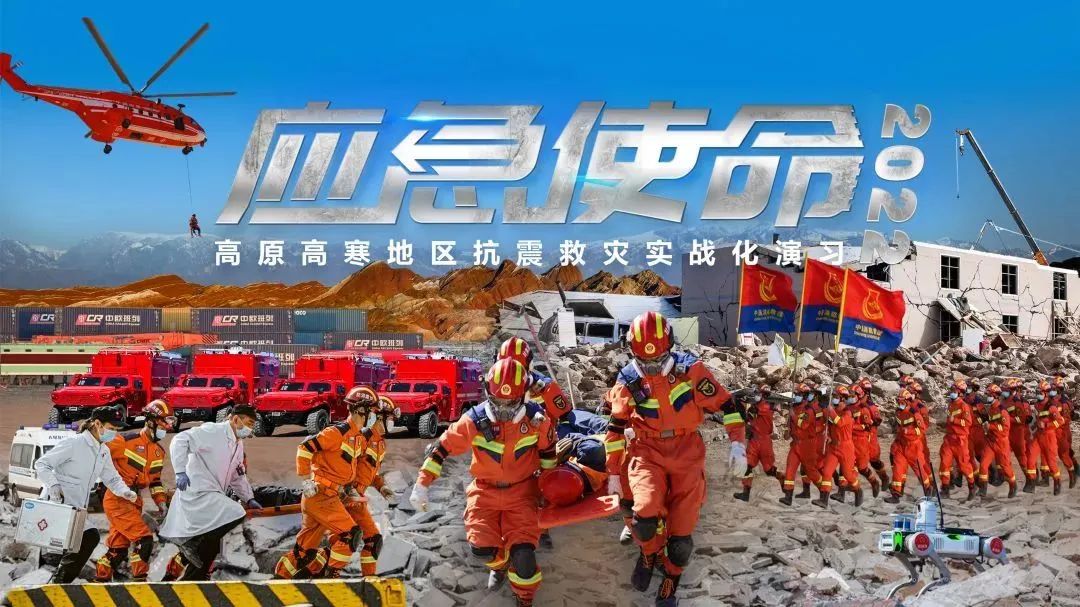
Source: Walkie-Talkie World. In order to further implement General Secretary Xi Jinping’s important instructions on disaster prevention, reduction, and relief, and to earnestly implement the decisions and deployments of the Party Central Committee and the State Council on coordinating development and safety, preventing and resolving major security risks, and comprehensively improving disaster prevention and reduction levels and joint rescue capabilities, the Office of the State Council Earthquake Relief Command, the Ministry of Emergency Management, and the Gansu Provincial People’s Government jointly held a practical earthquake relief drill in high-altitude and cold regions in May 2022 in Zhangye City, Gansu Province, testing the organizational structure, emergency processes, personnel quality, and technological equipment capabilities in various emergency rescue scenarios. Among these, communication support capabilities are known as the “lifeline” in emergency rescue. Hytera, as one of the important support units for this drill, set up an emergency command public-private integrated wireless communication system on-site and used broadband self-organizing networks to establish subnet links at sub-venues in Jiayuguan and Jiuquan, achieving voice, image, and other information data intercommunication within multiple exercise sites, creating good conditions for efficient emergency rescue and fully demonstrating Hytera’s strong scientific research strength.
In various rescue scenarios, high-rise disaster rescue is a typical scenario. When a high-rise building catches fire or collapses, it may cause power outages, leading to the failure of large network communications. In such scenarios, a solution is needed that can quickly and flexibly establish a communication network to carry out rescue operations, while requiring the transmission of front-end images, voice, and back-end command center information. Hytera’s broadband self-organizing network solution perfectly fits the scene requirements, featuring “fast deployment, strong signals, and long endurance.” The Whale Evaluation Team will simulate the high-rise emergency rescue scenario to practically test the communication support effects and performance of Hytera’s broadband and narrowband self-organizing network solution.
Device Introduction
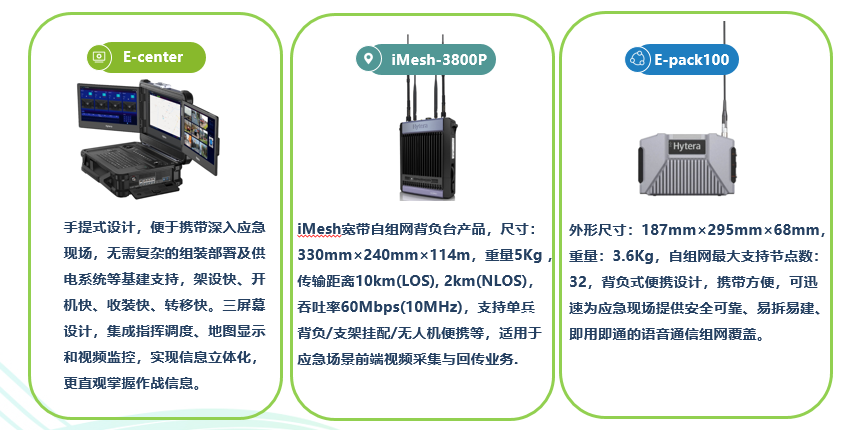
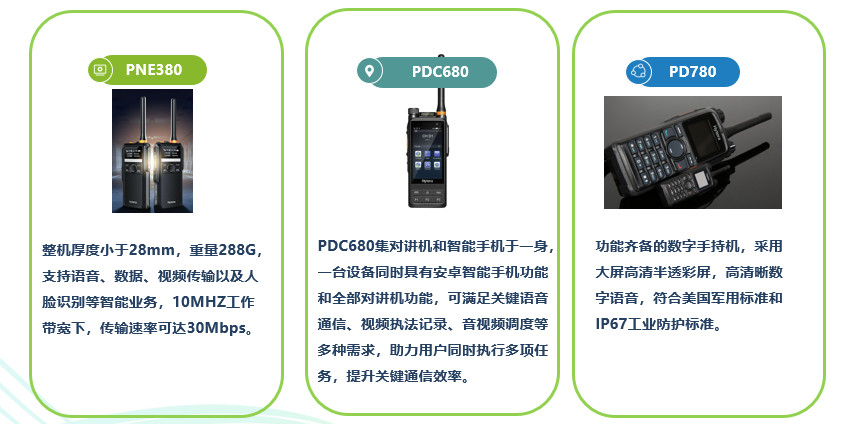
First, the equipment information used in this evaluation includes: 1 three-screen command box (E-center), 2 iMesh-3800P devices, 2 E-pack100 devices, 2 PNE380 devices, 2 PD780 devices, and 1 PDC680 device. A brief introduction to the relevant equipment is as follows:
It should be noted that the terminal devices used in this evaluation are Hytera brand devices, but this does not mean that they can only be networked with Hytera terminals. The self-organizing network from Hytera is fully compatible with PDT and DMR standards and does not use proprietary protocols. Therefore, Hytera’s self-organizing network can be networked with devices from different brands that comply with PDT and DMR standards, reflecting Hytera’s “integration” concept in product design.
Simulation Scene Description
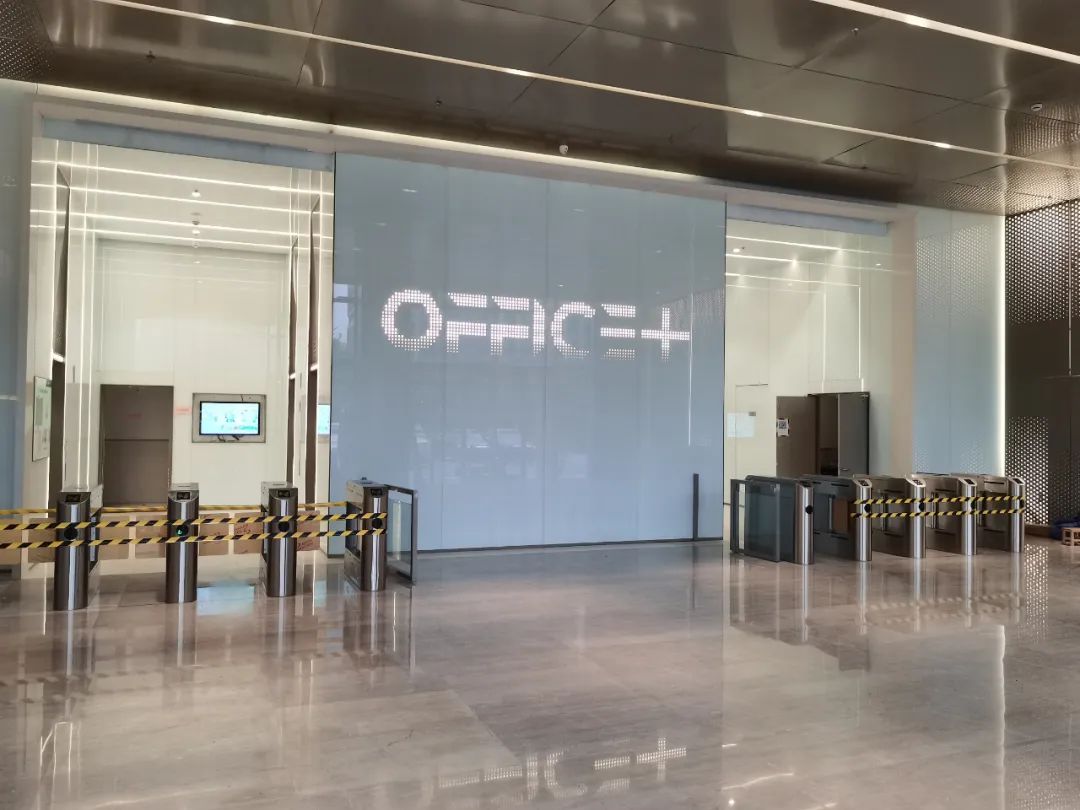
The location selected for this evaluation is a certain E1 business building in the south square of Nanjing South Station, Jiangning District, Nanjing City. Here is a brief introduction to the overview of this building: it has a total of 12 floors, but each floor is designed with a high LOFT creative structure, with a height of 6.3 meters, so each floor is equivalent to the height of two traditional floors. This is important for testing effect data.
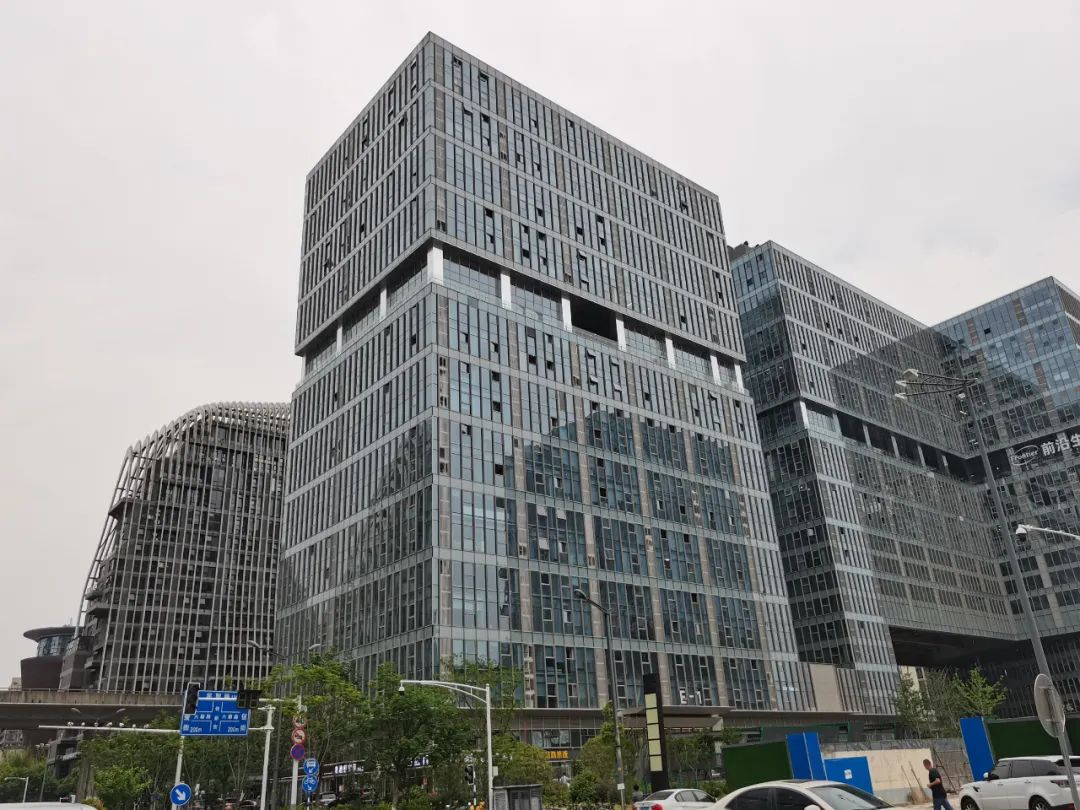
This simulated rescue scenario is specifically set as follows: a fire occurs in a partial area on the 9th floor of the office building, causing the fire to spread, leading to a power outage, and the elevator becomes unusable. Additionally, the indoor division cannot work normally, and the large network signal within the building is interrupted. Based on this scenario setting, we propose the Hytera broadband and narrowband self-organizing network solution diagram as follows:
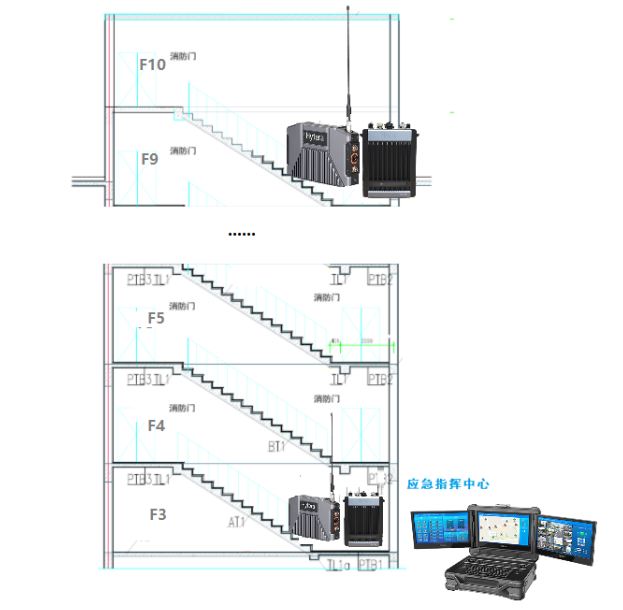
Building Section Diagram
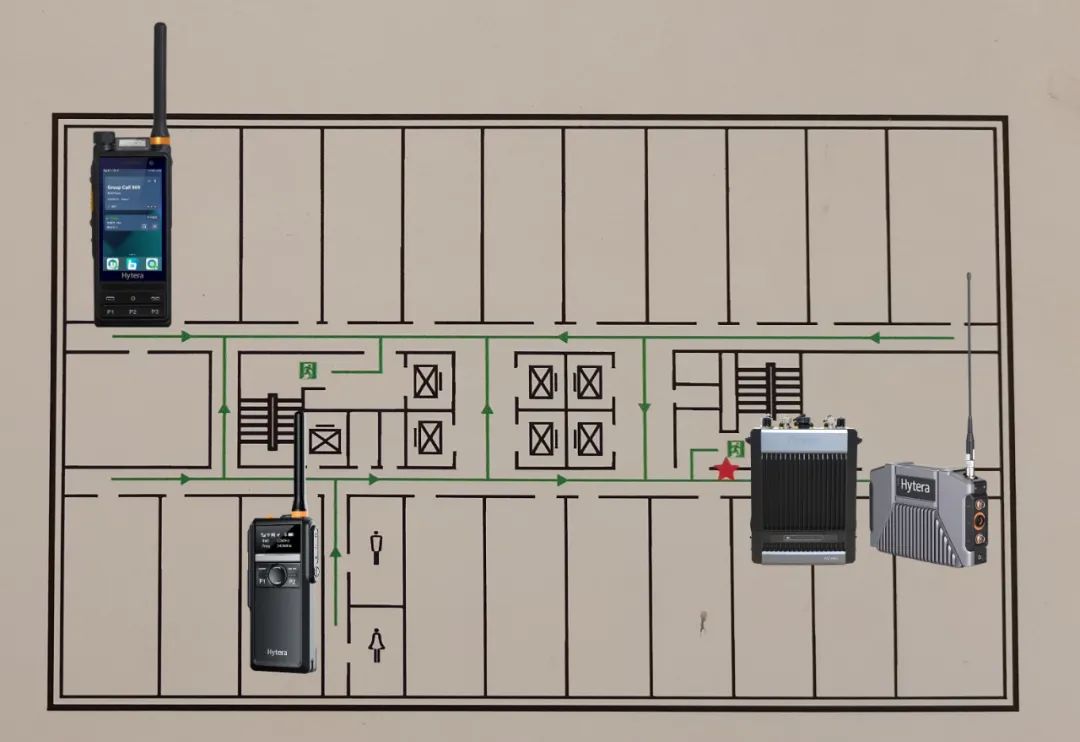
Target Floor PlanBroadband Self-Organizing Network: Deploy E-center at the emergency command center and connect it with the iMesh-3800P broadband self-organizing network base station. The PDC680 multimode terminal connects to the iMesh-3800P broadband self-organizing network base station. A second iMesh-3800P is deployed at higher floors (specifically where the signal is unstable and disconnections occur) to extend the coverage of the Mesh wireless signal. Meanwhile, during horizontal movement on the floor, the PNE380 is added as lateral signal expansion.Narrowband Self-Organizing Network:Deploy E-pack100 narrowband self-organizing network base station at the emergency command center to achieve regular access for the PDC680 multimode terminal based on narrowband wireless signals. A second E-pack100 is placed at the higher floor (where the iMesh-3800P is located) to allow terminals to access in a conventional digital manner.Next, we officially enter this simulated exercise evaluation, allowing everyone to clearly see the equipment deployment and debugging, device movement, signal strength, and communication support effects.
Deployment Debugging
After receiving a simulated alarm call, the rescue team rushed to the scene and assessed the situation on-site to formulate a networking plan:Considering the fire and power outage, and the elevator being unusable, the normal approach is to use the fire escape to carry out the rescue. Generally, we would set the communication command center at the first-floor fire escape, but since there were epidemic prevention materials placed on the first and second floors that day, we set the command center at the third-floor fire escape entrance.Upon arriving at the designated location, they began deploying and debugging the equipment:
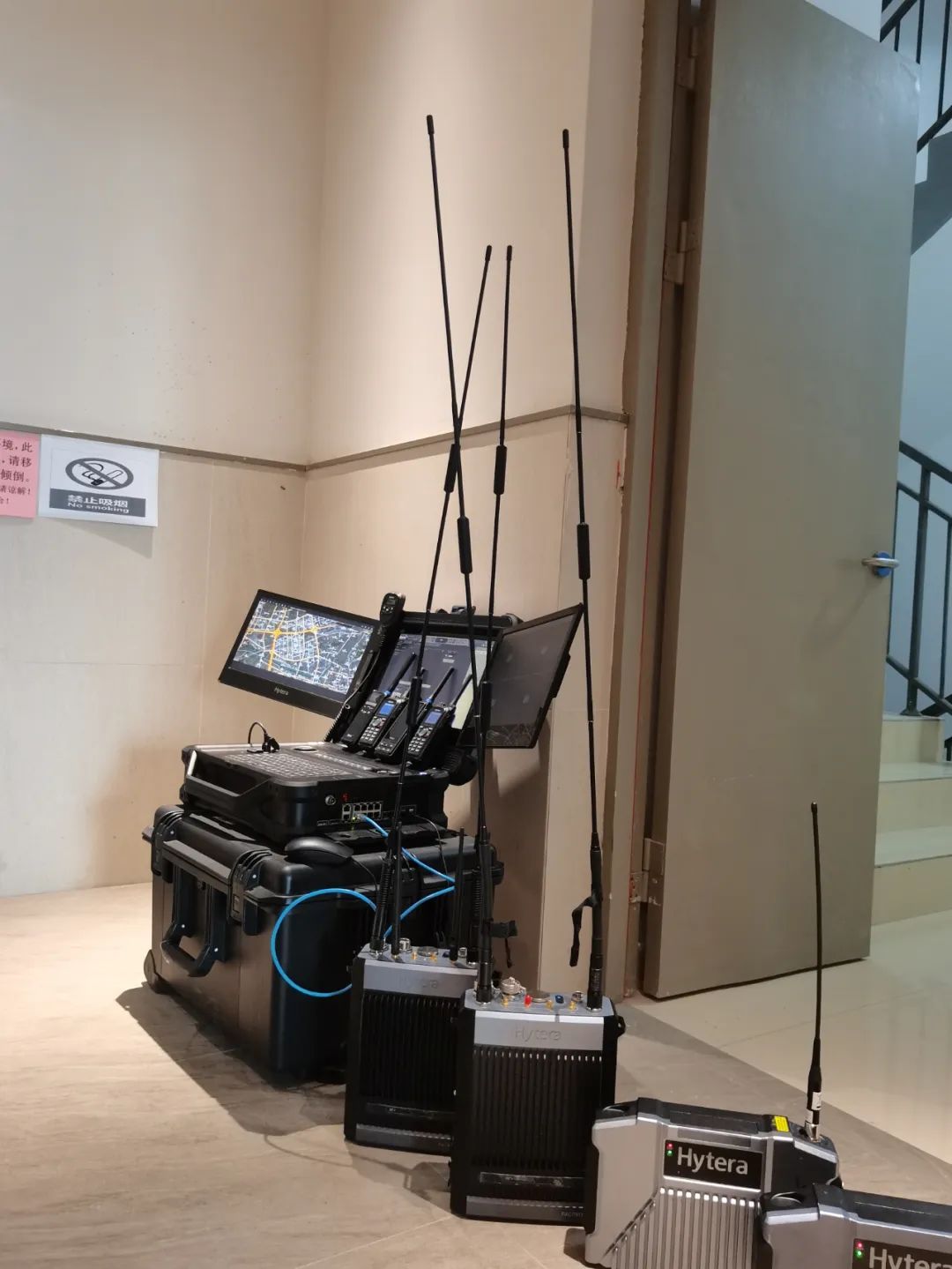
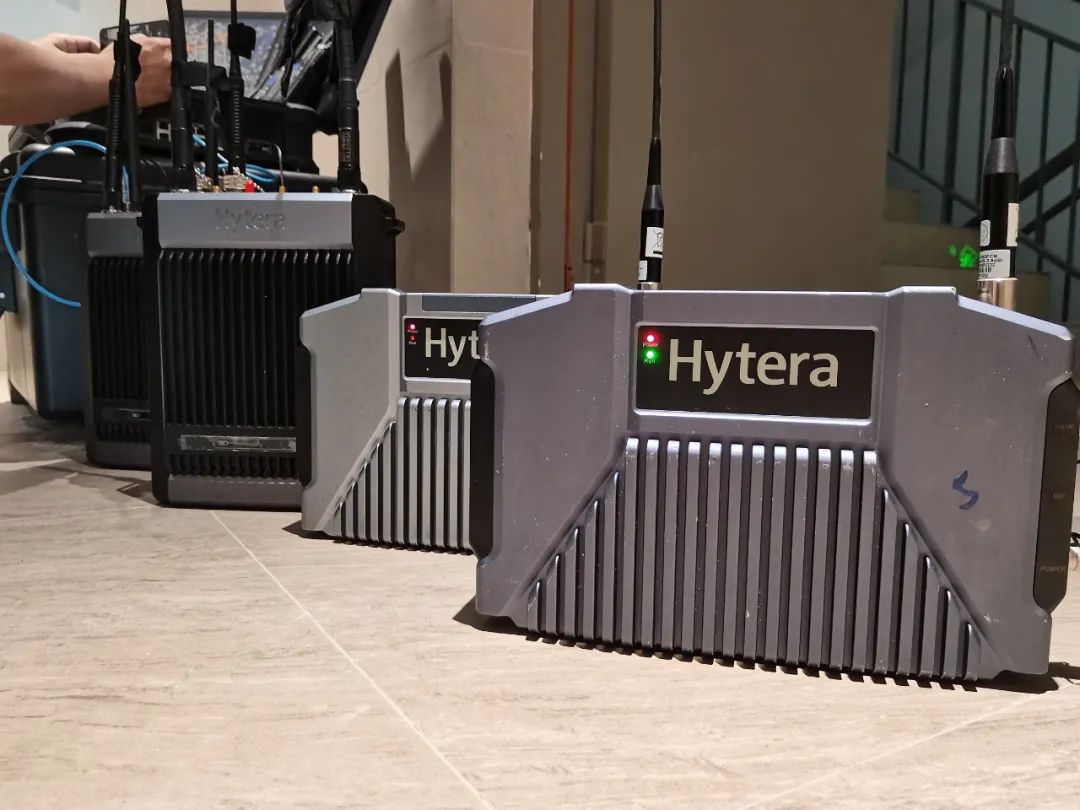
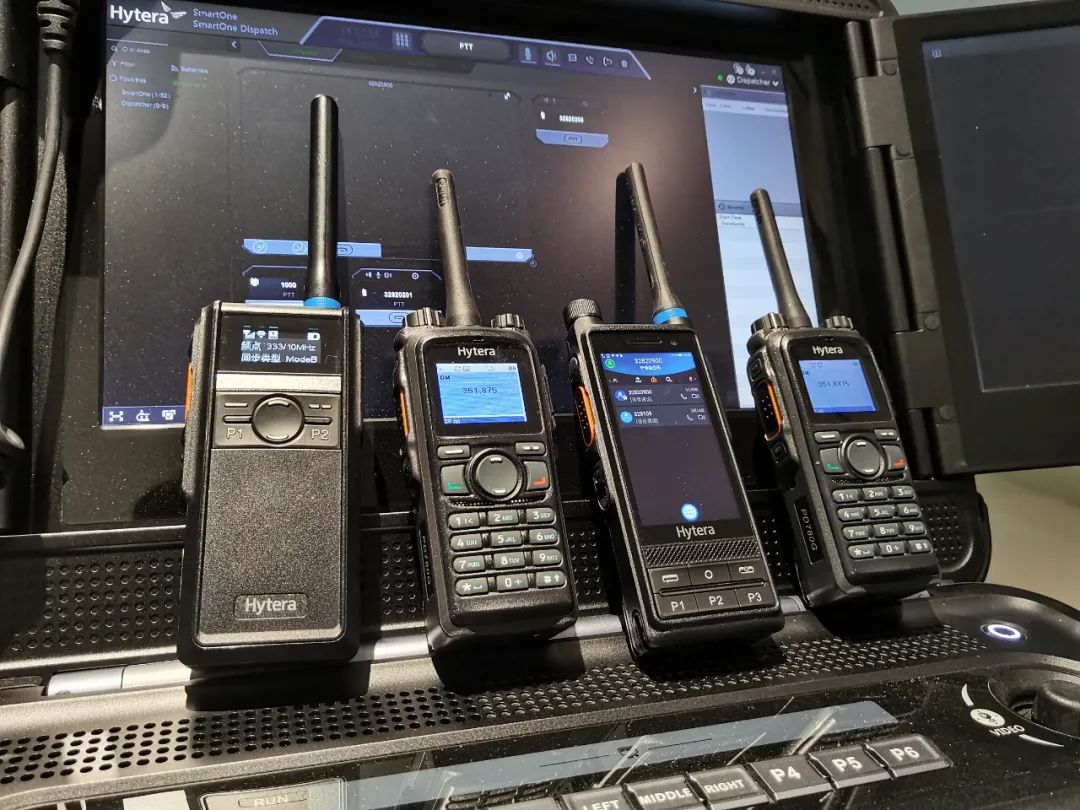
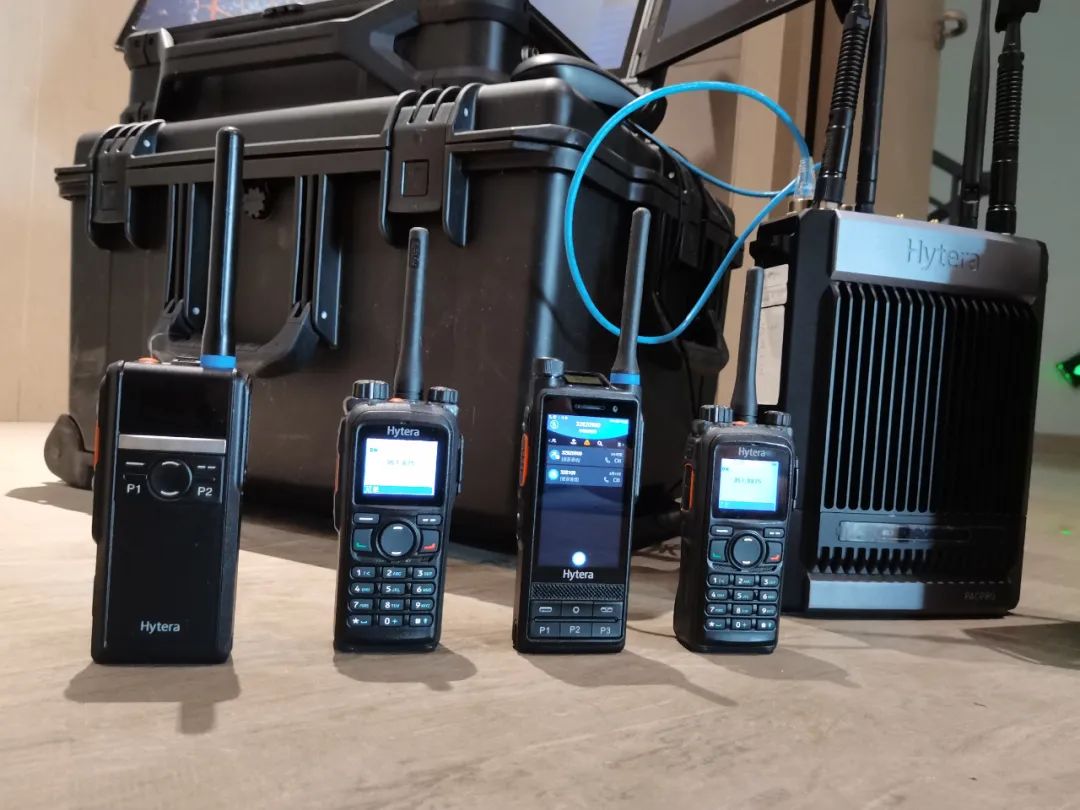
Voice Communication TestImage Transmission TestHytera’s broadband and narrowband self-organizing network-related devices are very convenient to deploy. From the timing data, it took about 3 minutes and 45 seconds from arriving at the scene to unpacking, installing, debugging, and establishing communication (turning on the devices resulted in immediate connectivity, including voice and data).
Rescue Scenario Real Test
After debugging, the equipment was placed at the preset location in the fire escape, and members of the rescue team carried one iMesh, one PNE380, one PDC680, and one PD780 to advance upwards from the fire escape.
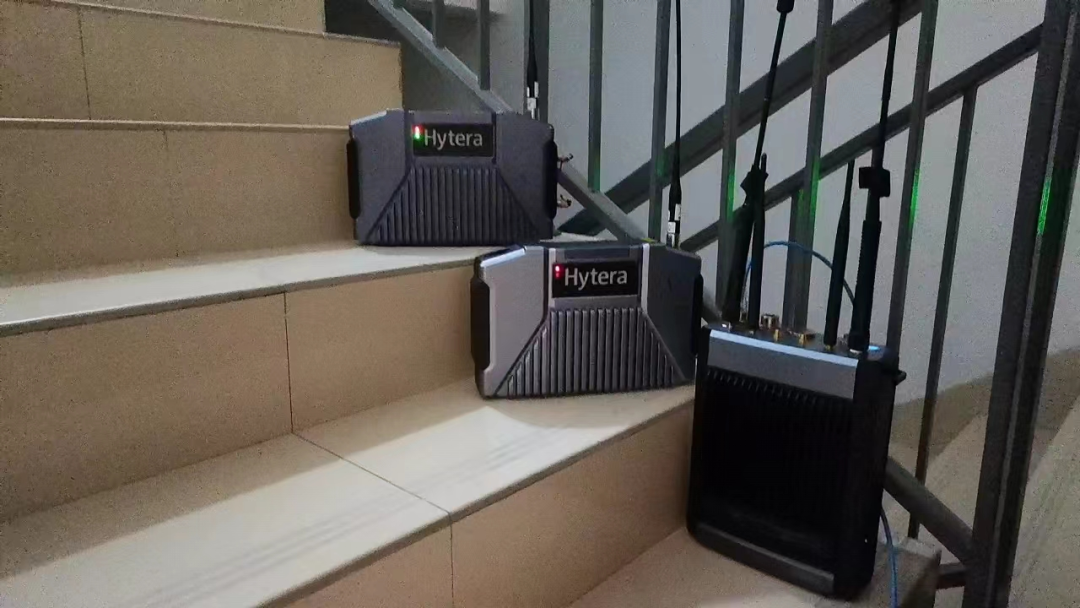
We designed four scenarios, and below are the descriptions and test situations for each:
01
Layer-by-Layer Advancement, Maximum Coverage Measurement
Rescue personnel set off from the emergency command center, and with each floor ascended, they actively initiated communication with the emergency command center to confirm that the current position had good signal coverage and that communication was normal (in this scenario, the PNE380 was kept turned off initially). The iMesh-3800P and E-pack100 are designed to be compact and lightweight, with each device weighing between 3.6-5Kg, making them easy to move. Below are some selected signal strength measurement data from various floors:
| Location (Floor) | Signal Strength | Remarks |
| 4th Floor | Bidirectional Signal: -75dBm/-75dBm | |
| 5th Floor | Bidirectional Signal: -79dBm/-79dBm | |
| 6th Floor | Bidirectional Signal: -86dBm/-88dBm | |
| 7th Floor | Bidirectional Signal: -98dBm/-98dBm | |
| 8.5th Floor | Bidirectional Signal: -108dBm/-114dBm |
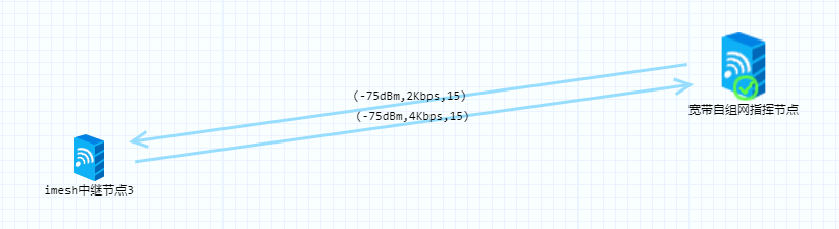
Signal Monitoring Diagram for Command Box on 4th Floor
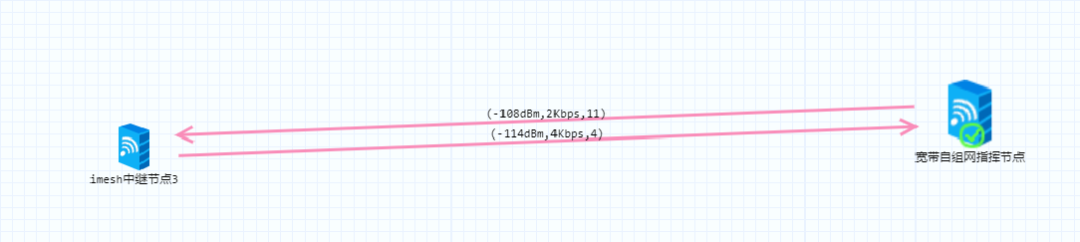
Signal Monitoring Diagram for Command Box on 8.5th Floor
From the data, in this real test of the E1 office building, when at around the 8.5th floor position, the iMesh signal began to fluctuate, indicating that the signal was about to enter the boundary range. After multiple attempts, the maximum networking distance between the two iMesh devices was ultimately determined to be 8.32 floors – 2 floors = 6.32 floors, which translates to approximately 39.8 meters when calculated at 6.3 meters per floor, equivalent to about 12 – 13 traditional floors. It can be said that achieving this signal coverage height in such an environment is quite impressive.
02
Proactive Call from Command Center
When the emergency command center receives a request for assistance regarding injured personnel in a certain building through other channels, it can proactively initiate a call through the command box, requesting rescue personnel to quickly proceed. After the rescue personnel arrive at the scene, they can pull up video to transmit the on-site images back to the command center and report on the rescue situation.
03
Target Floor, Lateral Movement
In the test of scenario 01, it was found that the maximum signal coverage distance between the two iMesh devices in this building is 6.32 floors. Therefore, we placed one iMesh-3800P at the 8.5th floor position, and rescue personnel carrying the PNE380, PDC680, and PD780 continued to advance, moving laterally across the entire 9th floor and checking two core points, as shown in the hexagram position in the following image:
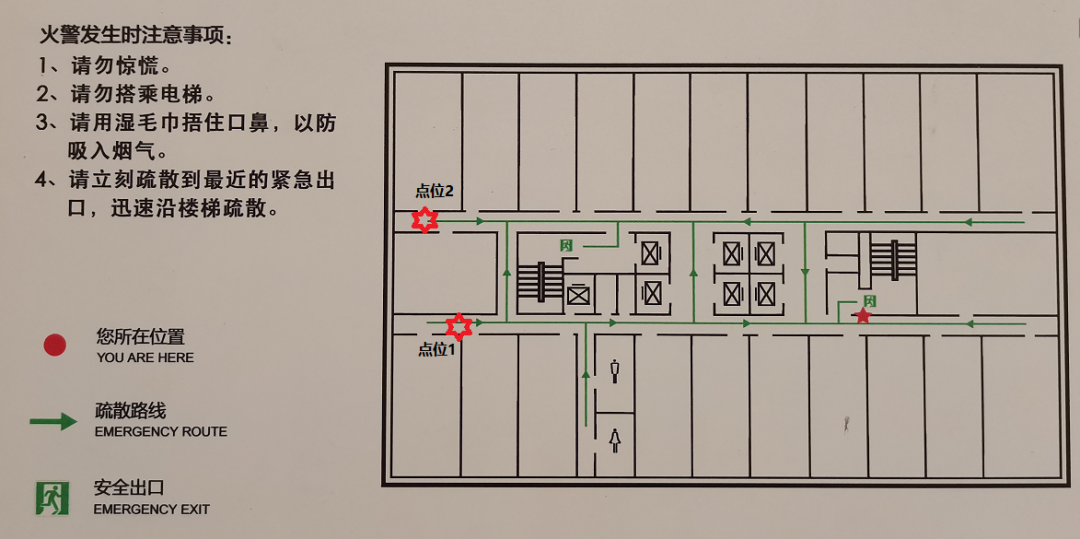
Point 1: The rescue personnel quickly moved to Point 1 and conducted a video pull test with the command center, with stable and clear voice and video transmission.At this time, the signal strength data between devices can be viewed on the E-center command center:
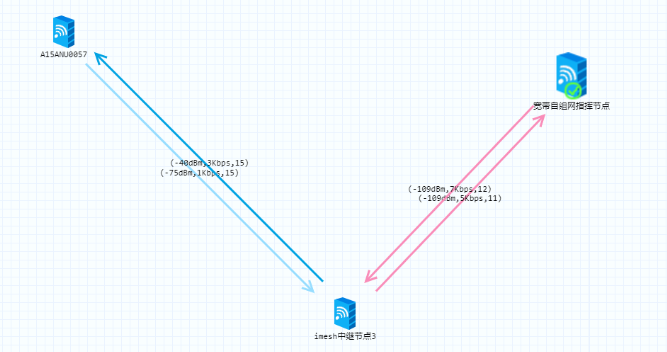
Signal Monitoring Diagram for Command Box at Point 1Point 2: The rescue personnel continued to move to Point 2 and conducted a video pull test with the command center, with stable and clear voice and video transmission.At this time, the signal strength data between devices can be viewed on the E-center command center:
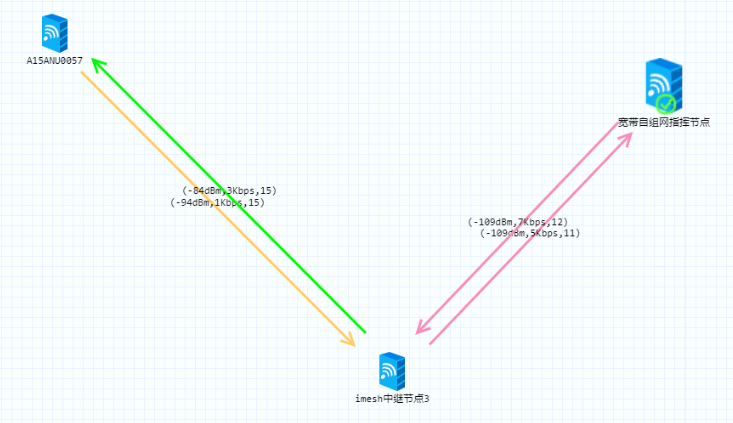
Signal Monitoring for Command Box at Point 2Lateral Movement Communication at Target Floor
04
Proactive Video Pull from Command Center
The emergency command center can proactively initiate a video pull to a designated terminal through the command box. After the rescue personnel receive the pull call, they can click to confirm and connect, transmitting the front rescue images back to the command center, enabling the command center to make predictions and dispatch based on the current emergency situation.Proactive Video Pull from Command Center
Summary
This evaluation lasted nearly 8 hours. After completing all evaluation actions, the iMesh-3800P, E-pack100, and PNE380 still had about 30% battery remaining, while the E-center was nearly exhausted without external power. The endurance performance of each device was indeed impressive. To summarize: through the evaluations of the four scenarios above, we can intuitively feel that Hytera’s self-organizing network solution effectively supports high-rise emergency rescue scenarios, with several points being particularly impressive:1. Convenient Deployment, Suitable for All Sizes: Ready to use, networking devices automatically connect upon powering on, making deployment very convenient. Meanwhile, the compact and portable devices significantly enhance individual combat capabilities and team collaboration.2. Wide Signal Coverage, Smart and Reliable: The self-organizing network automatically creates connections between multiple points, deriving multiple points from one point and further deriving larger points from multiple points, forming a large area of signal coverage. The maximum distance achieved in this building was around 39 meters.3. Strong Endurance: Although the iMesh-3800P/E-pack100 devices are small, their endurance is very robust, capable of meeting 10 hours of operational needs while supporting vehicle charging, fully meeting the usage requirements in rescue scenarios.Finally, as usual, here is the complete video of this evaluation: