The Netherlands is quite interesting; it dug a hole for itself for two months, and finally emerged from the ground smiling and saying
I’m fine, look, I’m in good spirits!
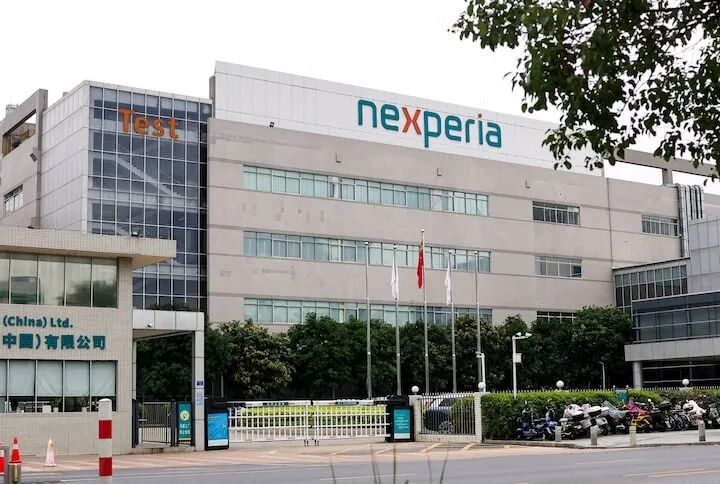
Let’s first sort out how ridiculous the Netherlands’ actions have been!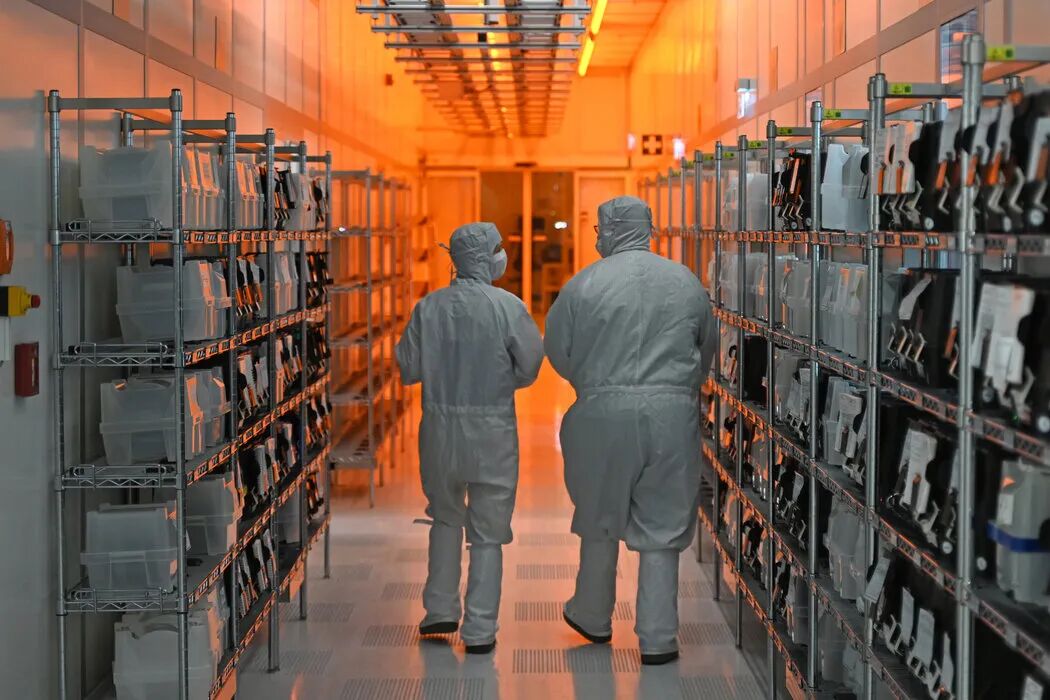 Before September of this year, Nexperia, a semiconductor company of Chinese descent in Europe, was quietly supplying low-end chips for the automotive, industrial, mobile, and consumer electronics sectors in Europe. At that time, Wingtech Technology could never have imagined that its wholly-owned subsidiary Nexperia would become embroiled in a national conspiracy.
In September, the United States expanded its export control rules (related company rules), extending the sanctions to subsidiaries of companies listed on the entity list. Faced with this rule, the Netherlands made no resistance and directly targeted Wingtech Technology.
On September 30, 2025, the Netherlands surprisingly invoked the Cold War-era “Goods Supply Act,” citing national security and governance deficiencies as reasons, effectively taking control of Nexperia and suspending the CEO position of Wingtech Technology’s founder, Zhang Xuezheng.
This action left Europeans dumbfounded; using state power to rob a private enterprise is something even the United States has not done so openly and without limits!
European astonishment quickly turned to fear, as 70% of Nexperia’s production capacity is in China, and Europe’s most competitive automotive manufacturing industry is heavily reliant on Nexperia’s stable chip supply.
China decisively halted the export of Nexperia chips, leaving companies like Volkswagen cursing; the Netherlands seems to be using all of Europe as a bargaining chip to please the United States.
European media commented that before the Netherlands robbed Nexperia, the chip supply in the Netherlands and all of Europe was very secure. After the robbery, the entire European industry immediately faced the risk of a standstill, calling for the Netherlands to stop its foolish actions and return control of Nexperia to Wingtech Technology.
They are hinting madly that the Netherlands is looking for trouble!
Complaints aside, everyone knows that the Netherlands is also a victim in this matter!
Recently, there was a statement circulating online that the soon-to-be-outgoing Prime Minister of the Netherlands is only concerned about his own comfort, leaving a mess for the next Prime Minister. This statement has a childish tone!
Our various restrictions on the Netherlands are partly to cooperate with their performance; after all, the Netherlands is not foolish, and ideology is nothing in the face of economic interests. Mature politicians always do business under the guise of ideology.
The series of bizarre operations by the Netherlands are all shrewd political calculations, typical actions of a small country balancing between great powers.
The two reasons given by the Netherlands, national security and governance deficiencies, seem absurd but are actually quite clever. The term national security has been overused by the United States, but Europeans have been brainwashed; they generally do not raise objections when they hear this term.
Governance deficiencies leave a lot of room for imagination; when needed, Wingtech Technology has governance deficiencies, cannot manage Nexperia well, and delays our employment, thus suspending your control rights. Once the environment changes, as long as Wingtech states that it has improved, the Netherlands will immediately backtrack and return control rights. This is a well-ordered retreat, and it can also explain to the United States!
Some media analyze that the reason the Netherlands did this is due to concerns about asset transfer and hollowing out of the manufacturing industry, even suggesting that the Netherlands is thinking about the industrial security of Europe. If this is indeed the case, the Netherlands could have resolved it through strong legislation.
Essentially, the seemingly foolish actions of the Netherlands are mainly to respond to the long-arm jurisdiction of the United States while retaining space for continued cooperation with China.
For us, we must make this behavior pay a price, showing enough anger on the surface, applying pressure while retaining flexible space, and after this performance, everyone can continue to do business happily.
The most important reflection should be on Wingtech Technology, as the wholly-owned shareholder of Nexperia, which completed the acquisition in 2019, has not yet established absolute personnel control over Nexperia after six years. Zhang Xuezheng rarely visits Nexperia’s headquarters in the Netherlands, which has created opportunities for Nexperia’s executives to collude with the Netherlands.
Wingtech Technology’s acquisition of Nexperia was once regarded as a classic success case of Chinese enterprise mergers and acquisitions, but the recent control crisis undoubtedly serves as a wake-up call for all Chinese enterprises that have gone abroad or plan to go abroad.
In the current geopolitical environment, the traditional logic of capital being king and equity equating to control has changed.
In the past, many Chinese enterprises believed that as long as they did not touch the most advanced EUV lithography machines, did not engage in 5nm advanced processes, and did not involve military industry, investing in mature technologies was safe.
However, the unlimited expansion of various countries’ definitions of critical infrastructure means that so-called non-advanced technologies can also be regarded as strategic assets and subjected to strict regulation.
Chinese enterprises acquiring a company overseas does not mean they have complete ownership. In the European legal system, there often lurks a mechanism for “legal robbery.” For example, stripping Wingtech Technology of control rights under the guise of “national security!”
Does this seem a bit different from the free market you understand?