“
Compared to cloud AI, edge AI focuses on embedding AI capabilities into devices, enabling real-time data processing, privacy protection, and low-latency responses by running AI algorithms locally on the terminal. This approach is becoming the core carrier for the implementation of AI technology. According to the “2024-2030 China Edge AI Market Survey and Investment Strategy Report,” the market size of China’s edge AI industry is expected to reach 500.44 billion yuan in 2024, growing to 1.90713 trillion yuan by 2028, with a compound annual growth rate of 39.75% during this period.
For edge AI, the two core elements are edge computing and embedded AI. The former realizes a shift in computing paradigms, while the latter serves as the localized engine for intelligent decision-making. Practical experience has shown that when developing embedded AI solutions, the features within the data are more critical than the algorithms; they are the core factors determining the effectiveness of machine learning. However, real-world data often contains a significant amount of noise and variance. Renesas Electronics’ Reality AI tool can extract highly relevant features from noisy signal inputs with minimal computational overhead, aligning with the resource constraints of edge devices.
Data Features: The Invisible Engine of Embedded AI
In the practical projects of embedded AI technology, people often focus on algorithm innovations, such as the design of convolutional neural network layers, the selection of SVM kernel functions, or the iterative optimization of K-means clustering. However, if one blindly pursues algorithm efficiency and complexity without effectively extracting features from the data, the final outcome will be akin to “using a cannon to shoot a mosquito”; despite consuming substantial algorithmic and computational resources, the device will fail to make optimal decisions.
Features are the hidden key variables in the data, mathematically describing the “important matters” to illustrate the differences between categories, predict variables, and detect anomalies. Features can come directly from the raw values in the input data or can be indirectly obtained from preprocessed input data. In fact, deep learning algorithms are methods for extracting effective features from underlying data, but they have significant limitations in feature extraction efficiency, resource consumption, and temporal feature processing.
Deep learning computes features from underlying data through multi-layer convolutional neural networks (such as CNNs), but the training and inference of multi-layer networks require a large number of floating-point operations, leading to substantial computational overhead, which is very unfriendly to edge devices with limited memory and computing power. Additionally, deep learning requires massive labeled datasets to effectively extract features, while edge scenarios often face the “small sample” problem, making deep learning prone to overfitting and significantly reducing feature extraction effectiveness. Furthermore, in the processing of temporal signals such as vibrations and sounds, while deep learning can handle the time dimension, its efficiency is subpar, and it may sometimes lose critical temporal features.
Therefore, although deep learning’s automatic feature extraction through multi-layer networks is an important technological path in the AI field, its application in edge scenarios is constrained by computing power, data, and real-time requirements.
In addition to deep learning, engineers often habitually use Fast Fourier Transform (FFT) in embedded AI development. For example, when extracting data features from electrical signals converted from vibrations or sounds, engineers will perform FFT calculations on the input data stream to discover certain patterns or regularities. This is because there are abundant tools that support FFT, such as MATLAB, Numpy, and Scipy, which are user-friendly; moreover, FFT is a fundamental topic in signal processing courses, and engineers have systematically learned its mathematical principles during their academic training. Additionally, the output of FFT (such as frequency peaks in a spectrum) can directly correspond to underlying physical phenomena, meeting engineers’ needs for “explainable features.”
However, the advantage of FFT lies in its practical applicability rather than the optimality of data features. In project practice, FFT often blurs important temporal information, which may be extremely useful for classifying or detecting underlying temporal signals. At the same time, FFT is more suitable for general frequency domain analysis, treating noise and target features indiscriminately, which can also affect the quality of data features.
So, what constitutes high-quality data features? Jeff, the technical director of Renesas AI COE and co-founder of the former Reality AI, provided a typical example: “Suppose I am trying to use an AI model to detect when my wife comes home. I would prepare a set of sensors aimed at the door to collect data. To apply this data to machine learning, I need to determine a set of features that can help the model distinguish my wife from anything else the sensors might detect. So, what would be the best feature? It would be the feature that indicates ‘she is there.’ That would be perfect—a feature with complete predictive capability. This way, the task of machine learning becomes effortless.”
Therefore, Su Yong, an expert in Renesas Electronics’ Embedded Processor Division, believes that although deep learning has achieved significant success in mainstream AI products, with many exciting innovations, leading people to focus more on algorithms, in edge AI scenarios where computing power and storage resources are extremely limited, the quality of features directly determines the success or failure of AI models. Ultimately, it all comes down to data, closely related to features.
Reality AI: Making Feature Extraction Useful
In summary, the resource constraints of embedded devices dictate that feature engineering must take precedence over algorithm selection. In the “feature-first” technical path, Renesas Electronics’ Reality AI tool serves as a lightweight AI development environment for edge devices (MCU/MPU), helping engineers address core challenges such as limited computing power, high data noise, and model lightweighting.
The Reality AI tool enables engineers to generate and build TinyML/Edge AI models based on advanced signal processing. It includes a series of analytical functions for finding the best sensors or combinations of sensors, optimal sensor placement, and automatically generating component specifications, as well as fully interpretable time-domain/frequency-domain model functions and optimized code for Arm® Cortex® M/A/R execution.
The searchable features in the Reality AI tool include:
-
Common transformations of raw data, including logarithmic, power, derivative, and sign transformations;
-
Statistical features and peak analysis;
-
Spectral features, including power, phase, spectral shape, periodicity, cepstrum, wavelet, etc.;
-
Linear and nonlinear dimensionality reduction;
-
Time-frequency sparse coding and temporal pattern analysis;
-
Binary pattern and texture analysis.
Next, we will look at a set of tests to see the superiority of the Reality AI tool in feature searching compared to FFT. This test involves searching for features from a moderately complex signal with noise. First, let’s look at the results presented by the signal after FFT processing. Figure 1 shows the frequency spectrum after FFT processing, with the vertical axis representing frequency, the horizontal axis representing time, and the colors in the figure representing a heat map, where warmer colors indicate higher energy in that specific frequency range. It is not difficult to see that FFT has blurred many signal features.
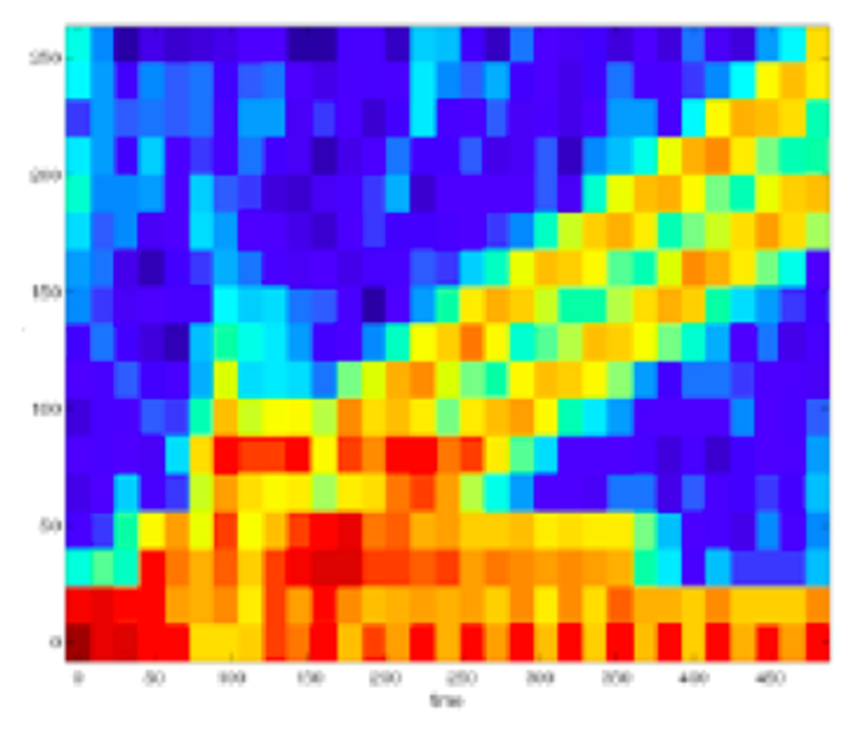
Figure 1: Frequency spectrum of the test signal after FFT calculation
Figure 2 shows the feature search results from the Reality AI tool, where these optimized features are presented in greater detail, and the details blurred by FFT are well represented. At the same time, the complexity of the results provided by the Reality AI tool is significantly reduced, allowing for a clearer view of the signal’s features.
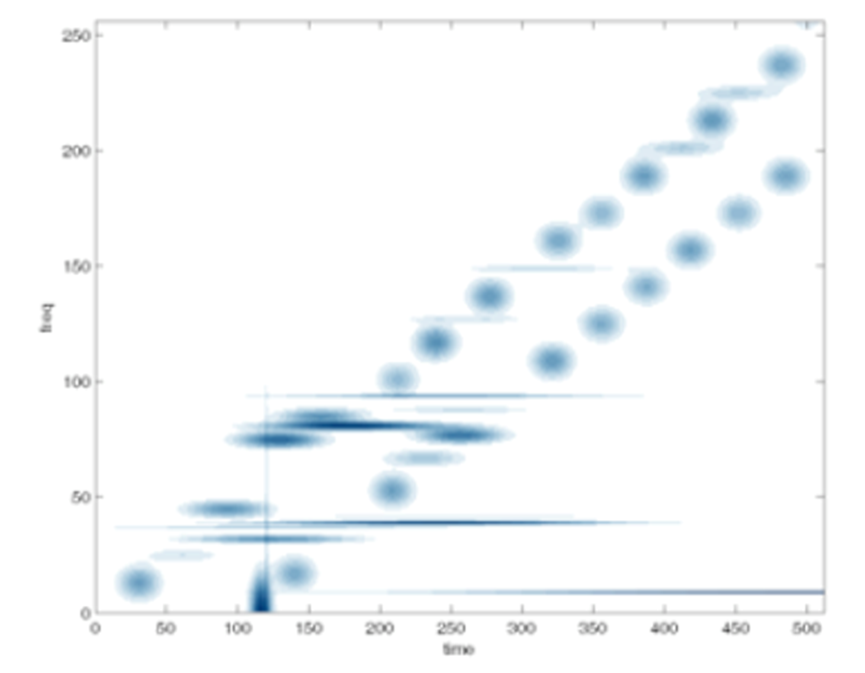
Figure 2: Distribution of the test signal in the feature space explored by the Reality AI tool
Based on the results provided by the Reality AI tool, we can attempt to interpret this segment of the signal: the base signal is a deep, buzzing sound with several tones, accompanied by a series of gradually increasing chirps, along with some other signals that appear and disappear suddenly. This signal pattern allows us to discern that it is a unique bird communicating some information.
In conclusion, the essence of the Reality AI tool is to build a “feature-first” underlying logic for embedded devices, transforming complex signals into a streamlined representation that can be efficiently processed by MCUs/MPUs. In the current flourishing landscape of edge AI, when deep learning is constrained by computing power and energy consumption, the Reality AI tool demonstrates that “few data, low power, high reliability” edge AI is feasible. For resource-limited edge AI application scenarios, this method’s efficiency will surpass that of deep learning by several orders of magnitude.
END
Renesas Electronics (TSE: 6723)
Technology makes life easier, dedicated to creating a safer, smarter, and sustainable future. As a global supplier of microcontrollers, Renesas Electronics integrates expertise in embedded processing, analog, power, and connectivity to provide complete semiconductor solutions. Successful product portfolios accelerate the market launch of automotive, industrial, infrastructure, and IoT applications, empowering billions of connected smart devices to improve people’s work and lifestyles. For more information, please visit renesas.com