Data Storage

Essential for Industrial Control: EEPROM Data Storage in PIC16F Microcontrollers (Includes Ready-to-Use Code)
In industrial control settings, microcontroller main control boards often need to store critical data such as calibration parameters, device addresses, and operation logs. —— These data must not be lost due to power outages, and the built-in PIC16F series microcontrollers’ EEPROM perfectly meets the core requirement of “long-term power-off data retention”. I have been engaged … Read more
From JDK8 to Python 3.12: Practical AI Full-Stack Development
The iteration of AI technology is accelerating, yet many enterprises are still constrained by the JDK8 architecture. Mainstream AI frameworks such as Spring AI and LangChain4J impose strict requirements for higher versions of JDK, leading to a dual dilemma of compatibility and cost when upgrading. Instead of passively adapting, it is better to proactively switch … Read more
XT25Q64F SPI NOR Flash
A “Small Chip” That Holds a Big World In the world of smart devices, whether it is routers, cameras, or industrial controllers, a reliable “storage warehouse” is needed to save firmware, configurations, and critical data. Today, we will deeply analyze XTX’s XT25Q64F—a stable and high-capacity flash memory chip, and see how it becomes the core … Read more
Introduction to C Language Arrays: Storing Multiple Data at Once!
📘 Introduction to C Language Arrays: Storing Multiple Data at Once! Author: IoT Smart Academy 🧠 1. Why Do We Need Arrays? In previous programs, we could only use single variables: int a, b, c, d, e; What if we need to store the scores of 100 students? Should we write 100 variables?😰 ✅ Solution: … Read more
Why NAND Flash Cannot Achieve XIP
NAND Flash cannot achieve XIP, which is entirely determined by its underlying hardware implementation technology and interface standards, rather than something that can be easily changed by software or the operating system. This stands in stark contrast to NOR Flash, which supports XIP, with the core difference being the access interface and addressing method.Interface Bus:NOR … Read more
Characteristics and Applications of Ultra-Low Power NOR Flash P25Q128L-SUH
The P25Q128L-SUH is a 128M-bit high-capacity SPI NOR Flash memory chip launched by Puya Semiconductor, packaged in SOP-8 (208mil). It operates within a voltage range of 1.65V–2.0V, specifically designed for applications in the Internet of Things, industrial control, automotive electronics, and consumer devices that demand stringent requirements for power consumption, space, and reliability. Its core … Read more
Building High-Performance Radar Signal Transceiver Systems with RF SoC Technology | Addressing Multi-Channel, High-Speed, and Synchronization Challenges

Queentest Building High-Performance Radar Signal Transceiver Systems with RF SoC Technology Addressing Multi-Channel, High-Speed, and Synchronization Challenges The high-performance radar signal transceiver system integrates high-speed signal acquisition, synchronized transmission, large-capacity data storage, and real-time processing capabilities, working in conjunction with modular hardware architecture and software platforms, to meet the demands for high-precision perception of complex … Read more
Understanding the Role of RAM in Microcontrollers!
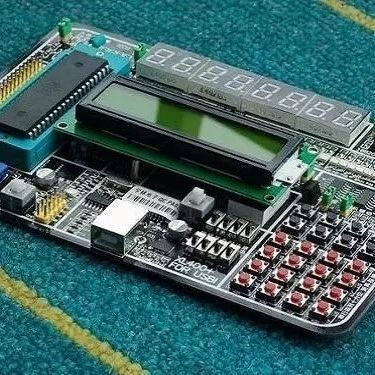
A microcontroller is essentially a small computer, and just like a large computer, it requires a data storage system. Microcontrollers have this capability, often integrated with the CPU, making them compact and flexible.Until the early 1990s, the most accessible microcontroller in China was the 8031: a chip without built-in memory, requiring external RAM and ROM … Read more
Embedded Storage Technology (Part 3): EEPROM
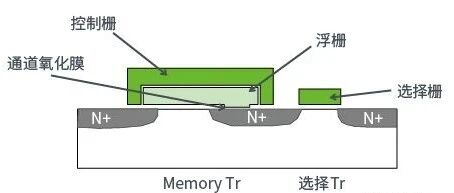
EEPROM is an Electrically Erasable Programmable Read-Only Memory with non-volatile characteristics, widely used for storing device parameters. Its core is based on a floating-gate transistor structure, allowing for byte-level erasure and writing (with a lifespan of 100,000 to 1,000,000 cycles). Compared to EPROM, it does not require ultraviolet light for erasure, making it more convenient … Read more