With the rapid development of technology, artificial intelligence has permeated various industries, changing our way of life. In the toy sector, the integration of AI has sparked an unprecedented transformation. From voice recognition to interactive feedback, toys are no longer just simple entertainment tools; they have become “life companions” that carry emotional support, educational enlightenment, and multiple functions. Recently, reporters visited several toy markets and consumers in Shijiazhuang.
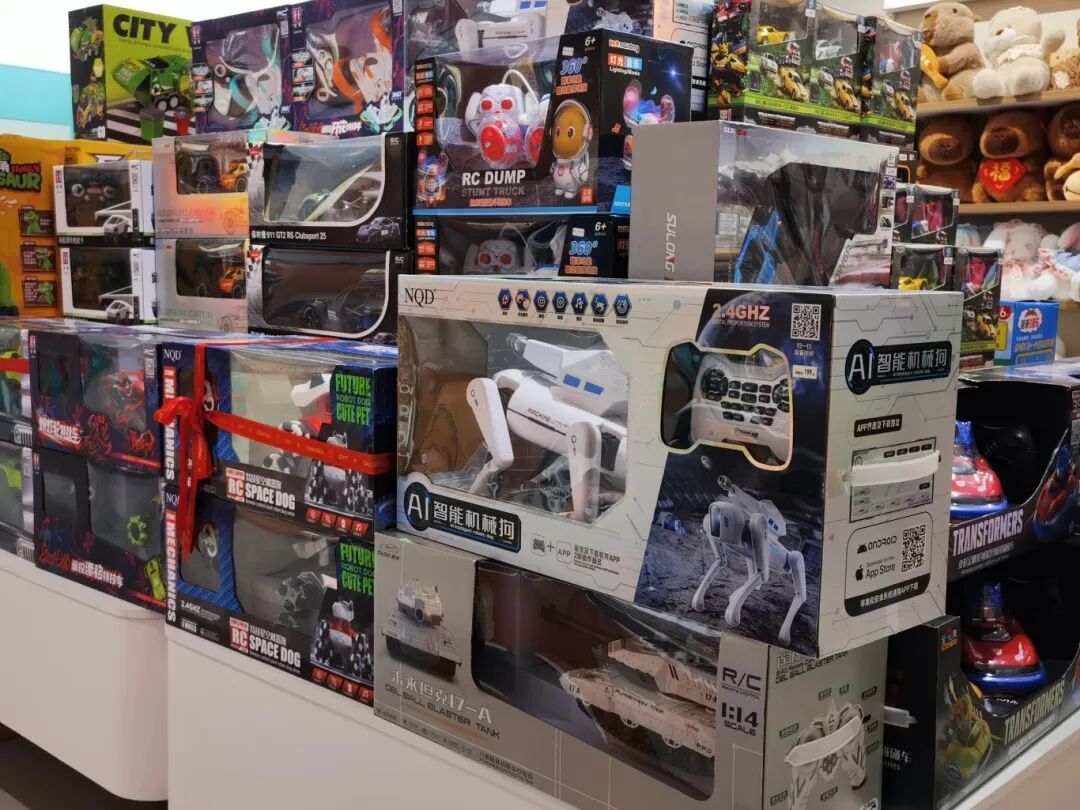
The image shows AI robotic dogs and other smart toys on the shelves of a shopping mall.
Rising Trend
AI Toys Become New Favorites Among Consumers
Unlike traditional toys, the core of AI toys is to achieve highly anthropomorphic interactive experiences through technologies such as multimodal interaction, emotional recognition, contextual memory, and adaptive learning. Currently, the consumer demographic for AI toys is expanding beyond just children to include all age groups.
According to data from e-commerce platforms, in the first half of 2025, the sales of AI toy products increased sixfold compared to the previous period, with a year-on-year growth rate exceeding 200%. According to reports from CCTV Finance, the global AI toy market size surpassed $11 billion in 2024 and is expected to reach $58 billion by 2030 (approximately 416.29 billion RMB), with an average annual growth rate exceeding 20%.
In the Wanting Toy Store at the Letai Center Mall in Shijiazhuang, a dazzling array of traditional toys stands alongside emerging AI toys. Many parents and children stop by the latest AI robotic dog. This toy can interact with children through voice commands, teaching them English, singing, telling stories, and even interacting with children using bionic tentacles. Ms. Zhang, who just placed an order, told reporters: “This AI toy not only accompanies my child but also engages in multilingual communication and physical interaction. It can even correct my child’s English pronunciation, allowing them to learn while playing. These toys are not only fun but also have educational significance.”
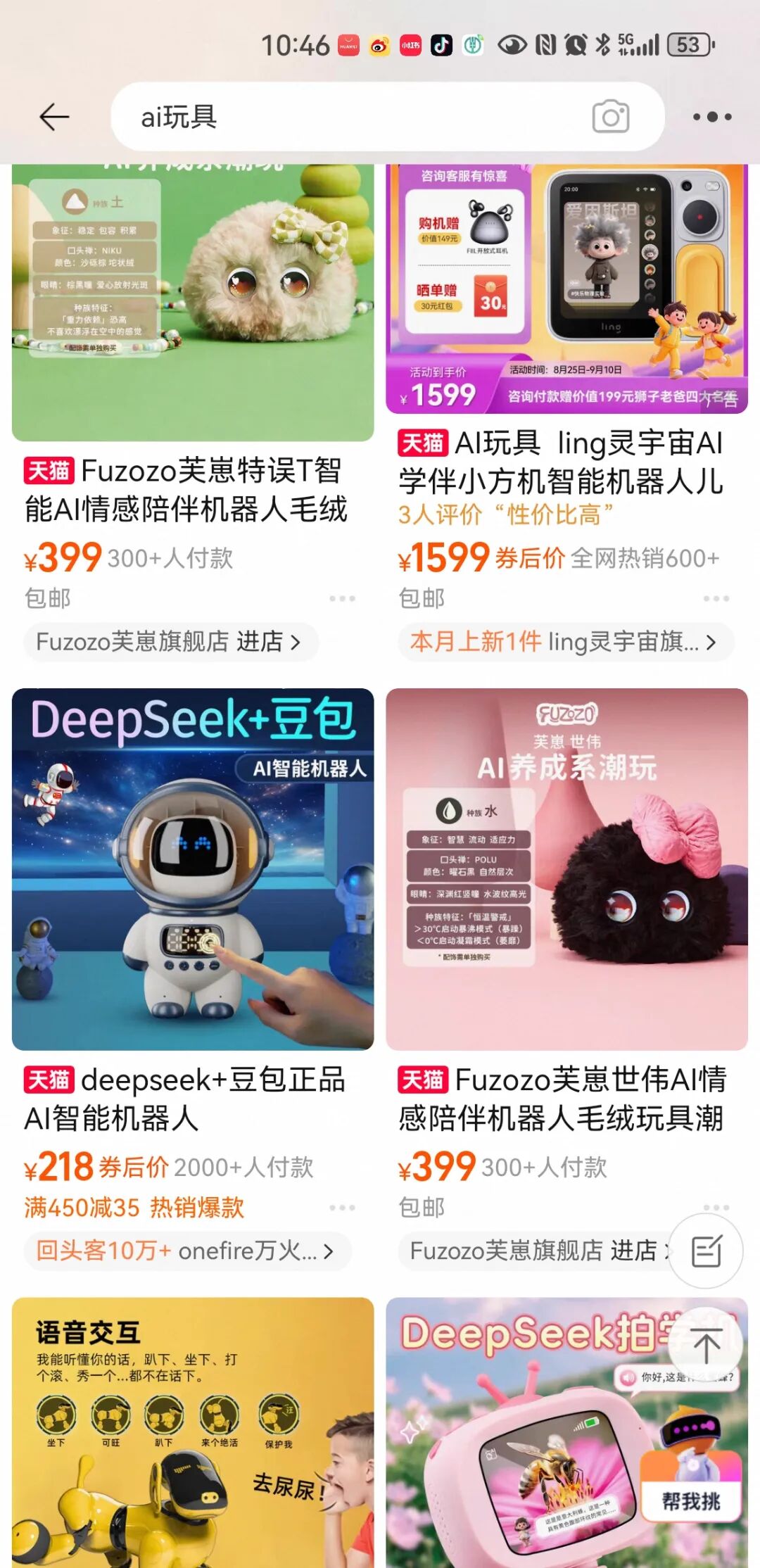
The image shows a variety of AI toys available on e-commerce platforms.
Currently, the main battlefield for AI toy sales is still online platforms. The head of the toy and musical instrument department at a major e-commerce platform pointed out that AI toys have become a sales hotspot on the platform. By the end of last year, consumers had already begun searching for AI toys on e-commerce platforms, with data showing rapid growth, maintaining an astonishing doubling rate every month. The booming market has attracted a large number of merchants, with over 5,000 businesses already entering this sector.
Wang Wenyu, who lives in Yuhua District, recently purchased a “Kedoubei” AI robot for her 5-year-old child on an e-commerce platform. This AI toy, shaped like a “big-eyed rabbit wearing glasses,” not only has a fluffy texture but also boasts powerful features. “Previously, the traditional story machine I bought for my child was discarded after two days. The content was repetitive, and it quickly became boring. This toy not only tells stories but also engages in story relay games, selects plots, and even helps with sleep. Its conversational abilities are impressive, and my child’s expressive skills have improved while playing with it. The most surprising feature is its interactive storytelling, which is not a one-way delivery. The AI acts like a patient little teacher, telling stories and posing questions: ‘Which path do you think the rabbit should take?’ At first, my child was hesitant to respond, but after some guidance, they began to speak more. Now, they chase after the Kedoubei every day to chat.” Additionally, this toy has rich NFC-themed gameplay: story adventures, story relays, etc. The operation is user-friendly; just tap the NFC card, and the Kedoubei will play, with its eye screen changing expressions and transforming into scenes from the story, which is highly attractive to children.
The combination of the toy’s appearance and its strong interactivity has sparked a wave of consumer enthusiasm for AI toys this year.
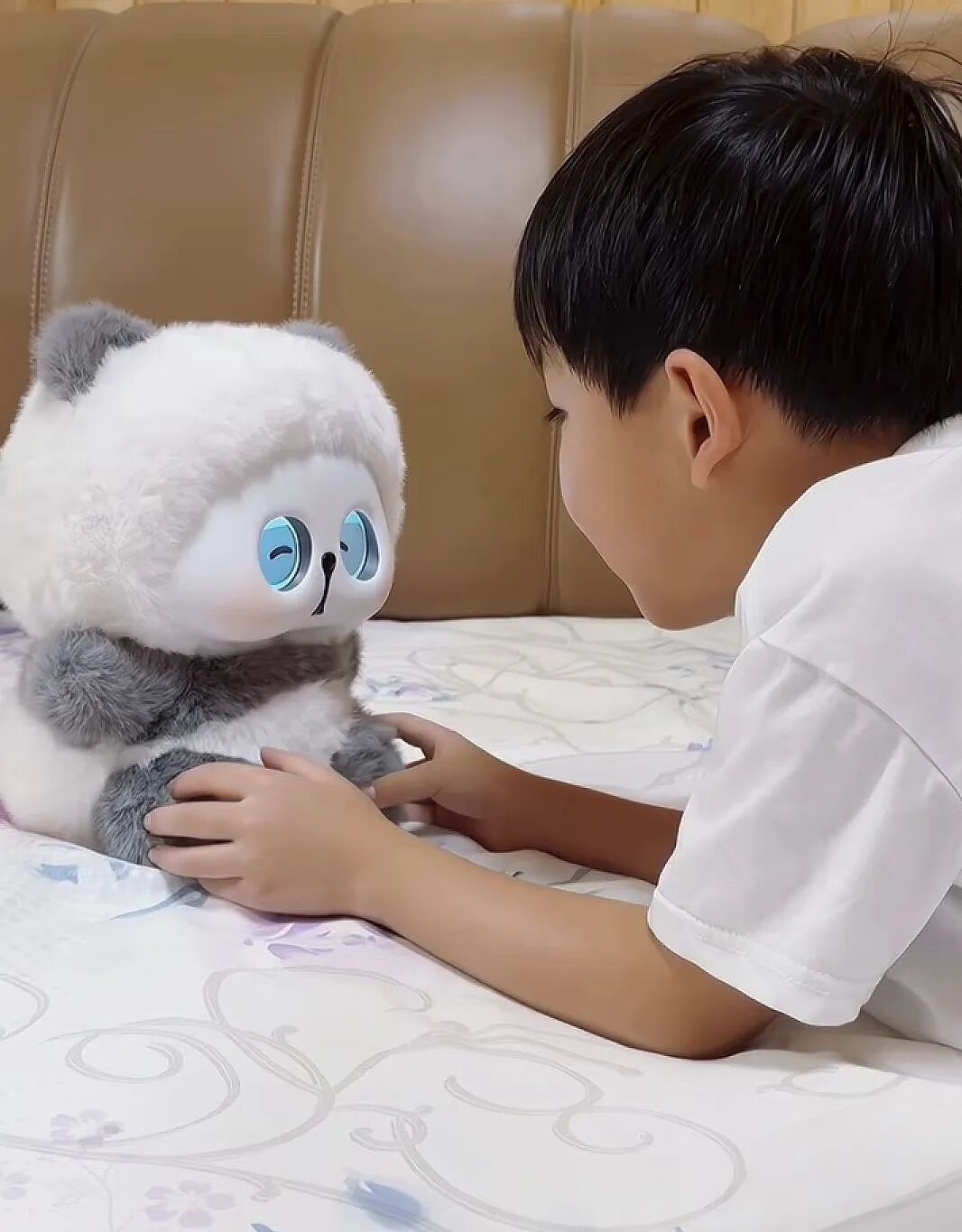
The image shows a child interacting with an AI toy.
What Sparked This Rise
Brand and Emotional Value Combined
In November last year, ByteDance launched the AI companion doll “Xianyan Bag,” which was initially just an internal gift but unexpectedly ignited market demand, with prices on second-hand trading platforms soaring to 500 RMB.
This product, with its soft and cute appearance, friendly interaction design that can call out “master,” and integration of advanced technologies such as the Doubao large model, professional version of buttons, voice recognition, and synthesis, enables bilingual emotional communication and even mimics parents’ tones, far surpassing traditional plush toys in both fun and technological content. Data from Taobao at the time showed that the number of toy products labeled with “AI” or “artificial intelligence” had exceeded 1,000.
Since the beginning of this year, many merchants have actively entered the children’s AI toy field, estimating it to be a vast emerging market. Similar “IP + AI” cases are not uncommon. Aofei Entertainment has integrated the “Pleasant Goat” IP with AI technology, launching the Pleasant Goat AI Bell Doll and AI Plush Series; Tom Cat has developed emotional companion robots based on its IP and is committed to creating customized vertical models for children.
However, successfully leveraging IP is not a universal phenomenon. The rapid spread of AI toys from niche hobbies to the mass consumer market is deeply rooted in their precise alignment with user psychology. AI toys targeting the children’s market often emphasize “smart parenting” as a selling point, highlighting the practical value of the product rather than being mere “technological gadgets.” Products like AI early education machines and smart pet robots aim to innovate traditional educational methods through interactive learning features. For example, most AI pendant toys on the market can generate personalized stories, and the Tom Cat robot can provide English conversation training, emphasizing their educational value.
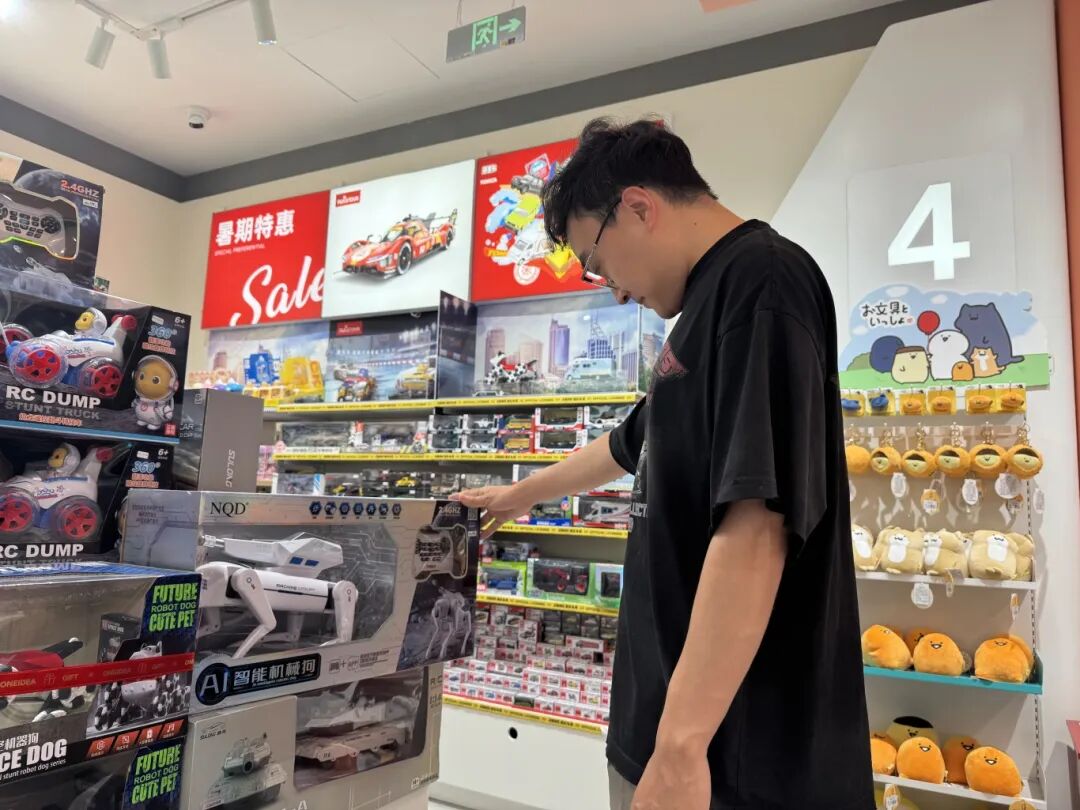
The image shows citizens shopping for AI toys in a mall.
On the other hand, AI toys also precisely tap into the “emotional economy.”
A young mother from Shijiazhuang, Zhang Huiwen, shared her experience of purchasing an AI toy in an interview. She said: “The AI toy I bought for my child not only tells stories and plays but also reacts differently based on the child’s emotional changes. Sometimes, when my child is upset, the toy comforts them with a gentle voice, and even asks, ‘What’s bothering you?’ ‘I’m here with you,’ and similar phrases, responding to my child’s answers with deeper language comfort. This emotional resonance was unexpected for me; I feel this toy provides my child with a greater sense of companionship.”
Contemporary consumers’ demands for toys have transcended mere entertainment functions, shifting towards more practical educational value and emotional healing. You might think that just being able to chat is enough, but that underestimates AI toys. Currently, some companies have introduced AI toys that even include sleep aid sounds, targeting the workplace stress relief needs of workers. There are also AI pets with medication reminder functions, aimed at elderly companionship scenarios, focusing on professionalism.
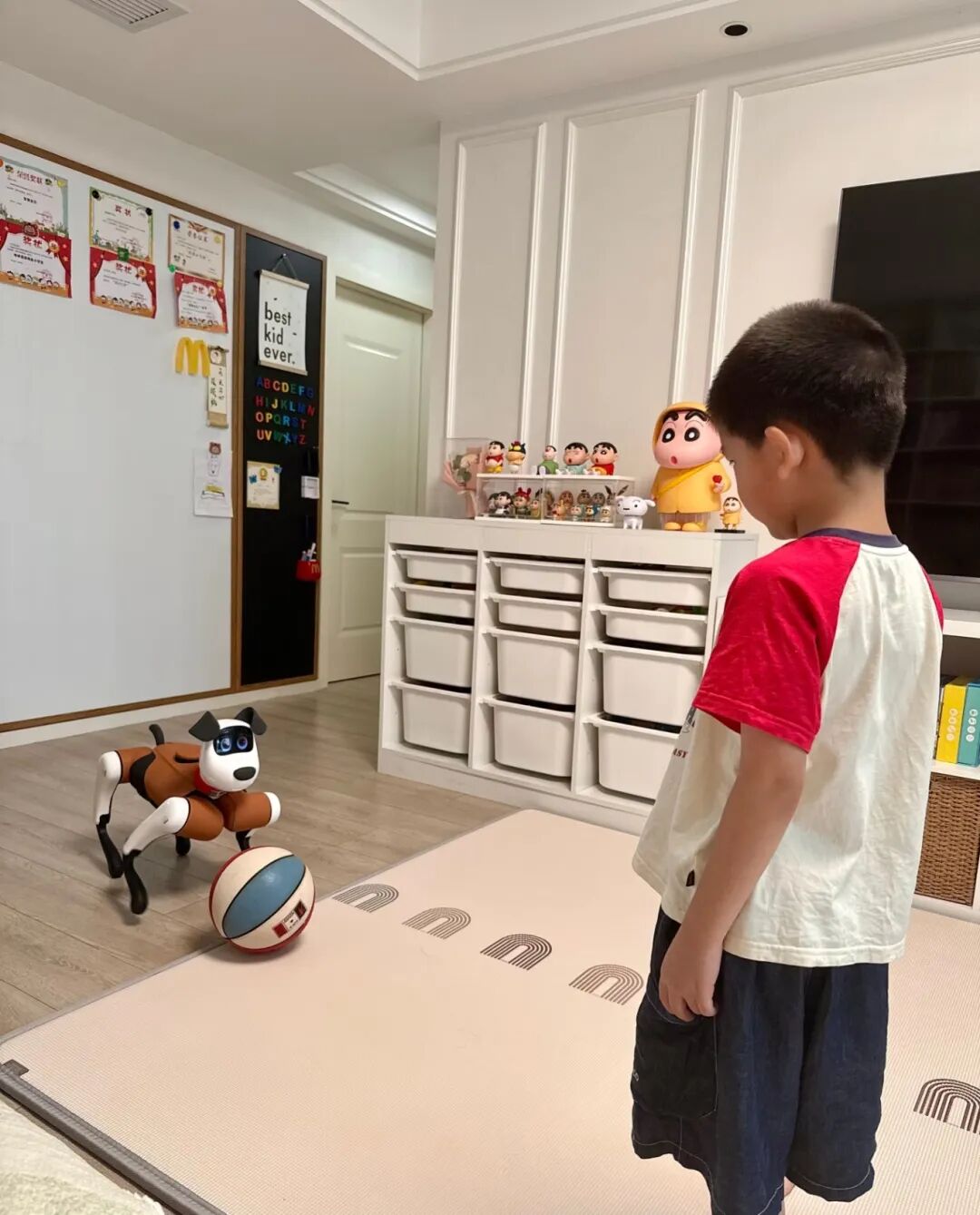
The image shows a child playing games with an AI robotic dog.
Huge Potential
Products Still Need Improvement
Although the market prospects for AI toys are broad, their development also faces some challenges and concerns.
Firstly, despite the strong interactivity and educational nature of AI toys, over-reliance on technology may have negative effects. Experts point out: “While AI toys can aid children’s learning and emotional development, excessive immersion in these high-tech toys may affect their social skills, especially face-to-face communication and emotional expression. Parents should not allow children to become overly dependent on these products but should engage in play with them to promote more interaction and socialization.”
Secondly, from a technical perspective, the speed of updating AI toy functions and content may pose a challenge. With continuous technological advancements, AI toys need to be iteratively updated to meet the growing demands of parents and children. If brands fail to update their technology and content in a timely manner, they risk losing market competitiveness.
Finally, privacy and data security issues are increasingly becoming a focus of concern for parents. As AI toys become more connected to the internet, parents worry that their children may leak personal information or encounter data security issues while interacting with the toys. In response, industry insiders suggest that companies should strengthen technical protections to ensure that the usage data of AI toys is not misused or leaked, safeguarding user privacy and security.
Overall, the market potential for AI toys is enormous, and their unique interactivity, educational value, and emotional functionality make them an important part of future entertainment and education for children and even adults. However, to secure a place in a competitive market, AI toys need not only innovative technology and rich content but also continuous improvements in pricing, privacy protection, and user experience.

Reporter: Yin Shangyang Text/Images
Editor: Song Lina
Reviewer: Feng Jinlian