
Click the blue text above to follow us.
With the long-term development of Internet of Things (IoT) technology, Bluetooth anti-loss devices have entered the public’s view, becoming a convenient tool for many people to locate their belongings.
Based on this, this issue will dissect this product, exploring whether there are unique aspects in its craftsmanship details and hardware solutions.
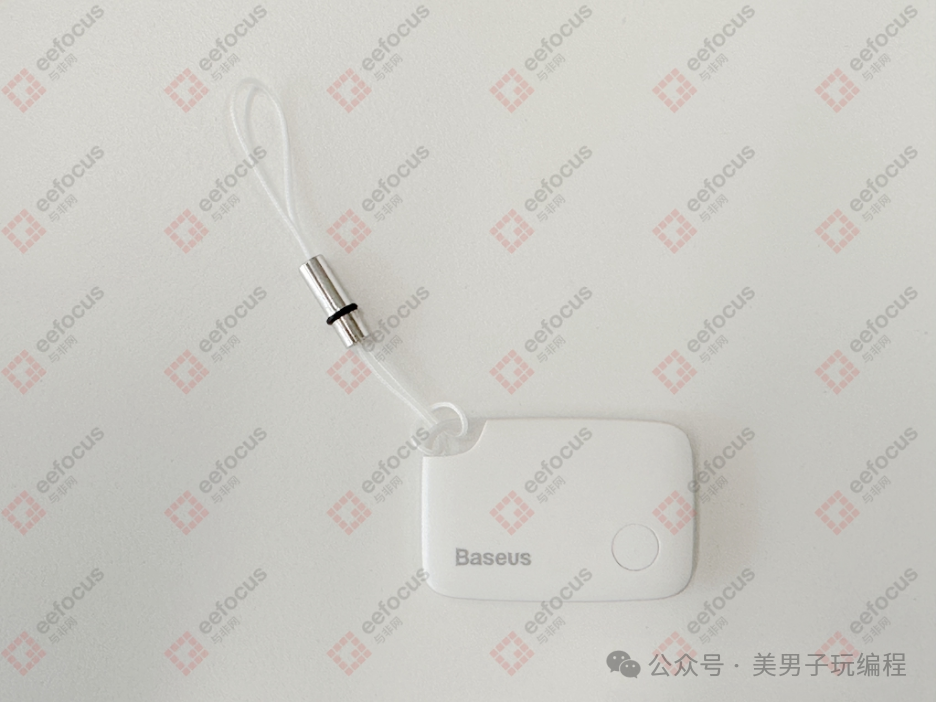
From the perspective of exterior design, the Baseus Bluetooth anti-loss device exhibits differentiated features: it adopts a rectangular card shape with sharp lines, and the front is equipped with a physical button, primarily serving the function of “reverse phone search”.
The side of the device is specifically designed with a speaker hole, aimed at expanding the propagation range of the alarm sound, making it easier for users to locate items by sound. This summarizes the exterior features; next, we will directly enter the disassembly phase to explore its internal structure.
The Baseus anti-loss device employs the simplest snap-fit assembly design—no special tools like screwdrivers are needed; the shell can be pried open gently from the seam, and no glue was found securing it during the entire process.
The advantages of this design are quite intuitive: users will find it very convenient to replace the battery, but the corresponding shortcoming is also evident—lack of glue sealing means the product is not waterproof, and it should be kept away from water or humid environments during daily use.
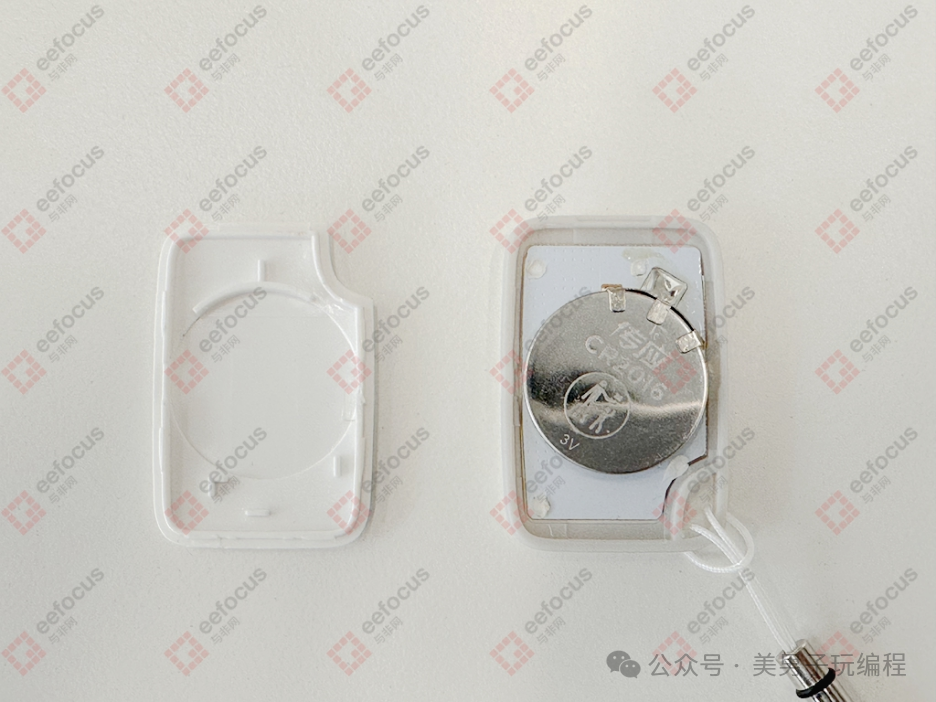
After opening the back cover, the core power supply component is clearly visible: it is equipped with a CR2016 button battery from the brand Chuan Ying, with a nominal parameter of 3V/75mAh.
According to official Baseus data, this battery can support approximately 180 days of battery life.
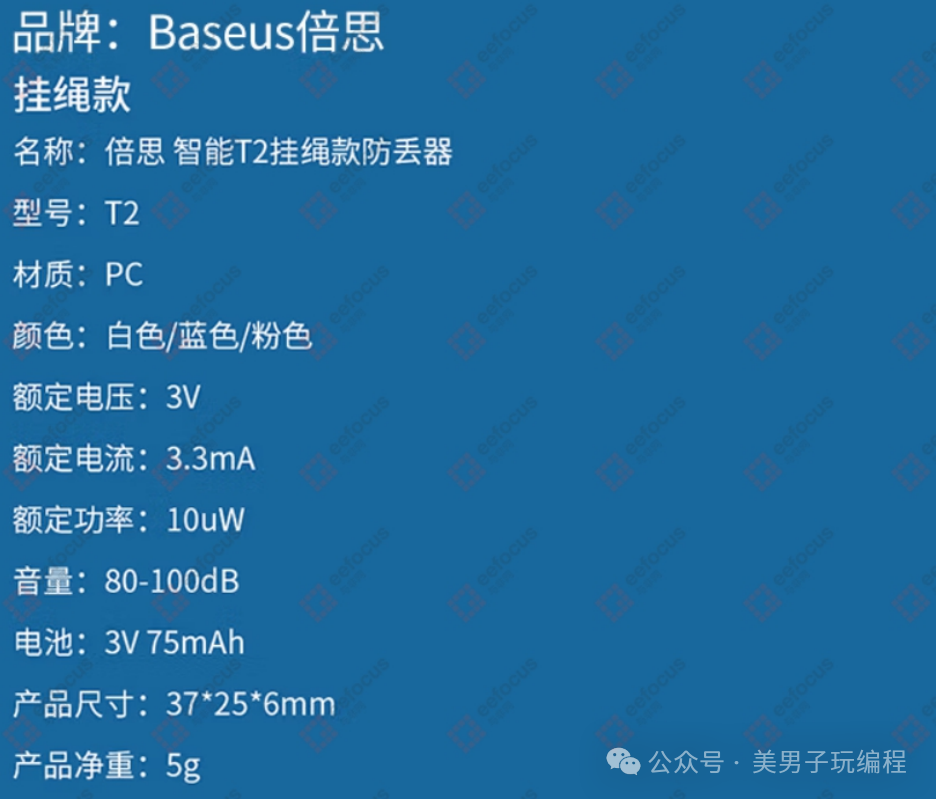
Initially, I had no doubts about this battery life data, but upon seeing the “rated current” parameter marked on the product’s official JD store page, doubts arose—based solely on this current value, it raises questions about whether it can sustain even one day of normal use, casting doubt on the product’s actual battery life.
Continuing the disassembly, after removing the battery and PCB mainboard from the device, the simplicity of its internal structure is impressive (as shown in the figure below).
A ceramic piezo buzzer is fixed on the back cover, and its ultra-thin design perfectly meets the needs of products like anti-loss devices that are “sensitive to internal space height,” allowing it to achieve alarm functionality without taking up too much space.
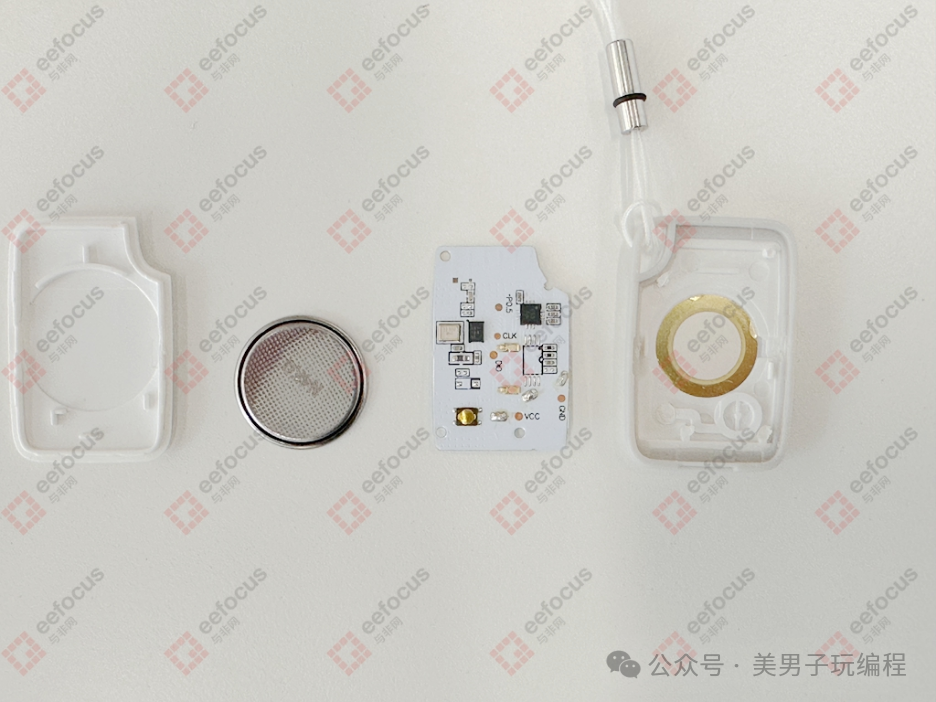
Looking at the PCB mainboard, its circuit layout is also extremely simplified: the two metal spring contact points in the center of the mainboard are specifically used to connect to the ceramic piezo buzzer. Through this design, the product can achieve a maximum alarm volume of 90dBm, ensuring that users can clearly hear the alert sound.
Adjacent to the 32MHz crystal oscillator is the IC chip, which is the Bluetooth core chip of this anti-loss device—based on the circuit connection method, the Bluetooth chip is directly powered by the button battery; the front antenna circuit is even simpler, consisting of just one filter and one capacitor, with the antenna made using PCB printing technology.
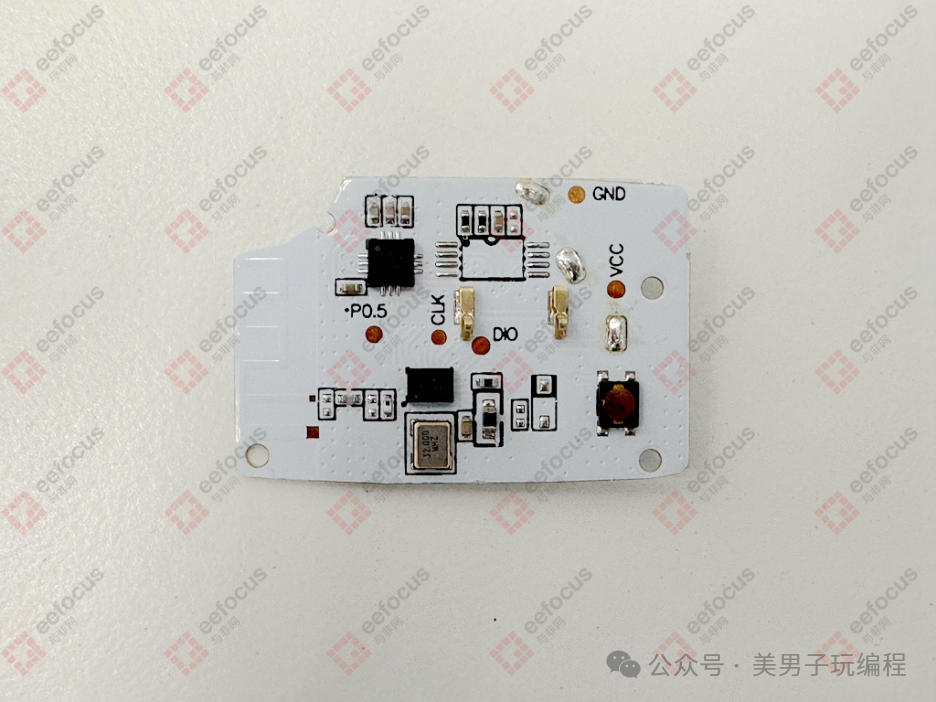
The overall circuit is extremely streamlined, leading to the inference that the core finding principle of this product relies solely on basic Bluetooth signal strength to determine the distance between the item and the phone, without incorporating more precise positioning technology.
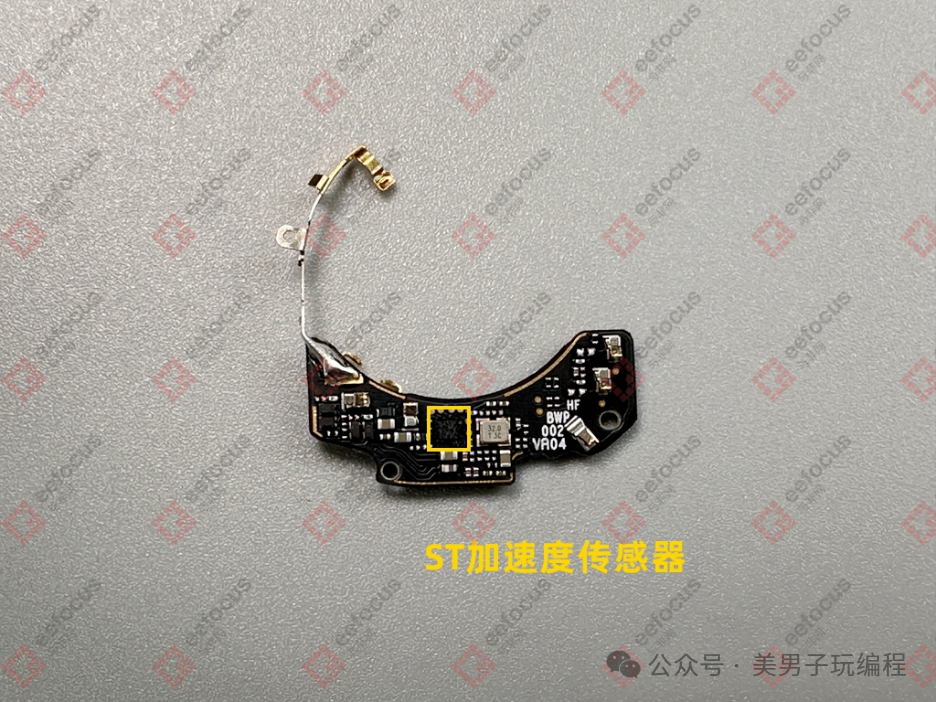
Regarding another IC chip on the mainboard, there are currently two speculative directions:
- It could be an accelerometer, primarily used to simply determine the movement trajectory of the item, assisting in achieving basic functions like “displacement alarm”;
- Or it might be an audio amplifier chip, whose core function is to drive the ceramic piezo buzzer to sound, ensuring the alarm volume meets design standards.
If any readers are familiar with the specific model and function of this chip, feel free to share in the comments.
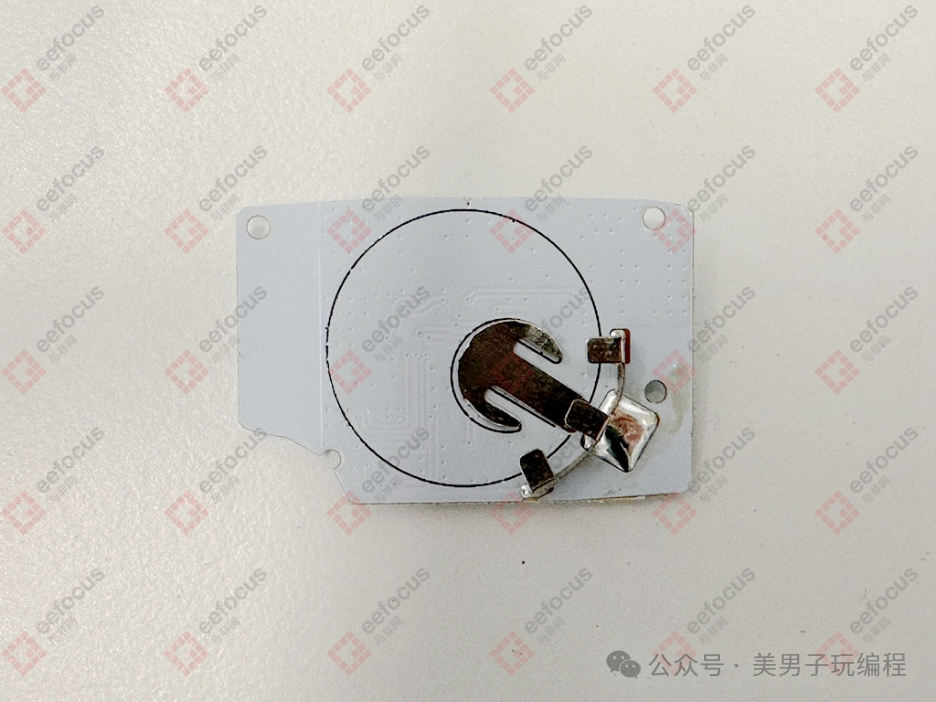
It is worth noting that the back of the PCB mainboard is designed with only one button battery interface, without any other electronic components.
From this perspective, the internal design of the entire Bluetooth anti-loss device is indeed “extremely minimal”.
If you think this type of product represents the mainstream standard of Bluetooth anti-loss devices, you might want to compare it with the hardware solutions of Apple and Huawei’s anti-loss devices to see where the differences lie.
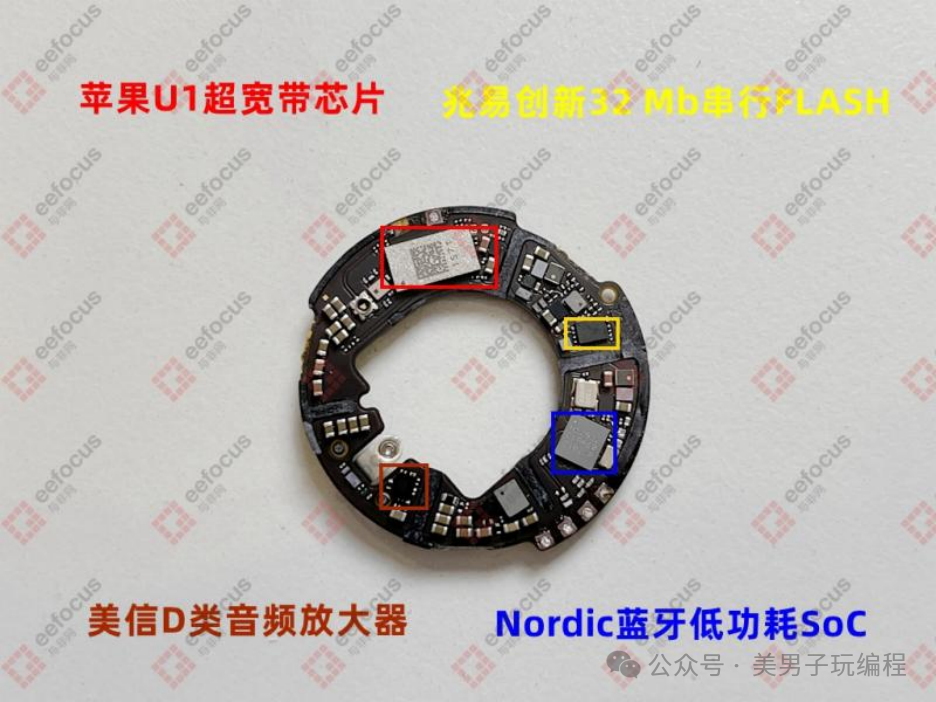
This is the internal hardware solution of Apple’s Airtag Bluetooth anti-loss device.
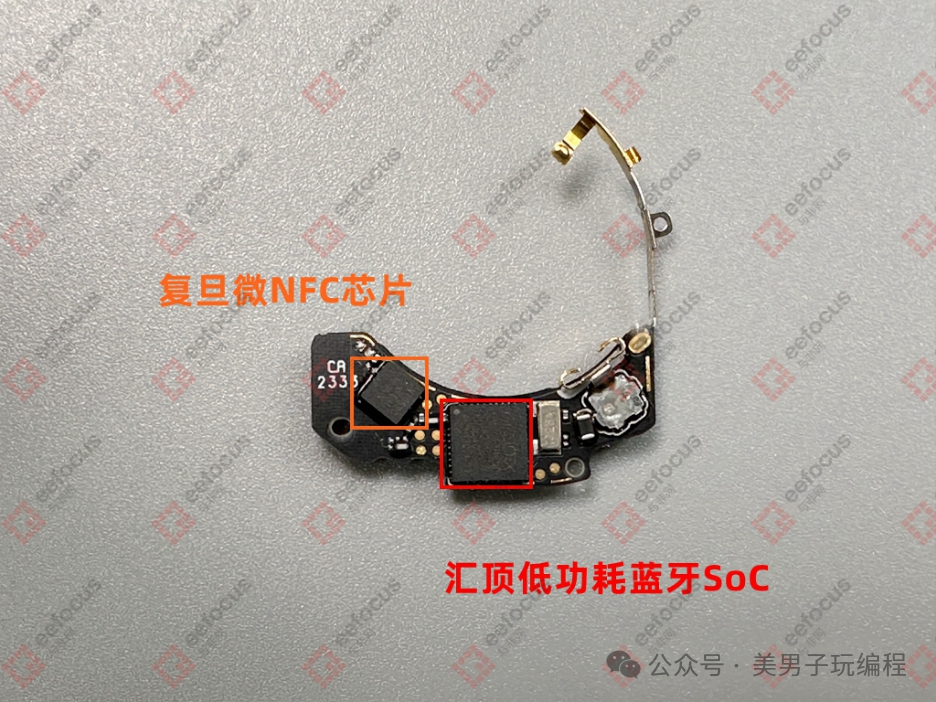
This is the internal hardware solution of Huawei’s Tag Bluetooth anti-loss device.
In summary, the “minimalist approach” of the Baseus Bluetooth anti-loss device has clear advantages: the simplified hardware solution reduces production costs, and the snap-fit design without glue enhances battery replacement convenience, allowing the product to be marketed at a lower price, attracting users sensitive to “basic anti-loss needs” and price.
However, at the same time, the shortcomings of this strategy are also very prominent:
-
Functionally: relying solely on Bluetooth signal strength for positioning lacks precise positioning technology and ecological interaction capabilities, failing to meet users’ core needs for “quick and precise item finding”;
-
Quality-wise: the glue-free design results in the product lacking waterproof capabilities, limiting daily use scenarios and significantly reducing durability;
-
Parameter contradiction: the rated current marked by the official and the “180 days battery life” promotion conflict, leading users to doubt actual performance.
Although the “minimalist” strategy successfully lowers the product price, it may also lead to the product failing to meet users’ core expectations for “precise anti-loss” in terms of user experience. For users needing reliable and precise anti-loss functionality, the practicality of such products is low, and they may even become “electronic waste”.
From an industry perspective, competition in niche markets should not only focus on “low-price competition” but also needs to enhance product value through technological innovation and functional upgrades. Only by making users feel that “the product is worth the price” can one truly establish a foothold in the segmented market, rather than being a flash in the pan.

 Click to read the original text for more exciting content~