Click the blue text to follow us

“
Development of Ultrasonic Wind Speed and Direction Sensor
”

01
#
Research Overview
#
With the introduction of China’s dual carbon goals, the development momentum of wind power generation is becoming increasingly rapid. However, the high randomness and uncertainty of wind significantly affect the efficiency and output power of generating units, necessitating real-time wind speed and direction information in wind farms to adjust the operating status of generating units, ensuring they can operate efficiently, reliably, and safely.
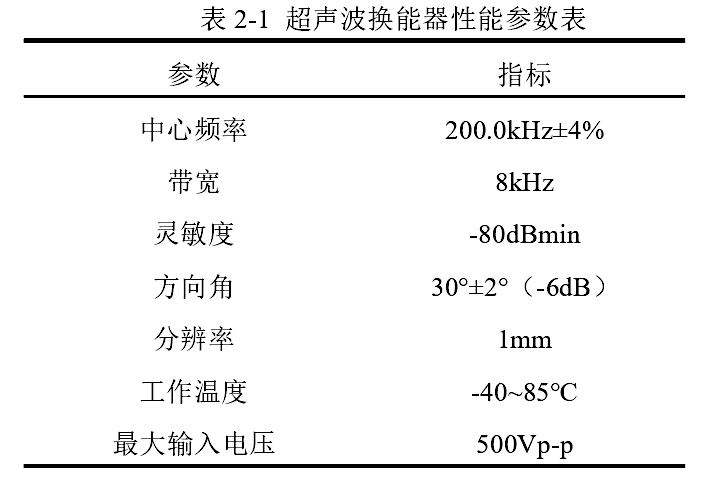
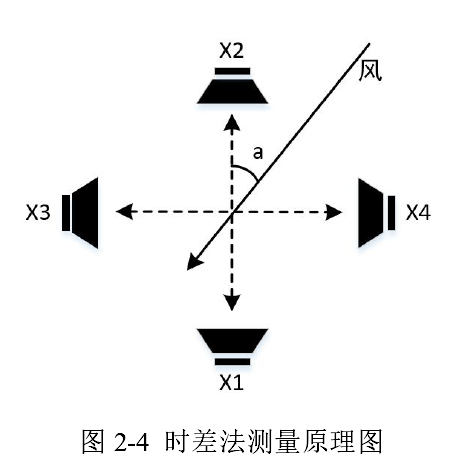
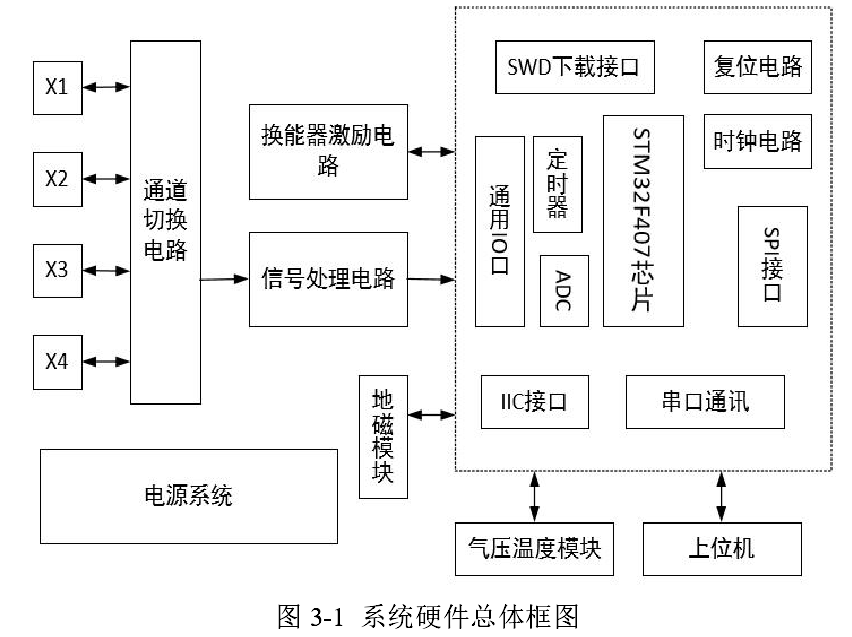
Tian Zhao from Northeast Electric Power University designed an ultrasonic wind speed and direction sensor based on the time difference method, using the STM32F407VET6 microprocessor as the control core of the system to measure the propagation time of ultrasonic waves, thereby calculating the specific values of wind speed and direction. The system is primarily designed from both hardware and software perspectives.
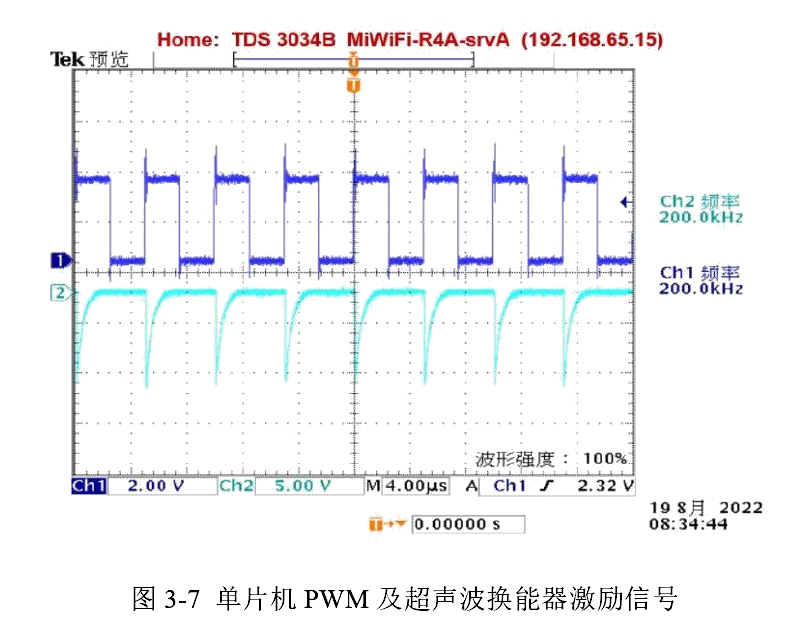
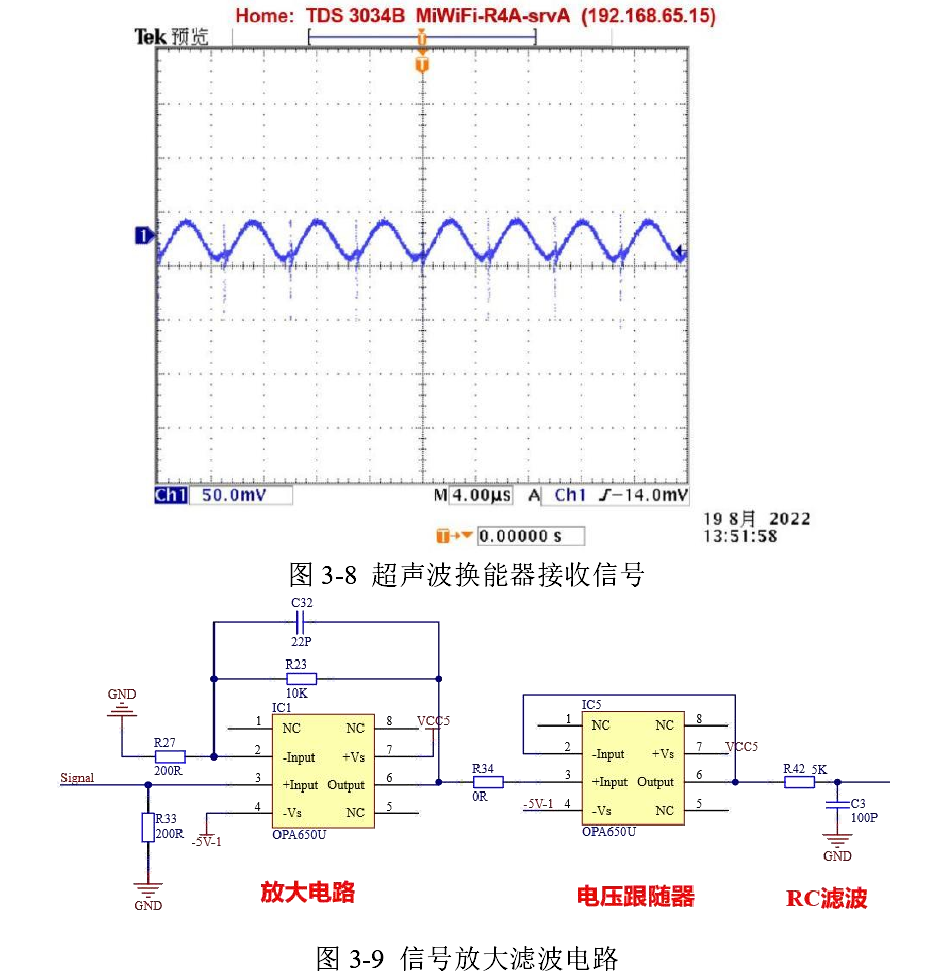
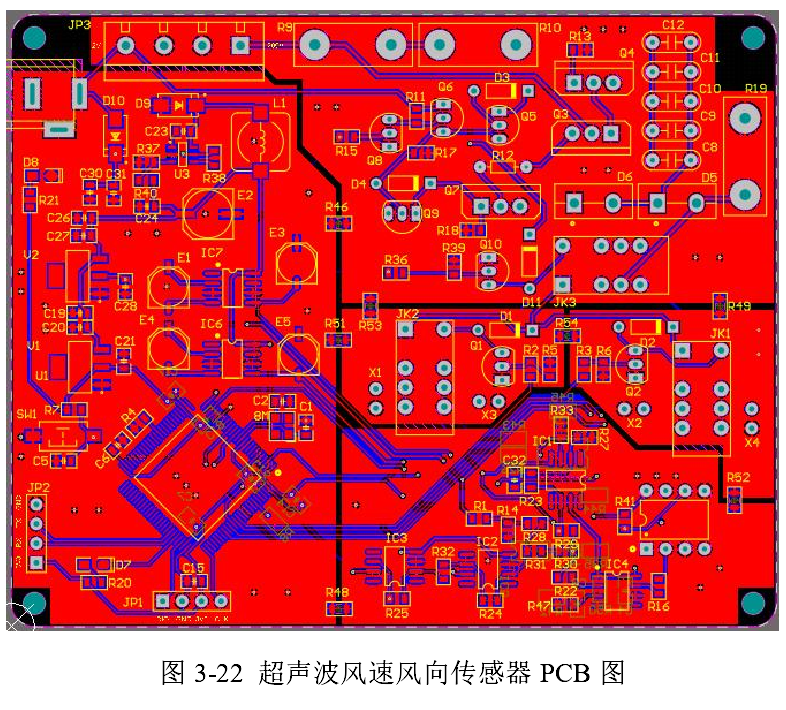
Hardware: A minimal system for the microprocessor was designed to enable the entire system’s logical control; a fixed pulse method was used to directly drive a high-power switch tube to generate ultrasonic waves from the ultrasonic transducer; a low-power, high-bandwidth operational amplifier was used for the signal processing circuit design to amplify and filter the received signals, which were then converted into digital signals by a voltage comparator for final processing by the microprocessor; the HMC5883L was used as the orientation detection unit to provide reference for sensor installation; the BMP180 was used as the environmental detection unit to monitor the sensor’s working environment in real-time; a DC-DC module and LDO power supply chip were used to construct the power circuit of the system, serving as the power source for various chips in the hardware circuit; Altium Designer 20 software was used for PCB layout, routing, and board fabrication, ultimately completing the overall hardware circuit testing.
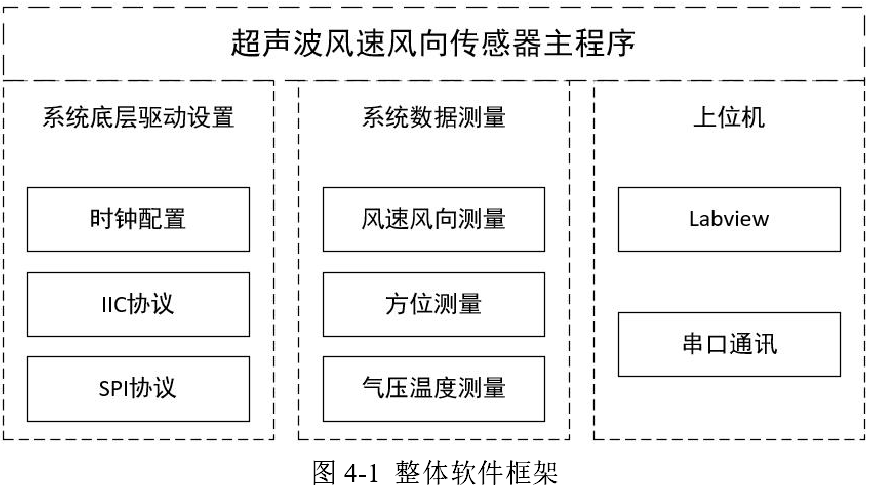
Software: A timer capture interrupt method was used to obtain the propagation time of the ultrasonic waves, with an array used to record and save the data for easy access during microprocessor calculations; the microprocessor’s IO output controlled the relay and ADG904 channel switching to achieve the conversion of the transducer’s transmission and reception functions; IIC communication was utilized to operate the registers of the pressure and temperature module and geomagnetic module, enabling accurate measurement of orientation and pressure/temperature information; the communication protocol and clock configuration at the system’s lower level were designed to facilitate communication between peripheral modules and the microprocessor.
A testing platform was built in the laboratory environment to conduct comprehensive testing of the ultrasonic wind speed and direction sensor and analyze measurement errors. For measuring the propagation time of ultrasonic waves, the Hilbert-Wavelet transform was used for optimization, which advanced the signal arrival time by two cycles compared to the threshold method, improving the measurement accuracy of the ultrasonic signal propagation time.
02
#
Research Process
#

References:
[1] Zhao Tian. Development of Ultrasonic Wind Speed and Direction Sensor [D]. Northeast Electric Power University, 2023.
Disclaimer: All images and text used in this article are reproduced. If there are any copyright issues, please inform us immediately, and we will confirm and delete the content based on the proof you provide.The content of this article represents the author’s personal views and does not reflect the views or positions of Ultrasonic Intelligent Measurement Island.
Special Reminder: To enhance scientific research innovation and various services, we have opened a professional communication group for ultrasonic scientific and technological cooperation QQ Group 115997706. We provide free services for companies and research institutions, including: 1. Company introductions; 2. Recruitment; 3. Product promotion; 4. Technical exchanges, etc. Interested friends can contact us through QQ group or public account. Please note your name, organization, and research direction when joining the group (without a note, we regret that we cannot approve), and the editor will review and invite you to join.

END