Energy Adaptive Wireless Sensor Network (WSN) Protocols: A Comparative Study of LEACH, LEACH-C, and LEACH-E (Matlab Implementation)
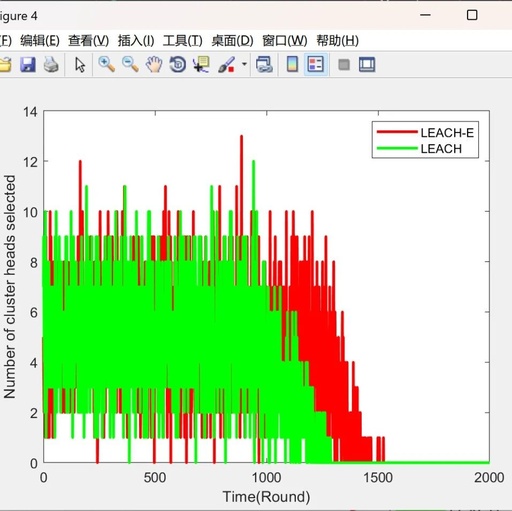
Energy Adaptive Wireless Sensor Network (WSN) Protocols: A Comparative Study of LEACH, LEACH-C, and LEACH-E (Matlab Implementation)

💥💥💞💞Welcome to this blog❤️❤️💥💥 🏆Author’s Advantage: 🌞🌞🌞The blog content aims to be logically clear and coherent for the convenience of readers. ⛳️Motto: A journey of a hundred miles begins with a single step. 💥1 Overview LEACH (Low Energy Adaptive Clustering Hierarchy) is a classic energy-adaptive wireless sensor network (WSN) protocol designed to extend network lifetime. … Read more

Overview of Wireless Sensor Networks

Overview of Wireless Sensor Networks

Authors: Wu Ruirui, Liu Jielin, Source: Longyan Robotics Wireless Sensor Networks (WSN) are self-organizing networks composed of a large number of sensor nodes. These sensor nodes not only can perceive environmental information within the network but also have simple computing capabilities, allowing them to transmit relevant information after sensing and processing. Sensor nodes are the … Read more

Detailed Explanation of Wireless Sensor Networks

Detailed Explanation of Wireless Sensor Networks

With the development of sensor technology, embedded technology, distributed information processing technology, and wireless communication technology, wireless sensor networks (WSN), composed of a large number of micro-sensor nodes with micro-processing capabilities, have gradually become a research hotspot. Compared to traditional wireless communication networks such as Ad Hoc networks, the self-organization, dynamism, reliability, and data-centric features … Read more

Overview of Wireless Sensor Networks

Overview of Wireless Sensor Networks

Shenyang University of Technology, Wu Ruirui, Liu Jielin Introduction Wireless Sensor Networks (WSN) are self-organizing networks composed of numerous sensor nodes. These sensor nodes not only sense environmental information within the network but also possess simple computational capabilities, allowing them to transmit the relevant information after sensing and processing. Sensor nodes are the most crucial … Read more

Underwater Wireless Sensor Networks: Current Research and Challenges

Underwater Wireless Sensor Networks: Current Research and Challenges

Authors: Wang Jing, Chen Jianfeng, Zhang Lijie, Huang Jianguo, Source: Streams of Ocean Life 1. Introduction Underwater wireless sensor networks (UWSNs) utilize aircraft, submarines, or surface vessels to randomly deploy a large number of inexpensive miniature sensor nodes (ranging from hundreds to thousands) into the water of interest. These nodes form a multi-hop, self-organizing network … Read more