Current Research Status of Wireless Sensors at Home and Abroad The development of wireless sensor networks can be traced back to traditional wireless sensor systems in the 1970s. The “Tropical Tree” sensor developed by the U.S. military at that time was an early wireless sensor system characterized by sensor nodes that could only collect data, lacking computing capabilities and the ability to communicate with each other. Modern research on wireless sensor networks originated in 1987 when the U.S. Department of Defense’s Advanced Research Projects Agency (DARPA) launched a research project called Distributed Sensor Networks (DSNs) for the U.S. military. Prior to this, a distributed network called ARPANET (Advanced Research Projects Agency Network), led by the U.S. Advanced Research Projects Agency (ARPA), had been operating for many years, consisting of about 200 nodes distributed across universities and research institutions nationwide. In 1998, Professor Gregory J. Pottie from the University of California, Los Angeles, redefined and elaborated on the scientific significance of wireless sensor networks from the perspective of network research, sparking a new wave of research in wireless sensor networks. The research hotspots mainly focus on network technology, information processing technology in dynamic networks, and the development of new sensor nodes. Today, wireless sensor networks are recognized as one of the most important technologies of the 21st century, receiving more attention internationally since entering the 21st century. In 2002, the Sandia National Laboratories of the United States collaborated with the Department of Energy to develop a subway and station environment monitoring system based on wireless sensor networks to prevent biochemical weapon attacks; in 2003, the National Science Foundation of the United States established a research plan for wireless sensor networks and set up a sensor network research center at UCLA; several universities, including Cornell University and the University of Southern California, have focused on researching communication protocols for wireless sensor networks, proposing various link layer, network layer, and transport layer communication protocols. In addition, some universities and research institutions in Europe and Japan have also launched research on wireless sensor networks and achieved corresponding research results. In China, wireless sensor networks have also been listed as one of the national strategic research projects, and the technology has been widely used. For example, China National Petroleum Corporation has utilized Internet of Things technology to build smart oil fields on a large scale, where a crucial part involves using wireless sensor networks to monitor oil well production and production safety. In addition to international natural science foundations and the 973 National Key Basic Research Program, many higher education institutions such as the Chinese Academy of Sciences, Tsinghua University, Zhejiang University, Southeast University, Nanjing University of Posts and Telecommunications, and Beijing University of Posts and Telecommunications have also started research on wireless sensor networks, resulting in numerous high-standard, high-quality, multi-research-point projects and journal papers. Research on the Application of Wireless Sensor Network Positioning TechnologyCurrently, wireless sensor technology is mainly applied in the following key areas:(1) Military Field Wireless sensor networks originated from military needs. In modern information warfare, utilizing their small size, good concealment, and large deployment monitoring areas, they can be covertly and safely deployed behind enemy lines via airdrops to carry out extensive, long-term strategic and tactical reconnaissance missions, monitoring enemy weapon deployments and tracking and identifying specific targets. This way, commanders can obtain richer intelligence information while minimizing casualties. (2) Medical and Health Thanks to the real-time and rich capabilities of wireless sensor networks, more and more medical institutions are investing in the application of WSN. With the development of sensor miniaturization technology, researchers have designed various wearable medical systems based on WSN. Multiple micro-medical sensors are placed on patients to monitor physiological indicators such as blood pressure, heart rate, electrocardiograms, body temperature, and pulse in real-time, allowing medical workers to easily collect a large amount of physiological information about patients without affecting their daily lives, enabling more comprehensive judgments and better treatment plans. (3) Environmental Monitoring With continuous economic development and population expansion, the severe smog pollution that has erupted in recent years has significantly affected residents’ daily travel and mental and physical health. Whenever smog outbreaks occur, hospitals are filled with respiratory patients; therefore, deploying wireless sensor networks to monitor PM2.5 is imperative. At the same time, in remote areas such as deserts and primitive rainforests, using wireless sensor networks for flora and fauna, soil, and climate surveys can greatly reduce human labor consumption. (4) Industrial Applications Wireless sensor networks also have broad application prospects in the industrial field, with exceptional safety advantages from not requiring human intervention, allowing them to work reliably in environments where humans cannot survive. For example, in underground mining operations rich in toxic gases, deploying sensor nodes to monitor toxic gas levels and other air indicators in real-time and in nuclear reactors filled with radioactive elements, deploying sensor networks to monitor radioactive material levels in various areas are effective measures to ensure the safety of operators. Since there are often diverse and harsh industrial production environments, deploying sensor networks in environments where personnel cannot safely survive can significantly reduce casualties during the production process and lower production costs, benefiting rapid industrial development. (5) Other Applications Wireless sensor technology is also suitable for life areas such as agriculture, smart transportation, urban management, and smart homes. Smart transportation systems built on wireless sensor networks are expected to achieve automated driving, automatic path planning, and flexible traffic flow control, making travel faster and more convenient; urban management systems can utilize sensor networks to collect massive amounts of information to provide a basis for resource allocation; smart home systems also require real-time monitoring of various indicators of homes, such as temperature, humidity, etc. Therefore, wireless sensor networks have a broad and bright application prospect. Typical Structure of Wireless Sensor Network Systems The typical structure of a wireless sensor network system that uses a homogeneous network for remote monitoring consists of four major hardware components: sensor nodes, aggregation nodes, server-side PCs, and client-side PCs. The functions of each component are as follows. 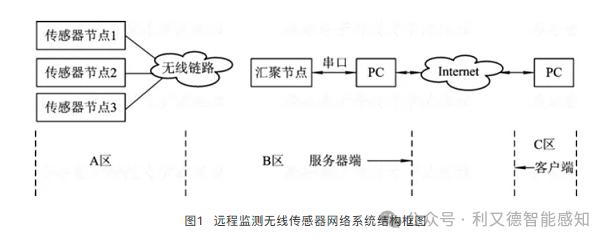 Sensor Nodes Deployed in the monitoring area (Area A), they form a wireless network through self-organization. The data monitored by sensor nodes is wirelessly transmitted along other nodes in a hop-by-hop manner, reaching the aggregation node (Area B) after multiple hops. Aggregation Nodes These are network coordinators responsible for establishing the wireless network, transmitting the information and data wirelessly received from sensor nodes to the server-side PC via SCI (Serial Communication Interface). Server-side PC This is a management node located in Area B and also serves as an independent Internet gateway node. There are two software applications on the LabVIEW software platform: one is a software platform VI for monitoring and managing the wireless sensor network, which is a virtual instrument VI for monitoring the wireless sensor network; the second is a Web Server software module and Remote Panel technology, which can achieve the connection between the wireless sensor network and the Internet. Client-side PC No software design is required on the client-side PC; it can call the front panel of the virtual instrument monitoring the wireless sensor network on the server PC through a browser, achieving remote monitoring and management of the sensor wireless network (Area A) from a remote location (Area C). Sensor Nodes in Wireless Sensor Networks1. Sensors and Their Conditioning Circuits The sensors should be selected according to the environmental characteristics of the area where the wireless sensor network is located, to meet special requirements such as environmental temperature ranges and size. The conditioning circuits connected to the sensors convert the output variations of the sensors into voltage signals of 0~2.5V or 0~5V that are compatible with A/D converters. When in areas without grid power supply, both the sensors and their conditioning circuits should be low power consumption. 2. Data Acquisition and A/D Converters with Microprocessor Systems The computer system in the sensor node is a low-power single-chip microprocessor system that can adapt to harsh working conditions in remote areas far from testing centers. For example, the MSP430-F149A ultra-low-power mixed signal processor produced by Texas Instruments (TI) has built-in sample/hold and 12-bit A/D converters, capable of collecting and converting signals and controlling instructions and data processing for the entire node system. 3. RF Modules The RF modules receive external wireless commands and wirelessly transmit the measured parameter data detected by the sensors, such as the CC2420 wireless transceiver chip from TI. 4. Power Supply Power supply for sensor nodes in wireless sensor networks is a highly specialized technical issue that is currently a research hotspot. If nodes are located in remote areas away from the power grid, battery power or wireless RF power supply methods are generally used. Aggregation Nodes in Wireless Sensor Networks The aggregation nodes in the wireless sensor network shown in Figure 1 are network coordinators, operating the panel controls of the monitoring management software platform on the PC, responsible for executing the configuration and establishment of the wireless sensor network under its instructions, and transmitting the data information wirelessly received from sensor nodes to the PC. Typically, the coordinator consists of four parts: microprocessor systems, RF modules, communication interfaces, and power supplies, as shown in the hardware block diagram.
 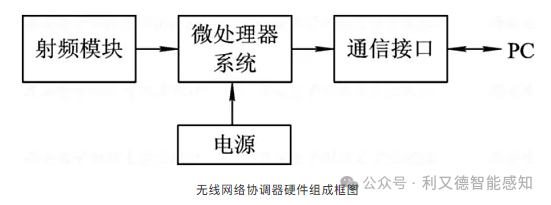 1. Communication Interfaces The communication interface in the coordinator is responsible for communicating with the PC. On one hand, when operating the corresponding controls on the front panel of the wireless sensor network monitoring platform VI on the PC, the communication interface is responsible for transmitting the corresponding instructions, such as network retrieval and data transmission; on the other hand, when the coordinator receives data information wirelessly sent from the sensor nodes, it also uploads it to the PC through the communication interface. 2. Microprocessor Systems The microprocessor in the coordinator is the main controller of the entire wireless sensor network and the core of the coordinator. 3. RF Modules This RF module receives data information wirelessly sent from the sensor nodes, uploads it to the PC via the communication interface; on the other hand, it transmits operational instructions to the sensor nodes via wireless transmission. Wireless Sensor Network Communication Protocols Currently, the IEEE 802.15 working group has completed the formulation of the following standards for wireless personal area networks:
- Medium-speed wireless personal area network standard IEEE 802.15.1—Bluetooth;
- High-speed wireless personal area network standard IEEE 802.15.3—Ultra Wideband (UWB); low-speed wireless personal area network standard IEEE 802.15.4. Low-speed wireless personal area networks mainly provide simple low-cost network connectivity for wireless applications with limited power capabilities and lower throughput requirements, aiming to build a short-range wireless communication network with simple and flexible protocols that are reasonably installed, reliable data transmission, extremely low equipment costs, and low energy consumption.
- Low-speed wireless personal area networks meet the requirements of wireless sensor networks for low energy consumption, low cost, universality, network topology, security, real-time performance, and data-centricity, so the physical layer and MAC layer protocols of currently researched and applied wireless sensor networks mostly adopt the IEEE 802.15.4 standard.
The network layer protocols based on the IEEE 802.15.4 standard mainly include the ZigBee protocol stack proposed by the ZigBee Alliance established in September 2001 and the embedded micro IPv6 protocol stack suitable for wireless sensor network nodes. Among them, the ZigBee protocol is widely researched and applied due to its low cost and compatibility of products produced by different manufacturers. Interconnection of Wireless Sensor Networks and the Internet Homogeneous networks introduce one or several wireless sensor network sensor nodes as independent gateway nodes and connect to the internet through these as interfaces, placing the interface with the standard IP protocol of the internet on the external gateway node of the wireless sensor network. This approach is more in line with the data flow model of wireless sensor networks, easy to manage, and does not require major adjustments to the wireless sensor network itself; the downside is that it may cause excessive energy consumption of nodes near the gateway and may lead to a certain degree of information redundancy. Heterogeneous networks feature: some high-energy nodes are assigned IP addresses as interfaces with the standard IP protocol of the internet. These high-capacity nodes can complete complex tasks and bear more loads, but the difficulty lies in the inability to clearly define what constitutes a “high-capacity” node. At the same time, how to facilitate communication between IP nodes through other ordinary nodes is also a technical challenge. Characteristics and Advantages of WSN Wireless Sensor Networks WSN is not simply understood as using wireless communication methods to network multiple sensor nodes; it has its own characteristics and advantages. 1. Large Network Scale (Many Nodes) For example: monitoring forest and grassland fire prevention, monitoring wildlife activity, and environmental monitoring often require the deployment of a large number of wireless sensor nodes, with deployment ranges far exceeding those of general local area networks. The advantages of deploying a large number of wireless sensor nodes are:
- Improving overall monitoring accuracy
- Reducing precision requirements for individual nodes
- The presence of a large number of redundant nodes gives the system strong fault tolerance.
2. Self-organizing Networks Unlike local area network deployment, the positions of wireless sensor nodes cannot be predetermined (aircraft scattering, random deployment by personnel), and the mutual neighbor relationships between nodes cannot be determined in advance. This requires wireless sensor nodes to have self-organizing capabilities, able to automatically configure and manage. The method of achieving this is through topology control mechanisms and network routing protocols that automatically form a multi-hop wireless network system capable of forwarding data. 3. Dynamic Networks The topology of wireless sensor networks frequently changes. Reasons include:
- Passive changes: sensor nodes run out of power; environmental changes cause communication failures; sensor nodes themselves malfunction.
- Active changes: adding new nodes; changes made based on routing algorithm optimizations.
4. Strong Reliability The hardware structure of sensor nodes is reliable
- During deployment: may be scattered by aircraft or randomly deployed by personnel
- During operation: subjected to wind, sun, rain, severe cold, and extreme heat.
- Maintenance: maintenance is very difficult (almost impossible).
Network structures are reliable: self-organizing networks and dynamic characteristics ensure basic information transmission remains normal. Software reliability: strong information confidentiality.5. Data-Centric In the internet, terminals, hosts, routers, and servers all have their own IP addresses. To access resources on the internet, one must first know the IP address of the server storing those resources. Thus, the internet is an address-centric network. In contrast, wireless sensor networks are task-oriented networks. In WSN, nodes also have numbers. However, whether the numbering is uniform across the entire WSN depends on specific needs. Additionally, there is no inherent link between node numbering and node location. When users use WSN to query events, they report the events of interest to the entire network rather than a specific node. Many times, only the resulting data matters, not which node produced the data. WSN employs micro sensor nodes to collect information, with nodes having self-organizing and collaborative working capabilities, using wireless multi-hop communication internally, providing the following advantages over traditional sensor networks (SN):
- High precision: achieving dense spatial sampling and close-range monitoring that a single sensor cannot.
- Strong flexibility: once deployed, no human intervention is needed.
- High reliability: can avoid single-point failure issues.
- High cost-effectiveness: reduces wired transmission costs; with technological advancement, sensor costs are low.
Application Areas of WSN Due to the particularity of WSN, its application areas are significantly different from ordinary networks, mainly including the following categories:
- Military Applications
WSN can be widely used on the battlefield due to its rapid deployment, self-organizing network, strong concealment, and high fault tolerance characteristics. This includes monitoring enemy troop strength and weaponry, real-time battlefield surveillance, target location and locking, and outcome assessment, etc.
- Emergency and Temporary Situations
After being struck by natural disasters, fixed communication network facilities may be completely destroyed or unable to function normally. In remote or secluded wilderness areas, or natural reserves where vegetation cannot be disturbed, fixed or preset network devices cannot be used for communication. These situations can leverage the rapid deployment and self-organizing characteristics of WSN to solve the problem.
- Environmental Monitoring
For example: monitoring irrigation conditions in farmland, soil composition monitoring, environmental pollution monitoring, forest fire alarms, water situation monitoring, temperature monitoring, and collecting illumination time data, etc.
- Medical Care
This includes: collecting physiological data from patients, managing medical equipment, dispensing medications, and tracking and locating key personnel, etc.
- Smart Homes
Integrating WSN sensor nodes into home appliances and connecting them to the internet can provide a more comfortable, convenient, and humanized home environment.
- Factory Monitoring
For example: chemical, petroleum, electric power, mechanical processing, textile dyeing, and other industries can conveniently monitor using WSN technology. Problems and Limitations of Wireless Sensor Network Positioning Technology Positioning technology is the foundational technology of wireless sensor networks and a highly regarded challenge in this field. Nodes must know their own locations to sense data, transmit data, and analyze it in the central processor. Measurement data without location information is meaningless, and determining node positions also facilitates secure routing, topology control, and other tasks. The positioning issue of nodes in WSN is a prerequisite and foundation for its operation. Currently, considerable achievements have been made in research on WSN positioning, but many problems and challenges remain in applications that need further in-depth analysis and resolution. (1) Positioning Accuracy: Influenced by hardware conditions, different ranging or angle measurement technologies have different error characteristics, and the resulting ranging errors will affect positioning accuracy. Additionally, errors caused during the positioning calculation process also impact positioning accuracy. (2) Energy Limitations: Sensor nodes rely on battery power, but due to the limited energy of the nodes’ batteries and the network’s requirement for adaptive, self-organizing operation, the computing power, memory, and communication capabilities of the nodes are all constrained, requiring communication and sensing between nodes to be minimized, and positioning algorithms must consume very little power. Therefore, energy limitations are also a challenge for positioning technology. (3) Number of Anchor Nodes: The locations of anchor nodes are usually manually arranged or determined by other positioning systems. However, for large-scale networks or areas that are difficult for personnel to access, manual arrangement is unrealistic, and it is impractical for all nodes to be determined by the positioning system; typically, only a small number of nodes serve as anchor nodes, and sparse anchor nodes make it difficult to determine the positions of ordinary nodes. (4) Poor Practicality: Most positioning algorithms based on distance-free measurements focus on theoretical research and are generally implemented in simulation environments, assuming many uncertain factors, but wireless sensor nodes are often deployed in complex geographical environments such as battlefields and uninhabited areas, making it difficult for these uncertain factors to be satisfied in practice, leading to a loss of practicality for the algorithms. Distributed sensor networks consist of a large number of interconnected and cooperative sensor nodes that coordinate work through self-organization to monitor the environment and collect data. Due to the numerous, widely distributed, low-power, and resource-limited characteristics of sensor nodes, the issue of data security is very important. In terms of data security for distributed sensor networks, several key technologies need to be considered: 1. Key Management Technology: Due to the large number of sensor nodes, key management becomes crucial for data security. An efficient and secure key management scheme must be designed to ensure secure communication between sensor nodes. Common key management technologies include symmetric encryption-based key negotiation, asymmetric encryption public key systems, and trust-based key management technologies. 2. Data Encryption Technology: To prevent data from being intercepted or tampered with by attackers during transmission, data encryption technologies need to be employed. Currently, symmetric encryption technologies such as AES and RC5 are widely used in distributed sensor networks. In addition, asymmetric encryption public key systems can also be used for data encryption, but due to their high computational complexity, they are unsuitable for large-scale sensor networks. 3. Authentication Technology: Before transmitting data, it is necessary to authenticate the identities of the sender and receiver to ensure the credibility and integrity of data transmission. Therefore, a secure and efficient node authentication technology must be designed, including cryptographic-based authentication technologies and biometric-based authentication technologies. 4. Secure Routing Technology: With a large number of nodes in sensor networks, it is necessary to design a secure routing scheme to prevent attackers from deliberately disrupting normal communication in the network. Secure routing technologies can ensure transmission security through establishing node trust levels, mutual authentication between nodes, and secure cooperation among nodes. Based on the above technologies, the design and implementation of key management algorithms, data encryption and decryption algorithms, node authentication technologies, and secure routing technologies will be carried out. Additionally, a series of experiments will be conducted to evaluate the reliability and performance of the designed technologies. Problems and Research Hotspots in WSN Applications During the design and application process of wireless sensor networks, various fundamental technologies are key to supporting sensor networks in accomplishing tasks; resolving these key technologies is a prerequisite for ensuring the normal operation of network user functions.
- Network Protocols
In the research of network protocols for wireless sensor networks, MAC protocols and routing protocols are the focus of research. Commonly used MAC protocols include: IEEE802.15.4, S-MAC, and T-MAC protocols; routing protocols include: SPIN, DO, GEM, LEACH, and so on.
- Time Synchronization
In WSN, sensor nodes often need to cooperate to complete complex detection and sensing tasks, requiring all nodes to maintain time consistency to facilitate time-related operations; some energy-saving schemes in WSN are also implemented through time synchronization. Currently, the more mature time synchronization protocols in WSN include RBS (Reference Broadcast Synchronization), Tiny/mini-Sync (Micro/Mini Synchronization), and TPSN (Timing-Sync Protocol for Sensor Networks).
- Positioning Technology
In WSN, the detection data obtained by sensor nodes is generally associated with location; users are interested in which location the received data is sent from. In some applications, measuring functions need to be realized through coordination among sensors at different spatial locations. Therefore, positioning technology in WSN includes both node self-positioning and target positioning. Positioning technology can utilize existing positioning technologies like GPS, or it can adopt suitable and effective positioning algorithms based on WSN’s own characteristics. Currently, the main algorithms include DV2hop, location dissemination algorithms, and DV2distance algorithms.
- Data Fusion
Due to various limitations of WSN, there is a need to perform fusion processing on monitoring data to save communication bandwidth and energy, improving information collection efficiency. From an energy consumption perspective, communication energy consumption among nodes is much higher than computational processing energy consumption. Currently, there are many methods for data fusion, commonly including average methods, Kalman filtering methods, Bayesian methods, neural network methods, statistical decision theories, fuzzy logic methods, production rules, and D-S evidence theories, etc.
- Energy Management
The charging and replacement of batteries for WSN nodes is challenging. Therefore, during design, it is crucial to focus on the efficient use of node energy, making energy management an important research topic in WSN. Currently, the main energy management strategies adopted include sleep mechanisms, data fusion, etc., which are primarily applied in the computational, storage, and communication units. The sleep mechanism can be realized through various measures such as corresponding hardware chips, network protocol coordination, dynamic power management, and dynamic voltage scheduling.
- Security Management
In WSN, security management mainly involves communication security and information security. Communication security primarily considers node security, passive resistance to intrusion, and active counter-intrusion, while information security focuses on data confidentiality, data authentication, data integrity, and timeliness. Currently, the research content on WSN security mainly includes: a) efficient encryption algorithms and anti-jamming at the physical layer; b) secure MAC protocols at the data link layer; c) secure routing protocols at the network layer; d) key management and secure multicast at the application layer. Currently, dedicated security protocols in WSN include: SNEP (Secure Network Encryption Protocol) and uTESLA (micro Timed Efficient Stream Loss-tolerant Authentication Protocol).  Wuhan Liyoude Technology Co., Ltd.TEL:027-83621617CAL:13296589910